The New Frontier: Analyzing Recent EV Charging Patent Filings
The electric vehicle industry is evolving at a breakneck pace, and the charging infrastructure sector is no exception. While much of the current public discourse focuses on the transition from CCS to the North American Charging Standard (NACS), a quiet revolution is happening in research and development labs worldwide. A recent surge in patent filings reveals a decisive shift toward next-generation charging technologies, specifically wireless inductive charging, ultra-high-power Megawatt Charging Systems (MCS), and advanced thermal management protocols for solid-state batteries. For fleet managers, infrastructure planners, and early adopters, understanding these patent trends is no longer just an academic exercise; it is a critical component of future-proofing capital investments.
As an expert in EV infrastructure deployment, I closely track United States Patent and Trademark Office (USPTO) and international filings to anticipate where the industry will be in five to ten years. This guide breaks down the most significant recent breakthroughs in charging technology patents and provides actionable, expert-level best practices for preparing your facilities for the next wave of EV charging innovation.
Breakthrough 1: Magnetic Resonance and Automated Alignment Patents
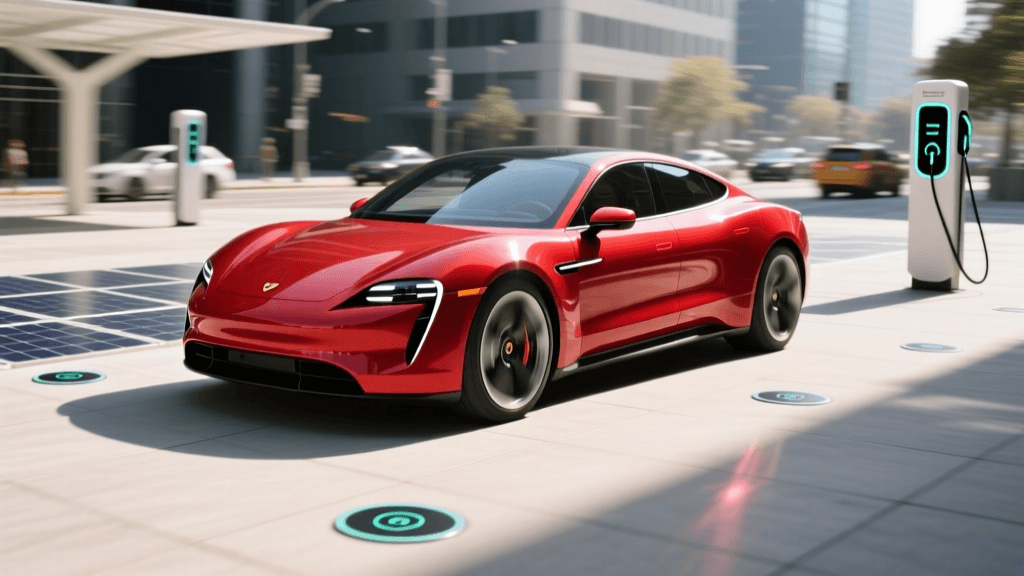
Wireless inductive charging has long been the holy grail for EV convenience, particularly for autonomous fleets and heavy-duty transit buses that require frequent, automated top-ups. Historically, the primary hurdles have been efficiency loss across the air gap and the precise alignment required between the ground pad and the vehicle receiver. Recent patent filings from industry leaders like WiTricity, Qualcomm, and various major OEMs have introduced breakthroughs in magnetic resonance coupling that dramatically mitigate these issues.
Newly patented magnetic resonance systems utilize advanced ferrite shielding and multi-coil array configurations that maintain power transfer efficiencies exceeding 92%, even with Z-gap (vertical distance) tolerances ranging from 150mm to 250mm. Furthermore, recent intellectual property filings detail the integration of Ultra-Wideband (UWB) and low-energy Bluetooth beacons embedded directly into the charging pad. These systems communicate with the vehicle's onboard sensors to achieve sub-centimeter alignment accuracy without requiring the driver or autonomous system to make micro-adjustments.
According to the U.S. Department of Energy Wireless Charging Initiatives, ongoing research supported by federal grants is actively validating these high-efficiency magnetic resonance systems for commercial viability, pushing the boundaries of dynamic (in-motion) and static wireless charging alike.
Breakthrough 2: Liquid-Cooled Megawatt Charging System (MCS) Innovations
For heavy-duty commercial fleets, Class 8 electric trucks, and electric aviation, standard 350 kW DC fast chargers are insufficient. The industry is rapidly moving toward the Megawatt Charging System (MCS), which targets power levels between 1.2 MW and 3.75 MW (up to 1250V DC and 3000A continuous). The primary engineering bottleneck at these extreme power levels is thermal management; a standard copper cable capable of carrying 3000A would be impossibly thick and heavy for a human operator to maneuver.
Recent patent filings focus heavily on advanced dielectric fluid cooling systems integrated directly into the MCS connector and cable assembly. Unlike traditional glycol-water cooling loops used in current 350 kW CCS cables, these new patents describe micro-channel liquid cooling architectures that circulate specialized dielectric fluids. Because the fluid is non-conductive, it can come into direct contact with the copper conductors, reducing the cable's outer diameter by up to 40% and cutting the connector weight in half, all while maintaining safe operating temperatures below 60°C at the plug interface.
The CharIN Megawatt Charging System task force continues to refine these standards, drawing heavily on the thermal and mechanical patents submitted by tier-one suppliers to ensure interoperability and safety across global heavy-duty fleets.
Breakthrough 3: Solid-State Battery Charging Protocols and Acoustic Monitoring
As solid-state batteries approach commercialization, their charging requirements differ vastly from traditional lithium-ion NMC or LFP chemistries. Solid-state cells are highly susceptible to lithium plating and dendrite formation if subjected to aggressive, unoptimized DC fast charging curves. A fascinating cluster of recent patents from companies like Toyota and QuantumScape outlines "smart charging" protocols that utilize acoustic and impedance monitoring in real-time.
These patented charging stations emit high-frequency acoustic pulses into the battery pack during the charging session. By analyzing the acoustic echo and real-time electrochemical impedance spectroscopy (EIS), the charger can detect the exact onset of lithium plating at the anode. The charger then dynamically adjusts the current delivery on a millisecond basis, allowing for ultra-fast charging speeds (potentially 10% to 80% in under 8 minutes) without degrading the solid-state electrolyte. Infrastructure planners must note that deploying these future systems will require charging dispensers with significantly higher onboard computational processing power and advanced edge-computing capabilities.
Data Comparison: Emerging Charging Technologies vs. Current Standards
To contextualize these patent trends, below is a technical comparison of current mainstream standards versus the emerging technologies currently dominating R&D and patent filings.
| Technology Standard | Peak Power Output | Max Voltage / Current | Primary Patent Focus Area | Target Application |
|---|---|---|---|---|
| CCS2 / NACS (Current) | 350 kW - 500 kW | 1000V / 500A - 900A | Connector ergonomics, basic liquid cooling | Passenger EVs, Light Commercial |
| MCS (Emerging) | 1.2 MW - 3.75 MW | 1250V / 3000A | Dielectric micro-channel cooling, heavy-duty latching | Class 8 Trucks, eVTOL, Maritime |
| Wireless Inductive (Emerging) | 11 kW - 500 kW | N/A (Magnetic Resonance) | Ferrite shielding, UWB alignment, Z-gap tolerance | Autonomous Fleets, Transit Buses, Robotaxis |
| Extreme Fast Charging (XFC) | 600 kW+ | 1000V+ / Advanced | Acoustic monitoring, solid-state impedance tracking | Next-Gen Passenger EVs with Solid-State Batteries |
For deeper insights into the thermal and power requirements of next-generation infrastructure, the National Renewable Energy Laboratory (NREL) Extreme Fast Charging research provides comprehensive data on grid impacts and hardware limitations associated with these high-power paradigms.
Expert Tips: How to Future-Proof Your Fleet Infrastructure Today
Understanding the patents is only half the battle; applying this knowledge to your physical infrastructure planning is where the true value lies. Based on the trajectory of these technological breakthroughs, here are my top expert recommendations for fleet managers and site developers:
- Oversize Your Underground Conduit and Trenching: If you are currently trenching for 350 kW CCS dispensers, do not use standard 2-inch PVC conduit. Lay 4-inch or 6-inch conduits with pull-strings. Future MCS deployments or high-power wireless pad installations will require significantly thicker, heavily shielded, and liquid-cooled cabling that cannot be retrofitted into narrow conduits without complete asphalt excavation.
- Plan for Edge-Computing Hardware at the Dispenser: The acoustic and impedance monitoring patents for solid-state batteries mean that future chargers will act as edge-computing nodes. Ensure your site's local area network (LAN) and fiber-optic backhaul are designed to handle massive data throughput from the dispenser to the cloud, rather than relying solely on basic cellular connections.
- Allocate Transformer Capacity for Wireless Pads: Wireless inductive charging systems, particularly for opportunity charging in depot environments, require dedicated high-frequency inverters. When sizing your site's utility transformer and switchgear, add a 20% to 30% overhead capacity specifically reserved for future wireless ground-pad deployments, which draw continuous baseline power for alignment sensors and thermal management.
- Specify Modular Power Cabinets: Instead of buying monolithic dispensers, invest in modular power cabinets (e.g., 600 kW cabinets that distribute power dynamically to multiple pedestals). Patents in dynamic load balancing software are advancing rapidly, and modular hardware will allow you to integrate new software-defined power routing via over-the-air (OTA) updates without replacing the physical copper and silicon.
Best Practices for Evaluating and Adopting Emerging Tech
While it is tempting to be the first to deploy a patented technology, infrastructure investments require a pragmatic approach. My best practice advice is to wait for formal standardization by bodies like CharIN, IEEE, or the Society of Automotive Engineers (SAE) before committing to mass deployment. Patents represent a company's defensive or offensive intellectual property strategy; they do not always represent the final standardized product.
Instead, establish controlled pilot programs. If you operate a transit fleet, designate a single depot lane for a wireless inductive charging pilot. This allows your maintenance teams to understand the physical wear-and-tear on ground pads (e.g., snow, ice, and debris clearance) while providing your operations software team with real-world API integration experience. Similarly, for heavy-duty fleets, engage with utility providers early regarding the demand charges associated with 1MW+ charging spikes, as MCS technology will fundamentally alter your facility's load profile.
Conclusion
The EV charging landscape is transitioning from a focus on basic connectivity and standardization to an era of extreme power, wireless convenience, and intelligent electrochemical monitoring. By keeping a close eye on patent filings for magnetic resonance alignment, dielectric MCS cooling, and solid-state acoustic charging, infrastructure professionals can anticipate the hardware and software requirements of tomorrow. Future-proofing your site through oversized conduit, modular power architecture, and strategic transformer sizing will ensure that when these patented breakthroughs hit the commercial market, your fleet is ready to plug in—or simply park and charge—without missing a beat.