The Promise of ISO 15118: What is Plug and Charge?
For years, the electric vehicle (EV) charging experience has been plagued by friction. Drivers must download multiple apps, create accounts, input payment information, and use RFID cards or QR codes to initiate a charging session. The industry's answer to this fragmented user experience is 'Plug and Charge' (PnC), a technology defined by the ISO 15118 standard. When implemented correctly, PnC allows an EV to automatically identify itself, authenticate with the charging station, initiate the session, and process payment the moment the connector is plugged in—mirroring the seamless experience of refueling a gasoline vehicle.
According to the Joint Office of Energy and Transportation, ensuring a seamless and reliable charging experience is critical for widespread EV adoption. The federal push for standardized, high-uptime charging networks has placed a renewed spotlight on ISO 15118 compliance. However, adoption across major U.S. charging networks remains uneven, with significant disparities in hardware readiness, software integration, and vehicle compatibility. In this data-driven analysis, we break down the current state of Plug and Charge across major networks, examine the technical hurdles, and provide actionable setup guides for EV owners.
Understanding the Technical Backbone: PKI and Power Line Communication
To understand why Plug and Charge adoption is complex, we must look at the underlying technology. ISO 15118 relies on Power Line Communication (PLC) to transmit data over the DC fast-charging cables. When the vehicle and the charger connect, they perform a digital 'handshake.' This handshake utilizes a Public Key Infrastructure (PKI) to exchange digital certificates, ensuring that the vehicle is legitimate, the charger is secure, and the payment routing is encrypted via Transport Layer Security (TLS).
If a single certificate is expired, or if the charger's backend server fails to communicate with the vehicle manufacturer's mobility service provider (MSP), the handshake fails. This technical complexity is the primary reason why PnC success rates vary wildly between networks and specific vehicle models.
Data-Driven Comparison: Network Adoption Rates
Below is a comparative analysis of how the top U.S. charging networks are implementing Plug and Charge or proprietary equivalents as of late 2023 and early 2024.
| Network | PnC Technology | Estimated Capable Stations | Primary Supported Vehicles | Common Pain Points |
|---|---|---|---|---|
| Electrify America | ISO 15118-2 | 800+ Stations | VW, Porsche, Ford, Hyundai, Kia | Handshake timeouts, PKI certificate mismatches |
| EVgo | Autocharge+ (Proprietary/ISO hybrid) | 150+ Stations | Nissan, BMW, GM, Mercedes | Requires app pre-configuration, limited CCS support |
| ChargePoint | App-based Autocharge | Widespread (Level 2) | Most EVs via MAC address | Rarely supported on DCFC hardware, relies on app |
| Tesla Supercharger | Proprietary Native PnC | 5,000+ Stations | Tesla vehicles (NACS) | Closed ecosystem, Magic Dock PnC still in beta |
Electrify America: Leading the CCS Charge
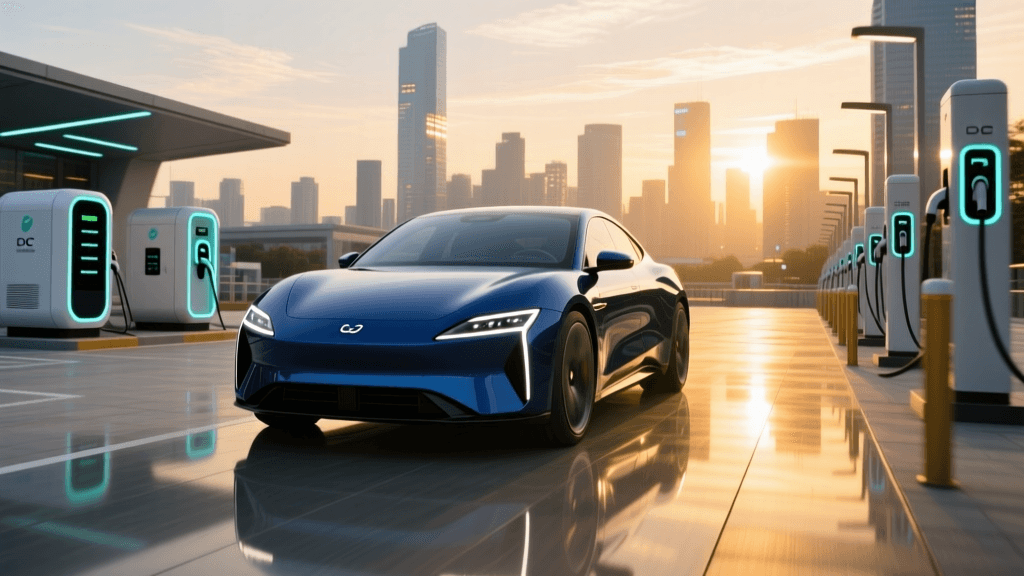
Electrify America (EA) has been the most aggressive proponent of the open ISO 15118 standard for Combined Charging System (CCS) vehicles. Because EA was heavily involved in the early development of PnC alongside Volkswagen, their network boasts the highest number of PnC-capable DC fast chargers. Vehicles like the Porsche Taycan, Ford F-150 Lightning, and Hyundai Ioniq 5 support PnC on EA's network. However, user data and community forums indicate a success rate hovering around 70-80%. The most common failure point occurs when the EA station's local network connection drops, preventing the real-time PKI certificate validation required to authorize the charge.
EVgo and the Autocharge+ Initiative
EVgo has taken a slightly different route with its 'Autocharge+' feature. While it aims to replicate the Plug and Charge experience, it often relies on identifying the vehicle's MAC address or requiring the user to link their specific VIN within the EVgo app prior to arrival. This is less secure than the cryptographic handshake of ISO 15118 but offers a pragmatic workaround for vehicles that lack full PnC firmware support. EVgo's Autocharge+ is highly reliable for legacy vehicles like the Nissan Leaf (CHAdeMO) and older BMW i3s, but it is less universally applicable to the newest wave of 800V CCS architecture vehicles.
Tesla Superchargers and the NACS Transition
Tesla invented the modern Plug and Charge experience. Every Supercharger globally utilizes a proprietary PnC protocol that has functioned flawlessly for over a decade. As the North American Charging Standard (NACS) becomes the industry standard, automakers like Ford and Rivian are gaining access to the Supercharger network. However, true Plug and Charge for non-Tesla vehicles using the Tesla app and a NACS adapter is still in its infancy. Currently, most non-Tesla EVs must rely on a 'Magic Dock' or initiate the session manually via the Tesla app, meaning the open NACS ecosystem has not yet achieved Tesla's native PnC seamlessness.
Actionable Setup: Configuring Your EV for Plug and Charge
If you own a modern EV with CCS capabilities, you can optimize your vehicle and accounts to take advantage of Plug and Charge where available. Follow these specific steps to ensure your digital handshake succeeds:
- Update Vehicle Firmware: PnC relies on up-to-date security certificates. Ensure your EV has the latest Over-The-Air (OTA) software update installed. For example, early Hyundai Ioniq 5 models required a specific OTA update to fix PnC handshake bugs with Electrify America.
- Enable PnC in the Infotainment System: Navigate to your EV's charging settings menu. Look for 'Plug and Charge' or 'Automatic Charging' and toggle it to 'On'. In some vehicles, you must explicitly authorize specific networks (e.g., checking the box for Electrify America).
- Register Your VIN in the Network App: Download the charging network's app (e.g., the EA app). Create an account, add a valid credit card, and navigate to the 'Vehicles' or 'Plug and Charge' tab. Input your exact 17-character VIN. The network will ping your automaker's database to verify the VIN and issue a digital contract.
- Set the App as a Fallback: Always keep the network app logged in on your smartphone with Bluetooth enabled. If the ISO 15118 handshake fails at the stall, the app will often allow you to initiate the charge via Bluetooth proximity without needing to scan a QR code.
Troubleshooting the Handshake: When PnC Fails
Even with perfect setup, PnC can fail. The Alternative Fuels Data Center notes that infrastructure communication errors remain a top barrier to seamless charging. If you plug in and the station screen reads 'Vehicle Not Recognized' or 'Authentication Failed,' follow these troubleshooting steps:
- Check the Cable Connection: The CCS connector must be fully seated. The top two pins handle DC power, but the bottom three pins handle AC power and PLC data. If the connector is sagging or not pushed in completely, the PLC modem cannot establish a data link.
- Toggle the Vehicle's Charging Flap: Close the charge port door, wait five seconds, and open it again. This forces the vehicle's onboard charger to reset its communication module.
- Disable and Re-enable PnC: If a specific station consistently fails, turn off Plug and Charge in your vehicle's settings and use the network's app or RFID card to initiate the session manually. You can turn PnC back on for your next stop.
Future Outlook: ISO 15118-20 and V2G
The current standard, ISO 15118-2, is already being superseded by ISO 15118-20. This next-generation protocol introduces support for Vehicle-to-Grid (V2G) and Vehicle-to-Home (V2H) bi-directional charging, as well as Automatic Connector Devices (ACD) for autonomous robotic charging. Research from the National Renewable Energy Laboratory (NREL) highlights that bi-directional charging will be essential for grid stabilization as EV adoption scales. For ISO 15118-20 to succeed, charging networks and automakers must align their PKI certificate management and backend server architectures far more rigorously than they did with the initial rollout. Until then, drivers must remain adaptable, leveraging Plug and Charge when it works, and relying on app-based fallbacks when the digital handshake falls short.