What 'Turbocharging' and 'Supercharging' Actually Mean for Your EV
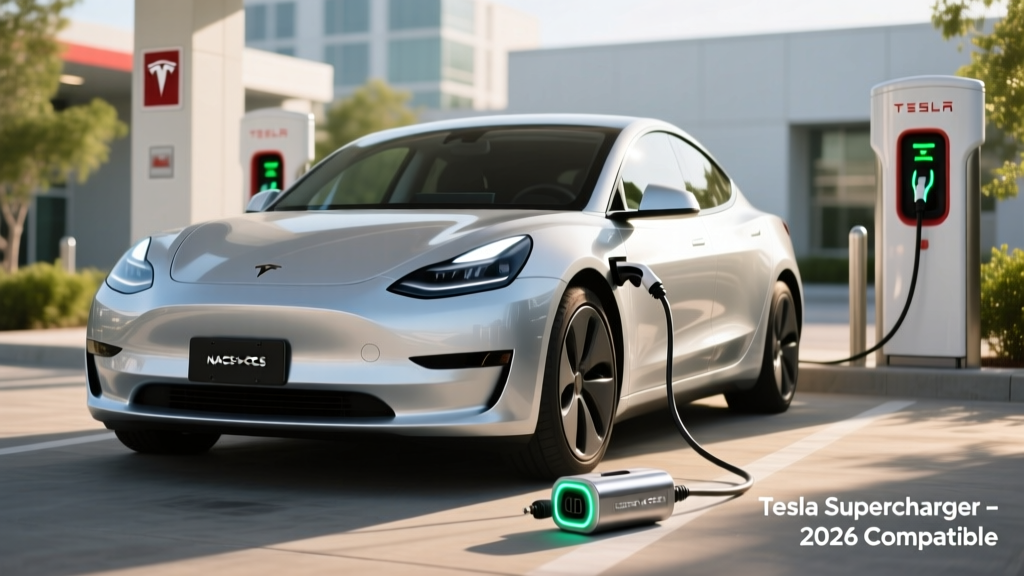
If you've searched for ways to speed up EV charging, you've likely encountered the terms turbocharging and supercharging. In the EV world, these aren't engine modifications — they describe two fundamentally different approaches to getting electrons into your battery faster. Supercharging typically refers to Tesla's proprietary DC fast-charging network (now opening to other brands via NACS), while turbocharging your home setup means maximizing Level 2 charging speed with a high-amperage 240V wall connector. Both strategies matter, but they solve different problems: one is about road-trip speed, the other about daily convenience.
Before we compare them, let's nail down the single most important distinction in EV charging: kW (kilowatts) measures power — how fast energy flows into your car. kWh (kilowatt-hours) measures energy — the total capacity of your battery. Think of kW as the width of a hose and kWh as the size of the bucket. Confusing them is the most common mistake new EV owners make, and it leads to wildly wrong expectations at the charger.
The Three Charging Levels: Speeds, kW, and Miles Per Hour
Every EV sold in the US charges via one of three levels. Here's exactly what each delivers in real-world terms:
| Level | Voltage | Max Power (kW) | Miles of Range Added Per Hour | Best For |
|---|---|---|---|---|
| Level 1 | 120V (standard outlet) | 1.2–1.9 kW | 3–5 mi/hr | Overnight top-up, PHEVs, low-mileage drivers |
| Level 2 | 240V (dryer-style outlet) | 3.3–19.2 kW | 12–75 mi/hr | Daily home charging, workplace charging |
| DC Fast Charge (DCFC) | 400–800V DC | 50–350 kW | 150–1,000+ mi/hr (peak) | Road trips, highway corridors, quick top-ups |
Real-world caveat: Those "miles per hour" figures assume moderate battery sizes (75–90 kWh) and optimal conditions. DC fast charging speeds taper significantly above 80% state of charge (SoC) — a 350 kW peak might average only 120–150 kW over a full 10–80% session. And in cold weather (below 32°F), expect 20–40% slower charging unless your EV has active battery preconditioning.
Supercharging Your EV on the Road: DC Fast Charging in Practice
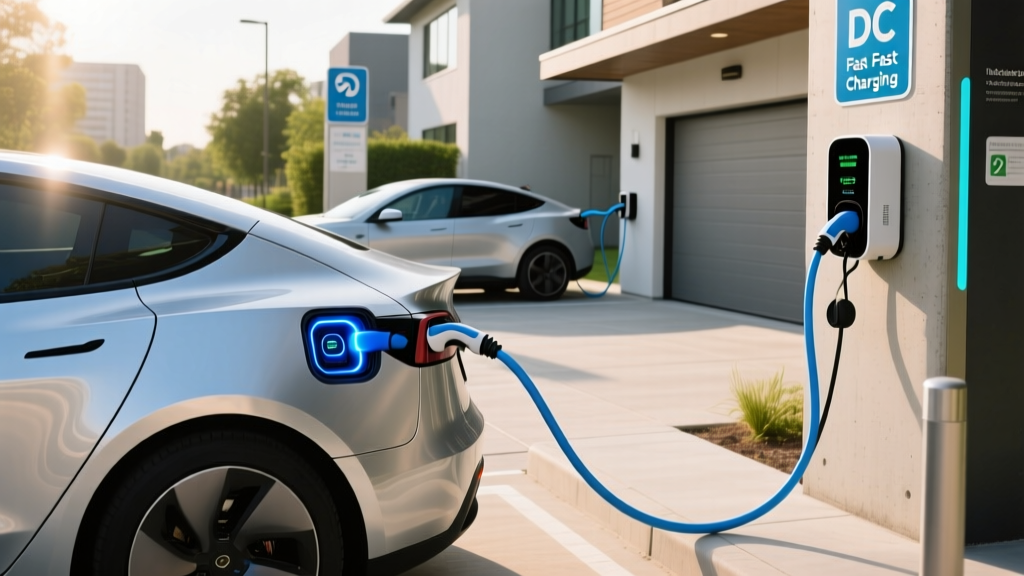
DC fast charging bypasses your car's onboard charger entirely, feeding direct current straight into the battery pack. This is how you achieve 10–80% charges in 18–30 minutes on a modern BEV. Here's what the major networks deliver in 2026:
- Tesla Supercharger V4: Up to 250 kW for most vehicles, with V4 cabinets capable of 350 kW for 800V-architecture vehicles like the Hyundai Ioniq 5 and Kia EV6.
- Electrify America: 150 kW and 350 kW stalls common; actual sustained rates depend on vehicle acceptance.
- EVgo / ChargePoint: Mix of 50 kW legacy and 350 kW newer stalls; check the app before you drive there.
Let's look at actual 10–80% charging times for popular 2026 EVs on a capable DC fast charger:
| Vehicle | Battery (kWh usable) | Peak DC Rate (kW) | 10–80% Time |
|---|---|---|---|
| Tesla Model Y (2026) | 75 kWh (NMC) | 250 kW | ~25 min |
| Hyundai Ioniq 5 (2026) | 77.4 kWh (NMC) | 240 kW (800V) | ~18 min |
| Ford F-150 Lightning (2026) | 131 kWh (NMC, Extended Range) | 150 kW | ~41 min |
| Chevrolet Equinox EV (2026) | 85 kWh (NMC) | 150 kW | ~30 min |
| BMW iX xDrive50 (2026) | 105.2 kWh (NMC) | 200 kW | ~34 min |
Charging-curve reality check: That "peak 250 kW" number only holds for a narrow SoC window (roughly 10–30%). By 60% SoC, most NMC batteries taper to 100–120 kW, and above 80%, you're looking at 40–60 kW. This is why we always quote 10–80% times — charging to 100% on DC fast can add another 30–45 minutes and accelerates battery degradation.
Turbocharging Your Home Setup: Level 2 Installation and Cost
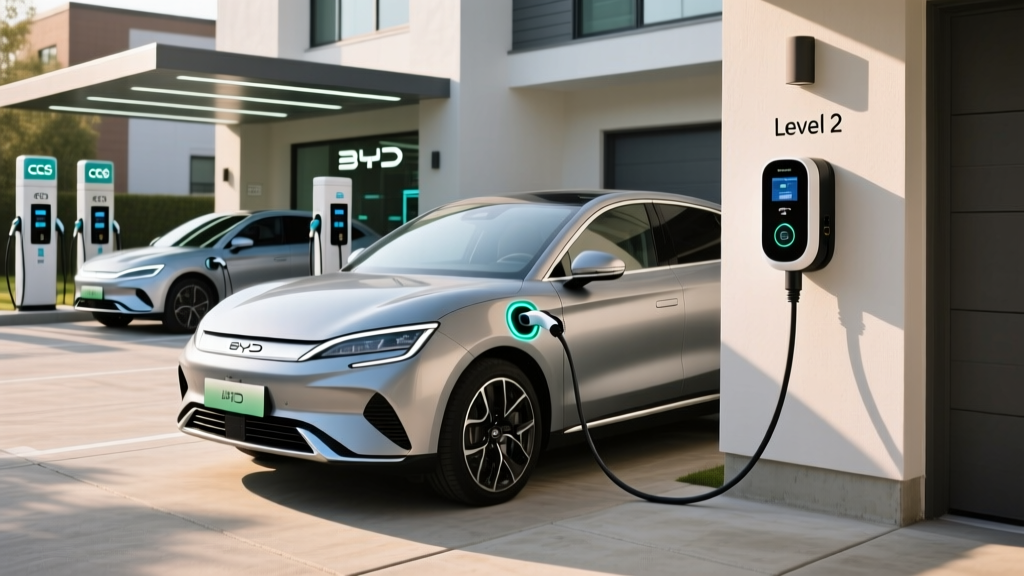
The most impactful upgrade you can make is a high-power Level 2 home charger. A 48-amp (11.5 kW) wall connector on a dedicated 60-amp, 240V circuit will fully recharge most EVs overnight — adding 35–45 miles of range per hour of charging. Here's what a professional installation typically costs in 2026:
| Component | Typical Cost Range | Notes |
|---|---|---|
| Level 2 Charger (hardwired, 48A) | $400–$750 | Smart Wi-Fi models cost more |
| Electrician labor (2–6 hours) | $600–$2,000 | Varies by run length, wall type, region |
| Electrical permit | $50–$200 | Required in most jurisdictions |
| Panel upgrade (if needed) | $1,500–$4,000 | Older 100A panels often need upgrade to 200A |
| Total (no panel upgrade) | $1,050–$2,950 | Most homes with 200A service fall here |
| Total (with panel upgrade) | $2,550–$6,950 | Common in pre-1990 homes |
The panel-upgrade gotcha: A 48-amp charger draws continuously for hours. The National Electrical Code (NEC) requires the circuit to be rated at 125% of the continuous load — so a 48A charger needs a 60A breaker. If your home has a 100-amp main panel (common in homes built before 1990), you likely don't have the headroom. A licensed electrician should perform a load calculation before you buy equipment. Source: National Fire Protection Association — NEC Article 625.
Some homeowners opt for a 32-amp (7.7 kW) charger on a 40-amp circuit to avoid a panel upgrade. This still adds 25–30 miles of range per hour — plenty for overnight charging if your daily commute is under 60 miles.
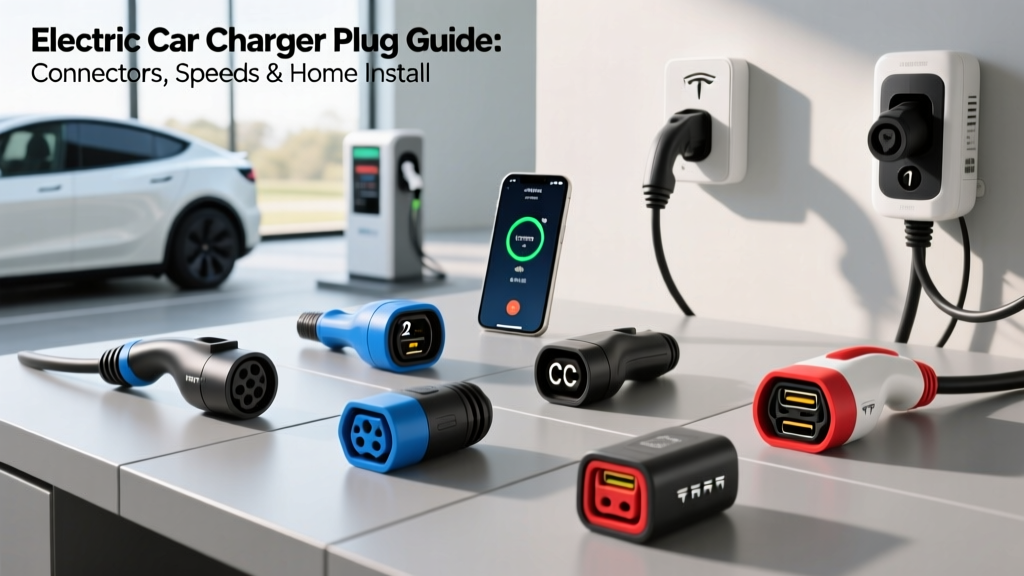
Connector Compatibility: NACS, CCS1, and CHAdeMO in 2026
The connector landscape has consolidated dramatically. As of 2026, nearly every new EV sold in the US uses the NACS (North American Charging Standard) port — originally Tesla's proprietary design, now adopted by Ford, GM, Rivian, Hyundai, Kia, BMW, and most other automakers. CCS1 is still found on older models (2021–2024 VW ID.4, some earlier Ford and GM EVs), and CHAdeMO is essentially legacy (Nissan Leaf, Mitsubishi Outlander PHEV).
| Connector | Brands Using It (New Vehicles) | Adapter Needed for Tesla Superchargers? |
|---|---|---|
| NACS (Tesla-style) | Tesla, Ford, GM, Rivian, Hyundai, Kia, BMW, Volvo, Polestar, Mercedes | No — native compatibility |
| CCS1 | VW (older), some 2023–2024 models from various brands | Yes — CCS-to-NACS adapter (~$200–$300) |
| CHAdeMO | Nissan Leaf (discontinued after 2025), Mitsubishi | Yes — adapter needed; limited DCFC network support |
For home Level 2 charging, all vehicles use the J1772 connector (or NACS, which includes J1772 signaling). Most NACS-equipped vehicles ship with a J1772-to-NACS adapter in the frunk, so any Level 2 charger with a J1772 plug will work. When buying a home charger, check whether it comes with a J1772 or NACS plug — or buy the appropriate adapter.
Cost to Charge: Home vs. Public vs. Gas — The Real Math
The economics of EV charging depend heavily on where you charge. Here's a breakdown using a 2026 Tesla Model Y (EPA 320 mi range, ~75 kWh battery, 3.5 mi/kWh efficiency) as a baseline:
| Charging Scenario | Avg. Cost ($/kWh) | Cost Per Mile | Annual Cost (12,000 mi) |
|---|---|---|---|
| Home — off-peak utility rate | $0.09–$0.14 | $0.03–$0.04 | $360–$480 |
| Home — standard rate (no TOU) | $0.15–$0.20 | $0.04–$0.06 | $480–$720 |
| Public Level 2 (workplace, retail) | $0.20–$0.35 | $0.06–$0.10 | $720–$1,200 |
| DC Fast Charging (road trips) | $0.35–$0.55 | $0.10–$0.16 | Varies by trip frequency |
| Gas car (28 MPG combined, $3.40/gal) | — | $0.12 | $1,440 |
The takeaway: If you charge primarily at home on off-peak rates (many utilities offer time-of-use plans with rates as low as $0.07–$0.10/kWh overnight), your fuel cost drops to roughly one-quarter of a comparable gas car. Even exclusive public Level 2 charging is cheaper than gas in most states. DC fast charging on road trips approaches gas-car cost per mile — but those trips represent a small fraction of annual driving for most owners. Source: fueleconomy.gov — EV electricity cost comparisons.
Best Home EV Chargers for 2026: Equipment Picks
Here are four Level 2 chargers that deliver reliable performance, smart features, and correct safety certifications. All are UL-listed and compatible with NACS or J1772 vehicles (with adapter where noted):
Tesla Wall Connector (Gen 4)
- Power: 48A / 11.5 kW (on 60A circuit)
- Connector: NACS native; J1772 adapter included
- Cable length: 24 ft
- Smart features: Wi-Fi, OTA updates, load sharing with second unit, power-sharing
- Price: ~$475
Best for Tesla and NACS-equipped EVs. Load-sharing lets you install two connectors on one 60A circuit — ideal for two-EV households.
ChargePoint Home Flex
- Power: Configurable 16A–50A (up to 12 kW on 50A circuit)
- Connector: J1772 (NACS adapter available)
- Cable length: 23 ft
- Smart features: Wi-Fi, app scheduling, Alexa integration, energy tracking
- Price: ~$650–$700
Best for flexibility — adjustable amperage lets you match your circuit capacity without buying a new unit.
Emporia Level 2 EV Charger
- Power: 48A / 11.5 kW (on 60A circuit)
- Connector: J1772
- Cable length: 24 ft
- Smart features: Wi-Fi, app, solar integration, energy monitoring, scheduled charging
- Price: ~$399
Best budget smart charger. Excellent energy monitoring and solar-aware scheduling for homes with rooftop panels.
Grizzl-E Smart
- Power: 40A / 9.6 kW (on 50A circuit)
- Connector: J1772 or NACS (select at purchase)
- Cable length: 24 ft
- Smart features: Wi-Fi, OCPP support, adjustable amperage, built-in load management
- Price: ~$549
Best for harsh climates — rated to -40°F and built with a rugged aluminum case. Canadian-made.
Safety and code essentials: Every home charger installation must comply with NEC Article 625. Key requirements include a dedicated circuit (no sharing with other appliances), a GFCI breaker for outdoor installations (required by 2020 NEC and later), and proper outdoor rating (NEMA 4 or NEMA 4X) if the charger is mounted outside. Hardwired installations are generally preferred over plug-in (NEMA 14-50 receptacle) because they eliminate a common failure point and satisfy some local inspectors who have flagged 14-50 outlets under NEC 625.40. Always hire a licensed electrician — DIY 240V work is dangerous and may void your homeowner's insurance. Source: U.S. Department of Energy — Home EV Charging.
Frequently Asked Questions
How much does it cost to install a home EV charger?
A typical Level 2 home charger installation costs $1,050–$2,950 if your electrical panel has sufficient capacity. This includes the charger ($400–$750), electrician labor ($600–$2,000), and permit ($50–$200). If your home needs a panel upgrade from 100A to 200A service, add $1,500–$4,000. Federal tax credit under §30D does not apply to home charging equipment — that's covered separately under the Alternative Fuel Vehicle Refueling Property Credit (Form 8911), which offers up to 30% (max $1,000) for charger installation, subject to census-tract eligibility.
How fast will each charging level add range?
Level 1 (120V): 3–5 miles per hour. Level 2 (240V, 48A): 35–45 miles per hour for most EVs. DC fast charging: 150–1,000+ miles per hour at peak, but sustained rates over a 10–80% session average much lower. A Hyundai Ioniq 5 on a 350 kW charger adds roughly 200 miles in 18 minutes; a Ford F-150 Lightning on a 150 kW charger adds about 150 miles in 30 minutes.
Which connector/charger is compatible with my EV?
If you bought a new EV in 2025 or 2026, it almost certainly has a NACS port (Tesla-style). Older EVs (2021–2024) may have CCS1. The Nissan Leaf uses CHAdeMO. For home charging, any J1772 Level 2 charger works with all EVs — NACS vehicles use the included adapter. For DC fast charging, verify your vehicle's port matches the station's connector; apps like PlugShare and A Better Routeplanner show connector types for every station.
How much does charging cost per mile vs gas?
Home charging on off-peak rates costs $0.03–$0.04 per mile — roughly 70–75% less than a 28 MPG gas car at $3.40/gallon ($0.12/mile). Public Level 2 charging runs $0.06–$0.10 per mile, still cheaper than gas. DC fast charging on road trips costs $0.10–$0.16 per mile, approaching gas parity. Most EV owners charge 80%+ of their miles at home, so the blended annual fuel cost is typically $400–$700 vs. $1,400+ for gas.
What electrical upgrades might I need?
The most common upgrade is a panel capacity increase. A 48A Level 2 charger requires a 60A dedicated breaker. If your main panel is 100A (common in pre-1990 homes), an electrician's load calculation may show you need a 200A upgrade ($1,500–$4,000). Other potential costs: running new conduit ($5–$15 per foot if the panel is far from the garage), upgrading the meter base, or adding a sub-panel. Some utilities offer rebates for panel upgrades tied to EV adoption — check with your local provider before committing to the work.