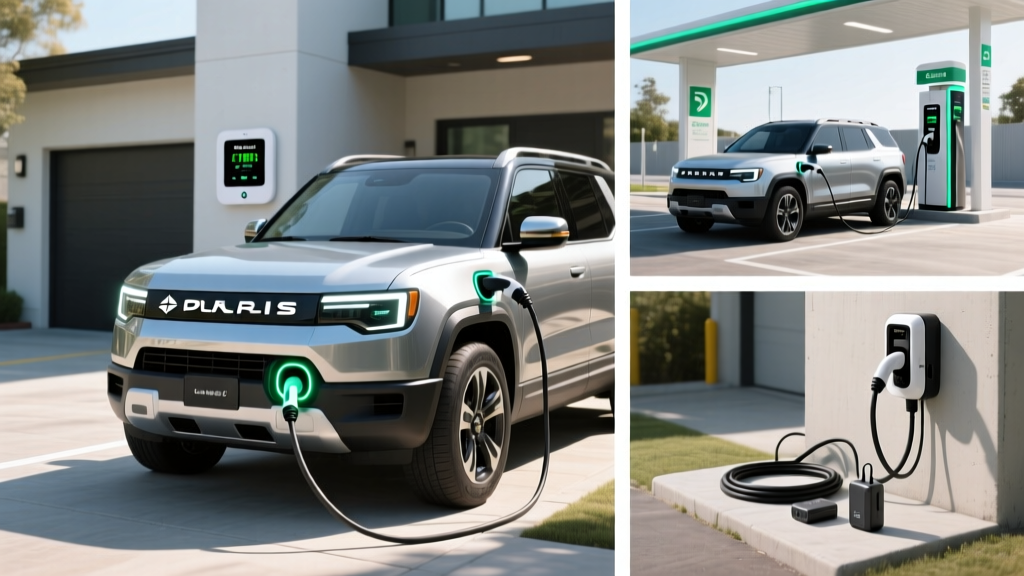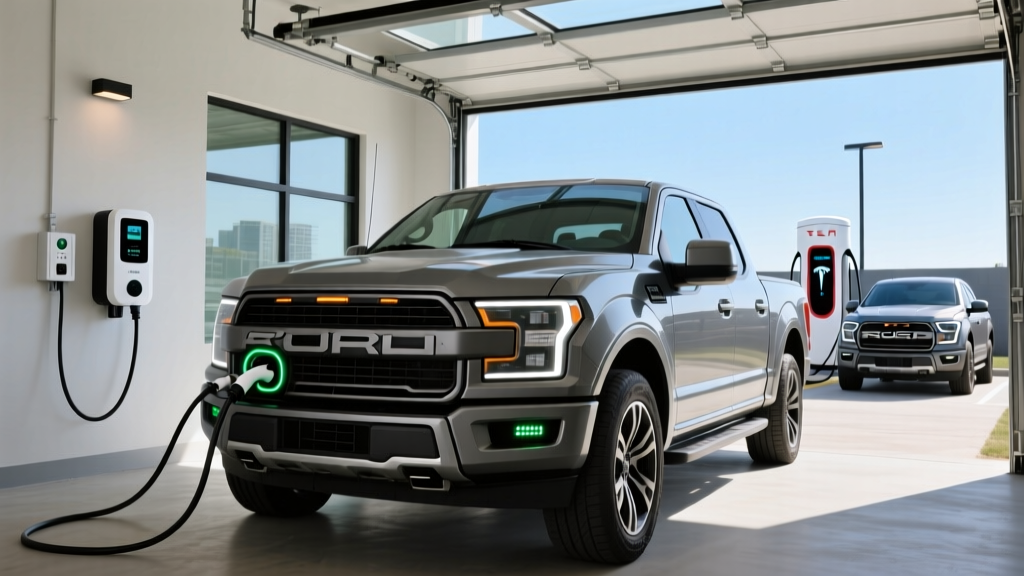
The Roush F-150 Supercharger isn't just a lifted, supercharged truck — it's a high-output performance machine that, depending on the model year and powertrain configuration, may feature Ford's hybrid or electrified architecture alongside Roush's signature supercharged 5.0L V8. If you're researching the Roush F-150 Supercharger and its charging requirements, you're likely looking at one of Roush's electrified or PHEV-adjacent builds, or you're comparing charging logistics for Ford's F-150 Lightning platform that Roush has modified. Either way, understanding charging levels, home installation costs, and connector compatibility is essential before you take delivery.
This guide covers everything you need to charge an electrified Roush F-150 at home and on the road — with exact numbers for speeds, costs, and equipment.
Charging Levels Explained: How Fast Will Each Level Add Range?
EV and PHEV charging is divided into three tiers. The critical distinction: kW (kilowatts) measures power — how fast energy flows into the battery. kWh (kilowatt-hours) measures energy — the battery's total capacity. Think of kW as the width of a hose and kWh as the size of the tank.
| Charging Level | Voltage | Power (kW) | Miles of Range Added Per Hour | Best For |
|---|---|---|---|---|
| Level 1 (Standard Outlet) | 120V AC | 1.0–1.4 kW | 3–5 miles | Overnight top-offs, PHEVs |
| Level 2 (Home/Public AC) | 240V AC | 3.3–19.2 kW | 12–75 miles | Daily home charging, workplace |
| DC Fast Charging | 400–800V DC | 50–350 kW | 150–400+ miles (peak) | Road trips, rapid top-ups |
For a large battery pack like the F-150 Lightning's extended-range 131 kWh usable battery (which Roush-modified Lightnings inherit), Level 1 charging is impractical for full recharges — it would take over 5 days. Level 2 at 11.5 kW (48A) adds roughly 30–35 miles per hour, completing a full charge overnight. DC fast charging at peak 150+ kW can push the battery from 10–80% in approximately 35–45 minutes, though the charge curve tapers significantly above 80% to protect battery health.
Home Charger Installation: Electrical Requirements and Costs
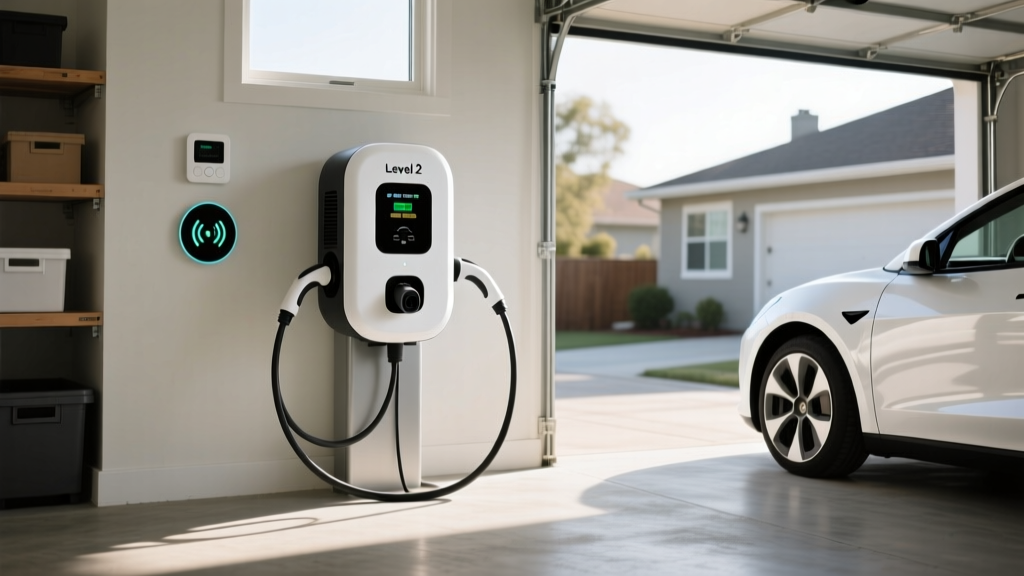
Installing a Level 2 home charger is the single most impactful upgrade for daily EV ownership. For a truck with a large battery pack, you'll want a minimum 48-amp (11.5 kW) charger on a dedicated 60-amp circuit.
Electrical Requirements
- Circuit: Dedicated 60A breaker (for a 48A continuous-draw charger — NEC requires 125% overhead)
- Voltage: 240V AC, single-phase
- Wire gauge: 6 AWG copper (THHN in conduit or NM-B depending on local code)
- Panel capacity: Minimum 100A service; 200A preferred for homes with other high-draw appliances
- GFCI protection: Required by NEC 2020+ for EV outlets in garages
Panel Upgrade Considerations
Homes with 100A service or older panels may need a panel upgrade to 200A before adding a 60A EV circuit. This is one of the most commonly overlooked costs. A panel upgrade typically runs $1,500–$3,500 depending on your utility, local labor rates, and whether a new meter base is required. Some utilities offer rebates for panel upgrades paired with EV adoption.
Alternatives if a panel upgrade is prohibitive:
- Install a lower-amperage charger (32A / 7.7 kW on a 40A circuit) — still sufficient for overnight charging
- Use a smart panel load-management device (e.g., Span panel or Emporia smart breaker) that dynamically shares capacity
How Much Does It Cost to Install a Home EV Charger?
| Component | Typical Cost Range | Notes |
|---|---|---|
| Level 2 Charger (Hardware) | $400–$1,200 | Varies by brand, power, smart features |
| Electrician Labor (standard install) | $500–$1,500 | Depends on run length, conduit, wall type |
| Permit & Inspection | $50–$300 | Required in most jurisdictions |
| Electrical Panel Upgrade (if needed) | $1,500–$3,500 | Not always required; depends on existing service |
| Total (no panel upgrade) | $950–$3,000 | Most common scenario |
| Total (with panel upgrade) | $2,450–$6,500 | Older homes or 100A service |
The IRS residential clean energy credit (IRC §25C) covers 30% of home charging equipment and installation costs, up to $1,000 per year. This applies to the charger hardware and electrician labor — but not to panel upgrades. Always consult a tax professional for eligibility specifics.
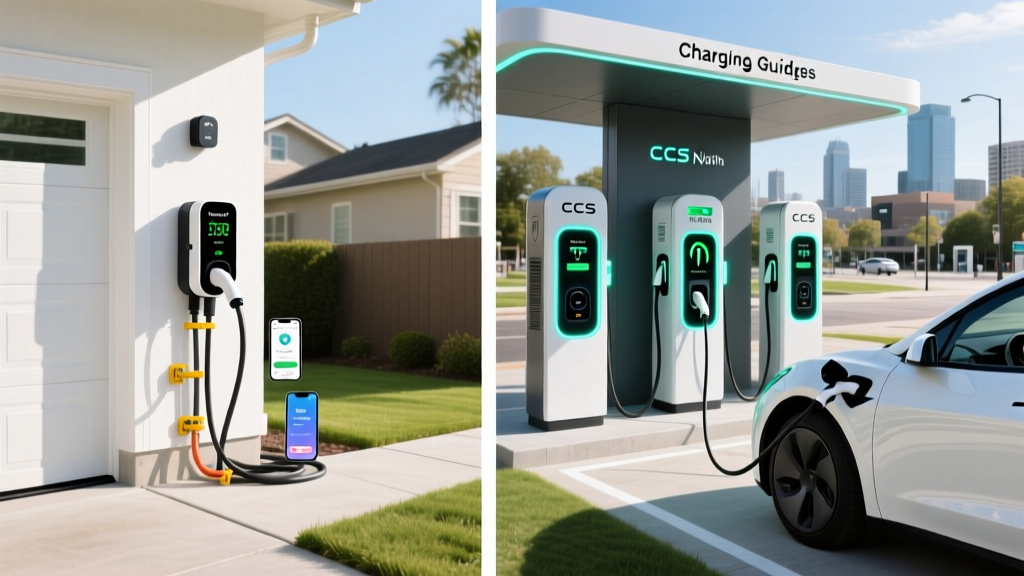
Connector Compatibility: NACS, CCS, and Adapters
Ford transitioned its North American EV lineup to the NACS (North American Charging Standard) connector — the Tesla-designed plug — starting with 2025 model-year vehicles. If your Roush F-150 is based on a 2025+ F-150 Lightning platform, it will have a native NACS port. Earlier models (2022–2024 F-150 Lightning) use CCS1.
| Connector Type | Compatible Vehicles | Network Access | Adapter Needed? |
|---|---|---|---|
| NACS (Tesla) | 2025+ Ford F-150 Lightning, Tesla, Rivian (2025+) | Tesla Supercharger, Electrify America (NACS stalls), ChargePoint | CCS-to-NACS adapter for older CCS networks |
| CCS1 | 2022–2024 F-150 Lightning, Hyundai, Kia, BMW, VW | Electrify America, EVgo, ChargePoint | NACS-to-CCS adapter for Tesla Superchargers |
| CHAdeMO | Nissan Leaf (legacy); essentially discontinued for new vehicles | Limited and shrinking | Not practical for new purchases |
Key adapter note: Ford provides a CCS-to-NACS adapter for 2025+ Lightning owners to access legacy CCS chargers. If you're running a 2022–2024 CCS-equipped Lightning platform, Ford offers a NACS adapter to access Tesla Superchargers — which, as of 2026, have over 30,000 stalls open to non-Tesla vehicles via the NACS standard. Always verify adapter compatibility with your specific model year on Ford's official charging page.
Cost to Charge: Home vs. Public vs. Gas
One of the biggest ownership advantages of an electrified truck is fuel-cost savings — but the math varies dramatically depending on where and when you charge.
| Charging Scenario | Avg. Cost ($/kWh) | Cost for 131 kWh Full Charge | Cost Per Mile (est. 2.0 mi/kWh) |
|---|---|---|---|
| Home (off-peak utility rate) | $0.08–$0.14 | $10.48–$18.34 | $0.04–$0.07 |
| Home (standard rate, no TOU) | $0.15–$0.20 | $19.65–$26.20 | $0.08–$0.10 |
| Public Level 2 (ChargePoint, etc.) | $0.25–$0.49 | $32.75–$64.19 | $0.13–$0.25 |
| DC Fast (Electrify America, EVgo) | $0.35–$0.55 | $45.85–$72.05 | $0.18–$0.28 |
| Tesla Supercharger (NACS) | $0.25–$0.40 | $32.75–$52.40 | $0.13–$0.20 |
| Gas (Roush supercharged V8, 14 MPG, $3.50/gal) | $3.50/gal | $32.75 (equiv. ~9.3 gal) | $0.25 |
At home off-peak rates, charging a large-battery electric truck costs roughly $0.04–$0.07 per mile — a fraction of what a supercharged V8 F-150 burns in fuel. However, exclusive reliance on DC fast charging at $0.48/kWh pushes cost-per-mile close to gas-equivalent territory. Home charging is where the economics win.
Recommended Home Chargers for Large-Battery Trucks
For an F-150-class battery (100–131 kWh usable), you want a charger that can deliver at least 11.5 kW (48A) to complete a full overnight charge. Here are top picks for 2026:
Ford Charge Station Pro
- Power: 11.5 kW (48A) / 80A capable with compatible onboard charger
- Connector: NACS (2025+), CCS1 (2022–2024)
- Cable length: 25 ft
- Smart features: FordPass app integration, scheduled charging, Pro Power Onboard integration
- Price: ~$1,195 (often included with Lightning purchase)
- Best for: Seamless Ford ecosystem integration
Emporia Vue / Emporia Level 2 Charger
- Power: 11.5 kW (48A)
- Connector: NACS (J3400) or CCS1 (J1772+CCS combo)
- Cable length: 24 ft
- Smart features: Real-time energy monitoring, solar integration, load management, app control
- Price: ~$399–$599
- Best for: Budget-conscious buyers who want energy monitoring
Grizzl-E Smart
- Power: 10 kW (40A)
- Connector: J1772 (CCS-compatible); NACS adapter available
- Cable length: 24 ft
- Smart features: OCPP-compatible, works with multiple apps, adjustable amperage
- Price: ~$449–$549
- Best for: Cold-climate durability (rated to -40°F), simple rugged build
Wallbox Pulsar Max
- Power: 11.5 kW (48A)
- Connector: NACS or J1772
- Cable length: 25 ft
- Smart features: Wi-Fi, Bluetooth, Power Boost load management, Eco mode for solar
- Price: ~$599–$699
- Best for: Compact design with smart load sharing
Charging Time Examples: 10–80% for Common Battery Sizes
Here's what to expect when charging a large truck battery from 10% to 80% State of Charge (SoC) — the practical charging window for road trips, since charging slows dramatically above 80% to protect battery longevity.
| Battery Size | Level 2 at 11.5 kW | DC Fast at 150 kW Peak | DC Fast at 250 kW Peak |
|---|---|---|---|
| 98 kWh usable (Std Range Lightning) | ~6 hours (10–80%) | ~32 minutes | ~22 minutes |
| 131 kWh usable (Ext Range Lightning) | ~8 hours (10–80%) | ~42 minutes | ~28 minutes |
| 18 kWh (typical PHEV) | ~1.2 hours | N/A (most PHEVs lack DCFC) | N/A |
Safety and Electrical Code Considerations
EV charging installations must comply with the National Electrical Code (NEC) Article 625 and local amendments. Key safety requirements:
- Dedicated circuit: Your EV charger must be on its own breaker — no sharing with other appliances
- GFCI protection: NEC 2020+ requires ground-fault protection for all EV supply equipment, including hardwired units
- Outdoor rating: If installing outside, the charger must be NEMA 4 rated (weatherproof). Most quality chargers (Ford Charge Station Pro, Grizzl-E, Wallbox) carry this rating
- Cable management: Retractable cable organizers prevent trip hazards and cord damage — especially important in a garage shared with a full-size truck
- Permit and inspection: Required in most municipalities. Your electrician should pull the permit — avoid any installer who suggests skipping this step
Always hire a licensed electrician familiar with EV charger installations. According to NHTSA and NFPA data, properly installed Level 2 chargers carry an excellent safety record, but DIY or unpermitted installations void insurance coverage in the event of electrical fire.
Frequently Asked Questions
How much does it cost to install a home EV charger for a Roush F-150?
Expect $950–$3,000 for a standard Level 2 installation (charger + electrician + permit) if your electrical panel has sufficient capacity. If a panel upgrade from 100A to 200A is needed, add $1,500–$3,500. The IRS §25C credit covers 30% of equipment and installation, up to $1,000.
How fast will each charging level add range to my truck?
Level 1 (120V): 3–5 miles per hour. Level 2 (240V, 48A): approximately 30–35 miles per hour for a large truck battery. DC fast charging: 150–400+ miles per hour at peak, but sustained average is lower due to charge-curve taper above 80% SoC.
Which connector does the Roush F-150 Supercharger use?
If based on a 2025+ Ford F-150 Lightning platform, it uses the NACS (Tesla) connector natively. If based on a 2022–2024 Lightning, it uses CCS1. Adapters are available from Ford for cross-compatibility with both Tesla Superchargers and legacy CCS networks.
How much does charging cost per mile compared to gas?
Home charging at off-peak rates costs roughly $0.04–$0.07 per mile — about 70–80% cheaper than a supercharged V8 F-150 at $0.25/mile. Public DC fast charging at $0.48/kWh pushes cost to $0.18–$0.28/mile, closer to gas parity. The economics strongly favor home charging.
What electrical upgrades might I need for a Level 2 charger?
Most homes with 200A service can accommodate a 60A dedicated EV circuit without upgrades. Homes with 100A service, older panels, or significant existing loads (electric heat, EV + dryer + range) may need a panel upgrade to 200A or a smart load-management system. Your electrician will perform a load calculation during the site assessment.
Can I use a Tesla Supercharger with my Roush F-150?
Yes. If your truck has a native NACS port (2025+ platform), you can plug directly into Tesla Superchargers. If it has CCS1 (2022–2024), Ford provides a NACS adapter. As of 2026, Tesla's Supercharger network has opened over 30,000 stalls to NACS-equipped non-Tesla vehicles. Check fueleconomy.gov for your specific vehicle's efficiency data.
Is it safe to charge an EV in the rain or snow?
Yes. All UL-listed EV chargers rated NEMA 4 are designed for outdoor use in rain, snow, and dust. The connector and vehicle inlet are designed to be weather-sealed during charging. Never charge with a damaged cable or a charger that shows visible wear or corrosion.