The Real Cost of Charging an EV: Home, Public, and Everything Between
If you're researching the electric car charging stations cost, you've already noticed the numbers are all over the map. A basic home Level 2 setup might run you $600 total, while a full panel upgrade with a hardwired 48-amp station can push past $3,000. Public DC fast charging can cost $0.48/kWh in some cities — nearly matching what you'd pay for gasoline per mile. The variables are real, but so is the data. Let's walk through every cost layer with exact figures.
Before we start, a critical distinction: kW (kilowatts) measures power — how fast energy flows into your battery. kWh (kilowatt-hours) measures energy — the total amount stored, like gallons in a tank. A 10 kW charger delivering power for 6 hours adds 60 kWh of energy. Keeping these straight will save you from the single most common EV confusion.
Charging Levels Explained: Speeds, Power, and Range Added Per Hour
Every EV owner deals with three charging tiers. Here's what each actually delivers in real-world terms, not marketing claims.
| Level | Voltage / Amperage | Max Power (kW) | Miles of Range Added Per Hour | Typical 10–80% Time (75 kWh Battery) | Best For |
|---|---|---|---|---|---|
| Level 1 (120V) | 120V / 12–16A | 1.4–1.9 kW | 3–5 mi/hr | ~40+ hours (not practical) | Overnight trickle, PHEVs, emergency backup |
| Level 2 (240V) | 240V / 16–80A | 3.8–19.2 kW | 14–65 mi/hr | 4–9 hours | Daily home charging, workplace, destination |
| DC Fast Charging | 200–800V DC | 50–350 kW | 150–1,200+ mi/hr (peak) | 15–45 minutes | Road trips, quick top-ups, fleet depots |
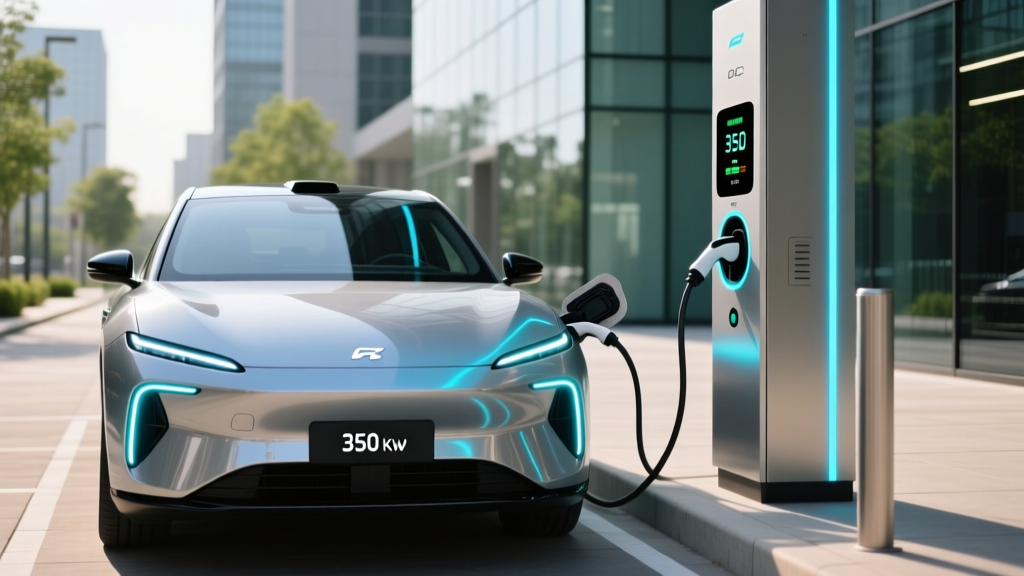
A few realities the table doesn't show: DC fast charging doesn't sustain peak rates. A station advertising 350 kW may only deliver that rate between 10–30% State of Charge (SoC) before tapering. On a 2026 Hyundai Ioniq 5 (84 kWh usable battery, NMC chemistry), you'll see peak ~240 kW early in the curve, tapering to ~100 kW by 60%, and ~50 kW above 80%. The 10–80% time of ~18 minutes assumes optimal battery preconditioning — arrive cold and that stretches to 28+ minutes.
How Much Does It Cost to Install a Home EV Charger?
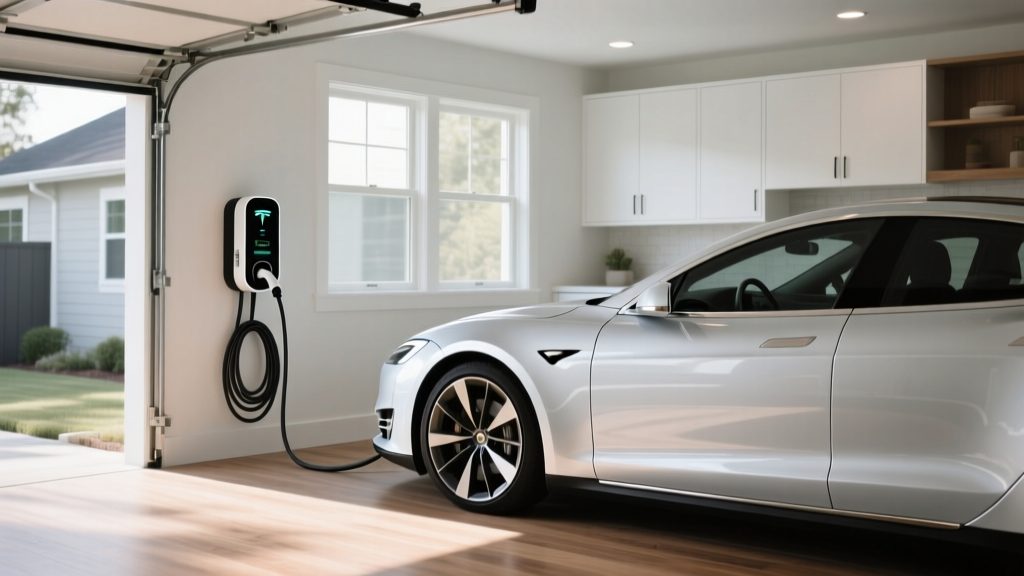
The electric car charging stations cost for home installation breaks into three buckets: the charger hardware, the electrician's labor and materials, and the permit. Here's what 2026 pricing looks like based on typical residential jobs.
| Cost Component | Low End | Typical | High End | Notes |
|---|---|---|---|---|
| Level 2 Charger (Equipment) | $200 | $400–$600 | $750+ | 32A–48A smart chargers; WiFi-enabled models cost more |
| Electrician Labor + Materials | $300 | $600–$1,200 | $2,000+ | Depends on run length, conduit, wall type, circuit distance from panel |
| Permit + Inspection | $50 | $100–$250 | $400 | Varies by municipality; some utilities bundle permit costs |
| Electrical Panel Upgrade (if needed) | $1,500 | $2,000–$3,000 | $4,500+ | Required if existing panel lacks capacity (common in pre-2000 homes with 100A service) |
| Total (No Panel Upgrade) | $550 | $1,100–$2,050 | $3,150 | Most homes with 200A service fall in this range |
| Total (With Panel Upgrade) | $2,050 | $3,100–$5,050 | $7,650+ | Older homes or those adding solar/battery may need this |
What Electrical Upgrades Might I Need?
A 48-amp Level 2 charger requires a dedicated 60-amp circuit (the National Electrical Code requires circuits rated at 125% of continuous load). That means 6-gauge copper wire and a 240V double-pole breaker. Here's when upgrades become necessary:
- 100-amp main panel: Likely needs an upgrade to 200A. A 48A charger draws ~11.5 kW — adding that to existing loads (HVAC, electric oven, dryer) can exceed a 100A panel's safe capacity.
- 200-amp panel with available breaker slots: Usually fine. Your electrician will perform a load calculation per NEC Article 220.
- Long wire runs (100+ feet from panel to garage): May require thicker wire (4-gauge or 3-gauge) to prevent voltage drop, adding $200–$500 in materials.
- No 240V outlet near parking spot: A NEMA 14-50 outlet install runs $300–$800 if the panel has capacity. Hardwired installations are often $100–$200 cheaper and eliminate the outlet as a failure point.
One cost-saving option: a smart load-management device like the Emporia Smart Load Management Kit (~$150) monitors your home's real-time consumption and throttles the charger when other loads spike. This can avoid a panel upgrade entirely, saving $2,000+.
Charging Station Connectors: Which One Fits Your EV?
The connector landscape shifted dramatically in 2024–2025 when nearly every major automaker adopted the North American Charging Standard (NACS), originally developed by Tesla. Here's where things stand for 2026 model-year vehicles.
| Connector | Brands Using It (2026 Models) | Max DC Fast Power | Adapter Needed? |
|---|---|---|---|
| NACS (Tesla/J3400) | Tesla (all), Ford, GM, Rivian, Hyundai, Kia, BMW, Mercedes, Volvo, Polestar, Fisker, Lucid (2025+) | Up to 350 kW (CCS-compatible stations via adapter) | CCS1→NACS adapter for Electrify America, EVgo legacy stalls; included with many new EVs |
| CCS1 (Combined Charging System) | VW, Audi (some), legacy models from pre-2025 | Up to 350 kW | NACS→CCS1 adapter to access Tesla Superchargers ($200–$250) |
| CHAdeMO | Nissan Leaf (discontinued after 2025), Mitsubishi Outlander PHEV (older) | Up to 100 kW (typically 50 kW) | No adapter available; CHAdeMO infrastructure declining rapidly |
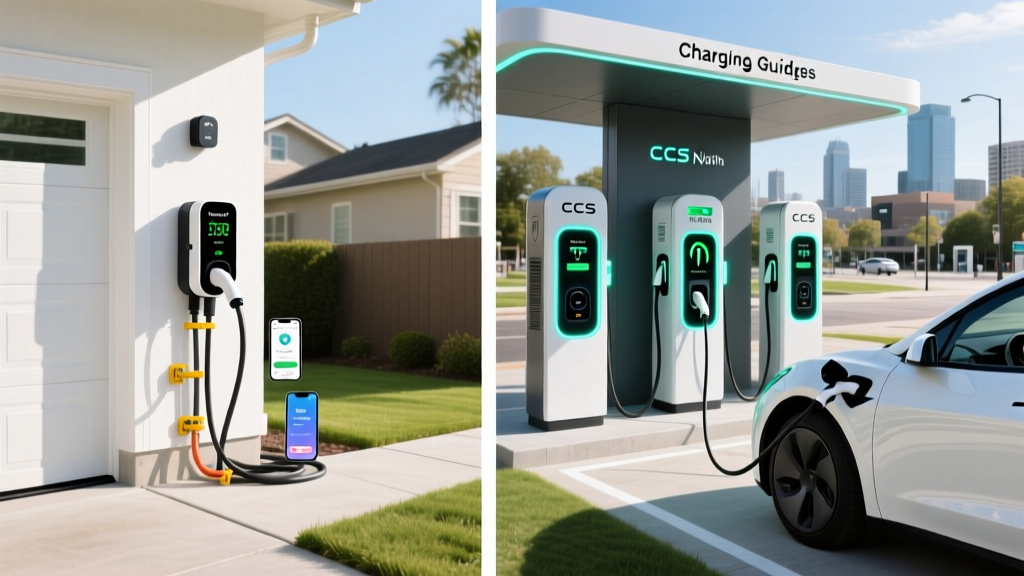
For home Level 2 charging, the connector matters less than you'd think. All Level 2 chargers use a J1772 plug (or NACS, which includes J1772 signaling). Every EV sold in the US can accept Level 2 J1772 charging either natively or with a small adapter that typically ships with the car. The real connector question matters for public DC fast charging on road trips.
How Much Does Charging Cost Per Mile vs. Gasoline?
This is where EV ownership economics get interesting — or disappointing, depending on how and where you charge. Let's run the numbers using real 2026 electricity rates and compare against a 30 MPG gasoline car at $3.40/gallon (national average as of early 2026, per EIA data).
| Charging Scenario | Rate ($/kWh) | Cost to Add 200 Miles* | Cost Per Mile | vs. Gas (30 MPG @ $3.40/gal) |
|---|---|---|---|---|
| Home Level 2 — Off-Peak TOU Rate | $0.08–$0.12 | $5.60–$8.40 | $0.028–$0.042 | 74–62% cheaper |
| Home Level 2 — Standard Residential Rate | $0.14–$0.18 | $9.80–$12.60 | $0.049–$0.063 | 56–44% cheaper |
| Home Level 2 — High-Cost State (CA, HI, MA peak) | $0.25–$0.35 | $17.50–$24.50 | $0.088–$0.123 | 22% cheaper to 9% more expensive |
| Public Level 2 (Workplace, Shopping) | $0.15–$0.30 | $10.50–$21.00 | $0.053–$0.105 | 53–7% cheaper |
| DC Fast Charging (Electrify America, EVgo, Tesla) | $0.32–$0.56 | $22.40–$39.20 | $0.112–$0.196 | 1% cheaper to 73% more expensive |
| Gasoline (30 MPG @ $3.40/gal) | — | $22.67 | $0.113 | Baseline |
*Based on a vehicle averaging 3.5 miles per kWh (286 Wh/mi), typical of a 2026 Tesla Model Y Long Range or Hyundai Ioniq 5. Less efficient EVs like the Ford F-150 Lightning (~2.0 mi/kWh) will cost ~75% more per mile.
The takeaway is unambiguous: home charging at off-peak rates is the cheapest way to drive. If you rely exclusively on DC fast charging, your per-mile cost can exceed gasoline. This is why home charging access is the single most important factor in EV satisfaction.
Best Home EV Chargers for 2026: Equipment Picks
Here are five Level 2 chargers we recommend based on reliability, power output, smart features, and value. All are UL-listed (or equivalent) and support the current connector ecosystem.
ChargePoint Home Flex (NACS or J1772)
- Power Output: Up to 12 kW (50A, adjustable down to 16A)
- Connector: Available in NACS or J1772
- Cable Length: 23 feet
- Smart Features: WiFi, app scheduling, Alexa integration, energy tracking
- Price: ~$550–$650
- Best for: Flexible amperage adjustment for older panels; robust app
Grizzl-E Smart (NACS or J1772)
- Power Output: Up to 11.5 kW (48A)
- Connector: NACS or J1772
- Cable Length: 24 feet
- Smart Features: WiFi, OCPP-compatible, OTA updates, works with ev.energy for utility optimization
- Price: ~$450–$550
- Best for: Outdoor installs (IP67 rated, -40°C tested), Canadian-built durability
Tesla Wall Connector (NACS)
- Power Output: Up to 11.5 kW (48A on 60A circuit)
- Connector: NACS native
- Cable Length: 24 feet
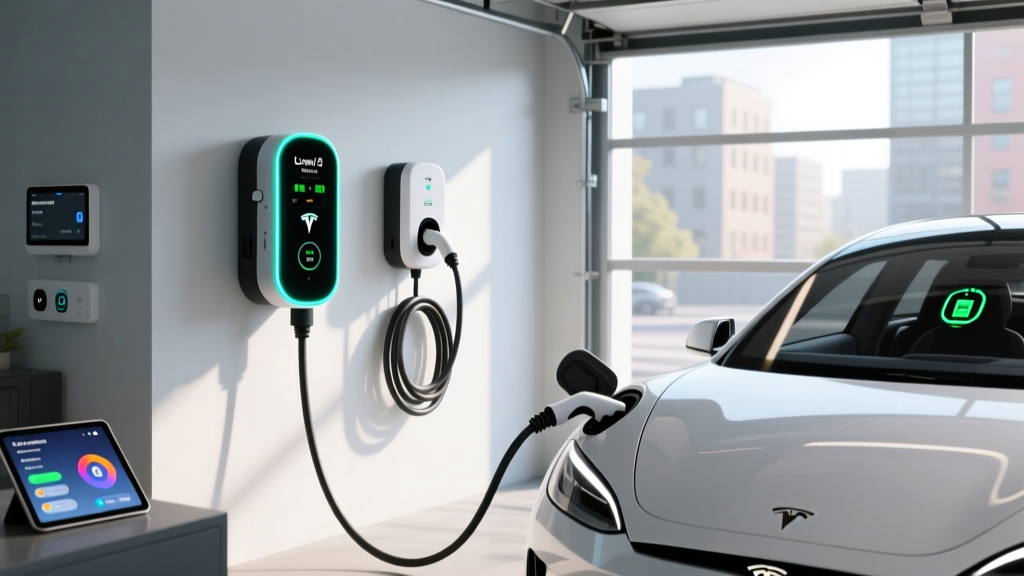
- Smart Features: WiFi, power sharing (link up to 6 units on one circuit), OTA updates, integrated with Tesla app
- Price: ~$420–$475
- Best for: Tesla owners; power sharing for multi-EV households
Emporia Level 2 EV Charger
- Power Output: Up to 11.5 kW (48A)
- Connector: J1772 (NACS adapter available)
- Cable Length: 24 feet
- Smart Features: Real-time energy monitoring via Emporia Vue integration, solar-aware charging, time-of-use scheduling
- Price: ~$350–$400
- Best for: Budget-conscious buyers; solar panel owners wanting excess-solar charging
Ford Charge Station Pro (NACS)
- Power Output: Up to 19.2 kW (80A, requires 100A circuit)
- Connector: NACS
- Cable Length: 25 feet
- Smart Features: Bidirectional V2H (vehicle-to-home backup power with F-150 Lightning), FordPass integration
- Price: ~$1,200–$1,400
- Best for: F-150 Lightning owners wanting home backup power; fastest residential Level 2 available
A note on amperage: your charger's max output is limited by your circuit. A 48A charger needs a 60A circuit. If your panel only has room for a 40A breaker, you'll get 32A (7.7 kW) — still enough for overnight charging on any EV. Don't overspend on a 48A unit if your electrical system caps you at 32A.
Safety, Code, and Installation Best Practices
EV charging is a continuous high-draw load — your charger will run at full amperage for 6–10 hours straight. This is fundamentally different from an oven or dryer that cycles on and off. Here's what proper installation requires:
- Dedicated circuit: Your Level 2 charger must have its own double-pole breaker. Never share a circuit with other appliances.
- GFCI protection: NEC 2023 and later require GFCI protection for all EV charging outlets. Hardwired installations may be exempt in some jurisdictions — check local code. Note: some chargers have built-in GFCI, which can cause nuisance tripping with a breaker-level GFCI. Your electrician will know the right approach.
- Outdoor rating: If your charger is outside, it must be rated at least IP55 (rain-resistant) or IP67 (submersion-proof). Look for NEMA 4 enclosure ratings.
- Wire gauge: 6 AWG copper for 48A circuits; 4 AWG for 60A+ circuits or long runs. Aluminum wire is cheaper but requires larger gauge.
- Permit and inspection: Most jurisdictions require a permit for any new 240V circuit. Skipping this risks insurance denial if a fire occurs and may flag during a home sale inspection.
Always hire a licensed electrician — ideally one who has completed EV-specific training (many utilities maintain lists of certified EV installer partners). Get at least two quotes, as pricing varies by 50%+ between contractors in the same market.
Federal and Utility Incentives That Lower Your Install Cost
The IRS §30C Alternative Fuel Vehicle Refueling Property Credit offers up to $1,000 (30% of cost) for home EV charger installation, including equipment and labor. Key rules for 2026:
- Maximum credit: $1,000 per property
- Must be installed at your primary residence
- Property must be in an eligible census tract (non-urban areas qualify; check the IRS Eligibility Mapper)
- Covers both equipment and installation labor
- Claimed on IRS Form 8911 with your annual tax return
Beyond the federal credit, many utilities offer rebates of $250–$1,000 for installing a smart Level 2 charger, especially if you enroll in a time-of-use (TOU) rate plan. Check your utility's EV program page — some (like PG&E, Xcel Energy, and Con Edison) offer rebates that stack with the federal credit.
Frequently Asked Questions
How much does it cost to install a home EV charger?
A typical Level 2 home installation costs $1,100–$2,050 including a $400–$600 smart charger, $600–$1,200 in electrician labor and materials, and $100–$250 in permits. If your home needs an electrical panel upgrade (common in pre-2000 homes with 100A service), add $2,000–$3,000. The IRS §30C credit can offset up to $1,000 of the total.
How fast will each charging level add range?
Level 1 (120V) adds 3–5 miles of range per hour — enough for PHEVs with small batteries but impractical for full EVs. Level 2 (240V, 48A) adds roughly 30–40 miles per hour for most EVs, fully recharging overnight. DC fast charging adds 150–1,200+ miles per hour at peak rates, with typical 10–80% sessions taking 15–45 minutes depending on the vehicle and station power.
Which connector is compatible with my EV?
For 2026 models: Tesla, Ford, GM, Hyundai, Kia, Rivian, BMW, and most others now use NACS. Volkswagen and some older models still use CCS1. The Nissan Leaf (now discontinued) used CHAdeMO. For home Level 2 charging, all EVs accept J1772 or NACS (with adapter). For DC fast charging on road trips, NACS gives you access to Tesla Superchargers — the largest and most reliable network — plus non-Tesla networks via adapter.
How much does charging cost per mile vs. gas?
Charging at home on off-peak electricity ($0.08–$0.12/kWh) costs $0.03–$0.04 per mile — roughly 65–75% cheaper than gasoline at $3.40/gallon in a 30 MPG car ($0.113/mile). Standard home rates ($0.14–$0.18/kWh) still save 44–56%. However, exclusive DC fast charging at $0.35–$0.56/kWh can cost $0.12–$0.20 per mile, matching or exceeding gasoline. Home charging access is the key variable.
What electrical upgrades might I need for a home charger?
If your home has a 200-amp electrical panel with available breaker slots, you likely need no upgrades beyond a new 240V circuit. If you have a 100-amp panel (common in homes built before 2000), you'll likely need a panel upgrade to 200A, costing $2,000–$3,000. A smart load-management device (~$150) can sometimes avoid this by dynamically limiting charger draw when other appliances are running. Your electrician will perform a NEC Article 220 load calculation to determine what's required.
Is it cheaper to charge at home or use public stations?
Home charging is almost always cheaper. Off-peak home rates run $0.08–$0.12/kWh, while public DC fast chargers average $0.35–$0.56/kWh — a 3–5x markup. Even public Level 2 chargers at $0.15–$0.30/kWh cost more than home. The exception is free workplace or destination charging, which some employers and retailers still offer.
Can I install a Level 2 charger myself?
While a qualified DIYer could physically mount a charger, the 240V circuit installation should be done by a licensed electrician. Most jurisdictions require a permit and inspection for new 240V circuits. Unpermitted work can void your homeowner's insurance coverage in the event of an electrical fire and may cause issues during a home sale. Budget $600–$1,200 for professional installation — it's not worth the risk to cut corners on a continuous high-draw circuit.
Sources: fueleconomy.gov (EPA efficiency data), IRS §30C Refueling Property Credit, U.S. Energy Information Administration (fuel pricing), manufacturer specification sheets.