What You Need to Know Before Charging the Polaris Electric Ranger
The Polaris Electric Ranger (officially the Ranger XP Kinetic) is a purpose-built electric utility vehicle with a 149 kWh lithium-ion battery pack producing 110 hp and 140 lb-ft of instant torque. With an EPA-estimated range of up to 110 miles in its Premium trim (and up to 45 miles on the Ultimate trim's smaller 29.8 kWh pack), the Kinetic is designed for work-site loops, trail riding, and farm use — not highway commuting. That use case fundamentally shapes how you should think about charging.
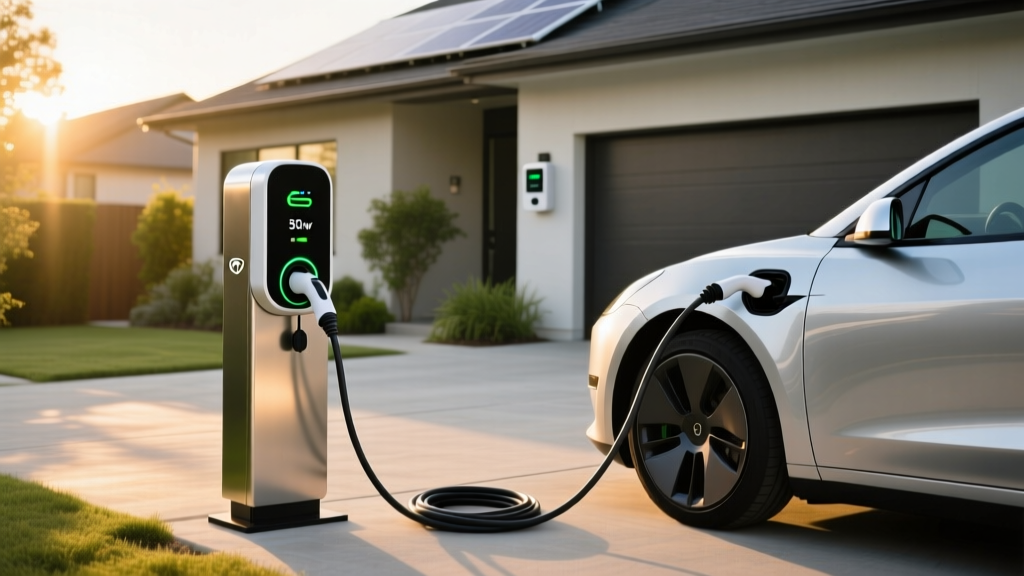
Unlike passenger EVs that rely heavily on DC fast-charging networks, the Ranger XP Kinetic is built around Level 1 and Level 2 AC charging. There is no DC fast-charge port on this vehicle. For most owners, a dedicated 240V Level 2 setup at the garage or barn is the practical ceiling — and it's more than sufficient given the Kinetic's typical daily duty cycle.
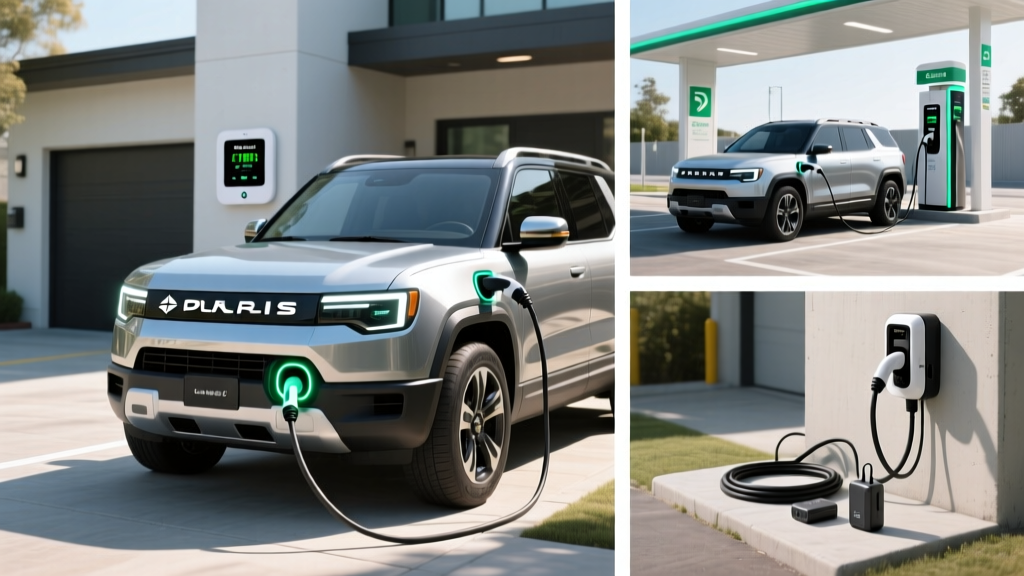
This guide covers every charging scenario for the Polaris Electric Ranger, from plugging into a standard 120V outlet to installing a hardwired Level 2 station, plus real cost-per-mile comparisons against the gas-powered Ranger XP 1000.
kW (kilowatts) measures charging power — the rate at which energy flows into the battery. Think of it as water pressure from a hose.
kWh (kilowatt-hours) measures battery energy capacity — how much total energy the pack holds. Think of it as the size of the bucket.
The Ranger XP Kinetic Premium has a 149 kWh battery (bucket size). A 7.2 kW Level 2 charger (water pressure) fills that bucket at a rate of roughly 7.2 kWh per hour.
Charging Levels Explained: Speeds and Range Added per Hour
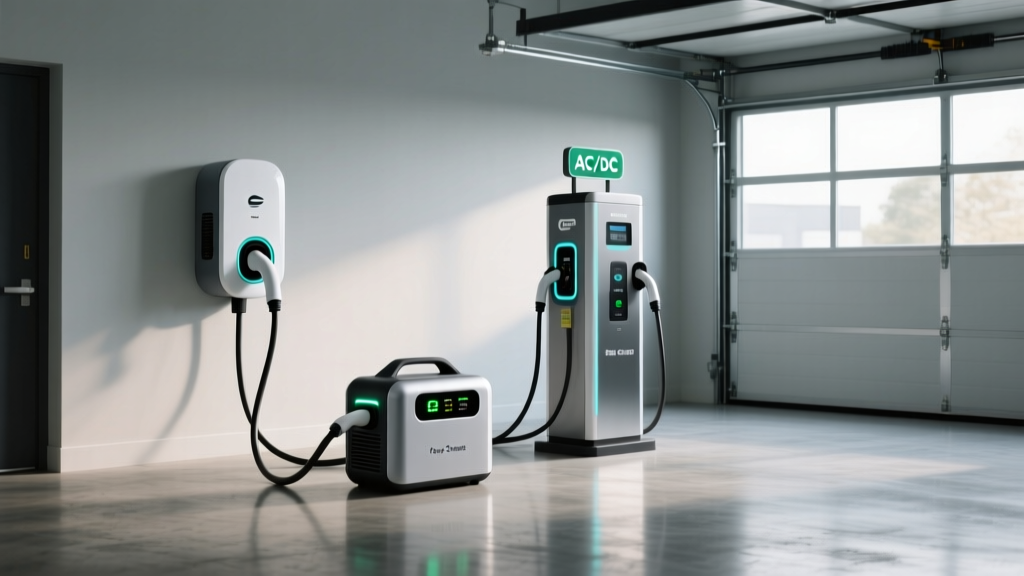
The Ranger XP Kinetic supports AC charging only. Here's what each level delivers in real-world terms for the 149 kWh Premium battery:
| Level | Voltage / Amperage | Power (kW) | Range Added per Hour | Full Charge Time (149 kWh) |
|---|---|---|---|---|
| Level 1 (Standard Outlet) | 120V / 12A | ~1.4 kW | ~1–2 miles | ~100+ hours (not practical for full charge) |
| Level 2 (240V Home/Barn) | 240V / 30–40A | ~7.2 kW | ~6–8 miles | ~20–22 hours |
| Level 2 (240V / 48A max) | 240V / 48A | ~11.5 kW | ~9–11 miles | ~13–15 hours |
| DC Fast Charging | N/A | N/A | N/A | Not supported on Ranger XP Kinetic |
Real-world context: Most Ranger Kinetic owners drive 20–40 miles per day on a work site or trail. A 7.2 kW Level 2 charger replenishes that daily use in 3–6 hours — easily overnight. The 149 kWh battery is massive for a UTV, so full 0–100% charges are rare and unnecessary for daily operations. Polaris recommends charging to 80–90% for daily use to preserve long-term battery health, reserving 100% charges for days when maximum range is needed.
Home Charger Installation: Electrical Requirements and Costs
Installing a Level 2 charger for the Ranger XP Kinetic at your home, barn, or workshop requires a dedicated 240V circuit — the same voltage your electric dryer or oven uses. Here's what the installation involves and what it costs.
Electrical Requirements
- Circuit: Dedicated 240V circuit, 40A minimum (50A recommended for future-proofing)
- Breaker: 40A or 50A double-pole breaker in your main panel
- Wire gauge: 6 AWG copper for 50A; 8 AWG for 40A
- Outlet type: NEMA 14-50 (if using a plug-in charger) or hardwired connection
- Panel capacity: Your electrical panel must have at least 50A of spare capacity. Older homes with 100A total service may need a panel upgrade to 200A.
Installation Cost Breakdown
| Component | Cost Range | Notes |
|---|---|---|
| Level 2 EVSE equipment (charger unit) | $350 – $750 | 40A–48A smart chargers; see equipment picks below |
| Electrician labor (2–4 hours) | $400 – $1,200 | Varies by region, run length, and wall type |
| Materials (conduit, wire, breaker) | $100 – $350 | Longer wire runs and outdoor conduit increase cost |
| Permit and inspection | $50 – $200 | Required in most jurisdictions; varies by municipality |
| Electrical panel upgrade (if needed) | $1,500 – $3,500 | Only if panel lacks capacity; 100A → 200A upgrade |
| Total (no panel upgrade) | $900 – $2,500 | Most common scenario for modern homes |
| Total (with panel upgrade) | $2,400 – $6,000 | Older homes with 100A service |
Panel upgrade reality check: If your home or shop was built before 1990 and still has a 100A panel, adding a 50A dedicated circuit for an EV charger may push total load beyond safe capacity. A licensed electrician will perform a load calculation per NEC Article 220 to determine if an upgrade is required. Budget for this possibility — it's the single largest variable in home charging installation.
Always hire a licensed electrician and pull a permit. Unpermitted electrical work can void your homeowner's insurance and create fire hazards. The National Electrical Contractors Association maintains a directory of licensed professionals.
Connector Compatibility: What Plug Does the Polaris Electric Ranger Use?
The Polaris Ranger XP Kinetic uses a J1772 connector for AC charging — the same standard connector used by virtually every non-Tesla EV sold in North America. This means any Level 2 charging station with a J1772 plug (which is nearly all of them) will work directly with the Kinetic.
| Connector Type | Compatible? | Notes |
|---|---|---|
| J1772 (standard AC) | ✅ Yes — native | Direct plug-in; no adapter needed |
| NACS (Tesla) | ❌ No | Not applicable; Kinetic has no DC fast-charge capability |
| CCS1 (Combo) | ❌ No | DC fast-charge standard; Kinetic does not support DC charging |
| CHAdeMO | ❌ No | Legacy DC fast-charge; not supported |
| NEMA 14-50 (240V outlet) | ✅ Yes (via mobile charger) | Use a portable Level 2 EVSE with NEMA 14-50 plug |
Practical takeaway: You don't need to worry about the ongoing NACS vs. CCS connector war. The Kinetic operates entirely in the AC charging world with the universal J1772 standard. Any J1772-equipped Level 2 charger — whether at home, at a campground, or at a public charging station — will connect directly.
For portable or temporary setups (job sites, remote properties), a mobile Level 2 EVSE with a NEMA 14-50 plug and J1772 connector is the most flexible option. These units plug into a 240V dryer-style outlet and deliver 32–40A without requiring a hardwired installation.
Cost to Charge: Per-Mile Cost vs. Gas Ranger
One of the strongest ownership arguments for the Ranger XP Kinetic is fuel cost savings. Here's how charging costs compare to gasoline across different scenarios, based on the 149 kWh Premium battery and EPA-estimated efficiency.
| Scenario | Rate | Cost per Full Charge / Fill-Up | Cost per Mile |
|---|---|---|---|
| Home charging (off-peak utility rate) | $0.08–$0.12/kWh | $11.92 – $17.88 | $0.11 – $0.16 |
| Home charging (standard residential rate) | $0.14–$0.18/kWh | $20.86 – $26.82 | $0.19 – $0.25 |
| Public Level 2 (commercial rate) | $0.25–$0.40/kWh | $37.25 – $59.60 | $0.34 – $0.54 |
| Gas Ranger XP 1000 (premium fuel, 25 mpg) | $3.80/gallon | ~$19.00 (5-gal tank) | $0.15 – $0.20 (varies by load/terrain) |
Key insight: At home off-peak rates, the Kinetic costs roughly $0.11–$0.16 per mile to "fuel" — comparable to or slightly cheaper than the gas Ranger under light-load conditions. The real savings come from the Kinetic's near-zero maintenance costs: no oil changes, no spark plugs, no air filters, no transmission fluid, and dramatically reduced brake wear thanks to regenerative braking.
For a utility vehicle used 5,000 miles per year, home charging at $0.14/kWh costs roughly $980 annually in electricity. The gas Ranger XP 1000 at 25 mpg and $3.80/gallon costs roughly $760 in fuel — but add $300–$500 per year in routine maintenance (oil, filters, belts) and the Kinetic's total operating cost pulls ahead.
Note: Public Level 2 charging is significantly more expensive and rarely practical for a UTV. The Kinetic's value proposition is built around home and job-site charging. According to fueleconomy.gov, charging at home is 2–5x cheaper than public charging on a per-kWh basis.
Recommended Level 2 Chargers for the Polaris Electric Ranger
Since the Kinetic uses a standard J1772 connector and charges exclusively on AC, you have a wide selection of compatible Level 2 chargers. Here are three proven units suited to garage, barn, or outdoor installation:
ChargePoint Home Flex
- Power Output: Up to 11.5 kW (48A at 240V)
- Connector: J1772 (25-foot cable)
- Installation: Hardwired or NEMA 14-50 plug
- Smart Features: Wi-Fi, app scheduling, Alexa integration, energy tracking
- Outdoor Rating: NEMA 4 (weatherproof)
- Price: ~$699
Best for: Maximum charging speed on the Kinetic's large battery. The 48A output cuts full-charge time to ~13 hours.
Emporia Vue Level 2 EV Charger
- Power Output: Up to 11.5 kW (48A at 240V)
- Connector: J1772 (24-foot cable)
- Installation: Hardwired or NEMA 14-50
- Smart Features: Wi-Fi, app control, solar integration, load management
- Outdoor Rating: NEMA 4
- Price: ~$399
Best for: Budget-conscious buyers who still want 48A output and smart scheduling. Excellent value.
Grizzl-E Smart
- Power Output: Up to 10 kW (40A at 240V)
- Connector: J1772 (24-foot cable)
- Installation: NEMA 14-50 plug or hardwired
- Smart Features: Wi-Fi, OCPP protocol, adjustable amperage
- Outdoor Rating: IP67 (fully sealed, extreme weather rated)
- Price: ~$499
Best for: Outdoor barn or job-site installations in harsh climates. Built in Canada for extreme cold and moisture.
Selection tip: For the Kinetic's 149 kWh battery, prioritize 48A chargers if your electrical panel supports a 60A circuit. The difference between 40A (9.6 kW) and 48A (11.5 kW) shaves 2–3 hours off a full charge — meaningful when you need the vehicle back in service quickly. For the 29.8 kWh Ultimate trim, even a 32A charger delivers a full charge in under 8 hours.
Safety, Code, and Outdoor Installation Considerations
Whether you're installing in a finished garage, a pole barn, or on an exterior wall, electrical safety and code compliance are non-negotiable. Here's what the National Electrical Code (NEC) requires for EV charging installations:
- Dedicated circuit: Your Level 2 charger must be on its own dedicated breaker — not shared with other outlets or appliances. This prevents overloading and tripped breakers.
- GFCI protection: NEC 2020 and later requires GFCI (ground-fault circuit interrupter) protection for all EV charging outlets. Hardwired chargers may have built-in GFCI; plug-in units require a GFCI breaker.
- Outdoor rating: Any charger installed outdoors must carry a NEMA 4 or IP65+ rating to withstand rain, dust, and temperature extremes. All three chargers recommended above meet this standard.
- Cable management: Use a holster or cable organizer to keep the charging cable off the ground. This prevents damage from vehicles, moisture, and trip hazards.
- Strain relief: For plug-in installations, ensure the NEMA 14-50 outlet is oriented correctly and the plug isn't bearing the weight of a heavy cable. Some jurisdictions now require outlet brackets for EV charging receptacles.
- Ventilation: While EV chargers don't produce exhaust, enclosed installations (small sheds, tight garages) should have adequate airflow to prevent charger overheating during sustained high-power sessions.
Remote property note: Many Ranger Kinetic owners use the vehicle on rural properties, farms, or job sites without standard residential electrical service. If you're installing at a barn or workshop fed by a sub-panel, confirm that the sub-panel has sufficient capacity (at least 50A spare) and that the feeder wire from the main panel is sized correctly. An electrician can assess this during a site visit.
Frequently Asked Questions
How much does it cost to install a home charger for the Polaris Electric Ranger?
Expect $900–$2,500 for a standard installation (equipment, electrician, materials, and permit) if your electrical panel has sufficient capacity. Homes needing a 200A panel upgrade should budget $2,400–$6,000 total. The charger unit itself costs $350–$750 for a quality 40A–48A smart unit.
How fast will each charging level add range to the Kinetic?
Level 1 (120V standard outlet) adds roughly 1–2 miles of range per hour — useful only for trickle-maintaining the battery between uses. Level 2 (240V) at 40A adds approximately 6–8 miles per hour, and at 48A adds roughly 9–11 miles per hour. For a typical 30-mile work day, a 48A Level 2 charger replenishes the battery in about 3–4 hours.
Can I charge the Polaris Ranger XP Kinetic at a Tesla Supercharger?
No. The Kinetic does not support DC fast charging of any kind — not Tesla/NACS, not CCS, not CHAdeMO. It charges exclusively via AC using the J1772 connector. You can charge at any public Level 2 station with a J1772 plug, but DC fast-charging stations are not compatible.
What electrical upgrades might I need for a Level 2 charger?
Most modern homes with 200A electrical service need only a new 50A double-pole breaker and a dedicated circuit — no panel upgrade required. Older homes with 100A service or homes with high existing loads (electric heat, large workshops) may need a panel upgrade to 200A or 400A. A licensed electrician will perform an NEC Article 220 load calculation to determine your specific needs.
Is the Polaris Electric Ranger eligible for the federal EV tax credit?
The §30D federal tax credit applies to qualified plug-in electric vehicles, but eligibility depends on MSRP caps, buyer income limits, battery sourcing requirements, and whether the vehicle qualifies as a "highway" vehicle under IRS rules. The Ranger XP Kinetic is classified as an off-road utility vehicle, which may affect eligibility. Consult IRS guidance on clean vehicle credits and a tax professional to determine whether the Kinetic qualifies in your specific situation. Do not assume a flat $7,500 credit applies.
How much does charging the Kinetic cost compared to fueling a gas Ranger?
At home off-peak rates ($0.08–$0.12/kWh), the Kinetic costs $0.11–$0.16 per mile to charge. The gas Ranger XP 1000 costs roughly $0.15–$0.20 per mile in fuel alone, plus $300–$500 annually in maintenance the Kinetic doesn't require. Over 5 years at 5,000 miles/year, the Kinetic can save $1,500–$3,000 in combined fuel and maintenance costs, partially offsetting its higher purchase price.
Does cold weather affect the Kinetic's range and charging speed?
Yes. Like all lithium-ion battery packs, the Kinetic's range drops 15–30% in freezing temperatures. A 110-mile EPA range may shrink to 75–90 miles in sub-30°F conditions. Charging speed also slows in cold weather because the battery management system limits charge rate to protect the cells. If possible, charge the Kinetic in a heated garage during winter months for faster charging and better range retention.
Sources: Polaris Ranger XP Kinetic specifications, fueleconomy.gov, IRS §30D Clean Vehicle Credits.