The Great EV Charging Debate: Hardwired vs. Plug-In
As electric vehicle adoption accelerates, homeowners are rushing to upgrade their garages with Level 2 charging stations. However, a massive misconception plagues the EV community: the belief that a plug-in NEMA 14-50 receptacle is universally superior, cheaper, and more convenient than a hardwired connection. At AutoEdgeView, we frequently see DIYers and even some licensed electricians make critical errors based on outdated electrical myths. According to the Department of Energy's home charging guidelines, proper infrastructure is the backbone of EV ownership, yet the nuances of the National Electrical Code (NEC) are often ignored until a breaker trips or a receptacle melts.
In this comprehensive myth-busting guide, we will dismantle the most common falsehoods surrounding hardwired versus plug-in EV charger wiring. We will examine the hidden costs of plug-in setups, the thermal realities of continuous loads, and the specific NEC code requirements that dictate your installation. Whether you are installing a Tesla Wall Connector, a ChargePoint Home Flex, or an Emporia Vue, understanding these wiring truths will save you money, prevent electrical fires, and ensure your EV charges at maximum efficiency.
Myth 1: Plug-In (NEMA 14-50) Installations Are Always Cheaper
The Myth: Buying a plug-in EV charger and having an electrician install a $15 NEMA 14-50 outlet is significantly cheaper than hardwiring the unit directly to the electrical panel.
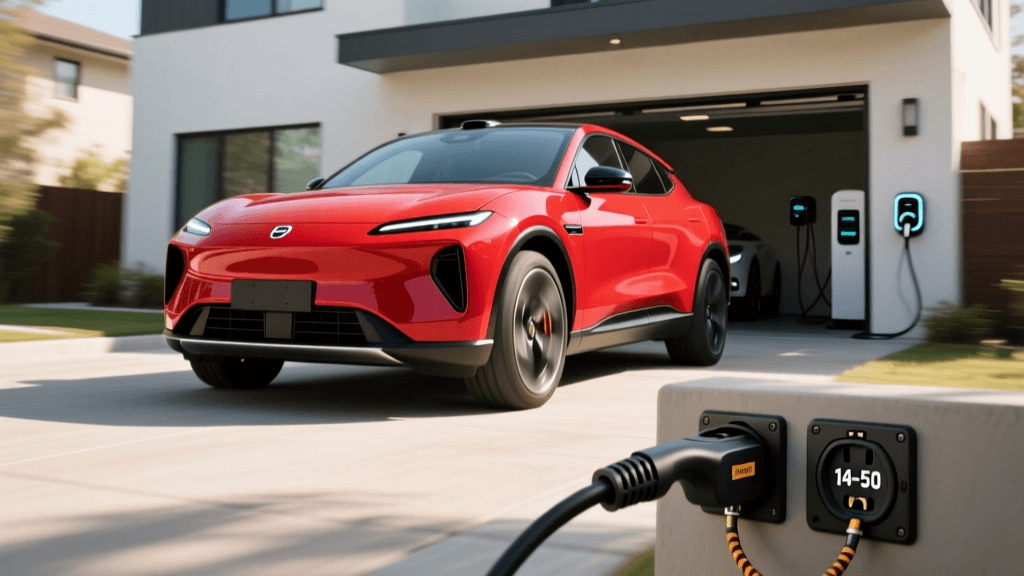
The Reality: This is perhaps the most expensive myth in the EV space. While a standard, residential-grade 14-50 receptacle from a big-box hardware store might cost $15, it is fundamentally unsafe for EV charging. EV charging is classified as a 'continuous load' under NEC Article 625, meaning it draws maximum current for three hours or more. Standard receptacles are designed for intermittent loads (like a stove or dryer) and will overheat, warp, and potentially catch fire under the sustained thermal stress of a 40-amp EV draw.
To do a plug-in installation safely, you must purchase an industrial-grade receptacle, such as the Hubbell 9450R or Bryant 9450FR, which feature heavy-duty internal contacts and superior heat dissipation. These receptacles typically cost between $100 and $130. Furthermore, modern NEC codes (specifically the 2017 and 2020 updates) require Ground Fault Circuit Interrupter (GFCI) protection for all 14-50 receptacles. A 50-amp double-pole GFCI breaker costs anywhere from $100 to $160, compared to $15 for a standard breaker. When you factor in the premium receptacle, the GFCI breaker, and the larger junction box required to house the stiff 6 AWG wire, a safe plug-in installation often costs $200 to $300 more in materials alone than a hardwired setup.
Myth 2: GFCI Breakers Are Mandatory and Harmless
The Myth: GFCI breakers are just a minor code requirement that won't affect your daily charging experience.
The Reality: Nuisance tripping is the bane of plug-in EV charger owners. EVs and their charging cables already contain sophisticated internal ground-fault protection. When you add a 50-amp GFCI breaker at the panel, you create a 'double GFCI' scenario. Minor, harmless ground leakage currents that naturally occur in EV battery management systems or during damp weather can trick the hyper-sensitive panel breaker into tripping, leaving you with an uncharged car in the morning. By choosing a hardwired installation, the NEC generally exempts the circuit from requiring a GFCI breaker at the panel (as the hardwired EVSE provides the necessary ground-fault protection internally). This not only saves you the $150 cost of the GFCI breaker but virtually eliminates nuisance tripping.
Myth 3: Hardwired Chargers Are 'Permanent' and Hurt Resale Value
The Myth: If you hardwire your Tesla Wall Connector or Enel X JuiceBox, you are permanently altering your home, and future buyers won't want your specific brand of charger.
The Reality: Professional electricians do not simply bury wires inside drywall for hardwired EV chargers. A proper hardwired installation utilizes a flush-mounted junction box or a surface-mounted conduit body with a flexible 'whip' (a short conduit encasing the wires) connecting to the charger. If you decide to sell your home or take your charger with you, an electrician can disconnect the whip in five minutes, cap the wires in the junction box, and install a blank cover plate for less than $50. Conversely, leaving behind a high-amperage hardwired junction box is actually a massive selling point for tech-savvy homebuyers, as it signals that the garage is pre-wired and ready for any high-speed Level 2 charger on the market.
Myth 4: You Can Use an Existing Dryer Outlet for EV Charging
The Myth: My garage already has a NEMA 10-30 or an old NEMA 14-50 outlet from a previous workshop tool. I can just plug my EV in.
The Reality: Plugging into an aging, unverified receptacle is a leading cause of residential electrical fires involving EVs. Older receptacles suffer from contact fatigue; the internal metal prongs lose their tension over time, creating electrical resistance. Resistance generates heat. The National Fire Protection Association (NFPA) 70 code strictly dictates that continuous loads must not exceed 80% of the circuit's rating. An old dryer outlet may be rated for 30 amps, but a continuous EV draw will push it to its absolute thermal limits. If you must use an existing outlet, it must be replaced with a new, industrial-grade receptacle, and the wiring must be inspected for degradation.
Hardwired vs. Plug-In: The Data Breakdown
To visualize the differences, refer to the comparison chart below based on standard residential electrical configurations.
| Feature | Hardwired EVSE | Plug-In (NEMA 14-50) |
|---|---|---|
| Maximum Continuous Amperage | 48A to 80A+ (Requires 60A-100A breaker) | 40A (Limited to 50A breaker / 80% rule) |
| GFCI Breaker Required at Panel? | No (EVSE handles ground fault) | Yes (Per NEC 2017/2020 625.54) |
| Material Cost (Breaker + Receptacle) | ~$15 (Standard Breaker) | ~$250+ (GFCI Breaker + Hubbell Receptacle) |
| Nuisance Tripping Risk | Extremely Low | Moderate to High (Double GFCI issue) |
| Portability | Low (Requires electrician to move) | High (Unplug and take with you) |
Common Wiring Mistakes That Cause Fires and Failures
Whether you choose hardwired or plug-in, the physical wiring process is where the most dangerous mistakes occur. If you are hiring an electrician or pulling a permit for a DIY install, watch out for these critical errors:
- Ignoring the 125% Continuous Load Rule: Under NEC Article 210.20, you cannot run a 50-amp continuous load on a 50-amp breaker. You must multiply the continuous load by 1.25. Therefore, a 40-amp plug-in charger requires a 50-amp breaker. A 48-amp hardwired charger requires a 60-amp breaker. Sizing the breaker exactly to the max draw is a code violation and a fire hazard.
- Failing to Use a Torque Screwdriver: NEC 110.14(D) requires that terminals be tightened to the manufacturer's specified torque. EV chargers draw massive current; a loose wire connection at the breaker or the charger lug will arc, overheat, and melt the terminal block. Hand-tightening is no longer legally or physically sufficient.
- Using the Wrong Wire Type: While NM-B (Romex) cable is common in residential walls, many jurisdictions require THHN/THWN individual wires inside metallic or PVC conduit for garage EV runs due to the higher heat ratings and physical protection. Furthermore, using 6 AWG copper wire on a 60-amp breaker is a violation; 6 AWG is generally rated for 55 amps in this context, requiring you to upsize to 4 AWG copper for a 48-amp hardwired charger on a 60-amp breaker.
The Verdict: Which Should You Choose?
If you are purchasing a charger capable of 48 amps or higher (like the Tesla Wall Connector or ChargePoint Home Flex configured for 60A circuits), hardwiring is the only logical choice. NEMA 14-50 receptacles are physically limited to 50-amp breakers, capping your continuous draw at 40 amps. Furthermore, the ENERGY STAR EV Charger specifications highlight that higher amperage units operate more efficiently when hardwired, bypassing the resistance and thermal bottlenecks of a physical plug connection.
However, if you are renting a home, plan to move within a year, or are installing a portable 'travel charger' setup in a detached garage where you only need 32 amps of continuous charging, a plug-in NEMA 14-50 setup is viable. Just remember to budget for the industrial-grade Hubbell receptacle and the expensive GFCI breaker. By busting these common myths and adhering strictly to NEC code, you will ensure your EV charging experience is safe, fast, and entirely hassle-free.