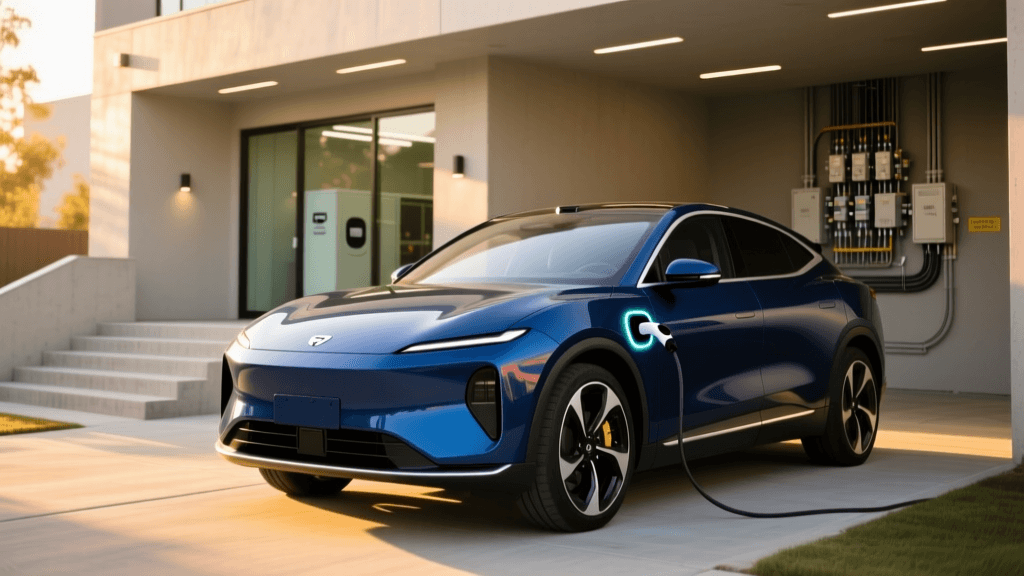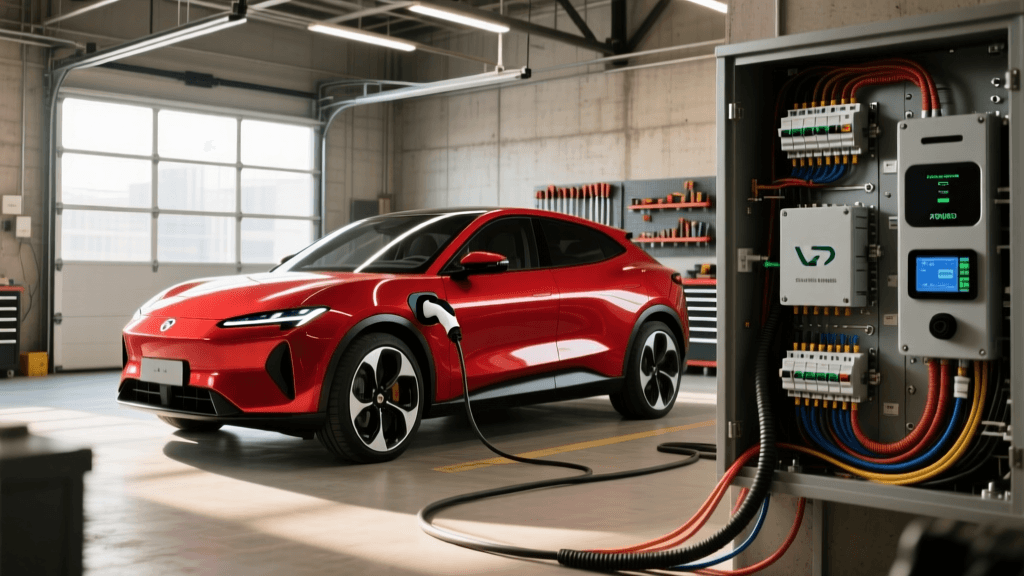
The Great Debate: Hardwired vs. Plug-In EV Chargers
When it comes to setting up Level 2 home charging, EV owners quickly face a critical decision: should you hardwire your EV charger directly into your electrical panel, or install a NEMA 14-50 receptacle for a plug-in setup? The internet is flooded with conflicting advice, outdated forum posts, and dangerous DIY shortcuts. According to the U.S. Department of Energy, proper home charging infrastructure is essential for maximizing battery health and ensuring household safety. Yet, many buyers fall victim to pervasive myths that lead to inefficient setups, nuisance tripping, or even severe fire hazards.
In this comprehensive guide, we are busting the most common myths surrounding hardwired versus plug-in EV charger wiring. We will also expose the frequent installation mistakes that violate the National Electrical Code (NEC) and cost homeowners thousands of dollars in remediation. Whether you are installing a Tesla Wall Connector, a ChargePoint Home Flex, or an Enel X JuiceBox, understanding the electrical realities of your wiring choice is non-negotiable.
Myth #1: A Standard NEMA 14-50 Outlet is Perfect for Daily EV Charging
The Myth: A NEMA 14-50 plug-in outlet is just as safe and durable as a hardwired connection for daily, high-amperage EV charging.
The Reality: This is perhaps the most dangerous myth in the EV community. The NEMA 14-50 receptacle was originally designed for high-draw, intermittent appliances like electric ranges and RV hookups. An electric range cycles on and off, rarely drawing maximum current for hours on end. In contrast, EV charging is classified by the NEC as a continuous load, meaning it draws maximum current for three hours or more—often taking 8 to 12 hours to fill a depleted battery.
When a standard, big-box-store NEMA 14-50 receptacle is subjected to continuous 40-amp or 50-amp loads for hours, the internal metal contacts experience thermal expansion and contraction. Over months of daily use, this phenomenon, known as 'thermal creep,' causes the contacts to loosen. The resulting increased electrical resistance generates immense heat, which can melt the receptacle faceplate and ignite a structural fire. The National Fire Protection Association (NFPA) strongly emphasizes adhering to strict EV charging protocols to prevent residential electrical fires. If you must use a plug-in setup, electricians universally recommend purchasing an industrial-grade, high-tension receptacle (such as those made by Hubbell or Bryant) specifically rated for continuous EV loads, rather than a standard residential outlet.
Myth #2: Hardwired Installations Are Always More Expensive
The Myth: Hardwiring an EV charger costs significantly more because it requires more labor and permanent modifications to your home.
The Reality: While hardwiring requires an electrician to make permanent connections, it is often cheaper overall than a code-compliant plug-in installation. To understand why, we must look at the hidden costs of plug-in setups mandated by recent NEC updates.
Under the 2017 and 2020 NEC updates, any new 14-50 receptacle installed in a garage or outdoors requires a Ground Fault Circuit Interrupter (GFCI) breaker. A standard 50-amp dual-pole breaker costs around $15 to $30. However, a 50-amp GFCI breaker from a reputable brand like Square D or Eaton can cost anywhere from $150 to $300 on its own. Furthermore, you must purchase the $80 industrial-grade receptacle mentioned earlier to ensure safety. Conversely, most modern hardwired EV chargers (like the Tesla Wall Connector) have built-in GFCI protection integrated into the unit's internal circuitry. This means the electrician only needs to install a standard, non-GFCI 50-amp breaker, entirely bypassing the expensive GFCI breaker requirement and the cost of a heavy-duty receptacle.
Common Mistake #1: Repurposing an Old Dryer Outlet
One of the most frequent and hazardous mistakes new EV owners make is attempting to plug their new EV charger into an existing laundry room or garage dryer outlet. Older homes often feature NEMA 10-30 or NEMA 14-30 receptacles, which are wired to 30-amp circuits using 10-gauge wire.
Many portable EV chargers and aftermarket adapter cords claim to support 30-amp dryer outlets. However, applying the NEC 80% continuous load rule (which we will detail below), a 30-amp circuit can only safely deliver 24 amps of continuous power to your vehicle. If a user overrides the software or uses a poorly designed adapter that attempts to pull 32 amps or 40 amps through a 30-amp circuit and 10-gauge wire, the wire will overheat inside the walls, bypassing the breaker's trip threshold and creating a severe fire risk. Never adapt a 50-amp EVSE plug to a 30-amp dryer outlet without explicit, software-limited current controls approved by a licensed electrician.
Common Mistake #2: Ignoring the 80% Continuous Load Rule
Both DIYers and some general contractors frequently misunderstand the National Electrical Code (NEC) Article 625, which governs EV charging systems. The most common violation is sizing the breaker exactly to the maximum output of the charger. For example, if an EV charger is capable of delivering 50 amps of continuous power, an uninformed installer might wire it to a 50-amp breaker.
This is a direct code violation. The NEC mandates that continuous loads must not exceed 80% of the circuit breaker's rated capacity. Therefore, a 50-amp breaker can only safely support a maximum continuous load of 40 amps. If you want to utilize a full 48-amp charging speed (common with the Tesla Wall Connector or ChargePoint Home Flex), you must install a 60-amp breaker and use wire rated for 60 amps (such as 4 AWG copper or 2 AWG aluminum). Failing to adhere to the 80% rule will result in failed municipal inspections and potential voided home insurance policies in the event of an electrical fire.
The GFCI Nuisance Tripping Phenomenon
Another major headache associated with plug-in NEMA 14-50 installations is 'nuisance tripping.' EV chargers already contain sophisticated internal ground-fault protection. When you plug an EV charger into a GFCI-protected 14-50 receptacle, you create two overlapping layers of GFCI protection. Minor electrical noise, voltage fluctuations, or minor ground leakage from the vehicle's onboard charger can cause the breaker's highly sensitive GFCI sensor to trip, cutting off power to your car in the middle of the night. Hardwiring eliminates the receptacle and the need for a GFCI breaker, relying solely on the charger's internal, purpose-built safety sensors, resulting in a vastly more reliable overnight charging experience.
Hardwired vs. NEMA 14-50 Plug-In: The Ultimate Comparison
To help you make an informed decision, the U.S. Environmental Protection Agency and leading electrical safety experts recommend evaluating your specific needs. Below is a structured comparison of the two wiring methods.
| Feature | Hardwired Installation | Plug-In (NEMA 14-50) |
|---|---|---|
| Max Amperage | Up to 48A (on 60A circuit) or 64A (on 80A circuit) | Typically limited to 40A (on 50A circuit) |
| Breaker Requirement | Standard dual-pole breaker | GFCI dual-pole breaker (required by NEC in garages) |
| Component Cost | Lower (No receptacle, no GFCI breaker) | Higher ($150+ GFCI breaker + $80 industrial outlet) |
| Reliability | High (No thermal creep, no nuisance tripping) | Moderate (Risk of thermal creep and GFCI trips) |
| Portability | None (Unit is permanently mounted) | High (Can unplug and take charger to new home) |
| Safety Profile | Superior (Direct connection, fewer failure points) | Good (Only if using industrial-grade receptacles) |
Final Verdict: Which Wiring Method Should You Choose?
If you own your home, plan to stay for several years, and want the fastest, safest, and most reliable charging experience, hardwiring is the undisputed champion. It allows for higher amperage, eliminates the expensive GFCI breaker requirement, and removes the physical point of failure associated with receptacles. Furthermore, hardwired setups future-proof your garage for the next generation of EVs, which are increasingly shipping with larger batteries that demand 48-amp or higher charging speeds.
However, a plug-in NEMA 14-50 setup still holds value for specific scenarios. If you rent your home, plan to move within a year, or frequently travel to a secondary property and want to take your Level 2 charger with you, the plug-in route is necessary. Just remember the golden rules: never use a standard residential receptacle, always respect the 80% continuous load rule, and ensure your electrician pulls the proper permits to keep your home safe and code-compliant.