The Great EV Charger Debate: Hardwired vs. Plug-In
Bringing a new electric vehicle home is an exhilarating milestone, but the excitement often hits a roadblock when it comes time to install the Level 2 EV charger. Homeowners are immediately faced with a critical decision: should you hardwire the EVSE (Electric Vehicle Supply Equipment) directly into your electrical panel, or install a NEMA 14-50 receptacle for a plug-in setup?
Walk into any EV forum or Facebook group, and you will find fierce debates, outdated advice, and downright dangerous myths circulating about both methods. While a plug-in outlet seems like the more flexible and cost-effective route on paper, recent updates to the National Electrical Code (NEC) and real-world safety data tell a vastly different story. According to the U.S. Department of Energy, proper home charging infrastructure is the backbone of EV ownership, yet improper installations remain a leading cause of residential electrical fires.
In this guide, we are busting the most pervasive myths about hardwired versus plug-in EV charger wiring and exposing the common, costly mistakes that DIYers and even some licensed electricians make during installation.
Myth 1: A Plug-In NEMA 14-50 Outlet is Always Cheaper
The Myth: Installing a 240-volt NEMA 14-50 receptacle is cheaper than hardwiring because you save money on the charger unit (plug-in models are sometimes slightly cheaper) and avoid complex electrical panel termination.
The Reality: This was true prior to 2017, but it is entirely false today due to NEC code updates. Under NEC 2017 and 2020 (specifically Article 210.8), any new 50-amp receptacle installed in a garage for EV charging requires a GFCI (Ground Fault Circuit Interrupter) breaker.
A standard 2-pole 50-amp breaker costs about $15 to $25. A 50-amp GFCI breaker, however, costs between $100 and $150. Furthermore, EV chargers already have internal GFCI protection built into the unit. Stacking a GFCI breaker on top of a GFCI-equipped EVSE frequently causes 'nuisance tripping,' where the breaker randomly shuts off your charging session in the middle of the night. Hardwired connections are generally exempt from this specific GFCI breaker requirement in most jurisdictions because the connection is permanent and the EVSE's internal protection is deemed sufficient. Therefore, hardwiring often ends up being cheaper and significantly more reliable.
Myth 2: Hardwiring Means You Can Never Move the Charger
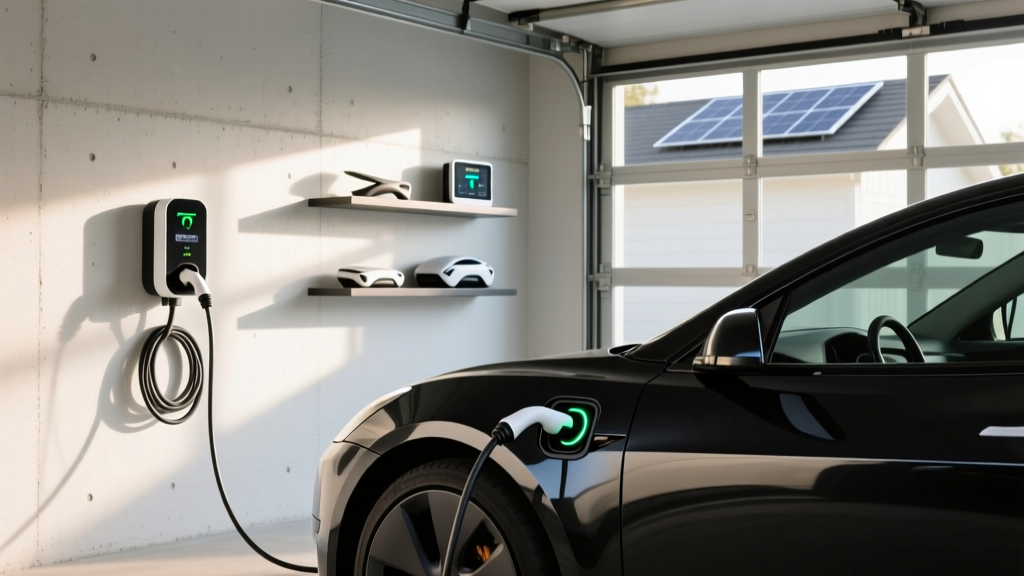
The Myth: If you hardwire your ChargePoint Home Flex or Tesla Wall Connector, you are permanently trapped. If you move to a new house, you have to leave your expensive charger behind.
The Reality: This fear of commitment is largely overblown. First, the vast majority of homeowners who install Level 2 chargers stay in their homes long enough to depreciate the cost of the unit. Second, if you do move, leaving a hardwired, smart EV charger mounted in the garage is a massive selling point that increases your home's resale value.
If you are absolutely dead-set on taking the charger with you, an electrician can install a local disconnect switch or simply cap the wires in a junction box for a fraction of the cost of a GFCI breaker setup. Conversely, if you use a NEMA 14-50 outlet and move, you are left with a giant, ugly 50-amp outlet in your garage that serves no purpose for the next homeowner unless they also buy an EV.
Myth 3: A 50-Amp Circuit Delivers 50 Amps of Continuous Charge
The Myth: If I install a 50-amp breaker and a NEMA 14-50 outlet, my car will charge at 50 amps.
The Reality: The NEC classifies EV charging as a 'continuous load,' meaning the charging session lasts for three hours or more. Under NEC Article 210.20, continuous loads can only utilize 80% of a circuit breaker's total capacity. Therefore, a 50-amp breaker (and a NEMA 14-50 receptacle) is legally and physically limited to 40 amps of continuous charging current.
This is where hardwiring pulls ahead. As noted in the Tesla Wall Connector Installation Guide, hardwiring allows you to safely scale up to a 60-amp breaker (yielding 48 amps of continuous charge) or even an 80-amp breaker (yielding 64 amps) for vehicles like the Hummer EV or Ford F-150 Lightning that support higher onboard charging rates. The NEMA 14-50 receptacle is physically capped at 50 amps; you cannot safely push more current through it without risking severe thermal runaway and melting the plug.
Three Dangerous Wiring Mistakes to Avoid
Beyond the myths, there are severe installation mistakes that compromise safety. The Electrical Safety Foundation International (ESFI) warns that EV charging draws massive, sustained electrical loads that expose any weakness in your home's wiring.
Mistake 1: Reusing an Old Dryer Outlet (NEMA 10-30)
Many homeowners try to save money by plugging into an existing 3-prong NEMA 10-30 dryer outlet using an adapter. This is incredibly dangerous. The NEMA 10-30 is an obsolete, ungrounded receptacle. EV chargers require a dedicated equipment grounding conductor to safely trip the GFCI in the event of a fault. Using an ungrounded adapter bypasses critical safety mechanisms and creates a severe shock hazard, especially in damp garage environments.
Mistake 2: Using Residential-Grade NEMA 14-50 Receptacles
If you must go the plug-in route, do not buy a $12 residential-grade NEMA 14-50 receptacle from a big box store. EV charging creates sustained heat that cheap, residential-grade plastic receptacles cannot handle, leading to melted faceplates and fires. You must specify an industrial-grade receptacle, such as the Hubbell 9450A or Bryant 9450FR. These cost around $75 to $100 but feature heavy-duty internal contacts and high-temperature thermoset materials designed to withstand hours of continuous 40-amp draw.
Mistake 3: Skipping the Torque Screwdriver
Whether hardwiring or installing a receptacle, the terminal screws must be tightened to the manufacturer's exact inch-pound specifications using a calibrated torque screwdriver. 'Hand-tight' is not acceptable. A loose connection creates electrical resistance, which generates intense heat over a 10-hour charging session. This thermal expansion and contraction eventually leads to arcing, melted wires, and electrical fires.
Hardwired vs. NEMA 14-50 Plug-In: Head-to-Head Comparison
| Feature | Hardwired EVSE | NEMA 14-50 Plug-In |
|---|---|---|
| Max Circuit Breaker Size | Up to 60A, 80A, or 100A | Strictly 50A |
| Max Continuous Charge | 48A, 64A, or 80A | 40A (80% Rule) |
| GFCI Breaker Required? | No (in most jurisdictions) | Yes (NEC 2017/2020) |
| Nuisance Tripping Risk | Very Low | High (Stacked GFCI) |
| Receptacle Cost | $0 (Direct wire) | $75 - $120 (Industrial Grade) |
| Portability | Permanent (Requires capping to remove) | High (Unplug and take it) |
| Thermal Safety | Excellent (No plug connection point) | Good (Only if using Hubbell/Bryant) |
Conclusion: Which Should You Choose?
While the NEMA 14-50 plug-in setup offers the allure of portability, the modern reality of NEC code requirements, GFCI nuisance tripping, and hardware limitations makes hardwiring the superior choice for 90% of homeowners. Hardwiring eliminates the weakest point of failure (the plug and receptacle), allows for faster charging speeds on high-capacity EVs, and often saves money by avoiding expensive GFCI breakers.
If you do opt for a plug-in setup, never cut corners. Demand an industrial-grade Hubbell or Bryant receptacle, ensure your electrician uses a torque screwdriver, and verify that your electrical panel has the physical space and amperage headroom to support a continuous 40-amp load. By busting these myths and avoiding common wiring mistakes, you will ensure your EV charges safely, efficiently, and reliably for years to come.