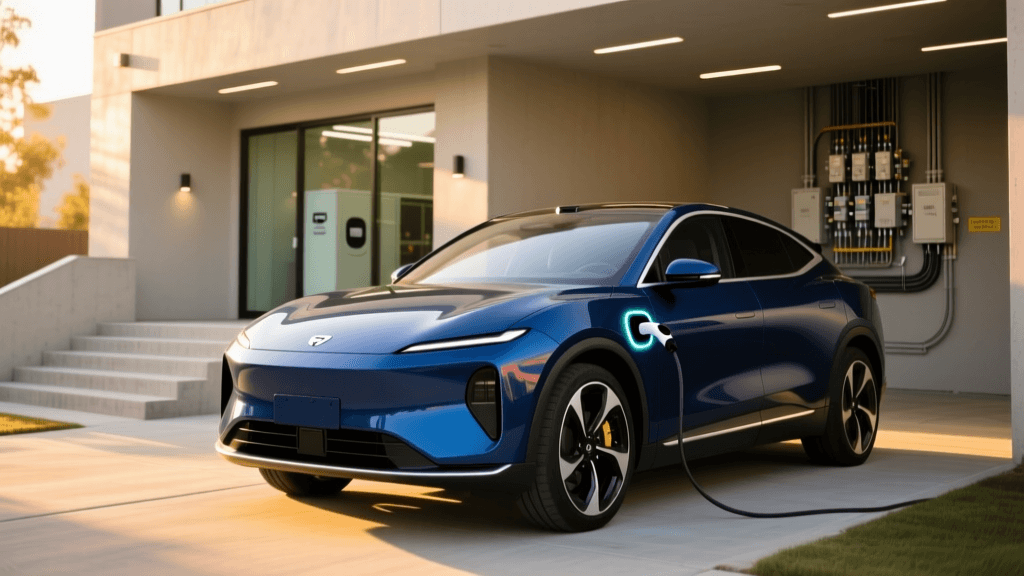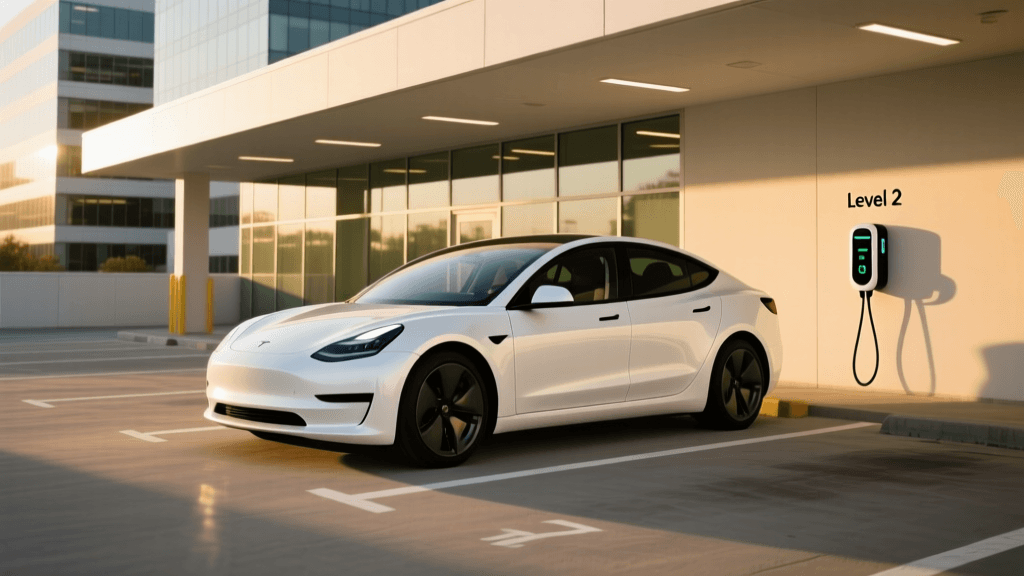
The Dilemma: Panel Upgrades vs. Smart Load Management
As electric vehicle adoption accelerates, homeowners are increasingly confronted with a common electrical bottleneck: insufficient main panel capacity. According to the U.S. Department of Energy, installing a Level 2 EV charger typically requires a dedicated 240-volt circuit rated for 40 to 60 amps. For older homes with 100-amp or 125-amp main service panels, adding a 60-amp continuous load violates National Electrical Code (NEC) capacity limits. This traditionally forces a costly main service upgrade to 200 amps, which can cost anywhere from $3,000 to $5,000 depending on your local utility and trenching requirements.
However, a modern, cost-effective alternative has emerged: EV charger energy metering paired with a dedicated subpanel or smart load-shedding system. By monitoring real-time household energy consumption, these systems automatically throttle the EV charger's amperage if the main house draws too much power, preventing the main breaker from tripping.
In this head-to-head showdown, we compare two industry-leading approaches to EV energy metering and subpanel installation: the Emporia VUE 3 with a traditional EV subpanel versus the Span Smart Panel. Both systems offer dynamic load management, but their installation methodologies, hardware costs, and metering granularities differ vastly.
Meet the Contenders: Emporia VUE 3 vs. Span Smart Panel
Contender 1: Emporia VUE 3 + Standard EV Subpanel
The Emporia VUE 3 is a third-party energy monitor that uses split-core Current Transformer (CT) clamps to measure magnetic induction around your electrical wires. For an EV installation, an electrician will install a standard 100-amp subpanel (such as a Square D Homeline or Eaton BR) dedicated solely to the EV charger and perhaps a few high-draw appliances. The VUE 3 monitor tracks the main service feeder and the new subpanel feeder. If the home's total load approaches the main breaker's limit, the VUE 3 communicates via Wi-Fi to the Emporia EV Charger, instructing it to dynamically reduce its charging amperage in real-time.
Contender 2: Span Smart Panel
The Span Smart Panel is a complete replacement for your traditional electrical panel (or installed as a critical-loads subpanel). Instead of external CT clamps, Span utilizes built-in Hall-effect sensors on every single circuit breaker. This provides native, circuit-level energy metering for the entire home without the need for a separate monitoring hub. Through the Span app, homeowners can designate the EV charger circuit as "flexible," allowing the panel's internal processor to automatically shed or throttle the EV load during peak household usage or solar/battery deficits.
Head-to-Head: Installation and Subpanel Integration
The physical installation process is where these two systems diverge significantly. As noted by electrical experts at EnergySage, understanding your home's existing infrastructure is critical before choosing a load management path.
Emporia Subpanel Installation Steps
- Feeder Cable Routing: The electrician installs a new 100-amp subpanel adjacent to the main panel or in the garage. They typically run 2-2-2-4 SER (Service Entrance) cable or individual THHN wires in PVC conduit from the main panel's new 100-amp breaker to the subpanel.
- CT Clamp Placement: The VUE 3 monitor is mounted near the main panel. The electrician snaps the main 200A CT clamps around the primary service conductors (ensuring the source-to-load arrows are correctly oriented). A secondary 100A CT clamp is placed on the subpanel feeder.
- Charger Wiring: A 60-amp breaker is installed in the new subpanel, wiring a NEMA 14-50 receptacle or hardwiring the Emporia Wall Connector directly using 6 AWG copper wire.
- Time & Complexity: This retrofit is highly modular. It usually takes an experienced electrician 4 to 6 hours and does not require a utility disconnect or main panel swap.
Span Panel Integration
- Panel Swap vs. Subpanel: Span can replace your main 200A panel entirely, which requires a utility disconnect, pulling the meter, and swapping the entire enclosure. Alternatively, it can be installed as a subpanel, though this requires rewiring all circuits you wish to monitor and control into the Span enclosure.
- Circuit Mapping: Because Span lacks external CT clamps, the electrician must use the Span app during installation to manually map and name every single circuit in the home while toggling loads on and off.
- Time & Complexity: A full main panel replacement takes 8 to 12 hours and requires municipal permitting and utility coordination. It is a major structural electrical change.
Energy Metering Accuracy and Load Shedding
When it comes to pure EV energy metering, the Emporia VUE 3 is a powerhouse. It samples data at a high frequency and provides granular, 1-second interval tracking specifically for the EV charging session. The load-shedding response time between the VUE 3 and the Emporia charger is virtually instantaneous, dropping the amperage from 48A down to 16A or lower within milliseconds if you turn on the electric oven and HVAC simultaneously.
The Span Smart Panel offers a broader, whole-home perspective. While it accurately meters the EV circuit, its primary strength is ecosystem integration. If you have solar panels and a home battery (like the Tesla Powerwall or Enphase IQ), Span can prioritize sending excess solar exclusively to the EV charger, and automatically shed the EV load if the battery drops below a user-defined reserve percentage during a grid outage.
Cost Breakdown: Hardware and Professional Installation
Cost is often the deciding factor for homeowners trying to avoid a $4,000 main service upgrade. Here is a realistic estimate based on national averages for a 60-amp EV circuit installation:
Emporia VUE 3 + Subpanel Setup
- Emporia VUE 3 Energy Monitor: $300
- Emporia EV Charger (Hardwired): $600
- Standard 100A Subpanel & Breakers: $250
- 2-2-2-4 SER Cable & Misc Hardware: $150
- Professional Electrician Labor (4-6 hours): $900 - $1,200
- Total Estimated Cost: $2,200 - $2,500
Span Smart Panel Setup
- Span Smart Panel (200A Main): $3,500 - $4,500
- Professional Electrician Labor & Permitting (8-12 hours): $2,500 - $4,000
- Third-Party EV Charger (e.g., ChargePoint or Wallbox): $600 - $700
- Total Estimated Cost: $6,600 - $9,200
Feature Comparison Table
| Feature | Emporia VUE 3 + Subpanel | Span Smart Panel |
|---|---|---|
| Primary Use Case | Targeted EV load management | Whole-home energy & solar/battery management |
| Metering Technology | Split-core CT Clamps | Built-in Hall-effect sensors |
| Data Granularity | Main, Subpanel, and EV Circuit | Every individual circuit in the panel |
| Installation Complexity | Low (Modular subpanel add-on) | High (Full panel swap or major rewire) |
| Load Shedding Speed | ~100 milliseconds (Wi-Fi local) | Instantaneous (Internal bus logic) |
| Estimated Total Cost | $2,200 - $2,500 | $6,600 - $9,200 |
Verdict: Which EV Metering Setup Wins?
According to infrastructure data from the Alternative Fuels Data Center, residential charging accounts for the vast majority of EV energy consumption, making home infrastructure optimization vital. However, the "best" system depends entirely on your broader home energy goals.
Choose the Emporia VUE 3 + Subpanel if:
Your sole objective is to install a high-speed Level 2 EV charger without paying for a main service upgrade. The Emporia ecosystem is the undisputed value champion for dedicated EV subpanel installations. It provides highly accurate, dedicated energy metering for your charging sessions, utilizes standard off-the-shelf electrical components for the subpanel, and keeps installation labor to a minimum. It is a surgical strike that solves the NEC Article 625 continuous load problem elegantly and affordably.
Choose the Span Smart Panel if:
You are already planning a main electrical panel upgrade, or you have a complex solar array and home battery system that requires granular, circuit-level orchestration. Span is a premium, whole-home energy management system. While it handles EV load shedding flawlessly via its internal processors, paying a $7,000+ premium just to avoid a subpanel installation is not financially justifiable for the average EV owner.
Final Installation Advice
Regardless of which system you choose, always ensure your electrician performs a formal NEC Article 220 load calculation before installation. Furthermore, when terminating the heavy-gauge feeder wires in your new EV subpanel, insist that your electrician uses a calibrated torque screwdriver to secure the lugs to the manufacturer's exact specifications. Loose connections on high-amperage EV circuits are a leading cause of thermal buildup and melted receptacles. By pairing a properly torqued, code-compliant subpanel with smart energy metering, you can safely charge your EV at maximum speeds for decades to come.