The 100A vs. 200A Bottleneck for EV Owners
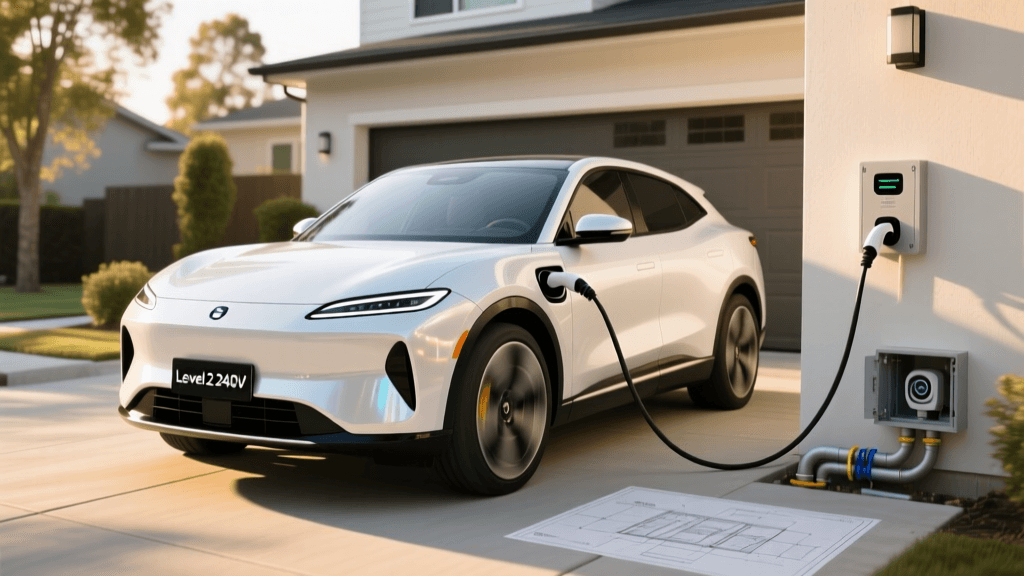
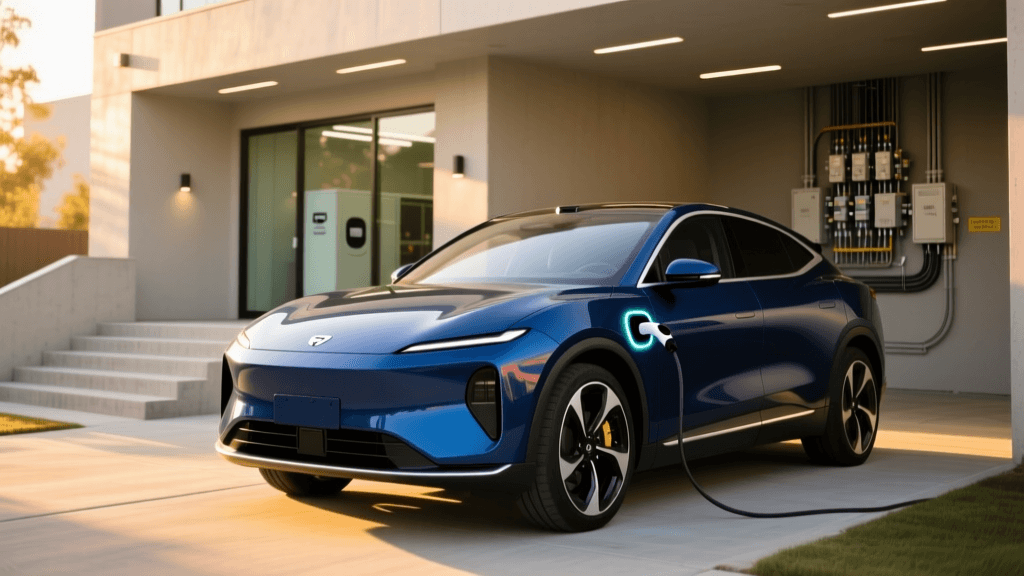
As electric vehicle adoption accelerates, homeowners are rapidly discovering a hidden infrastructure bottleneck: the residential electrical panel. While a standard Level 1 charger plugs into a basic 120V outlet, achieving optimal Level 2 charging speeds requires a 240V circuit drawing anywhere from 32 to 48 amps. For homes built between the 1960s and 1990s, the existing 100-amp electrical panel is often entirely insufficient to handle this new continuous load alongside existing household appliances. According to the U.S. Energy Information Administration, the average U.S. home already consumes roughly 10,500 kilowatt-hours annually, pushing older 100A panels near their thermal and safety limits.
This comprehensive data-driven analysis breaks down the exact mathematics, costs, and timelines associated with upgrading a 100A panel to a 200A panel specifically to accommodate an EV charger. We will also compare this traditional upgrade against modern smart load management alternatives to help you make the most financially sound decision.
The Math: NEC Article 220 Load Calculations
Before pulling a permit, electricians must perform a load calculation based on the National Electrical Code (NEC) Article 220. A 100A panel operating at 240V provides a maximum theoretical capacity of 24,000 watts. However, the NEC mandates that continuous loads (defined as drawing maximum current for three hours or more) must be derated to 80 percent. Therefore, your usable continuous capacity on a 100A panel is only 19,200 watts.
A standard 48A Level 2 EV charger (like the ChargePoint Home Flex or Tesla Wall Connector) draws 11,520 watts continuously. If you add this to a 100A panel, you are left with a mere 7,680 watts for the rest of your home. Consider the following typical household loads:
- Electric Range/Oven: 8,000 - 12,000 watts
- Electric Dryer: 5,000 - 6,000 watts
- HVAC System: 3,500 - 5,000 watts
- Electric Water Heater: 4,500 watts
As the data illustrates, running an EV charger simultaneously with an electric oven and HVAC system on a 100A panel will trip the main breaker. Upgrading to a 200A panel doubles your theoretical capacity to 48,000 watts (38,400 watts usable continuous), providing the necessary headroom for safe, simultaneous operation. The Electrical Safety Foundation International strongly emphasizes that bypassing these load calculations to force an EVSE onto an undersized panel is a leading cause of residential electrical fires.
Cost Data: Upgrading from 100A to 200A
The financial investment for a panel upgrade varies significantly based on regional labor rates, the complexity of the existing wiring, and whether the panel is indoors or outdoors. Below is a data-driven breakdown of average national costs for a standard 200A upgrade.
| Cost Category | Low Estimate | High Estimate | Details & Variables |
|---|---|---|---|
| Main Panel Hardware | $250 | $600 | 200A Main Breaker Panel (Square D, Eaton, Siemens) |
| Wire & Conduit | $300 | $800 | 4/0 AWG Aluminum or 2/0 AWG Copper SER cable |
| Labor (Electrician) | $800 | $2,500 | 8-16 hours depending on accessibility and relocation needs |
| Permits & Inspections | $150 | $500 | Local municipal building department fees |
| Utility Fees | $0 | $1,500 | Meter base upgrade or service drop replacement (if required) |
| Total Average Cost | $1,500 | $5,900 | Most homeowners pay between $2,200 and $3,500 |
The Hidden Variable: Utility Service Drops and Meter Bases
The most frequently overlooked data point in panel upgrade quotes is the utility company's infrastructure. Your electrical panel is only half the equation; the other half is the service drop (the overhead wires from the utility pole) and the meter socket.
If your home currently has a 100A service, the utility may have installed a 2/0 Aluminum overhead service drop, which is generally rated for a maximum of 125A to 150A. If you upgrade your interior panel to 200A, the local utility will require their own engineers to inspect the service drop. If it is undersized, the utility must replace the wires from the pole to your house and upgrade your meter socket to a 200A-rated continuous socket. While some utilities absorb this cost, many pass a 'service upgrade fee' to the homeowner, which can range from $500 to over $3,000 and add 4 to 12 weeks of waiting time to your project timeline.
Data Comparison: Panel Upgrade vs. Smart Load Management
Because of the high costs and utility delays associated with 200A panel upgrades, the EV industry has developed a data-driven alternative: Automated Load Management Systems (ALMS). Devices like the Emporia VUE with EV charger integration, or the Wallbox Power Meter, monitor your home's real-time electrical consumption. If your home's total load approaches the 100A limit, the system automatically throttles down the amperage going to the EV charger, preventing the main breaker from tripping.
| Feature | 200A Panel Upgrade | Smart Load Management (ALMS) |
|---|---|---|
| Upfront Hardware Cost | $250 - $600 | $150 - $350 (Energy Monitor + CT Clamps) |
| Installation Labor | $800 - $2,500 | $300 - $600 |
| Utility Approval Needed? | Yes (High delay risk) | No |
| Permit Required? | Yes | Usually No (Minor electrical work) |
| Max EV Charging Speed | Unrestricted (Full 48A) | Dynamic (Fluctuates based on home load) |
| Future Home Expansion | Supports Heat Pumps, Solar, ADUs | Does not increase total home capacity |
According to guidance from the U.S. Department of Energy, utilizing smart charging technologies can optimize home energy use without necessarily requiring immediate, costly infrastructure overhauls. If your only goal is to charge your EV overnight while the HVAC and major appliances are dormant, an ALMS device can save you upwards of $2,000 compared to a full panel swap.
Step-by-Step Execution Plan
If your load calculation dictates that a 200A upgrade is mandatory, follow this structured action plan to ensure compliance and cost-efficiency:
- Request a Professional Load Calculation: Do not rely on rules of thumb. Hire a licensed electrician to perform a formal NEC Article 220 calculation based on your home's exact square footage and appliance nameplates.
- Consult Your Utility Provider: Before signing a contractor agreement, call your local utility to inquire about their requirements and fees for upgrading a residential service from 100A to 200A. Ask specifically about meter base replacements and service drop upgrades.
- Secure Municipal Permits: Ensure your electrician pulls the necessary electrical permits. Unpermitted panel upgrades will void your home insurance and cause massive headaches during a future real estate transaction.
- Plan for the Outage: A 100A to 200A swap requires the utility to disconnect power at the pole or meter. Expect a total home power outage lasting between 4 and 8 hours on installation day.
- Schedule EVSE Installation Post-Inspection: Do not have the electrician install the 60A breaker and NEMA 14-50 receptacle (or hardwired wallbox) until the city inspector has officially signed off on the new 200A panel.
Conclusion: Analyzing the ROI
Upgrading from a 100A to a 200A electrical panel is a significant capital expenditure, averaging $2,800 nationally. From a pure EV charging perspective, the ROI is difficult to justify if a $400 smart load management system can achieve the same overnight charging results. However, viewing the upgrade through a broader real estate and home electrification lens changes the data. As homes transition to electric heat pumps, induction cooktops, and rooftop solar, a 200A panel transitions from a luxury to a baseline requirement. If you plan to remain in your home for more than five years and anticipate further electrification, the 200A upgrade is a mathematically sound investment that future-proofs your property and permanently removes the electrical bottleneck.