The Electrical Bottleneck in Pre-1990 Homes
As electric vehicle adoption accelerates, homeowners in older neighborhoods are hitting a frustrating mathematical wall. According to U.S. housing data, nearly 45% of American homes were built before 1980, and a vast majority of these properties operate on 100-amp or even 60-amp main electrical services. When you introduce a modern Level 2 EV charger into this ecosystem, the math simply does not add up without intervention.
A standard Level 2 home charger draws between 32 amps and 48 amps. Under the National Electrical Code (NEC) Article 220, EV chargers are classified as 'continuous loads,' meaning the circuit must be derated to 80% of its maximum capacity. Therefore, a 40-amp EV charger requires a 50-amp breaker, which continuously draws 40 amps. If your home has a 100-amp main panel, your usable continuous capacity is only 80 amps. Running a 40-amp EV charger leaves just 40 amps for your HVAC system, electric oven, water heater, and lighting. During peak summer or winter months, this guarantees a tripped main breaker.
Historically, the only solution was a costly 200-amp panel upgrade. Today, however, the Department of Energy and electrical engineers increasingly point to Dynamic Load Balancing (DLB) as a data-driven, cost-effective alternative. Below, we analyze the hard numbers comparing traditional panel upgrades against modern smart load management systems.
How Dynamic Load Balancing (DLB) Works
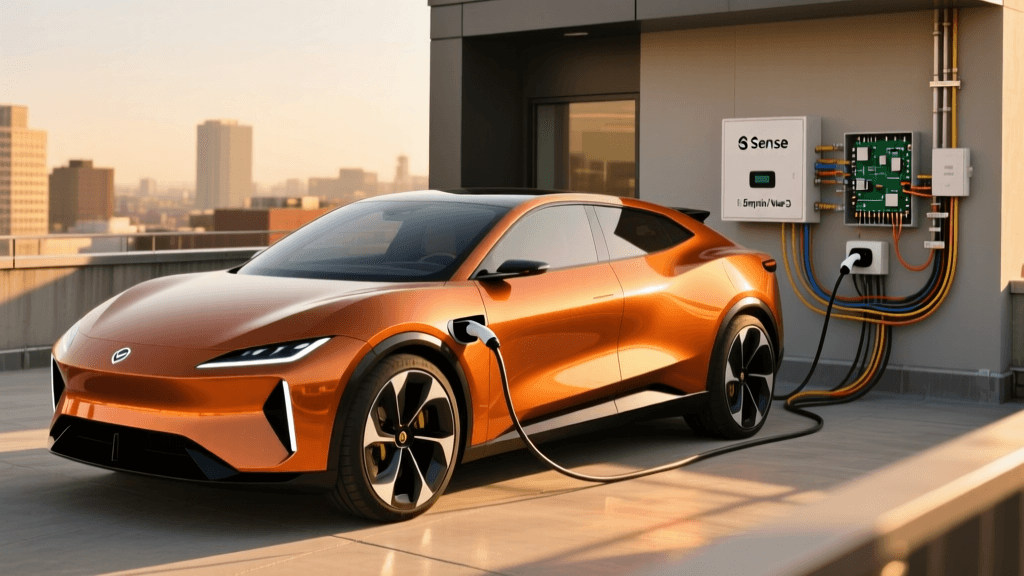
Dynamic Load Balancing bypasses the need for a massive infrastructure overhaul by utilizing a Current Transformer (CT) clamp. This small, non-invasive sensor is installed directly onto the main service conductors inside your existing electrical panel. The CT clamp monitors your home's total real-time electrical consumption and communicates with the EV charger via Wi-Fi, Ethernet, or a dedicated radio frequency.
If your home's total electrical demand spikes—for example, if the electric oven and AC compressor kick on simultaneously—the load balancer instantly throttles down the amperage flowing to the EV charger. Once the household appliances cycle off, the charger ramps back up to its maximum speed. This ensures your home never exceeds its 100-amp main breaker limit, keeping your electrical system safe and compliant without sacrificing the ability to charge your vehicle overnight.
Data-Driven Comparison: Panel Upgrade vs. Load Balancing
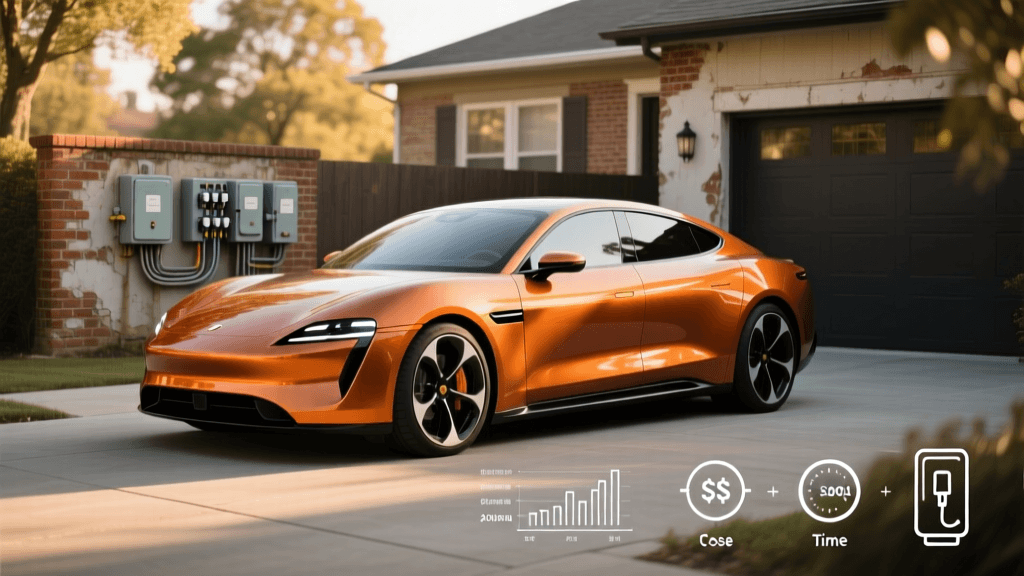
To understand the financial and logistical implications of both paths, we analyzed national average electrician rates, hardware costs, and permitting data for a standard 100-amp to 200-amp service upgrade versus the installation of a smart EVSE (Electric Vehicle Supply Equipment) with a CT clamp.
| Metrics | 200-Amp Panel Upgrade | Smart Load Balancing (CT Clamp) |
|---|---|---|
| Upfront Hardware Cost | $400 - $800 (Panel & Breakers) | $150 - $300 (CT Sensor Module) |
| EV Charger Cost | $400 - $700 (Standard EVSE) | $500 - $800 (Smart EVSE w/ DLB) |
| Electrician Labor | $1,500 - $3,000 | $400 - $800 |
| Utility & Permit Fees | $300 - $800 | $50 - $200 |
| Total Estimated Cost | $2,600 - $5,300 | $1,100 - $2,100 |
| Installation Time | 8 - 16 Hours (1-2 Days) | 2 - 4 Hours |
| Home Power Disruption | 4 - 8 Hours (Full Blackout) | 15 Minutes (To install CT clamp) |
| Max EV Charging Speed | 48 Amps Continuous | Dynamic (16A to 40A avg) |
Data Note: Costs vary by municipality and local utility requirements. Panel upgrades often require utility drop-line replacements if the overhead service wire is also rated below 200 amps, which can add $1,000+ to the final bill.
Top Smart Chargers with Native Load Management
Not all smart chargers support third-party CT clamps out of the box. If you are pursuing the load balancing route, you must select an EVSE specifically engineered for Energy Management Systems (EMS). Here is a data comparison of the top three units on the market for older homes:
1. Wallbox Pulsar Plus with Power Boost
- Hardware Cost: ~$650 (Charger) + $150 (Power Boost Meter)
- Max Output: 40 Amps (9.6 kW)
- Communication: Hardwired Ethernet or Wi-Fi to the Power Boost smart meter.
- Performance Data: Wallbox's proprietary Power Boost technology features an ultra-low latency response time of under 2 seconds. If your home's load approaches the 100-amp threshold, the system smoothly ramps the charger down to as low as 6 amps rather than cutting power entirely, ensuring a continuous, albeit slower, charge.
2. Emporia Level 2 EV Charger with Vue Smart Panel
- Hardware Cost: ~$400 (Charger) + $100 (Vue Energy Monitor)
- Max Output: 48 Amps (11.5 kW - requires hardwiring)
- Communication: Direct integration via the Emporia app and local network.
- Performance Data: Emporia offers the most granular data tracking on the market. The Vue monitor tracks individual circuit-level data across your entire 100-amp panel. The EV charger dynamically adjusts based on real-time solar production (if applicable) and baseline home load. It is the most cost-effective DLB setup currently available.
3. Enel X JuiceBox with CT Clamp
- Hardware Cost: ~$700 (Charger) + $150 (CT Clamp Accessory)
- Max Output: 40 Amps (9.6 kW)
- Communication: Wi-Fi enabled with Enel X cloud-based load management algorithms.
- Performance Data: Originally designed for commercial multi-dwelling units, the JuiceBox CT setup is incredibly robust. It is ideal for older homes that also have secondary high-draw loads like electric baseboard heating, as its algorithm prioritizes critical home infrastructure over EV charging speed with commercial-grade reliability.
Navigating NEC Article 750 and Local Permits
When installing a load balancing system, electrical inspectors will evaluate your setup under NFPA 70 (The National Electrical Code), specifically Article 750, which governs Energy Management Systems (EMS). Article 750 explicitly permits the use of automated load management systems to prevent the main service from overloading, effectively allowing you to install a 50-amp or 60-amp EV circuit on a 100-amp main panel, provided the EMS is fail-safe and listed for the application.
However, local jurisdictions interpret the NEC differently. Some progressive municipalities fully embrace Article 750 and will approve a CT-clamp installation on a 100-amp panel with a simple permit. Others may still require a manual load calculation (NEC Article 220) and demand a panel upgrade regardless of smart technology. It is vital to consult with a licensed local electrician who understands how to present EMS documentation to your local building department. For comprehensive safety guidelines regarding residential installations, the Alternative Fuels Data Center provides excellent baseline resources for homeowners preparing for inspections.
Conclusion: Which Path Should You Choose?
The decision between a 200-amp panel upgrade and dynamic load balancing ultimately comes down to your budget, your timeline, and your future home electrification plans.
Choose a 200-Amp Panel Upgrade if: You plan to fully electrify your home in the near future (e.g., installing a heat pump, electric water heater, and induction stove), you have two EVs that require simultaneous 40-amp charging, or you are planning a major home addition that requires expanded circuit space.
Choose Smart Load Balancing if: You live in a home where a panel upgrade is prohibitively expensive or structurally difficult, you only charge one EV overnight, and you want to save between $1,500 and $3,000 on immediate installation costs. For the vast majority of older homes with 100-amp service, dynamic load balancing provides a safe, code-compliant, and highly efficient bridge into the electric vehicle era without the need for heavy construction.