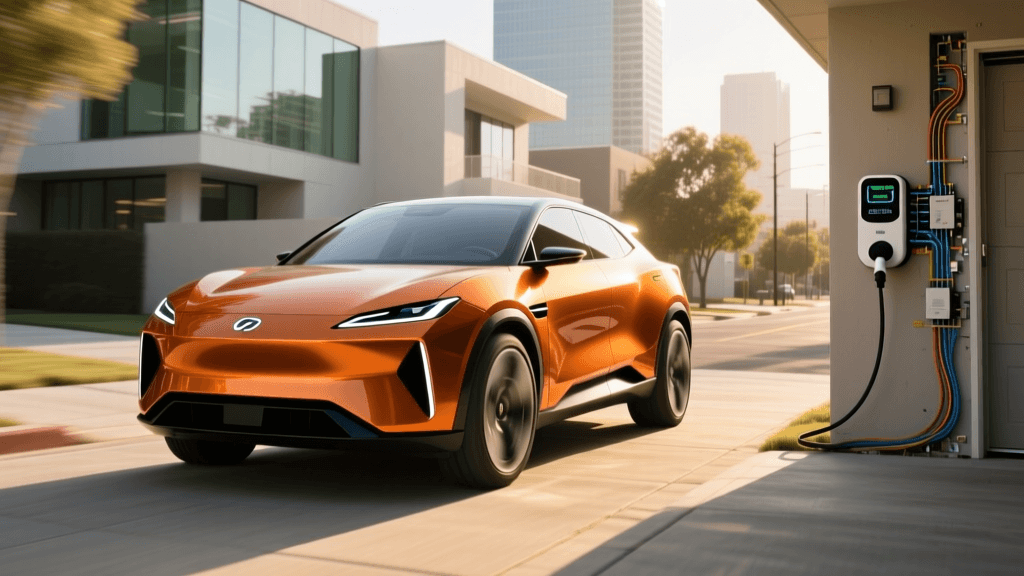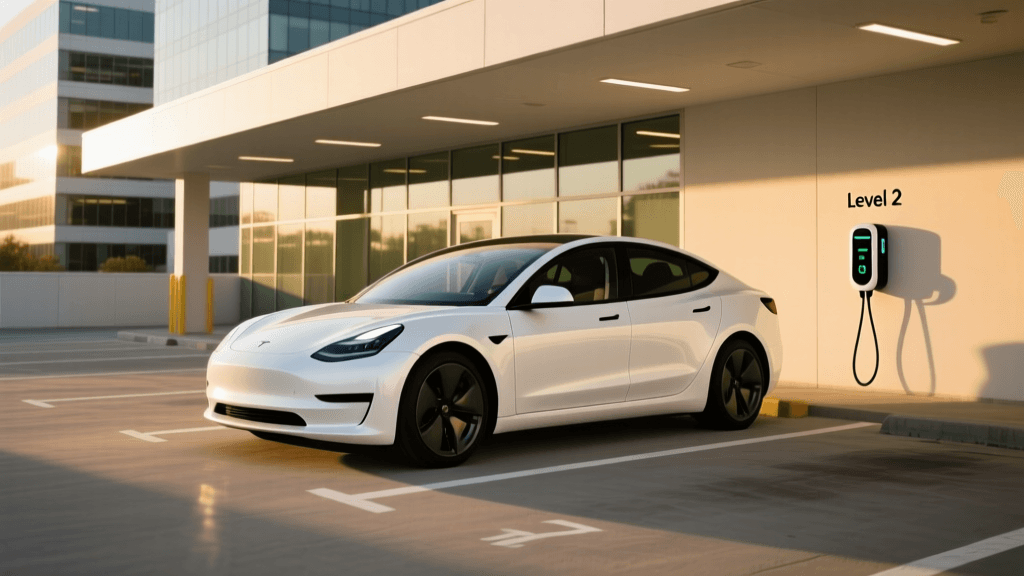
The Business Case for Workplace EV Charging
As electric vehicle (EV) adoption accelerates across the United States, the demand for convenient, reliable charging infrastructure has shifted from residential driveways to commercial parking lots. For facility managers, property developers, and corporate sustainability officers, installing commercial Level 2 EV chargers at the workplace is no longer just a fringe perk—it is a strategic business decision. According to the U.S. Department of Energy, employees with access to workplace charging are six times more likely to drive an electric vehicle than those without. However, moving from the decision to install to the actual ribbon-cutting requires a rigorous understanding of capital expenditures (CapEx), operational expenditures (OpEx), and the long-term return on investment (ROI). This comprehensive cost and value breakdown will dissect the financial realities of deploying a commercial Level 2 charging network at your workplace.
Hardware Selection: Networked vs. Non-Networked Commercial Chargers
The foundation of your cost breakdown begins with the Electric Vehicle Supply Equipment (EVSE). For commercial applications, durability, vandal resistance, and networking capabilities are paramount. Unlike residential units, commercial chargers must withstand harsh weather, frequent cable handling, and potential impacts.
Networked Smart Chargers
Networked chargers, such as the ChargePoint CT4000 series, Enel X JuiceBox Commercial, or Blink HQ 100, connect to the internet via cellular or Wi-Fi networks. This connectivity allows facility managers to set user pricing, track energy usage, restrict access to employees, and generate ESG (Environmental, Social, and Governance) reports. A dual-port commercial pedestal typically ranges from $5,500 to $7,500 per unit. While the upfront hardware cost is higher, the ability to monetize the chargers or manage energy loads dynamically makes them the standard for modern workplaces.
Non-Networked (Standalone) Chargers
Non-networked units operate much like residential chargers; they provide power upon connection but lack backend software, payment processing, or remote monitoring. These units cost significantly less, generally between $1,500 and $2,500 per dual-port pedestal. However, they are rarely recommended for workplaces because they cannot prevent unauthorized use (ICE-ing), cannot bill users for electricity, and offer no data to verify sustainability goals.
Electrical Infrastructure and Installation Labor
The physical installation of commercial EV chargers is often the most variable and expensive component of the project. Labor and materials can easily eclipse the cost of the hardware itself, depending on the existing electrical capacity of your building.
Panel Capacity and Upgrades
A standard dual-port Level 2 charger operating at 240V and 32 Amps per port requires a dedicated 40-Amp or 50-Amp circuit. If you are installing four ports (two pedestals), you are adding a substantial continuous load to your building's electrical panel. If your current switchgear lacks the capacity, a commercial panel upgrade or the installation of a dedicated sub-panel can cost anywhere from $5,000 to over $25,000.
Dynamic Load Management (DLM)
To avoid exorbitant panel upgrade costs and utility demand charges, many workplaces utilize Dynamic Load Management software. DLM monitors the building's real-time energy consumption and automatically throttles the power delivered to the EV chargers during peak building usage, ramping up the charging speed when the building's load drops. This software-first approach can save tens of thousands of dollars in avoided electrical infrastructure upgrades.
Trenching, Conduit, and Wiring
The distance from the electrical room to the parking spaces dictates your trenching and wiring costs. Commercial installations typically require heavy-duty wiring, such as 2 AWG aluminum or 4 AWG copper, housed in rigid metal or PVC conduit. Trenching through asphalt or concrete parking lots costs between $50 and $150 per linear foot. Furthermore, local building codes dictate trenching depths (usually 18 to 24 inches for PVC conduit) and require concrete bollards to protect the pedestals from vehicular impacts, adding $500 to $1,000 per station.
Software, Networking, and Ongoing Maintenance
Beyond the initial installation, commercial chargers carry ongoing operational costs that must be factored into your annual budget.
- Network Subscription Fees: Smart chargers require a SaaS (Software as a Service) subscription to access the backend management dashboard. Providers like ChargePoint or EV Connect typically charge between $250 and $400 per port, per year.
- Cellular Connectivity: If the chargers rely on embedded 4G/LTE modems rather than local Wi-Fi, expect to pay $10 to $15 per month per station for data connectivity.
- Maintenance and Warranties: Commercial environments demand extended warranties. A standard 1-year warranty is insufficient; purchasing a 3-year or 5-year comprehensive warranty package adds roughly $1,000 to $1,500 per pedestal upfront but protects against costly out-of-pocket repairs for screen failures or connector damage.
Federal Tax Credits and Local Utility Incentives
The financial sting of commercial EVSE installation is significantly mitigated by government incentives. The most prominent federal incentive is the Alternative Fuel Vehicle Refueling Property Credit (30C). Under the updated Inflation Reduction Act guidelines, businesses can claim a tax credit of up to 30% of the cost of hardware and installation (capped at $100,000 per item) provided the chargers are installed in eligible low-income or non-urban census tracts.
Additionally, local utility companies frequently offer 'Make-Ready' programs. These programs cover the cost of the electrical infrastructure upgrades (the wiring, trenching, and panels) leading up to the charger, leaving the business to pay only for the EVSE hardware itself. Always consult with your local utility provider and a certified tax professional before breaking ground.
Comprehensive Cost Breakdown: 4-Port Pedestal Setup
The following table illustrates the estimated costs for a standard workplace installation featuring two dual-port networked pedestals (4 total Level 2 ports) located approximately 100 feet from the main electrical room.
| Expense Category | Low Estimate | High Estimate |
|---|---|---|
| Hardware (2x Dual-Port Networked Pedestals) | $11,000 | $15,000 |
| Electrical Materials (Wire, Conduit, Breakers) | $2,500 | $6,000 |
| Labor & Trenching (100 ft run, asphalt patching) | $4,000 | $12,000 |
| Engineering, Permits, & Utility Fees | $1,500 | $4,000 |
| Concrete Bollards & Signage | $800 | $1,500 |
| First-Year Network & Software Subscriptions | $1,000 | $1,600 |
| Total Estimated CapEx + Year 1 OpEx | $20,800 | $40,100 |
| Estimated Cost After 30% Federal Tax Credit | $14,560 | $28,070 |
The Hidden ROI: Employee Retention and ESG Goals
Calculating the direct financial ROI of workplace chargers based solely on charging fees is often a losing proposition. Most employers offer charging as a subsidized benefit or at a break-even rate to cover electricity costs. The true ROI is found in indirect value creation.
First, workplace charging is a powerful talent acquisition and retention tool. Data from the Edison Electric Institute highlights that commercial EV adoption is accelerating, and top-tier talent increasingly expects sustainable workplace amenities. Offering free or discounted charging can be the deciding factor for eco-conscious employees choosing between job offers.
Second, commercial EV infrastructure contributes directly to corporate ESG reporting and can help commercial real estate achieve LEED (Leadership in Energy and Environmental Design) certification points. Buildings with LEED certification command higher lease premiums and experience lower vacancy rates, effectively allowing landlords to pass the value of the EV infrastructure onto tenants through higher property valuations.
Actionable Steps for Facility Managers
- Conduct an Electrical Load Study: Before soliciting bids, hire an electrical engineer to perform a load study on your facility. This will immediately tell you if you need a costly utility transformer upgrade or if you can utilize Dynamic Load Management.
- Survey Your Employees: Do not guess the demand. Send out an internal survey to gauge how many employees currently own EVs, how many plan to purchase one in the next 24 months, and what they are willing to pay for workplace charging.
- Future-Proof Your Conduit: Even if you only have the budget for two pedestals today, lay empty conduit (sweepstakes) to the parking lot during the initial trenching phase. Pulling wire through existing conduit later is a fraction of the cost of re-cutting and re-paving asphalt.
- Establish a Clear EV Charging Policy: Draft a policy addressing 'ICE-ing' (internal combustion engine vehicles parking in EV spots), charging time limits, and disciplinary actions to ensure the chargers remain available for those who truly need them during the workday.
Installing commercial Level 2 chargers at the workplace is a complex capital project that requires balancing upfront infrastructure costs against long-term employee satisfaction and sustainability mandates. By leveraging federal tax incentives, utilizing load-management software, and viewing the installation through the lens of holistic property value rather than direct charging revenue, businesses can transform their parking lots into forward-thinking, high-value assets.