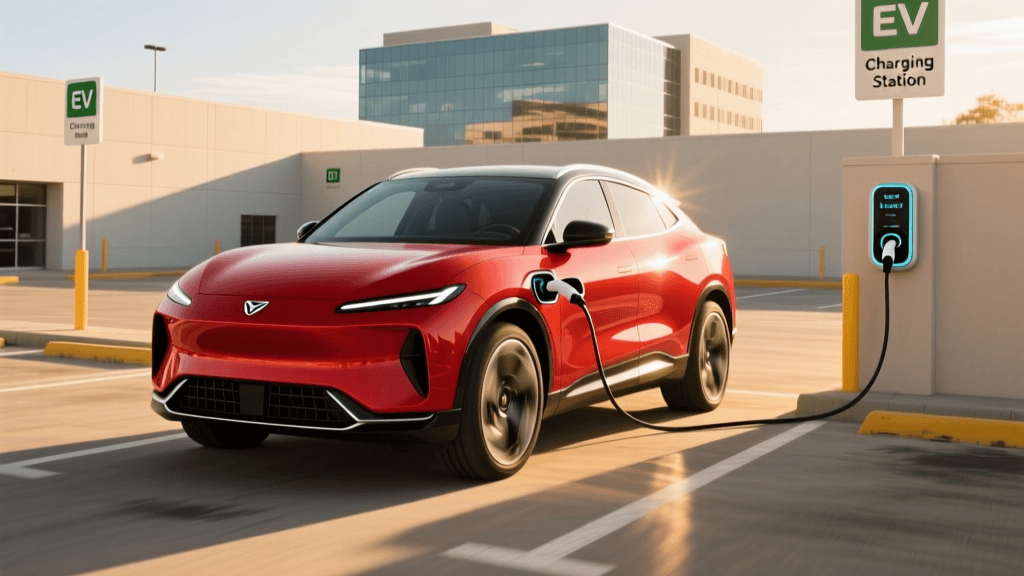
The Business Case for Workplace EV Charging
As electric vehicle (EV) adoption accelerates across global markets, commercial real estate developers and workplace facility managers are facing a new operational mandate: provide reliable, on-site charging infrastructure. According to the U.S. Department of Energy's Alternative Fuels Data Center, workplace charging is one of the most effective ways to support EV adoption. It eases range anxiety for daily commuters, supports corporate fleet electrification, and serves as a powerful tool for talent acquisition and corporate ESG (Environmental, Social, and Governance) goals. However, transitioning from a standard commercial parking lot to an electrified mobility hub requires a significant capital expenditure. Understanding the granular cost breakdown and the long-term value proposition is essential for securing stakeholder buy-in and ensuring a successful deployment.
Hardware Costs: Selecting the Right Commercial Workhorse
Unlike residential setups, commercial Level 2 chargers must be built to withstand high-frequency use, harsh weather conditions, and potential vandalism. Commercial-grade units typically feature NEMA 4-rated enclosures, RFID authentication, payment processing terminals, and OCPP (Open Charge Point Protocol) network compatibility. Most commercial installations utilize dual-port pedestals to maximize parking space efficiency and reduce the per-stall cost of electrical trenching.
Below is a comparison of popular commercial Level 2 hardware options and their estimated base hardware costs:
| Charger Model | Configuration | Est. Hardware Cost | Network/Software |
|---|---|---|---|
| ChargePoint CT4000 | Dual-Port, 2x 30A (7.2kW) | $6,500 - $7,500 | Proprietary |
| Enel X JuiceBox Commercial | Single-Port, 40A (9.6kW) | $2,000 - $2,800 | OCPP / Proprietary |
| Blink Series 2 Dual | Dual-Port, 2x 32A (7.6kW) | $5,000 - $6,000 | Proprietary |
| Autel MaxiCharger AC | Single-Port, 50A (12kW) | $2,500 - $3,200 | OCPP / Proprietary |
While dual-port pedestals like the ChargePoint CT4000 require a higher upfront hardware investment, they effectively cut the installation labor and trenching costs in half per charging stall, making them the industry standard for surface parking lots.
Electrical Infrastructure and Labor Expenses
The most variable component of any commercial EV charging project is the electrical infrastructure. Most commercial buildings operate on 480V three-phase power, whereas Level 2 chargers require 208V or 240V single-phase power. This necessitates the installation of step-down transformers, which can cost between $3,000 and $8,000 depending on the kVA rating required. Furthermore, commercial sites must adhere to strict local electrical codes, which often mandate rigid metal conduit (RMC) or PVC-coated steel rather than the flexible PVC used in residential settings.
- Trenching and Concrete Restoration: Running underground conduit from the main electrical room to remote parking stalls typically costs $50 to $150 per linear foot. If the lot requires concrete saw-cutting, trenching, and repouring, costs lean toward the higher end of that spectrum.
- Electrical Panel Upgrades: If the existing facility lacks the spare amperage to support a new 100A or 200A EV subpanel, a main service upgrade or the addition of a new utility transformer can add $10,000 to $30,000 to the project.
- Smart Load Management: To avoid costly panel upgrades, many facilities implement dynamic load management (DLM) software. DLM monitors the building's real-time energy consumption and throttles the chargers during peak demand, ensuring the site never exceeds its main breaker capacity. This software is usually bundled with the network subscription but requires specialized commissioning labor.
Soft Costs: Permitting, Networking, and ADA Compliance
Beyond copper wire and steel enclosures, commercial installations carry significant 'soft costs' that facility managers must budget for. Permitting fees vary wildly by municipality but generally range from $500 to $2,500 for a multi-stall commercial project. Additionally, commercial sites must comply with the Americans with Disabilities Act (ADA). This means ensuring that at least one charging stall per site (or a specific percentage based on local building codes) is van-accessible, features proper signage, and maintains an accessible route to the building entrance. Upgrading curbs, installing wheelchair ramps, and purchasing specialized ADA-compliant charger pedestals can add $2,000 to $5,000 to the total project cost.
Network connectivity is another ongoing expense. Commercial chargers require cellular or Wi-Fi connections to process payments, manage access control, and report telemetry data. Network subscriptions typically cost between $20 and $50 per port, per month. While non-networked chargers are cheaper to operate, they prevent the business from recouping electricity costs through user fees and eliminate the ability to restrict access to employees only.
The Value Proposition: ROI, Retention, and Tax Incentives
Despite the high upfront costs, the return on investment (ROI) for workplace charging extends far beyond direct revenue generation from charging fees. For many corporations, the value lies in employee retention, fleet operational readiness, and lucrative tax incentives. Under the Inflation Reduction Act, the Internal Revenue Service (IRS) guidelines on the 30C Alternative Fuel Infrastructure Tax Credit allow commercial entities to claim a tax credit of up to 30% of the total hardware and installation costs, capped at an impressive $100,000 per item of property. To qualify, the chargers must be located in eligible low-income or non-urban census tracts, making this incentive a massive boon for suburban corporate campuses and rural logistics hubs.
Furthermore, workplace charging serves as a premium employee perk. Surveys consistently show that access to on-site charging is a deciding factor for EV-driving talent when choosing between employers. For companies operating commercial delivery fleets, depot-based Level 2 charging ensures vehicles are topped off and ready for morning routes without relying on expensive and time-consuming public DC fast-charging networks.
Step-by-Step Budgeting Example: A Four-Port Corporate Setup
To illustrate the financial commitment, consider a mid-sized corporate office installing two dual-port ChargePoint CT4000 pedestals (four charging stalls total) in an existing surface parking lot, located 150 feet from the main electrical room.
- Hardware (2x Dual-Port Pedestals + Crash Bollards): $15,000
- Transformer & Subpanel Installation: $8,500
- Trenching, Conduit, & Concrete Restoration (150 ft): $12,000
- Labor, Electrician, & Commissioning: $9,500
- Permitting & ADA Signage: $1,500
- Gross Project Cost: $46,500
- Less 30C Tax Credit (Assuming Eligibility at 30%): -$13,950
- Net Capital Expenditure: $32,550
In this scenario, the net cost per charging stall drops to roughly $8,137. If the company charges a modest $0.15 per kWh markup on electricity and implements a $2.00 per hour idle fee, the system can generate enough revenue to cover the ongoing $150/month network subscription and basic maintenance, effectively making the perk self-sustaining while reaping the invisible benefits of ESG compliance and employee satisfaction.
Final Thoughts on Long-Term Value
Installing commercial Level 2 chargers in the workplace is not a simple plug-and-play endeavor; it is a complex infrastructure project that requires careful electrical planning, municipal coordination, and strategic financial modeling. However, by leveraging smart load management to avoid panel upgrades, utilizing dual-port hardware to minimize trenching, and capitalizing on federal 30C tax incentives, facility managers can drastically reduce the net cost of deployment. As EV penetration continues to climb, the businesses that invest in workplace charging infrastructure today will secure a distinct competitive advantage in talent acquisition, fleet efficiency, and corporate sustainability tomorrow.