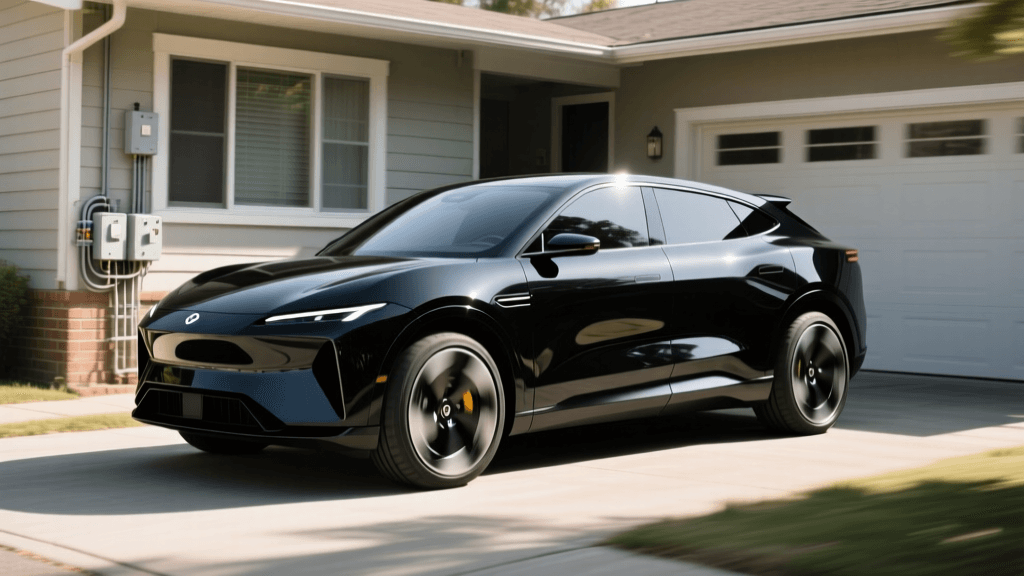
The Challenge of EV Charging in Older Homes
For owners of older homes, typically built before 1985, the transition to an electric vehicle presents a unique mathematical and electrical hurdle. Most mid-century homes were constructed with 60-amp or 100-amp main electrical service panels. Modern Level 2 EV chargers generally require a 240-volt circuit rated for 40 to 60 amps to deliver optimal charging speeds (roughly 32 to 48 continuous amps). However, the National Electrical Code (NEC) mandates that continuous loads—defined as those drawing power for three hours or more—must not exceed 80% of the circuit breaker's rating. Furthermore, the total continuous load on a main panel cannot exceed its rated capacity minus the calculated baseline load of the home.
If you have a 100-amp panel, your maximum safe continuous draw is 80 amps. If your home's baseline load (refrigerator, HVAC, lighting, and electronics) rests around 35 to 45 amps, you simply do not have the mathematical headroom to add a 48-amp EV charger without risking a tripped main breaker or, worse, an electrical fire. Historically, the only solution was a Service Panel Upgrade (SPU) to 200 amps. Today, Automated Load Management Systems (ALMS), commonly known as load balancing, offer a data-driven alternative that dynamically adjusts EV charging speeds based on real-time household energy consumption.
What is Automated Load Management?
Load balancing utilizes Current Transformer (CT) clamps that physically attach to the main service wires entering your electrical panel. These sensors read the magnetic field generated by the electrical current, calculating the exact real-time amperage draw of your entire home hundreds of times per second. This data is fed to the EV charger's microprocessor. If your home's baseline load spikes (for example, the air conditioning compressor kicks on while the electric oven is preheating), the charger instantly throttles down the amperage sent to the EV. When the household load drops, the charger ramps back up to its maximum capacity.
Data-Driven Comparison: Load Balancing vs. Panel Upgrade
To determine the most logical path for older homes, we must analyze the empirical data regarding costs, installation metrics, and operational efficiency. Below is a comparative breakdown of a traditional 200-amp Service Panel Upgrade versus installing a Load-Balancing Level 2 Charger on an existing 100-amp panel.
| Metric | Service Panel Upgrade (200A) | Hardware Load Balancing (CT Clamps) |
|---|---|---|
| Average Equipment Cost | $800 - $1,500 | $150 - $300 (CT Meter Add-on) |
| Average Labor Cost | $1,500 - $3,500 | $200 - $450 |
| Total Estimated Cost | $2,300 - $5,000 | $350 - $750 |
| Installation Time | 8 - 16 Hours | 2 - 4 Hours |
| Permitting Complexity | High (Utility Coordination Required) | Low (Standard EVSE Permit) |
| Max Continuous EV Amperage | 48A - 80A (Static) | 0A - 48A (Dynamic) |
| Utility Grid Impact | Requires Transformer Verification | Zero Grid Impact |
Cost Analysis and ROI Breakdown
According to the U.S. Department of Energy, upgrading an older home's electrical service is one of the most significant barriers to EV adoption, with total costs frequently exceeding $3,000 when utility fees, trenching, and new meter bases are factored in. In contrast, adding a CT-clamp load management kit to an existing 60-amp or 100-amp sub-panel or dedicated circuit costs an average of $450 in parts and labor. The return on investment (ROI) for load balancing is immediate, saving the homeowner roughly $2,000 to $4,000 upfront while entirely bypassing the bureaucratic delay of waiting for local utility companies to approve and schedule a main service swap.
Charging Speed and Throttling Metrics
The primary concern for EV owners considering load balancing is the fear of slow charging speeds. However, residential energy consumption data paints a different picture. Analysis of smart home energy profiles reveals that peak household loads (where HVAC, electric dryers, and cooking appliances run simultaneously) occur for only 2% to 5% of a 24-hour cycle. Because most EV charging occurs overnight between 11:00 PM and 6:00 AM, when baseline home loads drop below 15 amps, a load-balancing EV charger will operate at its maximum 48-amp capacity approximately 95% to 98% of the time. The throttling events are statistically negligible and rarely impact the driver's morning state-of-charge.
Top Load-Balancing EV Chargers for Older Homes
When selecting a system for an older home, the integration between the CT clamps and the EVSE (Electric Vehicle Supply Equipment) must be seamless. Here are the top data-backed performers in the load-management space:
- Emporia Level 2 EV Charger with VUE Smart Home Energy Monitor: Emporia utilizes a highly granular software approach. The VUE monitor tracks individual circuits, allowing the Emporia app to set hard limits based on the exact real-time capacity of your specific 100-amp panel. It is widely considered the most data-transparent option for tech-savvy homeowners.
- Wallbox Pulsar Plus with Power Meter: Wallbox offers a proprietary Power Meter that installs directly into the main breaker panel. It communicates via Wi-Fi with the Pulsar Plus charger, offering dynamic load balancing that adjusts in milliseconds. It is highly rated for its compact footprint and reliable wireless CT communication.
- Myenergi Zappi: A pioneer in dynamic load balancing, the Zappi features built-in CT clamps and does not require a separate hub for basic load management. It is particularly favored in older homes because of its robust, hardwired fail-safes; if the CT clamp loses communication, the charger defaults to a safe, low-amperage draw rather than shutting off completely.
Code Compliance and Permitting Data
Installing load management systems is not a 'hack' or a workaround; it is explicitly recognized and regulated by national electrical authorities. The National Fire Protection Association (NFPA) publishes the National Electrical Code (NEC), which governs electrical safety in the United States. Specifically, NEC Article 625.41(A) outlines the requirements for Automatic EVSE Load Management Systems. The code dictates that the load management system must be listed and identified for the purpose of controlling the EVSE load, ensuring that the total continuous load on the service panel never exceeds the allowable limits. Because the system is code-compliant, local Authorities Having Jurisdiction (AHJs) and electrical inspectors routinely approve these installations without requiring a main panel upgrade, provided the CT clamps are installed correctly and the EVSE is UL-listed for load shedding.
Conclusion: Which Data Points to Your Best Choice?
The data overwhelmingly supports hardware load balancing as the superior choice for older homes with 100-amp electrical service. A Service Panel Upgrade represents a massive capital expenditure ($2,500+) and introduces weeks of permitting delays, all to accommodate peak electrical loads that occur less than 5% of the time. By leveraging CT-clamp load balancing technology, older homes can safely integrate 48-amp Level 2 EV charging for under $800, maintaining NEC code compliance, protecting the home's electrical infrastructure, and delivering maximum charging speeds during the overnight hours when the grid and the home are at rest. For the data-driven EV owner, load balancing is not just a compromise; it is the most mathematically efficient solution on the market.