The Shift from Simple Charging to Smart Energy Hubs
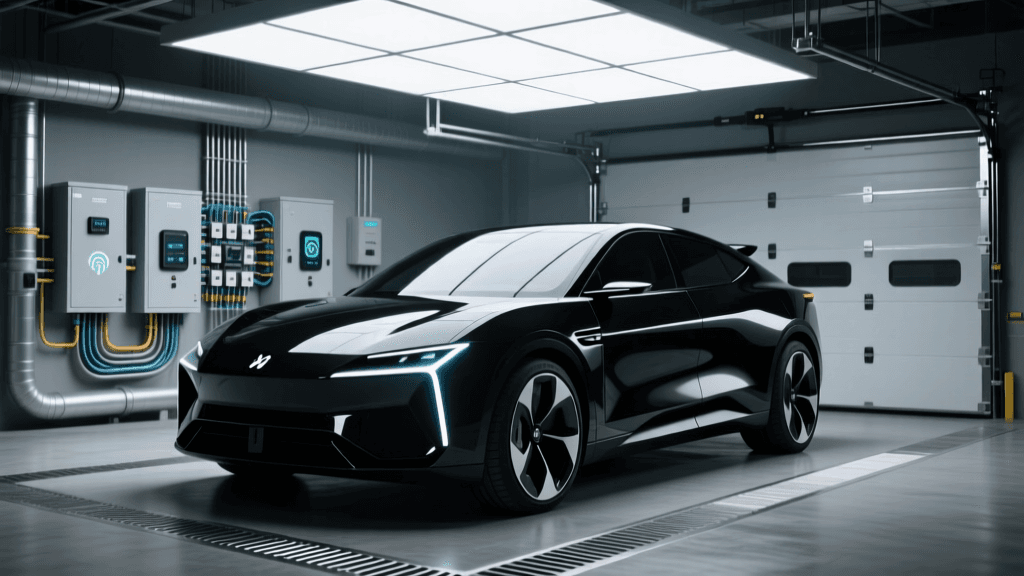
As the automotive industry accelerates toward an all-electric future, the role of the residential garage is undergoing a radical transformation. It is no longer merely a place to park; it is evolving into a decentralized smart energy hub. When conducting a garage electrical wiring assessment before an EV charger install, looking solely at today's needs is a costly mistake. Future-proofing your electrical infrastructure requires anticipating the integration of 800-volt vehicle architectures, bidirectional charging (Vehicle-to-Home or V2H), and AI-driven load management systems.
According to the National Renewable Energy Laboratory (NREL), the convergence of rooftop solar, stationary home batteries, and EV bidirectional capabilities will redefine residential grid interaction over the next decade. Therefore, your pre-installation wiring assessment must evaluate not just the capacity to draw power, but the infrastructure's readiness to manage, store, and potentially export it.
Core Assessment Step 1: Evaluating Main Panel Capacity
The first critical step in any garage wiring assessment is determining your main electrical panel's total amperage and available physical slots. Most modern homes are equipped with a 200-amp main service panel. However, as households add electric vehicle chargers, heat pumps, and induction stoves, a 200-amp panel is rapidly becoming the bottleneck of the modern electrified home.
During your assessment, locate your main breaker and note its rating. Next, count the available physical spaces. A Level 2 EV charger requires a 240-volt circuit, which takes up two adjacent slots in a standard breaker box. If your panel is full, you may need to install a sub-panel or utilize tandem breakers (where permitted by local codes) to free up space. For homeowners planning to adopt V2H systems or add extensive solar arrays in the near future, upgrading to a 400-amp service (often configured as dual 200-amp panels) is the emerging industry standard for luxury and high-load homes.
Understanding the NEC 80% Continuous Load Rule
When assessing your wiring, you must apply the National Fire Protection Association (NFPA 70) guidelines, specifically the National Electrical Code (NEC) Article 625 regarding EV charging. The NEC mandates that EV charging is considered a continuous load (operating for three hours or more). Consequently, the circuit must be derated by 80%.
- A 50-amp breaker (commonly used for NEMA 14-50 outlets) can only safely deliver 40 amps of continuous charging current.
- A 60-amp breaker supports 48 amps of continuous charging.
- To achieve an 80-amp continuous charge for future high-speed home chargers, you must install a 100-amp breaker and corresponding heavy-gauge wiring.
Future-Proofing Trends: Smart Panels and AI Load Management
One of the most significant industry trends impacting garage wiring assessments is the rise of smart electrical panels and AI-driven load shedding. Traditional wiring assessments often concluded that a main panel upgrade was mandatory if the calculated load exceeded 80% of the main breaker's capacity. Today, technologies like the Span.IO smart panel or Emporia's automated load management systems change this calculus.
These systems monitor real-time energy consumption at the circuit level. If you turn on the electric oven and the HVAC system simultaneously while your EV is charging, the smart panel can dynamically throttle the EV charger's amperage down to prevent tripping the main breaker. When assessing your garage wiring, consult with your electrician about integrating a smart sub-panel. This allows you to install a high-capacity 100-amp hardwired EV charger without necessarily paying thousands to upgrade your utility drop and main meter, provided the wiring from the main panel to the smart sub-panel is adequately sized.
Wiring Standards: Hardwired vs. NEMA 14-50 in the Modern Era
A pivotal decision during the assessment phase is choosing between a hardwired connection and a NEMA 14-50 receptacle. While the 14-50 outlet has been the traditional standard for its flexibility, the industry outlook heavily favors hardwired installations for future-proofing.
Why the shift? High-power Level 2 chargers (60A to 80A) exceed the safe, standardized limits of residential plug receptacles. Furthermore, the NEC now requires GFCI protection for all 14-50 receptacles. Because most premium EV chargers (like the ChargePoint Home Flex or Tesla Wall Connector) have built-in GFCI protection, adding a GFCI breaker to the panel creates nuisance tripping due to overlapping protective circuitry. Hardwiring bypasses the receptacle, eliminates the GFCI breaker requirement (relying on the charger's internal safety mechanisms), and provides a more stable thermal connection for daily, high-amperage use.
Garage Wiring Sizing and Voltage Drop Chart
When measuring the distance from your electrical panel to the proposed charger location, remember that wire gauge must increase if the run exceeds 50 feet to prevent voltage drop, which can degrade charging speeds and damage vehicle onboard chargers over time. Always use copper wire (THHN/THWN in conduit) rather than aluminum for indoor garage EV circuits.
| Target Continuous Amps | Required Breaker Size | Copper Wire Gauge (Under 50 ft) | Copper Wire Gauge (50-100 ft) | Future-Proofing Application |
|---|---|---|---|---|
| 32 Amps | 40 Amp | 8 AWG | 6 AWG | Standard PHEVs / Older EVs |
| 40 Amps | 50 Amp | 6 AWG | 4 AWG | NEMA 14-50 / Standard Level 2 |
| 48 Amps | 60 Amp | 4 AWG | 3 AWG | Hardwired Tesla / ChargePoint |
| 80 Amps | 100 Amp | 1/0 AWG | 2/0 AWG | Future 800V Architecture / V2H Prep |
Conduit Pathways and Physical Routing Assessment
Before cutting into drywall or trenching concrete, physically map the conduit pathway. The U.S. Department of Energy Vehicle Technologies Office emphasizes that safe, code-compliant routing is paramount for long-term infrastructure reliability. Assess whether the wiring will run through an unfinished basement, an attic, or surface-mounted along the garage wall.
If surface-mounting, plan for rigid metal conduit (RMC) or PVC Schedule 80 to protect the wiring from physical damage, especially near the driveway where vehicles maneuver. Ensure the conduit is sized generously; electricians recommend using a minimum 1-inch conduit even for 6 AWG wire. This empty space inside the conduit dissipates heat generated during continuous 40A+ charging sessions and allows for easy wire pulling if you ever need to upgrade to thicker 1/0 AWG cables for a bidirectional inverter setup in the future.
Cost Analysis: Basic Install vs. Future-Proofed Infrastructure
Understanding the financial implications of your assessment helps set realistic expectations. A basic assessment leading to a standard 50-amp NEMA 14-50 install with a short wire run typically costs between $600 and $1,200. However, if your assessment reveals the need for future-proofing, costs scale accordingly.
- Main Panel Upgrade (200A to 400A): $2,500 - $5,000. Essential for homes planning solar, battery storage, and multiple EVs.
- Smart Sub-Panel Integration: $1,500 - $3,000. Allows for AI load management without a utility drop upgrade.
- Hardwired 100-Amp Circuit (V2H Ready): $1,200 - $2,500. Includes heavy-gauge copper and specialized conduit routing.
While the upfront costs of a comprehensive, future-oriented wiring assessment and subsequent upgrades are higher, they protect your property value and prevent the need for secondary, invasive construction when bidirectional charging hardware becomes mainstream in the next three to five years.
Conclusion: Assess for Tomorrow, Install for Today
A garage electrical wiring assessment is no longer a simple calculation of available breaker slots. It is a strategic evaluation of your home's role in the broader smart grid. By understanding the NEC continuous load rules, anticipating the physical requirements of 800V architectures, and considering smart load management panels, you can transform your garage into a resilient, future-proof energy node. Always partner with a licensed electrician who understands not just current code compliance, but the rapidly evolving landscape of EV energy ecosystems.