The Strategic Value of Workplace EV Charging
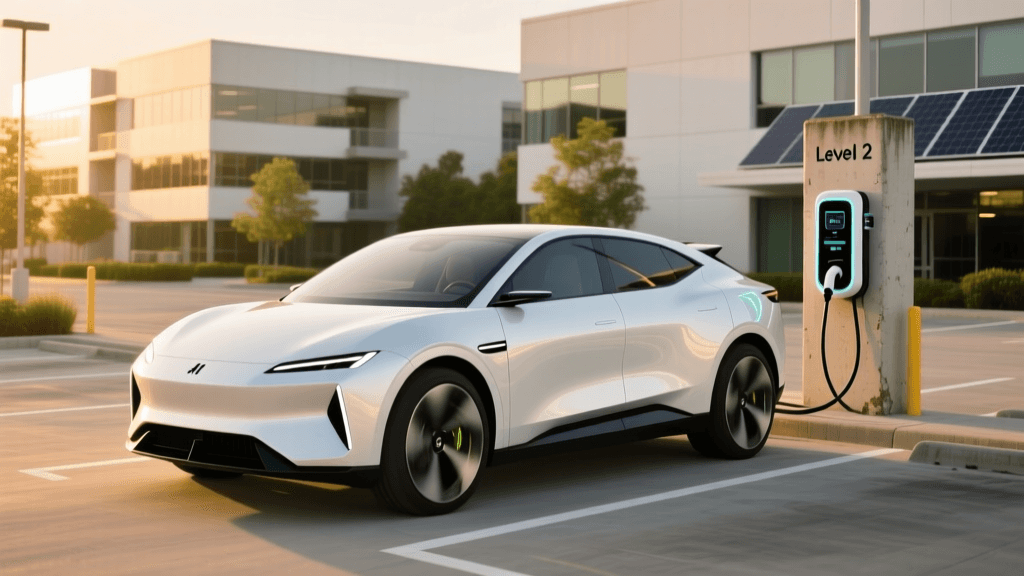
As electric vehicle (EV) adoption accelerates, commercial real estate managers and corporate fleet directors are recognizing workplace charging not just as an employee perk, but as a critical infrastructure investment. According to the U.S. Department of Energy's Alternative Fuels Data Center, workplace charging is the second most popular location for EV drivers to charge, behind only home charging. For businesses, offering Level 2 commercial charging stations bridges the gap for employees who live in multi-unit dwellings without access to overnight charging, directly supporting corporate ESG (Environmental, Social, and Governance) goals and boosting talent retention.
However, transitioning from a conceptual sustainability goal to a fully operational commercial EV charging plaza requires a rigorous cost and value analysis. Unlike residential setups, commercial installations demand networked hardware, advanced load management, ADA (Americans with Disabilities Act) compliance, and robust electrical infrastructure. This guide breaks down the exact costs, hidden expenses, and long-term ROI of installing commercial Level 2 chargers at your workplace.
Commercial Level 2 Hardware: Costs and Options
Commercial Level 2 chargers operate on 208V or 240V alternating current (AC), typically delivering between 6.2 kW and 19.2 kW of power per port. Unlike residential units, commercial hardware must be ruggedized (NEMA 3R or 4 rated for outdoor use), feature integrated payment systems, and support network connectivity for fleet management and employee billing.
Below is a comparison of leading commercial Level 2 charging stations and their estimated hardware costs:
| Brand & Model | Configuration | Max Power Output | Estimated Hardware Cost | Best Use Case |
|---|---|---|---|---|
| ChargePoint CT4021 | Dual-Port Pedestal | 19.2 kW (Total) | $6,000 - $7,500 | Premium corporate campuses, public-facing retail |
| Blink Networked Dual | Dual-Port Pedestal | 15.2 kW (Total) | $5,000 - $6,500 | Mixed-use commercial, municipal parking |
| Emporia Vue Commercial | Single/Dual Wall/Pedestal | 11.5 kW - 19.2 kW | $1,200 - $2,500 | Small business fleets, budget-conscious offices |
| Tesla Wall Connector (Commercial) | Single-Port Wall | 11.5 kW | $600 - $800 | Employee-only parking, Tesla-heavy fleets |
Note: Prices fluctuate based on supply chain conditions, cable length (18ft vs. 25ft), and optional branding or custom wrapping.
Electrical Infrastructure and Installation Labor
The hardware is often only 30% to 40% of the total project cost. The electrical infrastructure and labor required to deliver consistent, code-compliant power to a commercial parking lot represent the bulk of the capital expenditure.
Panel Upgrades and Switchgear
Most commercial buildings operate on 3-phase power. Adding multiple dual-port Level 2 chargers can easily draw 100 to 200 amps of continuous load. If your existing switchgear lacks the capacity, a commercial panel upgrade or the installation of a dedicated sub-panel can cost between $5,000 and $25,000, depending on the utility's requirements and the complexity of the main service entrance.
Trenching and Conduit
If your parking lot requires chargers to be installed far from the main electrical room, trenching through asphalt or concrete is necessary. Commercial trenching, conduit laying, and surface restoration typically cost between $50 and $150 per linear foot. A 100-foot trench run could add $5,000 to $15,000 to your project budget.
ADA Compliance and Safety Bollards
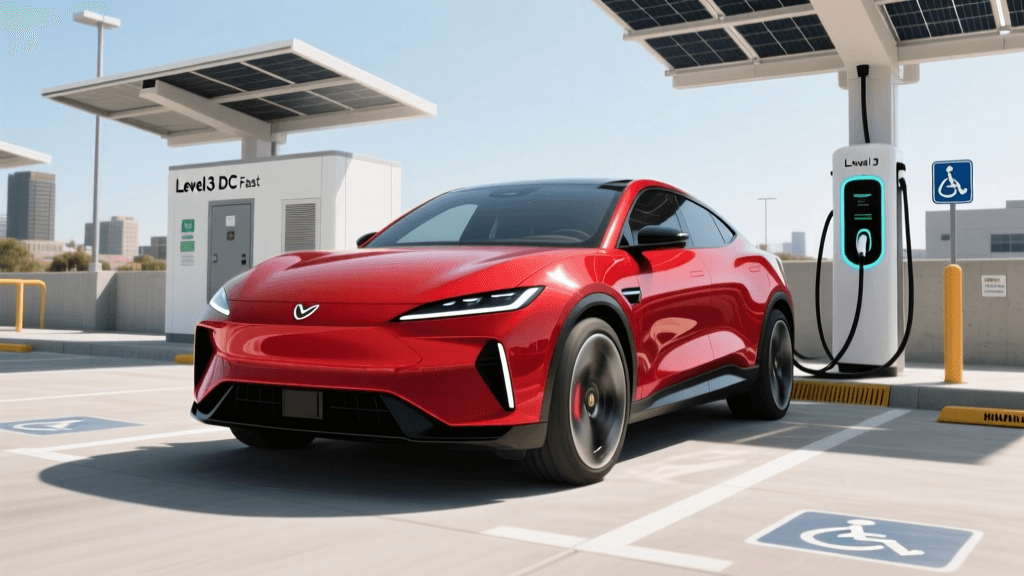
Commercial installations must comply with local building codes and the ADA. This requires designated accessible parking spaces, proper slope gradients, and reachable charger screens. Additionally, installing steel safety bollards filled with concrete to protect the EVSE from vehicle impacts costs roughly $300 to $600 per pedestal.
Navigating Commercial Permitting and Engineering
Unlike residential installations that might only require a simple pull-and-inspect permit, commercial EVSE deployments demand rigorous engineering and municipal oversight. Before a single trench is dug, facilities managers must invest in site surveys and electrical engineering drawings. A licensed professional engineer (PE) will typically charge between $1,500 and $4,000 to draft load calculation sheets, single-line diagrams, and site plans required for municipal building permits.
Permitting fees themselves vary wildly by jurisdiction but generally scale with the valuation of the electrical work. Expect to pay anywhere from $500 to $2,500 in municipal permit fees. Furthermore, commercial sites often require environmental reviews or stormwater management plans if significant asphalt trenching is involved, potentially adding weeks to the project timeline and thousands in consulting fees. Factoring in a 10% to 15% contingency budget for unforeseen engineering hurdles is a best practice for commercial real estate developers.
Network Fees and Smart Load Management
To prevent tripping main breakers and to manage energy costs, commercial chargers utilize software platforms. Network fees cover cellular connectivity, payment processing, and dashboard access for facility managers.
- Network SaaS Fees: Typically $25 to $40 per port, per month.
- Cellular Modem Fees: Often bundled, but can run $10 to $15 per month if billed separately.
- Payment Processing: Expect standard merchant processing fees (2.5% to 3.5% per transaction) if you charge employees or the public for electricity.
Dynamic Load Management (DLM): Instead of paying for a massive utility service upgrade, DLM software allows multiple chargers to share a single electrical circuit. The software dynamically allocates power based on how many vehicles are plugged in and their current state of charge. While DLM requires an upfront software licensing fee, it routinely saves businesses tens of thousands of dollars in avoided utility infrastructure upgrades.
Maximizing ROI: Tax Credits and Utility Rebates
The financial viability of workplace charging improves dramatically when leveraging federal and local incentives. The most significant federal incentive is the Alternative Fuel Vehicle Refueling Property Credit (Section 30C). Under the updated Inflation Reduction Act guidelines, commercial properties located in eligible low-income or non-urban census tracts can claim a tax credit of up to 30% of the total hardware and installation costs, capped at an incredible $100,000 per single item of property (per charging pedestal).
Furthermore, many local investor-owned utilities (IOUs) offer commercial EV make-ready programs. These programs cover 100% of the infrastructure costs on the utility side of the meter, and sometimes offer rebates of $2,000 to $5,000 per Level 2 port for the customer-side wiring. Facilities managers should consult the AFDC Incentives Search to identify state-specific grants and utility rebate programs before finalizing their electrical engineering plans.
Calculating the Long-Term Value and ROI
How does a business recoup a $20,000 to $50,000 investment per charging pedestal? The ROI is rarely generated through direct electricity markups. Instead, the value is realized through indirect corporate benefits:
- Talent Acquisition and Retention: In competitive job markets, workplace EV charging is a highly sought-after benefit that costs the employee nothing but provides immense daily value.
- Increased Dwell Time and Retail Spend: For commercial retail centers, Level 2 chargers keep high-income EV drivers on the property for 2 to 4 hours, significantly increasing the likelihood of secondary purchases.
- Fleet Electrification Readiness: For companies transitioning their corporate sales fleets or delivery vans to electric models, having on-site Level 2 infrastructure is non-negotiable. Depot charging ensures vehicles are topped off during off-peak hours, drastically reducing reliance on expensive public DC fast-charging networks and optimizing fleet operational uptime.
- Future-Proofing Real Estate: Commercial buildings equipped with EV infrastructure command higher lease rates and experience lower vacancy rates as corporate tenants mandate ESG-compliant workspaces.
Final Cost vs. Value Verdict
Installing commercial Level 2 chargers at a workplace is a capital-intensive project, with fully installed dual-port pedestals averaging between $12,000 and $25,000 before incentives. However, when factoring in the 30C federal tax credit, utility make-ready rebates, and the immense intangible value of employee satisfaction and property valuation, the ROI timeline is often shorter than anticipated. By partnering with certified commercial EVSE installers and utilizing dynamic load management software, businesses can deploy scalable, cost-effective charging networks that future-proof their commercial real estate assets for the electric decade ahead.