The Paradigm Shift to Commercial DCFC
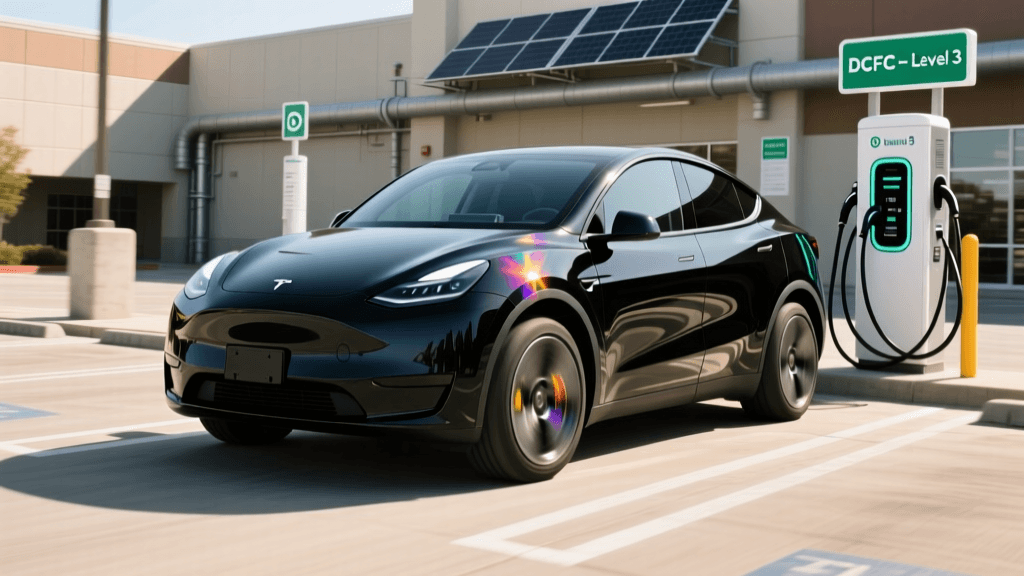
Deploying Level 3 Direct Current Fast Chargers (DCFC) in commercial environments is a monumental undertaking that transcends standard electrical contracting. Unlike Level 2 alternating current (AC) setups commonly found in residential driveways or retail parking lots, commercial DCFC stations operate at power levels ranging from 50 kW to over 350 kW. This requires high-voltage three-phase power, complex utility coordination, heavy civil engineering, and sophisticated network software. As the electric vehicle market accelerates, fleet operators, retail plaza owners, and highway corridor developers must adopt rigorous best practices to ensure their infrastructure is reliable, scalable, and compliant with emerging federal standards. According to the U.S. Department of Energy's Alternative Fuels Data Center, the rapid expansion of public and private fast-charging networks is critical to supporting the next generation of long-range EVs and heavy-duty electric trucks.
Phase 1: Site Selection, Traffic Flow, and Feasibility
The success of a commercial DCFC hub begins long before the first trench is dug. Site selection must account for high-visibility, ease of access, and proximity to major arterial roads or highway off-ramps. For commercial fleet depots or heavy-duty truck stops, civil engineers must design pull-through lanes with generous turning radii to accommodate vehicles towing trailers. Standard parking spaces are insufficient for Class 8 electric semis or delivery vans with long wheelbases.
Evaluating Grid Proximity
A site might be perfect from a real estate perspective, but if it is located at the end of a degraded or overloaded utility distribution line, the cost to upgrade the grid could render the project financially unviable. During the feasibility phase, developers must submit a preliminary load letter to the local utility to determine the available capacity at the nearest substation. If the site requires a new dedicated feeder line or substation upgrade, lead times can stretch from 12 to 24 months. Therefore, prioritizing sites with existing 480V three-phase commercial power or robust medium-voltage distribution lines is a crucial expert best practice.
Phase 2: Utility Coordination and Make-Ready Infrastructure
Utility coordination is universally cited by EV infrastructure developers as the most unpredictable variable in the installation timeline. Commercial DCFC sites often demand between 600 amps and 2,000+ amps of new electrical service. This necessitates the installation of new pad-mounted transformers, high-amperage switchgear, advanced metering infrastructure, and heavy-duty ground fault protection systems.
Make-Ready Programs and Demand Charges
Many utilities now offer 'make-ready' programs, where the utility covers the cost of the infrastructure upgrades up to the customer side of the meter. Navigating these programs requires meticulous documentation and early engagement. Furthermore, commercial operators must analyze utility rate structures, specifically peak demand charges. A single 350 kW charger operating at peak capacity can trigger massive monthly demand fees. To mitigate this, experts recommend integrating on-site battery energy storage systems (BESS) or solar canopies to perform peak shaving, thereby flattening the load profile and reducing long-term operational expenditures.
Phase 3: Hardware Selection and Network Architecture
Selecting the right DCFC hardware involves balancing upfront capital expenditures with long-term maintenance and uptime requirements. The market is dominated by established players like Tritium, ABB, ChargePoint, and BTC Power. When specifying hardware, operators must decide between standalone 50 kW units and modular power cabinets that utilize dynamic power sharing. Under the National Electric Vehicle Infrastructure (NEVI) formula program, federally funded highway corridor sites are generally required to feature at least four 150 kW CCS connectors capable of simultaneous charging. This mandate heavily influences commercial hardware selection, pushing developers toward scalable power cabinets.
Dynamic Power Sharing and Liquid-Cooled Cables
For sites deploying 150 kW or higher dispensers, dynamic power sharing is essential. A centralized 600 kW power cabinet can distribute electricity to multiple dispensers based on real-time vehicle demand. If only one vehicle is plugged in, it receives the maximum charge rate; as more vehicles connect, the power is intelligently divided. Additionally, for chargers exceeding 200 kW, liquid-cooled cables are mandatory. These cables are significantly thinner, lighter, and easier for customers to handle than traditional air-cooled copper cables, vastly improving the user experience and reducing cable wear and tear on the concrete pad.
Phase 4: Civil Engineering, Trenching, and Permitting
Civil works represent a massive portion of the DCFC installation budget. Trenching through asphalt or concrete to lay heavy-gauge DC cables and fiber-optic communication lines requires precise coordination. Expert installers strongly advise against direct burial of cables. Instead, all wiring should be pulled through oversized PVC or rigid metal conduit to protect against moisture, soil shifting, and future excavation damage.
Future-Proofing with Oversized Conduit
A golden rule in commercial EV infrastructure is to future-proof your underground pathways. If your current engineering drawings call for 2-inch conduit, install 4-inch or 6-inch conduit instead. The marginal cost of larger conduit during the initial trenching phase is negligible compared to the catastrophic cost of saw-cutting and re-trenching a newly paved lot five years later when upgrading to megawatt charging systems (MCS). Furthermore, all sites must adhere to local building codes and federal accessibility guidelines. The Joint Office of Energy and Transportation provides comprehensive frameworks for ensuring that charging plazas meet Americans with Disabilities Act (ADA) requirements, including proper aisle widths, slope gradients, and accessible user interfaces.
Commercial DCFC Installation: Cost and Timeline Breakdown
Understanding the financial and temporal scope of a commercial DCFC project is vital for securing capital and managing stakeholder expectations. The following table outlines the typical phases, timelines, and estimated costs for a multi-dispenser commercial plaza.
| Project Phase | Estimated Timeline | Average Cost Range (Per Dispenser) | Key Deliverables |
|---|---|---|---|
| Site Assessment & Feasibility | 2 - 4 Weeks | $2,000 - $5,000 | Utility load letter, traffic study, geotechnical report |
| Engineering & Design | 4 - 8 Weeks | $5,000 - $15,000 | Stamped civil/electrical drawings, ADA compliance plan |
| Utility Upgrades (Make-Ready) | 3 - 12 Months | $20,000 - $150,000+ | New transformer, switchgear, service drop, metering |
| Civil Works & Trenching | 4 - 8 Weeks | $15,000 - $40,000 | Concrete pads, bollards, conduit laying, asphalt patching |
| Hardware & Commissioning | 2 - 4 Weeks | $40,000 - $120,000 | Dispenser placement, termination, network integration |
As illustrated, utility upgrades and hardware procurement represent the most significant capital expenditures, while utility coordination dictates the overall project timeline. Leveraging state and federal incentives, such as those outlined by the Department of Energy's EV Charging Infrastructure programs, can dramatically offset these upfront make-ready costs and accelerate deployment.
Expert Best Practices for Long-Term Reliability
Installation is only the beginning of the DCFC lifecycle. Commercial operators must prioritize uptime, as a broken charger damages brand reputation and strands drivers. Implement a rigorous preventative maintenance schedule that includes cleaning air filters on power cabinets, inspecting liquid-cooling fluid levels, testing emergency stop mechanisms, and verifying the calibration of internal revenue-grade meters. Furthermore, ensure your network software operates on Open Charge Point Protocol (OCPP) 1.6J or 2.0.1. This open standard prevents vendor lock-in, allowing you to switch network service providers without having to rip and replace the physical hardware. Finally, install robust physical protections, including heavy-duty steel bollards, concrete wheel stops, and protective canopies, to prevent vehicular collisions and environmental degradation from destroying multi-million-dollar power cabinets.
Conclusion
Commercial Level 3 DC fast charger installation is a complex orchestration of electrical engineering, civil construction, and software integration. By prioritizing thorough site feasibility, oversizing underground infrastructure, and selecting modular, OCPP-compliant hardware, developers can build resilient charging hubs capable of serving the electric mobility demands of the next decade. Strategic planning and adherence to expert best practices will ultimately determine the operational success and profitability of any commercial fast-charging network.