The 100-Amp Bottleneck: Understanding Your Baseline Data
As electric vehicle (EV) adoption accelerates, homeowners are increasingly confronting a hidden infrastructure hurdle: the legacy 100-amp electrical panel. Homes built prior to 1985 were typically equipped with 100-amp service, which was entirely sufficient for the analog era. However, introducing a Level 2 EV charger into this ecosystem fundamentally alters the home's energy consumption profile. According to the U.S. Department of Energy, upgrading your electrical service is often the most significant variable in the total cost of home EV charging installation. This data-driven analysis breaks down the technical necessities, cost comparisons, and alternative solutions for upgrading from a 100A to a 200A electrical panel.
Load Calculation Analytics: Why Level 2 Chargers Trip the Scale
To understand the necessity of a panel upgrade, we must examine the data through the lens of the National Electrical Code (NEC), specifically Article 220 regarding load calculations. A standard 100-amp panel operating at 240 volts provides a maximum theoretical capacity of 24,000 watts (24 kW). However, the NEC mandates that continuous loads—defined as loads expected to run for three hours or more, which includes EV charging—must be derated to 80% of the breaker's capacity.
The Math Behind the Upgrade
- Total 100A Capacity: 24,000W
- Continuous Load Limit (80% Rule): 19,200W
- Typical Base Home Load (HVAC, Oven, Lighting): 8,000W - 12,000W
- Level 2 EV Charger (e.g., ChargePoint Home Flex at 48A): 11,520W (Requires a 60A breaker, reserving 14,400W of panel capacity)
When you add a 14,400W EV charging reservation to a baseline home load of 10,000W, the total demand reaches 24,400W. This exceeds the 19,200W continuous safety threshold of a 100A panel, creating a severe fire hazard and guaranteeing that the main breaker will trip during peak usage. Upgrading to a 200A panel doubles your capacity to 48,000W (38,400W continuous), providing ample headroom for simultaneous EV charging, HVAC operation, and electric cooking. For detailed safety standards, refer to the National Fire Protection Association (NFPA 70) guidelines.
Cost Comparison: Traditional 200A vs. Smart Panel Upgrades
When the data dictates that a panel upgrade is unavoidable, homeowners face a bifurcated market: the traditional 200A breaker box versus the emerging category of Smart Electrical Panels. Below is a comparative cost and feature analysis based on national average installation data.
| Feature / Metric | Traditional 200A Panel (e.g., Square D Homeline) | Smart Panel (e.g., SPAN Smart Panel) |
|---|---|---|
| Average Material Cost | $400 - $800 | $2,500 - $3,500 |
| Average Labor Cost | $1,100 - $2,200 | $1,500 - $2,500 |
| Total Estimated Cost | $1,500 - $3,000 | $4,000 - $6,000 |
| Installation Time | 4 - 8 Hours | 6 - 10 Hours |
| Circuit-Level Control | None (Manual breakers only) | App-based control per circuit |
| Solar / Battery Integration | Requires external sub-panels | Native, seamless integration |
| Outage Management | Full home blackout | Prioritizes critical circuits (e.g., fridge, EV) |
While the traditional 200A panel remains the most cost-effective route for simple EV charging needs, the data suggests that smart panels offer a superior long-term ROI for homes planning to adopt solar arrays, home battery backups (like the Tesla Powerwall), and V2H (Vehicle-to-Home) bidirectional charging in the future.
Hidden Variables: Utility Drop and Mast Upgrades
A critical data point often omitted from initial contractor quotes is the condition of the utility service drop. Upgrading the internal panel to 200A is only half the battle; the wires delivering power from the street must also support the increased amperage.
Most 100A services utilize 2 AWG aluminum or 3 AWG copper wiring. A 200A service requires thicker 2/0 AWG aluminum or 1/0 AWG copper wiring. If your home utilizes an overhead service drop, the weatherhead, mast, and service entrance conductors must be replaced. According to utility guidelines from providers like Pacific Gas and Electric (PG&E), the utility company must be notified to upgrade the meter socket and the external service lines. This coordination can add $500 to $1,500 to the project cost and extend the project timeline by 2 to 6 weeks, depending on local utility backlog data.
The Alternative Data: Automated Load Management Systems (ALMS)
Before committing to a $3,000+ panel upgrade, data-driven consumers should evaluate Automated Load Management Systems (ALMS). ALMS technology allows you to install a high-amperage Level 2 charger on an existing 100A panel by dynamically throttling the charger's power draw based on the home's real-time electrical consumption.
ALMS Cost-Benefit Analysis
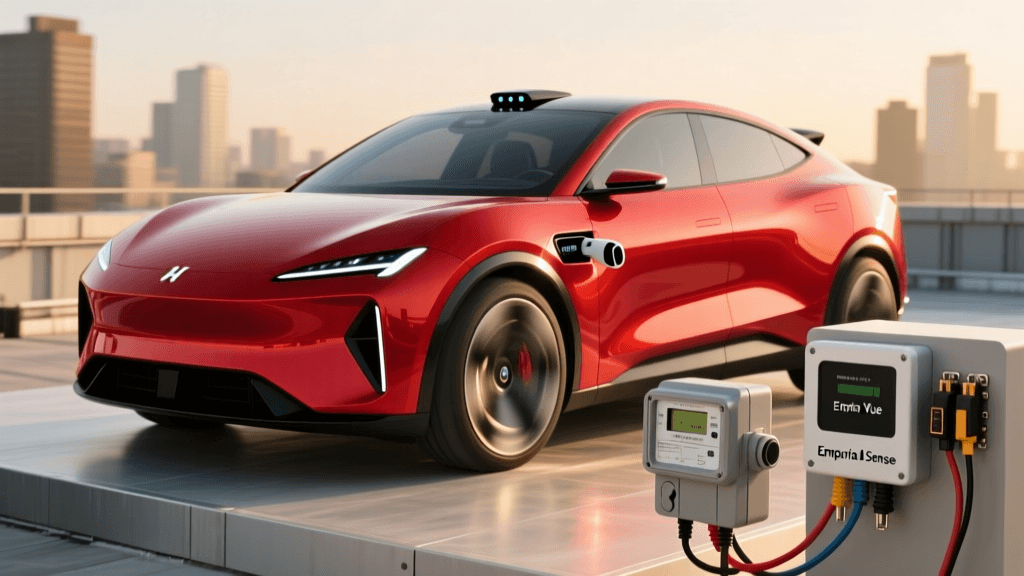
- Hardware Required: Smart charger with CT clamps (e.g., Wallbox Pulsar Plus with Power Meter) or a smart monitor (Emporia Vue 3) paired with a compatible charger.
- Average Hardware Cost: $150 - $300 (for the monitoring module/CT clamps).
- Average Installation Cost: $300 - $600 (significantly less labor than a full panel swap).
- Total ALMS Cost: $450 - $900.
The Trade-off: The data shows that ALMS reduces average charging speeds. If your HVAC and electric oven turn on simultaneously, the ALMS will drop the EV charger from 48 amps down to 16 amps to prevent the 100A main breaker from tripping. For commuters who park overnight and have 10+ hours to charge, this data-driven workaround saves thousands of dollars. For high-mileage drivers requiring rapid turnaround times, the 200A physical upgrade remains the mandatory choice.
Permitting and Local Code Compliance
Every jurisdiction requires a permit for a service upgrade. The permitting process ensures that the new 200A panel meets local grounding, bonding, and clearance requirements. Data from municipal building departments indicates that permit fees for service upgrades typically range from $150 to $400. Furthermore, modern NEC codes require Arc Fault Circuit Interrupters (AFCI) and Ground Fault Circuit Interrupters (GFCI) on specific circuits, which increases the material cost of the new 200A panel compared to the original 100A panel installed decades ago. Factoring in a 10% contingency for code-mandated upgrades (like updating the home's grounding rod or water pipe bonding) is a statistically sound budgeting strategy.
ROI and Real Estate Impact
Does the data support a positive Return on Investment (ROI) for a 200A upgrade? Real estate analytics indicate that 200-amp service has transitioned from a luxury to a baseline expectation for modern homebuyers. A 100A panel is frequently flagged during home inspections as a 'functional obsolescence' issue, often resulting in buyer credits or reduced offer prices. By upgrading to 200A and installing a 240V NEMA 14-50 receptacle or hardwired EV charger, you effectively future-proof the property. While you may not recoup 100% of the $3,000 upgrade cost in immediate home value, you eliminate a major point of friction during the sale process, reducing time-on-market metrics.
Conclusion: Let the Data Guide Your Installation
Upgrading from a 100A to a 200A electrical panel is a significant capital expenditure, averaging between $1,500 and $3,000 for traditional setups, and up to $6,000 for smart panels. However, the physics of continuous electrical loads and the NEC 80% rule leave little room for compromise when installing a 48-amp Level 2 EV charger. By analyzing your specific daily driving data, evaluating the utility drop requirements, and comparing the long-term ROI of smart panels versus traditional breaker boxes, you can make an informed, financially sound decision. For those with flexible charging schedules, exploring ALMS alternatives offers a highly efficient, low-cost bridge to EV adoption without the immediate need for heavy infrastructure overhauls.