The Critical Role of Weatherproofing in Outdoor EVSE Installations
Installing a Level 2 Electric Vehicle Supply Equipment (EVSE) outdoors exposes your electrical infrastructure to some of the most unforgiving environmental conditions. From driving rain and windblown dust to UV degradation and freezing ice, outdoor EV chargers face constant threats that can compromise safety and functionality. As EV adoption accelerates, ensuring your home or commercial charging setup is properly weatherproofed is not just a best practice; it is a critical safety requirement.
According to the U.S. Department of Energy, ensuring your home charging equipment is rated for outdoor use and properly shielded from the elements is a fundamental step in preventing electrical hazards and extending the lifespan of your investment. This expert guide breaks down the essential weatherproofing requirements, material selections, and installation techniques necessary for a bulletproof outdoor EV charging station.
Decoding NEMA and IP Ratings for EV Chargers
Before selecting an EV charger or an outdoor enclosure, you must understand the ingress protection ratings that dictate how well the equipment resists moisture and particulates. In North America, the National Electrical Manufacturers Association (NEMA) ratings are the standard, while international products often use the Ingress Protection (IP) code.
| Rating Standard | Protection Level | Best Use Case for EV Charging |
|---|---|---|
| NEMA 3R | Protection against falling rain, sleet, and ice formation. | Covered patios, carports, and mild climates. |
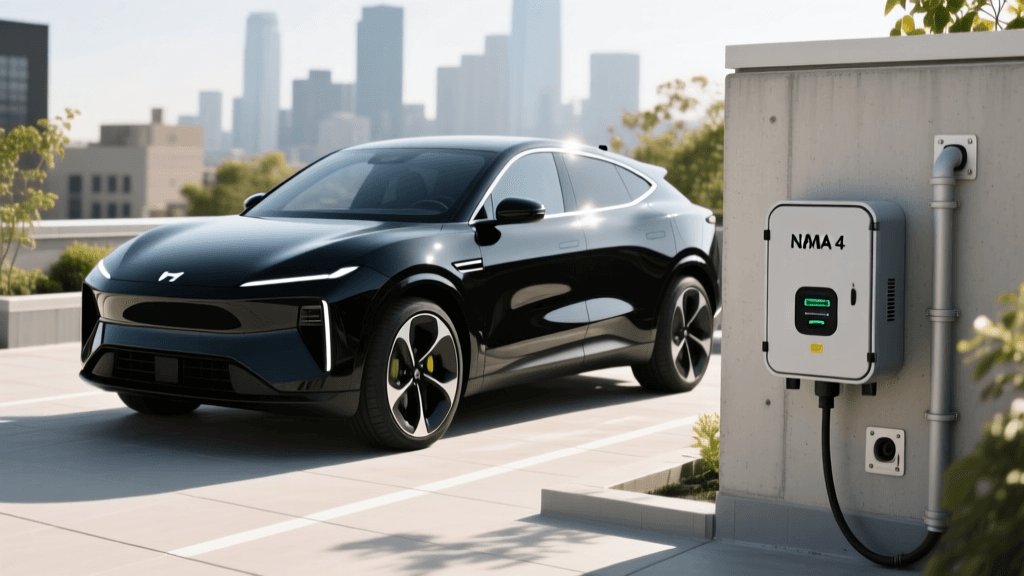
| NEMA 4 | Protection against windblown dust, rain, splashing water, and hose-directed water. | Open driveways, exposed exterior walls, and commercial lots. |
| NEMA 4X | Same as NEMA 4, but with added corrosion resistance. | Coastal areas with salt air, and regions using heavy road salt in winter. |
| IP65 | Dust-tight and protected against low-pressure water jets from any direction. | Standard outdoor residential installations. |
| IP66 | Dust-tight and protected against powerful, heavy seas or high-pressure water jets. | Severe weather zones and flood-prone driveways. |
Expert Tip: Always aim for a minimum of NEMA 4 or IP65 for any fully exposed outdoor EV charger. If you live within five miles of the ocean or in a region that heavily salts winter roads, invest in a NEMA 4X rated enclosure or charger housing to prevent premature rust and internal short circuits.
Selecting the Right Outdoor-Rated Level 2 Chargers
Not all EV chargers are created equal when it comes to outdoor durability. When shopping for an outdoor EVSE, verify the manufacturer's explicit weatherproofing claims. Some of the most reliable outdoor-rated units on the market include:
- ChargePoint Home Flex: Rated NEMA 4, featuring a ruggedized exterior and a holstered connector design that prevents water ingress into the plug pins.
- Tesla Wall Connector: Rated NEMA 4 (IP65 equivalent), designed with a sealed glass faceplate and internal potting to protect sensitive logic boards from humidity.
- Emporia Vue: A cost-effective, NEMA 4 rated option that includes a robust outdoor holster to keep the connector off the ground and away from puddles.
Even if the charger itself is NEMA 4 rated, the physical connector plug must never be left resting on the ground. Always install the manufacturer-provided holster at least 18 inches above grade to prevent snow burial and mud splashback.
Conduit, Wiring, and Drip Loop Best Practices
The most common point of failure in outdoor EV installations is not the charger itself, but the conduit and wiring transitions. Water is relentless and will travel via capillary action down wires and into your electrical panel if not properly stopped.
Choosing the Right Conduit
For outdoor runs, avoid standard PVC Schedule 40 if it is exposed to direct sunlight, as UV rays will make it brittle over time. Instead, use PVC Schedule 80 or UV-resistant Liquid-Tight Flexible Metal Conduit (LFMC). LFMC is highly recommended for the final transition from the rigid conduit to the EVSE enclosure because it absorbs vibrations and allows for precise alignment without stressing the weatherproof seals.
The Mandatory Drip Loop
Every outdoor conduit run entering a charger, junction box, or electrical panel must feature a drip loop. A drip loop is a U-shaped bend in the conduit or wiring that dips at least 6 inches below the entry point before rising back up to enter the enclosure. This ensures that rainwater running down the conduit drips off the bottom of the loop rather than flowing directly into the electrical fitting.
Sealing Fittings and Dielectric Grease
When transitioning from outdoor conduit into an indoor panel or a NEMA-rated box, you must use a conduit sealing fitting (often referred to as a Myers hub or sealing hub). These fittings feature a rubber gasket that compresses tightly around the conduit. Furthermore, apply a layer of dielectric grease or silicone sealant to the threads of all outdoor conduit connections to prevent moisture migration and galvanic corrosion between dissimilar metals.
Electrical Panel and Disconnect Weatherproofing
If your electrical panel is located outdoors, or if you are installing a dedicated outdoor subpanel or disconnect switch for your EV charger, the enclosure must be rated for the environment. A standard NEMA 1 (indoor) panel with a weatherproof cover is insufficient for EV charging loads, which generate sustained heat.
Use NEMA 3R or NEMA 4 painted steel or fiberglass enclosures for outdoor breakers. Fiberglass enclosures are increasingly preferred by master electricians because they do not rust, they provide excellent UV resistance, and they do not suffer from the condensation issues that metal boxes experience during rapid temperature drops. Ensure the panel features a breathable drain plug at the bottom to allow any internal condensation to escape, preventing the buildup of corrosive humidity inside the breaker box.
Strategic Mounting and Environmental Shielding
Where and how you mount the EVSE drastically impacts its longevity. Follow these structural best practices:
- Mounting Height: Install the charger and its holster between 18 and 24 inches above the ground. This clears standard snow accumulation levels and prevents damage from landscaping equipment like weed whackers.
- Hardware Selection: Never use standard zinc-plated lag bolts for outdoor mounting. They will rust and fail within a few years. Use 304 or 316 stainless steel lag screws with rubber-backed washers to seal the mounting holes in the wall.
- Sun and UV Shielding: While NEMA 4 chargers are water-tight, prolonged exposure to direct, intense UV radiation can degrade plastic holsters and charging cables over time. If possible, mount the unit on a north-facing wall (in the Northern Hemisphere) or install a simple polycarbonate awning above the charger to provide shade.
- Flood Plain Avoidance: Never mount an EVSE or electrical disconnect below the historical flood line of your property. If your driveway slopes toward the house, install trench drains to divert runoff away from the charging zone.
NEC Code Compliance and Safety Inspections
Weatherproofing intersects directly with electrical safety codes. The National Electrical Code (NEC) Article 625 outlines the specific requirements for Electric Vehicle Charging System Equipment. When installing outdoors, pay special attention to the following code mandates:
- GFCI Protection: NEC requires Ground Fault Circuit Interrupter (GFCI) protection for all receptacles and hardwired EVSEs installed outdoors. Because outdoor environments are prone to moisture, nuisance tripping can occur if water enters the connection. Ensure your GFCI breaker is housed in a weatherproof enclosure if located outside.
- Working Clearances: Maintain a minimum 30-inch wide and 36-inch deep clear working space in front of the electrical panel or disconnect switch, free from snow, shrubs, and stored items.
- Cable Management: The NEC prohibits the charging cable from resting across public walkways where it poses a trip hazard or can be damaged by foot traffic and snow shovels. Use retractable cable management systems or ceiling-mounted pulleys for long cables (25+ feet).
Ongoing Maintenance and Annual Inspections
Even the most meticulously weatherproofed outdoor EV charger requires routine maintenance. Experts recommend a bi-annual inspection schedule (spring and fall). During these checks, inspect the charging cable for micro-cracks in the rubber jacket, which can allow moisture to reach the internal copper wiring. Check the silicone seals around the charger's faceplate and reapply outdoor-rated silicone caulk if peeling is observed. Finally, open the holster and wipe out any accumulated debris, spider webs, or moisture, applying a small amount of electrical contact cleaner to the plug pins to ensure optimal conductivity and prevent arcing.
By adhering to these expert weatherproofing standards, utilizing NEMA 4 enclosures, and following strict conduit sealing protocols, you ensure your outdoor EV charging station remains safe, code-compliant, and fully operational through every season.