The Critical Importance of Outdoor Weatherproofing
Installing an Electric Vehicle Supply Equipment (EVSE) unit outdoors introduces a unique set of environmental challenges that indoor installations simply do not face. From driving rain and snow to UV radiation and extreme temperature fluctuations, outdoor EV chargers must be meticulously weatherproofed to ensure long-term reliability and user safety. Water intrusion into high-voltage electrical components can lead to catastrophic failures, including short circuits, electrical fires, and severe shock hazards. According to the Electrical Safety Foundation International (ESFI), adhering to strict outdoor electrical safety protocols is non-negotiable for residential and commercial charging setups.
As a senior installation expert, I have inspected hundreds of outdoor EV charging stations. The most common point of failure is rarely the charger itself—most premium units like the ChargePoint Home Flex or Tesla Wall Connector are built with robust internal weatherproofing. Instead, failures almost always originate at the installation boundaries: the junction boxes, conduit connections, and receptacle enclosures. This comprehensive guide details the expert best practices for weatherproofing your outdoor EV charger installation, ensuring it withstands the elements for years to come.
Understanding NEMA and IP Ratings for EV Enclosures
Before selecting materials, it is vital to understand the ingress protection ratings that govern electrical enclosures. The National Electrical Manufacturers Association (NEMA) and the Ingress Protection (IP) rating system provide standardized metrics for weather resistance. While many consumer EV chargers boast an IP55 or IP65 rating, the external junction boxes and receptacles housing your hardwired connections or NEMA 14-50 outlets must meet or exceed these standards.
| Enclosure Rating | Protection Level | Best Use Case |
|---|---|---|
| NEMA 3R | Protection against rain, sleet, snow, and ice formation. | Mild climates, covered carports, and shaded areas. |
| NEMA 4 | Protection against splashing water and hose-directed water. | Exposed driveways, frequent car washing areas. |
| NEMA 4X | NEMA 4 protection plus corrosion resistance. | Coastal areas, heavy snow regions using road salt. |
| IP65 | Dust tight and protected against low-pressure water jets. | Equivalent to NEMA 4 for general outdoor use. |
| IP67 | Dust tight and protected against temporary water immersion. | Flood-prone zones, extreme weather environments. |
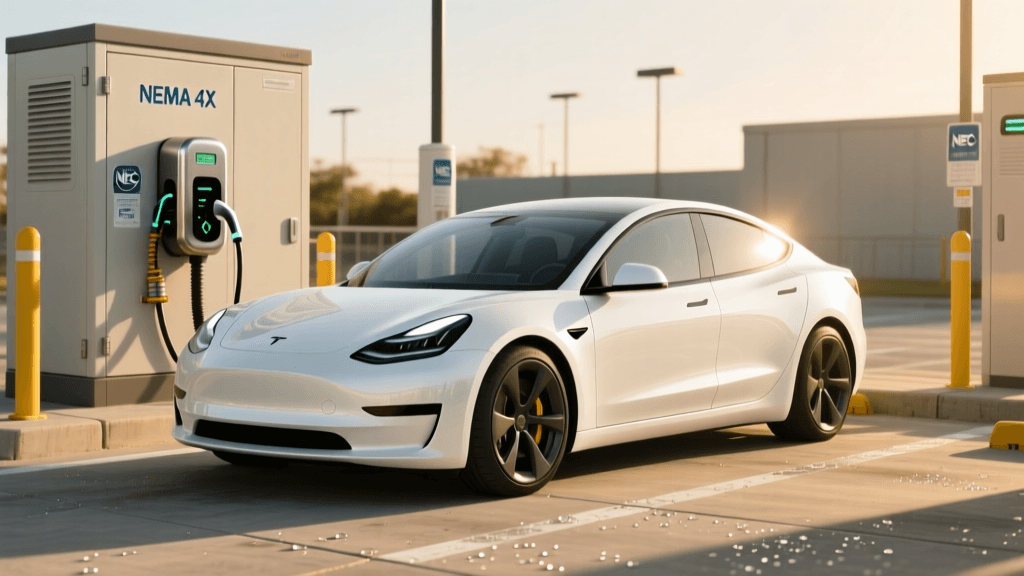
For permanent outdoor installations, NEMA 4X is the gold standard. The 'X' denotes corrosion resistance, which is critical if you live near the ocean or in northern climates where winter road salt and de-icing chemicals are prevalent. Using a standard NEMA 3R box in these environments will result in rusted hinges and compromised seals within a single winter season.
Essential Weatherproofing Components & Best Practices
1. NEMA 4X Enclosures and Hub Seals
When routing conduit into an outdoor junction box or a NEMA 14-50 weatherproof receptacle box, the entry points (hubs) are the most vulnerable areas for water ingress. Always use threaded conduit hubs paired with neoprene or rubber O-ring gaskets. Furthermore, apply a bead of outdoor-rated, UV-stable silicone sealant (such as GE Silicone II or Dow Corning 795) around the exterior edge of the hub where it meets the enclosure. Never rely on cheap acrylic caulks, which will crack and peel after a few cycles of freezing and thawing.
2. Liquid-Tight Flexible Metal Conduit (LFMC)
Rigid PVC conduit is common, but UV exposure can make it brittle over time. For the final run connecting to the EVSE or an outdoor disconnect box, Liquid-Tight Flexible Metal Conduit (LFMC) with a UV-resistant PVC jacket is highly recommended. Ensure you use liquid-tight connectors with internal sealing rings. According to the Department of Energy's Alternative Fuels Data Center, proper conduit selection and sealing are vital to maintaining the integrity of the charging infrastructure against environmental degradation.
3. The Drip Loop: A Non-Negotiable Requirement
Gravity is water's guiding force. A drip loop is a deliberate U-shaped dip in the EV charging cable or external wiring before it enters the charger enclosure or wall receptacle. This ensures that any water running down the cable will drip off the bottom of the loop rather than traveling directly into the electrical housing. If you are hardwiring the unit through an exterior wall, the conduit itself must feature a downward sweep or drip loop before entering the wall penetration. Seal the wall penetration with fire-rated, weatherproof expanding foam or a silicone-based exterior sealant to prevent moisture and pests from entering the home's interior.
4. In-Use Weatherproof Covers for NEMA 14-50 Receptacles
If you are installing a NEMA 14-50 outlet rather than hardwiring, you must use an 'in-use' weatherproof cover. These deep, bubble-style or angled aluminum covers allow the EV charger plug to remain inserted while the cover is fully closed and latched. Standard flat weatherproof covers are illegal and unsafe for EV charging because they cannot close when the heavy, thick EV cable is plugged in, leaving the live prongs exposed to rain and snow.
Navigating Local Electrical Codes (NEC Article 625)
The National Electrical Code (NEC) Article 625 specifically governs Electric Vehicle Charging Systems. For outdoor installations, the NEC mandates strict adherence to weatherproofing and Ground Fault Circuit Interrupter (GFCI) protection. The 2020 and 2023 NEC updates require GFCI protection for all receptacles rated 125-volt to 250-volt, single-phase, 40 amperes to 150 amperes supplying EVSE. This means your NEMA 14-50 outdoor outlet must be protected by a GFCI breaker.
However, GFCI breakers are notoriously sensitive to moisture. If your outdoor enclosure or conduit allows even minor condensation to build up, it can cause nuisance tripping, leaving your vehicle uncharged in the morning. To prevent this, ensure your outdoor panel or disconnect box features built-in weep holes at the bottom to allow condensation to escape, and use anti-condensation plugs in the conduit hubs. The National Fire Protection Association (NFPA) emphasizes that combining GFCI requirements with rigorous moisture management is essential for safe, reliable outdoor charging.
Maintenance Tips for Extreme Climates
- Coastal Regions: Inspect NEMA 4X enclosures bi-annually. Rinse the exterior with fresh water to remove salt spray buildup, which can degrade gaskets over time.
- Heavy Snow & Ice: Mount the EV charger and junction boxes at least 18 to 24 inches above the ground to prevent burial in snow drifts. Avoid using metal shovels or ice melt chemicals near the base of the charging pedestal or wall mount.
- High UV / Desert Climates: UV radiation destroys rubber gaskets and plastic conduit. Apply a UV-protectant spray to rubber seals annually, and consider installing a physical sunshade or carport over the charging station to prolong the life of the LCD screens and plastic housings.
Conclusion
Weatherproofing an outdoor EV charger is not merely about protecting the hardware; it is about safeguarding your home and your family from high-voltage electrical hazards. By investing in NEMA 4X enclosures, utilizing liquid-tight conduit with proper hub seals, enforcing strict drip loop protocols, and adhering to NEC Article 625, you ensure a resilient and code-compliant installation. Never cut corners on sealants or enclosure ratings—the upfront cost of premium weatherproofing materials is a fraction of the cost of replacing a water-damaged EV charger or repairing electrical fire damage.