The 100-Amp Bottleneck: Why EV Owners Are Upgrading
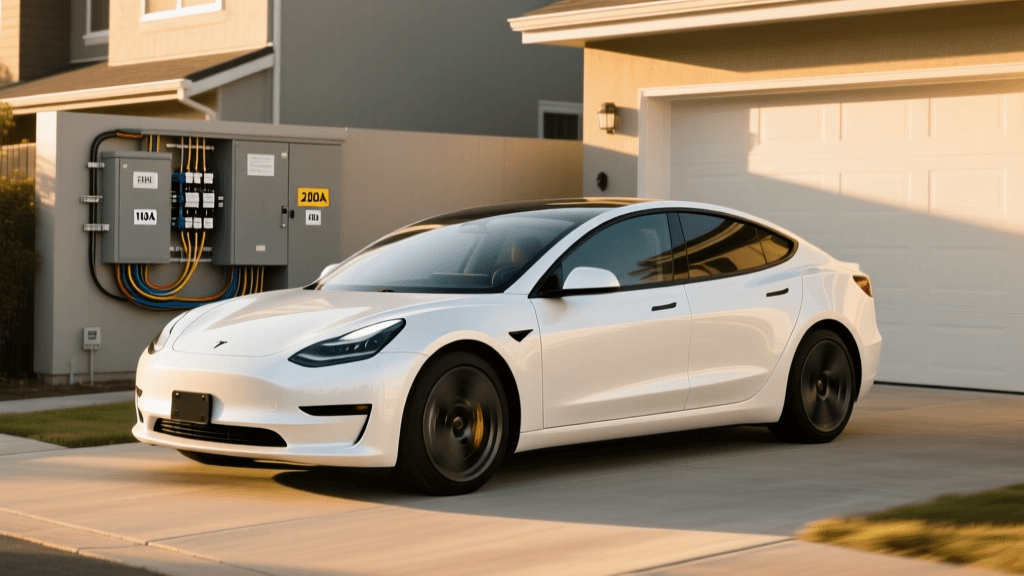
As electric vehicle adoption accelerates, homeowners are rapidly discovering a hidden bottleneck in their property's infrastructure: the 100-amp electrical panel. While a 100-amp service was considered standard and sufficient for many homes built between the 1960s and 1990s, the addition of a Level 2 EV charger fundamentally alters a home's electrical load profile. According to the U.S. Department of Energy, Level 2 charging operates at 240 volts and typically draws between 32 and 48 amps, demanding a massive, continuous draw that older panels simply cannot accommodate safely alongside modern household appliances.
For EV owners facing this limitation, the most common solution is a 100A to 200A electrical panel upgrade. However, this is a major capital expenditure. In this data-driven comparison analysis, we break down the electrical mathematics, the true costs of a 200-amp upgrade, utility infrastructure constraints, and the emerging data on smart load management alternatives that might save you thousands of dollars.
The Mathematics of Home Electrical Capacity
To understand why a 100-amp panel fails under EV charging loads, we must look at the National Electrical Code (NEC) and the physics of split-phase power. Most North American homes receive 240V split-phase power. A 100-amp panel provides a maximum theoretical capacity of 24,000 watts (100A x 240V). A 200-amp panel doubles this to 48,000 watts.
However, the NEC mandates strict safety margins for continuous loads—defined as loads expected to run for three hours or more. Since EV charging easily exceeds this threshold, NEC Article 210.20 and 215.3 require that continuous loads be limited to 80% of the breaker and panel's rated capacity.
The 80% Continuous Load Rule:
100A Panel Maximum Continuous Load = 80 Amps (19,200 Watts)
200A Panel Maximum Continuous Load = 160 Amps (38,400 Watts)
A typical 48-amp Level 2 EVSE (Electric Vehicle Supply Equipment) requires a 60-amp dedicated breaker and draws 11,520 watts continuously. If you plug in an EV drawing 48 amps on a 100-amp panel, you only have 32 amps (7,680 watts) remaining for the entire rest of your home. If your central air conditioner kicks on (drawing 15-20 amps) while the electric oven or dryer is running, the main 100-amp breaker will trip, cutting power to your entire house.
Data Table: Typical Home Peak Load vs. Panel Capacity
The U.S. Energy Information Administration (EIA) notes that space cooling and water heating dominate home energy use. Below is a data matrix demonstrating how quickly a 100A panel reaches critical mass during peak summer EV charging sessions.
| Appliance / System | Typical Breaker Size | Estimated Continuous Draw | Wattage (at 240V) |
|---|---|---|---|
| Level 2 EV Charger (48A) | 60 Amp | 48 Amps | 11,520 W |
| Central HVAC / AC Unit | 30 - 40 Amp | 22 Amps | 5,280 W |
| Electric Oven / Range | 50 Amp | 25 Amps | 6,000 W |
| Electric Water Heater | 30 Amp | 24 Amps | 5,760 W |
| Electric Clothes Dryer | 30 Amp | 22 Amps | 5,280 W |
| Total Peak Demand | N/A | 141 Amps | 33,840 W |
Analysis: A peak demand of 141 amps catastrophically exceeds the 80-amp continuous safety limit of a 100A panel, and even pushes the boundaries of a standard 200A panel if all appliances run simultaneously without load management.
Cost Analysis: What Does a 100A to 200A Upgrade Cost?
Upgrading your electrical service is not merely a matter of swapping the metal box on your wall. It involves the utility company, heavy-gauge wiring, and strict municipal permitting. Based on national contractor data and electrical supply pricing, here is the cost breakdown for a standard 200-amp service upgrade using premium components like a Square D Homeline or Eaton BR 200-Amp main breaker panel.
| Upgrade Component | Estimated Cost Range | Data Notes |
|---|---|---|
| 200A Panel & Breakers | $400 - $800 | Varies by busbar material (copper vs. aluminum) |
| Heavy Wire (2/0 AWG Copper) | $300 - $600 | Required for 200A service; price fluctuates with commodity markets |
| Electrician Labor (1-2 Days) | $1,200 - $2,500 | Depends on regional labor rates and home accessibility |
| Permits & Inspections | $150 - $400 | Municipal fees; NEC Article 220 load calculation required |
| Utility Service Drop Upgrade | $500 - $2,000 | Required if utility lines from the pole are rated below 200A |
| Drywall Repair & Painting | $200 - $500 | Often required if panel relocation or wall cutting is needed |
| Total Estimated Cost | $2,750 - $6,800 | National average sits near $3,500 for straightforward swaps |
The Data-Driven Alternative: Dynamic Load Management
Because a full panel upgrade can cost upwards of $5,000, the EV industry has developed a data-driven alternative: Dynamic Load Management (DLM). Instead of increasing the physical capacity of your home, DLM uses current transformers (CT clamps) and smart software to monitor your home's real-time energy usage and dynamically throttle the EV charger's amperage.
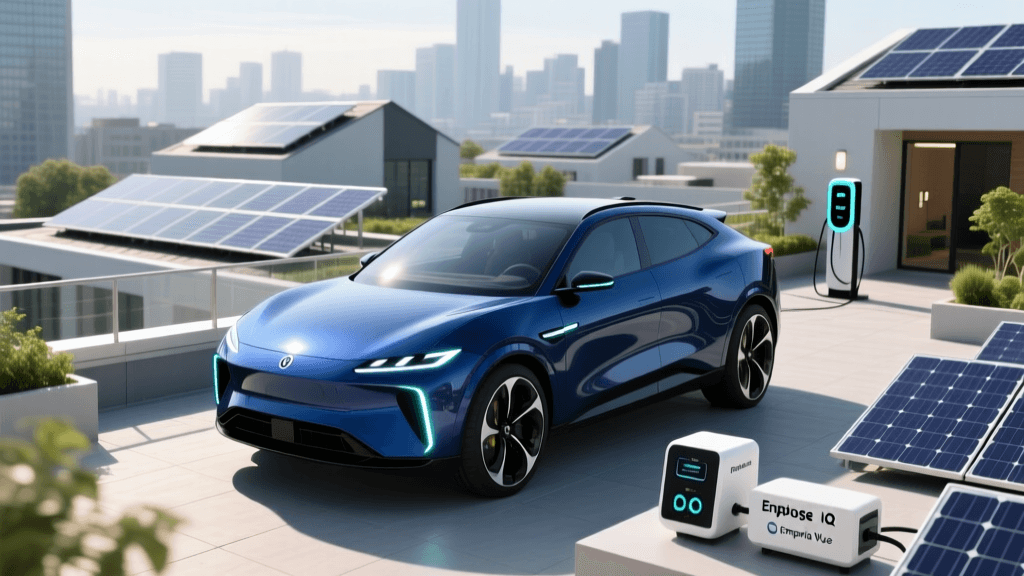
For example, the Alternative Fuels Data Center highlights emerging smart-grid technologies that allow EVSEs to communicate with home energy monitors. Products like the Wallbox Pulsar Plus paired with the Power Energy Meter, or the Emporia VUE Smart Home Energy Monitor integrated with their EV charger, continuously read the main panel's load. If your central AC and electric oven turn on, the smart charger instantly drops its draw from 48 amps down to 16 amps to prevent the main 100-amp breaker from tripping. Once the oven turns off, the charger ramps back up to maximum speed.
Cost Comparison: Panel Upgrade vs. Smart Load Management
- 200A Panel Upgrade: ~$3,500+ | Timeline: 2-6 weeks (including utility and permits) | Home Value Impact: High
- Smart Load Management Setup: ~$800 - $1,400 (Hardware + Installation) | Timeline: 1-3 days | Home Value Impact: Moderate
From a purely financial perspective, if you plan to stay in your home for less than five years, or if your utility company quotes an exorbitant fee for a new transformer drop, DLM is the superior ROI. However, if you plan to add solar panels, heat pumps, and battery storage in the future, the 200A upgrade is a necessary foundational investment.
Utility Service Drops and Infrastructure Limits
A critical variable often ignored in online guides is the utility's service drop—the overhead wires or underground conduit connecting the municipal grid to your home's weatherhead or meter base. A 100-amp service typically utilizes 1/0 AWG aluminum or #3 AWG copper wire. To upgrade to 200 amps, the wire must be upgraded to a minimum of 2/0 AWG aluminum or 1/0 AWG copper.
If your utility owns the service drop, they must perform this upgrade. In some municipalities, utility upgrades are subsidized or free, provided the local transformer has the kVA (kilovolt-ampere) capacity to support it. If you live at the end of a long rural line, or if your neighborhood's shared transformer is already near max capacity due to neighbors also charging EVs, the utility may require a transformer upgrade. This can introduce delays of several months and trigger hefty infrastructure fees. Always request a 'service upgrade feasibility study' from your utility provider before paying an electrician for a permit.
Permitting, Timelines, and Code Compliance
Upgrading from 100A to 200A requires strict adherence to NEC Article 220, which dictates how residential load calculations must be performed. Your electrician will submit a detailed load calculation matrix to the local building department, proving that a 200A panel safely covers your square footage, HVAC systems, and the new 60-amp EVSE circuit.
The typical timeline for a 200A upgrade follows this data trajectory:
- Week 1: Electrician site visit, load calculation, and permit submission.
- Week 2-3: Utility company coordination for meter base upgrade and service drop replacement.
- Week 4: Installation day. Power is disconnected for 6-10 hours while the old panel is removed, new 200A busbars are mounted, and circuits are mapped.
- Week 5: Municipal inspection and utility meter reconnection.
Conclusion: Is the 200A Upgrade Worth the ROI?
The data is clear: a 100-amp electrical panel is fundamentally incompatible with the modern, electrified home. While dynamic load management offers a brilliant, cost-effective workaround for budget-conscious EV owners or those facing utility roadblocks, the 100A to 200A panel upgrade remains the gold standard for long-term homeowners. Spending an average of $3,500 to $4,500 not only enables safe, uninterrupted 48-amp Level 2 EV charging but also future-proofs your property for solar integration, heat pump installations, and eventual home battery storage systems. When analyzing the long-term ROI, the 200A upgrade transitions from a mere EV charging requirement to a vital home equity investment.