Why NIO Battery Swap Stations Change the Battery Longevity Conversation
Most EV owners think about battery health in terms of charging habits — avoiding daily DC fast charging, keeping state of charge between 20% and 80%, and preconditioning in cold weather. NIO battery swap stations flip that equation entirely. Instead of plugging in and waiting 18–40 minutes for a 10–80% charge at a DC fast charger, a NIO driver pulls into a swap station and receives a fully charged battery pack in roughly three minutes. The depleted pack stays behind, where it is slow-charged, inspected, and cycled back into rotation.
This model — called Battery as a Service (BaaS) — has implications that extend far beyond convenience. Because NIO centrally manages every pack in its swap network, the company controls charge rates, thermal conditioning, and retirement criteria in ways individual owners never can. As of early 2026, NIO operates over 2,700 battery swap stations globally, with the majority in China and a growing footprint in Europe. The U.S. market remains limited, but the technology raises fundamental questions for every EV buyer: How long do batteries really last? What degrades them? And does a swap ecosystem meaningfully extend pack life?
To answer those questions, we need to start with the chemistry inside the pack.
LFP vs. NMC: The Chemistry Inside Your EV Battery
Every EV battery pack is built from lithium-ion cells, but the cathode chemistry determines energy density, cycle life, thermal stability, cold-weather performance, and cost. The two dominant chemistries in 2026 are lithium iron phosphate (LFP) and nickel manganese cobalt (NMC) / nickel cobalt aluminum (NCA).
| Attribute | LFP (Lithium Iron Phosphate) | NMC / NCA (Nickel-Based) |
|---|---|---|
| Energy density | ~160–180 Wh/kg (cell level) | ~220–300 Wh/kg (cell level) |
| Typical cycle life | 3,000–5,000+ cycles to 80% SoH | 1,000–2,000 cycles to 80% SoH |
| Cold-weather performance | Greater range loss below 32°F; slower charge acceptance | Better low-temp discharge; preconditioning still required |
| Thermal stability | Excellent — less prone to thermal runaway | Good but requires more active thermal management |
| Cost (per kWh, 2026) | ~$80–100/kWh at pack level | ~$110–140/kWh at pack level |
| Common applications | Tesla Model 3 RWD, BYD Blade packs, NIO 75 kWh standard pack | Long-range variants (Tesla LR, Hyundai Ioniq 5 LR, NIO 100 kWh pack) |
| Charging to 100% regularly | Recommended periodically for BMS calibration | Best kept at 80% daily; 100% for trips only |
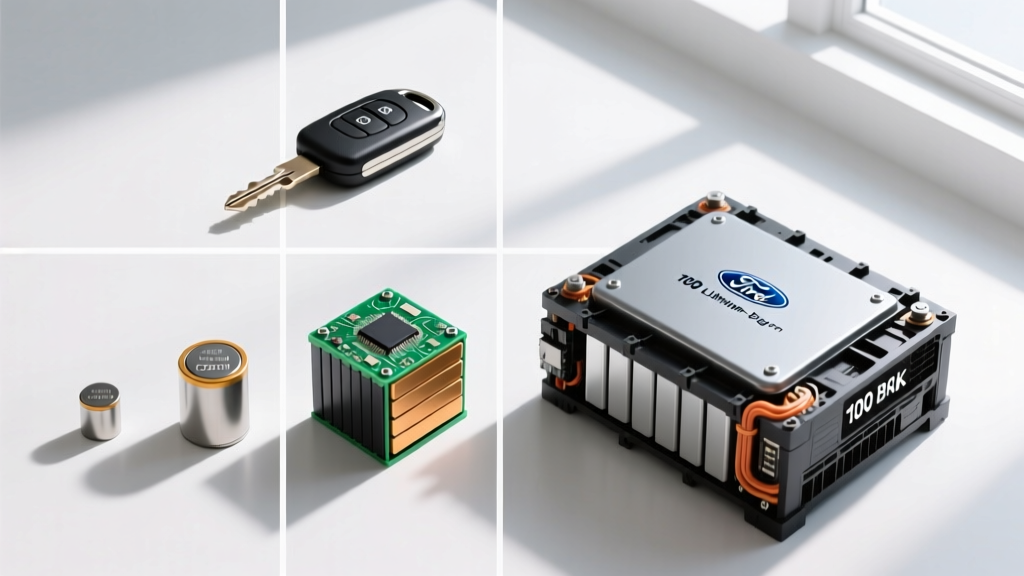
NIO offers both chemistries across its lineup. The 75 kWh pack uses LFP cells and is the most common option in the swap network due to its long cycle life and lower cost. The 100 kWh pack uses NMC chemistry for drivers who need maximum range — roughly 310–370 miles WLTP depending on the vehicle model (note: WLTP figures run 10–15% higher than EPA estimates, and U.S. buyers should expect lower real-world numbers). The 150 kWh semi-solid-state pack, available in limited deployment, pushes range past 500 miles WLTP but carries a premium and remains a low-volume offering.
The swap model is particularly well-suited to LFP chemistry. Because LFP's voltage curve is extremely flat across most of its state of charge range, accurately estimating remaining range is harder than with NMC. NIO's swap stations recalibrate the battery management system (BMS) each time a pack is exchanged, partially mitigating this challenge.
How Long Do EV Batteries Actually Last?
The short answer: far longer than most buyers fear. Data aggregated from fleet operators, manufacturer reports, and independent testing shows that modern EV batteries lose roughly 10–15% of their original capacity over 150,000–200,000 miles under normal use. That means a pack rated for 300 miles of EPA range when new would still deliver approximately 255–270 miles after a decade and 150,000+ miles of driving.
Typical degradation trajectory (NMC and LFP, averaged across multiple OEM datasets):
- Year 1 / 15,000 miles: ~2–4% capacity loss (initial formation loss)
- Year 3 / 45,000 miles: ~6–8% total loss
- Year 5 / 75,000 miles: ~8–10% total loss
- Year 8 / 120,000 miles: ~10–14% total loss
- Year 10 / 150,000 miles: ~12–17% total loss
Sources: Geotab fleet data, manufacturer warranty thresholds, and independent testing by Recurrent Auto.
LFP packs tend to degrade more slowly in terms of cycle life — Tesla's LFP-equipped Model 3 RWD, for instance, shows median degradation of roughly 8–10% at 100,000 miles based on fleet telemetry. NMC packs in long-range vehicles may show slightly steeper early-life degradation (3–5% in year one) before stabilizing.
For NIO specifically, the swap model introduces a unique dynamic. Because packs are rotated across thousands of vehicles, no single pack accumulates the same continuous duty cycle as a fixed pack. NIO states that its swap stations charge packs at controlled rates with active thermal management, which is gentler than repeated DC fast charging by individual owners. The company also retires packs from the swap pool once they fall below a defined state of health threshold — typically around 80–85% capacity — and repurposes them for stationary energy storage.
What Does the Battery Warranty Cover?
In the United States, federal emissions-related warranty requirements push most automakers to cover EV battery packs for at least 8 years or 100,000 miles (10 years/150,000 miles in California Air Resources Board states). The warranty typically guarantees that the battery will retain a minimum percentage of its original capacity — usually 70% — over that period.
| Manufacturer | Warranty Period | Capacity Retention Threshold | Notes |
|---|---|---|---|
| Tesla (Model 3/Y LFP) | 8 yr / 100,000 mi | 70% | Covers defects and excessive degradation |
| Tesla (Model 3/Y LR NMC) | 8 yr / 120,000 mi | 70% | Longer mileage for LR variants |
| Hyundai / Kia | 10 yr / 100,000 mi | 70% | Among the longest in the industry |
| Ford (Mach-E) | 8 yr / 100,000 mi | 70% | Covers traction battery only |
| GM (Ultium-based) | 8 yr / 100,000 mi | 70% | Modular pack allows section replacement |
| NIO (BaaS subscribers) | Ongoing — no degradation concern for owner | N/A — pack swapped if below threshold | Battery ownership stays with NIO; owner leases capacity |
The NIO BaaS model sidesteps the warranty question entirely for subscribers. Because you never own the battery — you pay a monthly fee for capacity access (roughly $140–170/month for the 75 kWh pack, depending on market) — NIO bears all degradation risk. If a pack falls below serviceable health, it is replaced in the rotation at no cost to the driver. This is the core value proposition of battery swap stations: the consumer never faces a surprise five-figure replacement bill.
EV Battery Replacement Costs: The Numbers
For EV owners with a fixed battery (the vast majority outside NIO's ecosystem), out-of-warranty replacement remains a real but statistically uncommon concern. Most modern packs outlast the vehicle's usable life. When replacement is needed — due to manufacturing defect, physical damage, or extreme degradation — costs vary significantly by pack size and chemistry.
| Vehicle / Pack | Battery Size | Chemistry | Estimated Replacement Cost (2026) |
|---|---|---|---|
| Tesla Model 3 RWD | ~60 kWh | LFP | $8,000–$12,000 |
| Tesla Model Y Long Range | ~75 kWh | NMC | $12,000–$16,000 |
| Hyundai Ioniq 5 | 77.4 kWh | NMC | $11,000–$15,000 |
| Ford F-150 Lightning (extended) | ~131 kWh | NMC | $20,000–$30,000 |
| Chevrolet Silverado EV | ~200 kWh | NMC (Ultium) | $25,000–$38,000 |
These figures include parts and labor but can vary by region and service center. GM's Ultium platform is notable for allowing individual module replacement rather than full-pack swaps, which can reduce costs to $3,000–$6,000 for a single failed module. NIO's architecture is similarly modular, though under BaaS the cost is absorbed by the subscription.
Industry-wide, pack-level pricing has fallen from over $1,000/kWh in 2010 to approximately $100–140/kWh in 2026, according to BloombergNEF tracking. This trend continues to compress replacement costs, though labor and diagnostics add meaningful overhead.
Factors That Accelerate Battery Degradation
Battery wear is not linear and is heavily influenced by how the pack is used. The following factors have the most measurable impact on long-term state of health:
- Frequent DC fast charging: Packs that DC fast charge more than 3x per week show roughly 1–2% additional degradation per year vs. primarily Level 2 charging. Heat generation at high charge rates (150–350 kW) is the primary driver. NIO swap stations mitigate this by slow-charging returned packs at controlled rates with active cooling.
- Extreme temperatures: Sustained operation in ambient temperatures above 95°F or below 10°F accelerates chemical aging. Active thermal management (liquid cooling/heating) reduces but does not eliminate this effect. Expect 15–30% temporary range loss in sub-freezing conditions — this is not permanent degradation but reduced available capacity until the pack warms.
- High state of charge storage: Storing an NMC pack at 100% SoC for days or weeks, especially in heat, causes electrolyte decomposition. LFP is more tolerant of high-SoC storage. Best practice for NMC: store at 50–60% SoC if the vehicle won't be driven for a week or more.
- Deep discharge cycles: Regularly driving to 0% SoC stresses the anode. Most EVs have a buffer (typically 2–5 kWh below the displayed 0%) to prevent true deep discharge, but repeatedly hitting the buffer is still harmful.
- Calendar aging: Even unused batteries degrade over time due to electrolyte breakdown. A 10-year-old pack with 30,000 miles will still show measurable capacity loss — typically 5–8% from calendar aging alone.
This is where NIO battery swap stations hold a structural advantage. The swap network charges packs at moderate rates in temperature-controlled environments, avoids the high-SoC storage problem by keeping packs in constant rotation, and uses fleet-level telemetry to flag anomalies before they become failures. An individual owner charging at home with a Level 2 unit and occasionally using DC fast charging will not match that level of controlled care — but good habits (80% daily limit, preconditioning before fast charging, avoiding deep discharges) get most owners close enough that degradation remains manageable.
How to Check and Maximize Battery Health
Most modern EVs provide some form of battery health readout, though the granularity varies:
- In-vehicle displays: Tesla, Hyundai, and BMW offer battery health indicators in the service menu or app. These typically show a percentage or bar graph representing estimated SoH.
- OBD-II diagnostics: Third-party tools like LeafSpy (for Nissan Leaf), Teslalogger, or generic OBD-II readers with EV-specific PIDs can pull detailed cell voltage data and estimated capacity.
- Manufacturer service checks: Dealers can run full-capacity tests that compare actual kWh delivered against the pack's original rated capacity. This is the most accurate method and is typically done during warranty claims.
- Third-party services: Companies like Recurrent Auto offer fleet and individual battery health reports using connected-car data.
For NIO owners, battery health is effectively abstracted away. Each time you swap, the station runs diagnostics on the returned pack. If you receive a pack with lower-than-expected range, you can swap again immediately. NIO's app also provides estimated range and charge data, though it does not expose raw SoH percentages to the user the way some other OEMs do.
To maximize health on a fixed-pack EV, follow these evidence-based practices:
- Set daily charge limit to 80% for NMC; 100% is acceptable for LFP (charge to 100% at least once per month for BMS calibration).
- Use Level 2 home charging as your primary method; reserve DC fast charging for road trips.
- Precondition the battery before fast charging — most EVs do this automatically when a charger is set as the navigation destination.
- Avoid leaving the vehicle at 100% SoC or below 10% SoC for extended periods.
- In extreme cold, plug in when parked so the thermal management system can maintain pack temperature using grid power rather than battery energy.
Emerging Battery Technology: What's Next
NIO's 150 kWh semi-solid-state battery pack, developed in partnership with WeLion, represents the first commercial deployment of semi-solid-state cells in a production passenger vehicle. This pack uses a hybrid electrolyte that improves energy density to approximately 360 Wh/kg at the cell level — roughly 40% higher than conventional NMC. The result is over 500 miles of range (WLTP) in the NIO ET7 sedan.
However, important caveats apply:
- Availability: The 150 kWh pack is produced in limited volumes and is offered primarily through NIO's flexible rental program rather than outright purchase. It is not widely available outside China.
- Cost: The pack is estimated to cost over $40,000 at current production volumes, making it impractical for mass-market vehicles.
- True solid-state batteries: Fully solid-state packs — using a solid electrolyte with no liquid component — remain in development at Toyota, Samsung SDI, QuantumScape, and others. Realistic commercial deployment in volume production vehicles is expected in the 2028–2032 timeframe, not before.
- Silicon anode technology: Companies like Sila Nanotechnologies and Group14 are replacing graphite anodes with silicon-dominant materials, boosting energy density by 10–20% without changing the cathode. This is already appearing in limited applications (e.g., Mercedes G 580 with EQ Technology) and is expected to reach broader production by 2027–2028.
These technologies will eventually reach the swap ecosystem. NIO's modular architecture is designed to accept next-generation packs without vehicle modification — a NIO owner in 2026 could theoretically upgrade to a solid-state pack when it enters the swap network in 2030 without buying a new car. This forward compatibility is one of the strongest arguments for the swap model.
Frequently Asked Questions
How long do EV batteries last in years and miles?
Most modern EV batteries retain 80–88% of their original capacity after 150,000–200,000 miles and 10–15 years of use. LFP chemistries tend to last longer in cycle count, while NMC offers higher energy density. Battery failure before 100,000 miles is rare and typically covered under warranty.
How much does it cost to replace an EV battery?
Replacement costs range from approximately $8,000 for a 60 kWh LFP pack (e.g., Tesla Model 3 RWD) to $30,000+ for large packs like the F-150 Lightning extended range (131 kWh). Prices have fallen steadily and continue to decline. Most owners will never need an out-of-warranty replacement because the battery outlasts the vehicle.
What does a battery warranty actually cover?
Federally mandated minimum coverage is 8 years/100,000 miles (10 years/150,000 miles in CARB states). The warranty covers defects in materials and workmanship plus excessive capacity degradation — typically defined as falling below 70% of original capacity. It does not cover damage from accidents, flooding, or unauthorized modifications.
Are NIO battery swap stations better for battery longevity?
The evidence suggests yes, primarily because swap stations charge packs at controlled, moderate rates with active thermal management — conditions that are gentler than typical consumer DC fast charging. NIO also monitors every pack continuously and retires units that fall below health thresholds. However, an individual owner who follows best charging practices (Level 2 primary, 80% daily limit, preconditioning) can achieve comparable longevity with a fixed pack.
LFP vs. NMC — which battery chemistry should I choose?
Choose LFP if you prioritize longevity, lower cost, and don't need maximum range. Choose NMC if you need the longest possible range per charge and are willing to follow stricter charge-limit habits. LFP handles daily 100% charging better; NMC offers roughly 30–40% more energy density, translating to more miles in the same physical pack size.
Can I check my EV battery health myself?
Yes, with varying precision. Many OEM apps show a health indicator. OBD-II diagnostic tools can pull cell-level voltage data. For the most accurate measurement, a dealer capacity test compares actual energy delivered against the pack's original rating. NIO owners don't need to monitor SoH directly — the swap network handles this automatically.