Why a 2013 Ford Fusion Key Fob Battery Matters to EV Owners
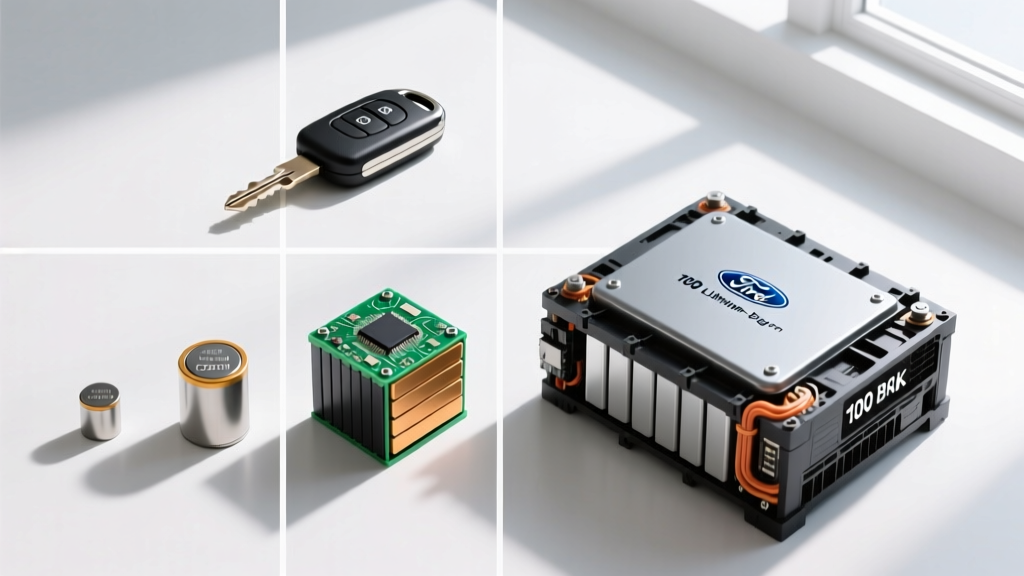
If you've ever searched for a Ford Fusion 2013 key fob battery, you already know the basics of lithium cells: they power electronics, they degrade over time, and they eventually need replacement. That tiny CR2032 coin cell in your Fusion's key fob is a lithium-manganese dioxide primary battery — a non-rechargeable cousin of the massive lithium-ion traction packs propelling modern EVs down the highway.
The connection isn't trivial. Understanding why a 3-volt coin cell dies after three years while a 75 kWh EV battery pack is engineered to last 15+ years illuminates the core engineering trade-offs that define electric vehicle ownership. This guide covers the chemistry, degradation science, warranty structures, replacement economics, and care practices that every EV buyer and owner needs — with the same data-driven rigor you'd apply to any major vehicle purchase.
LFP vs. NMC/NCA: The Chemistry Decision That Shapes Your EV
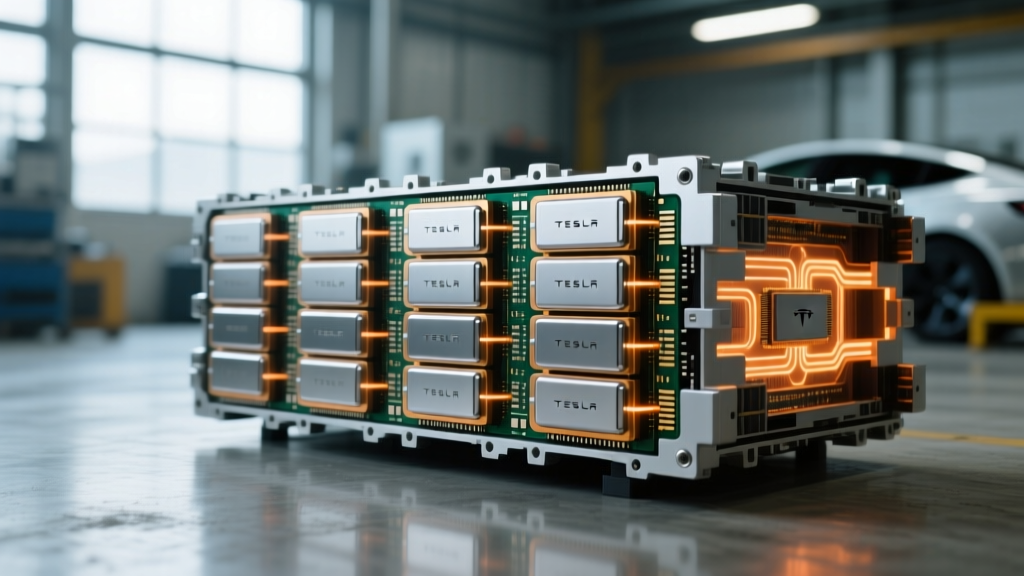
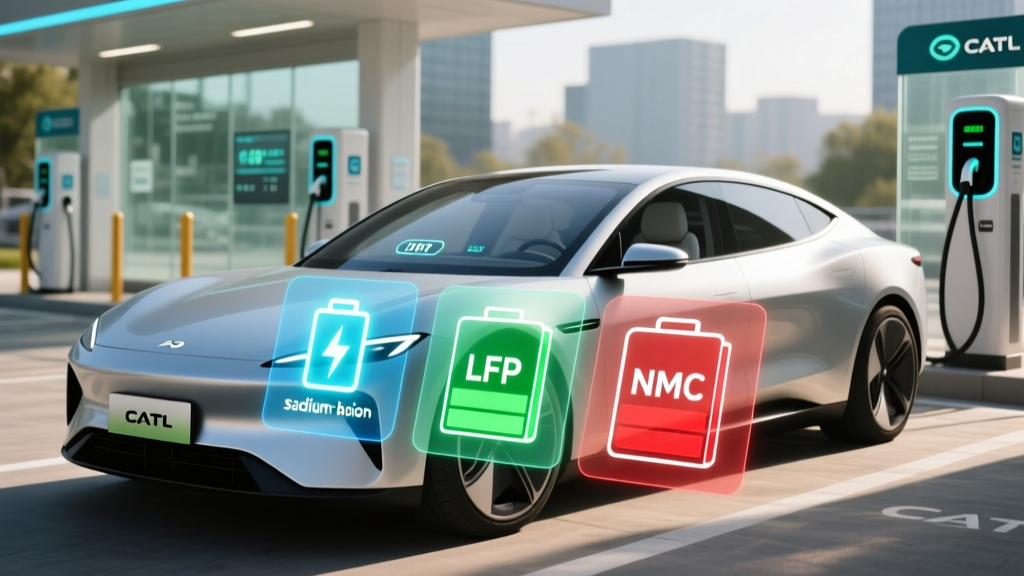
Every EV sold in 2026 uses one of two dominant lithium-ion chemistries for its traction battery: lithium iron phosphate (LFP) or nickel manganese cobalt / nickel cobalt aluminum (NMC/NCA). The choice affects range, longevity, cold-weather behavior, and price.
| Attribute | LFP (Lithium Iron Phosphate) | NMC / NCA (Nickel-based) |
|---|---|---|
| Energy Density | ~160–180 Wh/kg (lower) | ~220–260 Wh/kg (higher) |
| Cycle Life | 3,000–5,000+ cycles to 80% SoH | 1,500–2,500 cycles to 80% SoH |
| Cold Performance | Reduced; slower charge acceptance below 32°F | Better low-temp charge/discharge |
| Thermal Stability | Excellent; higher runaway threshold (~518°F) | Good but lower threshold (~410°F) |
| Cost per kWh | Lower (~$90–110/kWh pack-level in 2026) | Higher (~$120–145/kWh pack-level) |
| Recommended SoC Range | 0–100% daily OK; periodic 100% calibrations | 20–80% daily; 100% for trips only |
| Typical Use Cases | Tesla Model 3/Y RWD, Ford Mustang Mach-E Select (LFP trims), BYD models | Long-range/performance trims, Hyundai Ioniq 5/6, Rivian, Lucid |
Which is better? It depends on your use case. LFP wins on longevity, safety margin, and cost — ideal for daily commuters who charge at home and don't need maximum range. NMC/NCA wins on energy density and cold-weather charging — essential for long-range road-trippers and buyers in northern climates who need every EPA mile.
The coin cell in a Ford Fusion 2013 key fob uses lithium-manganese dioxide — a primary (non-rechargeable) chemistry chosen for shelf life and stable voltage output. EV traction batteries use secondary (rechargeable) chemistries optimized for thousands of charge cycles. Same lithium foundation, radically different engineering goals.
How Long Do EV Batteries Actually Last? Real Degradation Data
The fear of a dead battery pack is the single biggest objection prospective EV buyers raise. The data tells a less dramatic story.
Typical degradation trajectory (NMC packs, aggregated fleet data):
- Year 1 / ~15,000 miles: 2–4% capacity loss (initial formation loss)
- Year 3 / ~45,000 miles: 5–8% total loss
- Year 5 / ~75,000 miles: 8–12% total loss
- Year 8 / ~120,000 miles: 10–15% total loss
- Year 10 / ~150,000 miles: 12–18% total loss
Sources: Geotab fleet battery health study, Recurrent Auto battery data reports.
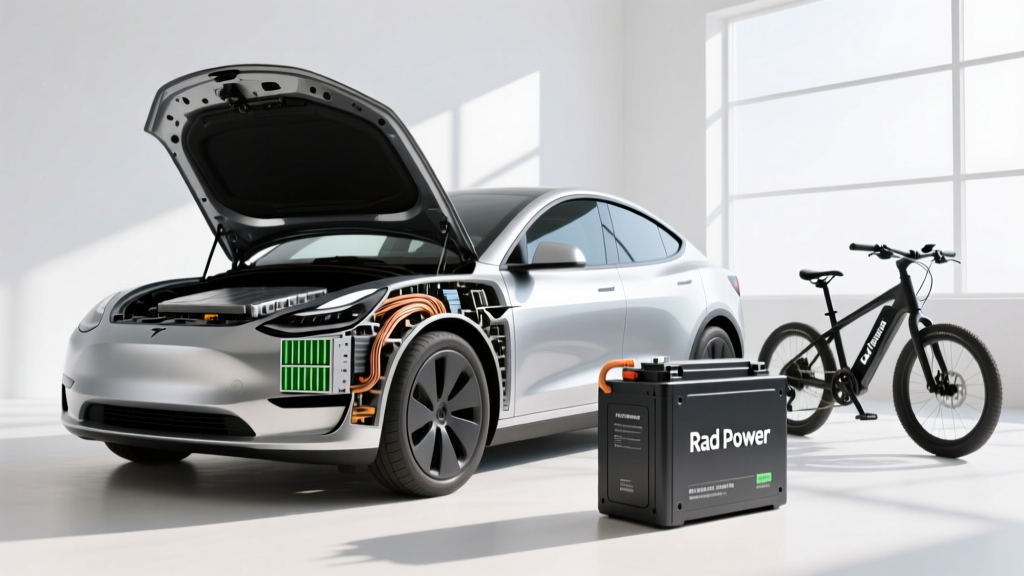
Modern thermal management systems — liquid-cooled packs with active heating and cooling — are the primary reason degradation curves have flattened compared to early EVs. A 2026 Tesla Model Y Long Range with its NMC pack, liquid cooling, and sophisticated battery management system (BMS) will typically retain 88–92% of original capacity at 100,000 miles.
LFP packs show even slower degradation. Tesla's standard-range Model 3 vehicles using CATL-sourced LFP cells have demonstrated 90%+ capacity retention at 100,000 miles in fleet data, owing to LFP's inherently stable olivine crystal structure.
For context: the CR2032 in your 2013 Fusion key fob delivers roughly 225 mAh of capacity and is designed for ~3 years of intermittent use before voltage drops below the fob's operating threshold. An EV traction battery delivers 75–100+ kWh and is engineered for 1,500–5,000 full charge cycles. The engineering ambition is orders of magnitude apart.
Battery Warranty Terms: What's Actually Covered?
Federal law mandates a minimum 8-year / 100,000-mile warranty on EV battery packs for emissions-related components, and most manufacturers exceed this baseline. Here's how major 2026 warranties stack up:
| Manufacturer (2026 Models) | Warranty Period | Mileage Cap | Capacity Retention Threshold |
|---|---|---|---|
| Tesla (Model 3/Y Long Range) | 8 years | 120,000 miles | 70% of original capacity |
| Tesla (Model 3/Y RWD — LFP) | 8 years | 100,000 miles | 70% |
| Hyundai / Kia (Ioniq 5/6, EV6) | 10 years | 100,000 miles | 70% |
| Ford (Mustang Mach-E, F-150 Lightning) | 8 years | 100,000 miles | 70% |
| GM (Chevy Equinox EV, Blazer EV) | 8 years | 100,000 miles | 70% (60% for fleet) |
| Rivian (R1T, R1S) | 8 years | 175,000 miles | 70% |
| BMW (i4, iX) | 8 years | 100,000 miles | 70% |
What triggers a warranty claim: If your pack's usable capacity drops below the stated threshold (typically 70%) within the warranty window, the manufacturer must repair or replace the battery at no cost. In practice, most warranty replacements involve swapping failed modules rather than the entire pack, as modern packs are modular and serviceable.
What's excluded: Damage from accidents, flooding, unauthorized modifications, or using the vehicle as a stationary power source outside manufacturer-approved V2H/V2L protocols. Cosmetic degradation of range from normal aging above the threshold is not covered.
EV Battery Replacement Cost: The Real Numbers
This is where fear-mongering runs rampant. Let's ground it in data.
| Vehicle / Pack Size | Full Pack Replacement (2026 est.) | Module-Level Repair | Typical Need Timeline |
|---|---|---|---|
| Tesla Model 3 RWD (~60 kWh LFP) | $12,000–$15,000 | $2,500–$4,000 per module | Rarely before 200,000+ mi |
| Tesla Model Y LR (~75 kWh NMC) | $14,000–$18,000 | $3,000–$5,000 per module | Rarely before 180,000+ mi |
| Hyundai Ioniq 5 (~77.4 kWh NMC) | $15,000–$20,000 | $3,500–$5,500 per module | Rarely before 175,000+ mi |
| Ford F-150 Lightning Ext. Range (~131 kWh) | $22,000–$30,000 | $4,000–$7,000 per module | Rarely before 150,000+ mi |
| Chevy Bolt EV (~65 kWh NMC) | $10,000–$14,000 | $2,000–$3,500 per module | Recall replacements aside; 150,000+ mi |
Key context: According to data from Recurrent Auto, fewer than 1.5% of EVs in their studied fleet required a battery replacement outside of manufacturer recalls. The vast majority of EV batteries outlive the vehicle's economic life. By the time a pack might need replacement at 200,000+ miles, the vehicle itself is often worth less than the cost of a new pack — at which point a refurbished or salvaged pack becomes the economical choice, typically at 40–60% of new-pack cost.
Compare this to the $8–$12 you spend replacing the CR2032 coin cell in a 2013 Ford Fusion key fob every three years. The cost-per-mile of an EV traction battery, amortized over 150,000 miles, works out to roughly $0.06–$0.10 per mile in the worst-case replacement scenario — but most owners will never face that cost.
Factors That Accelerate (or Preserve) Battery Health
Battery degradation isn't random. It's driven by measurable electrochemical stressors that owners can manage.
What Hurts Your Battery
- Exclusive DC fast charging: Daily use of 150+ kW DC fast chargers generates sustained heat, accelerating electrolyte decomposition. Fleet data shows vehicles that fast-charge >90% of the time degrade 1.5–2x faster than those primarily using Level 2.
- Sustained 100% SoC: Storing an NMC pack at full charge for days stresses the cathode. This is why most manufacturers recommend 80% daily for NMC.
- Deep discharge (0% SoC): Letting the pack sit at or near empty causes copper dissolution in the anode current collector.
- Extreme heat exposure: Prolonged parking in >100°F ambient without thermal management active. Liquid-cooled packs mitigate this significantly.
- Cold fast-charging without preconditioning: Charging a cold NMC pack at high power can cause lithium plating on the anode — a permanent capacity loss mechanism.
What Preserves Your Battery
- Level 2 home charging as primary: Gentle 7–11 kW charging generates minimal heat. This is the equivalent of sipping vs. gulping.
- 20–80% SoC window (NMC): Or 0–100% is fine for LFP — the chemistry tolerates full states better.
- Preconditioning before DC fast charging: Most modern EVs do this automatically when you navigate to a charger. It warms the pack to the optimal ~95–105°F for rapid charge acceptance.
- Garage parking in extreme climates: Reduces thermal cycling stress on the pack.
- Regular driving: Batteries prefer use. Extended storage at any SoC is worse than moderate daily cycling.
How to Check and Monitor Your Battery's State of Health (SoH)
State of Health (SoH) is the percentage of original usable capacity your pack currently retains. A new pack is 100% SoH; a pack with 12% degradation sits at 88% SoH.
Built-in vehicle tools:
- Tesla: The service menu (accessible via the software screen) displays current battery health percentage. The Tesla app also shows estimated range at 100% SoC, which you can compare to the original EPA figure.
- Hyundai/Kia: The EV-specific menu in the infotainment system shows battery health status, and the Bluelink/Kia Connect app provides SoH estimates.
- Ford: The FordPass app displays battery health metrics, and the SYNC system includes an EV battery status page.
- GM (Ultium platform): The myChevrolet/myCadillac app includes a battery health indicator.
Third-party tools:
- OBD-II dongles + apps: Devices like the OBDLink SX paired with apps such as ABRP (A Better Route Planner) or LeafSpy (for Nissan Leaf owners) can read real-time pack data including voltage variance, cell balance, and estimated SoH.
- Recurrent Auto: This free service connects to your vehicle's telematics and provides ongoing battery health reports benchmarked against similar vehicles in their fleet database.
- Dealer diagnostic: Any authorized service center can run a full battery health report, typically as part of scheduled maintenance.
Practical check: Charge to 100% and note the displayed range. Compare it to the original EPA-rated range on fueleconomy.gov. A 2025 Tesla Model Y Long Range originally rated at 330 miles EPA that now shows 297 miles at 100% has roughly 90% SoH — right in line with expected degradation for a pack with ~40,000 miles.
Emerging Battery Tech: Solid-State and Silicon Anodes
Next-generation battery technologies are in active development, but timelines matter.
Solid-state batteries replace the liquid electrolyte with a solid ceramic, polymer, or sulfide conductor. The promise: higher energy density (~400+ Wh/kg projected), faster charging, improved safety (no flammable electrolyte), and longer cycle life. Toyota has announced solid-state EV prototypes targeting 2027–2028 production, initially in limited-run vehicles. Samsung SDI and QuantumScape are pursuing similar timelines. Realistically, broad market availability at competitive pricing is a 2029–2032 proposition.
Silicon anode technology replaces graphite anodes with silicon-dominant materials, boosting energy density by 20–40%. Companies like Sila Nanotechnologies and Group14 are already shipping silicon-anode materials to cell manufacturers. Expect silicon-enhanced anodes in mainstream EV packs by 2027–2028, offering modest range gains within existing pack form factors.
Sodium-ion batteries are entering the market for lower-cost, shorter-range EVs. CATL has begun shipping sodium-ion cells for urban EVs in China, with energy densities around 140–160 Wh/kg. US-market availability is likely 2027+ and would target budget segments where LFP currently dominates.
None of these technologies are available in production EVs you can buy today. If you're shopping now, LFP and NMC/NCA are mature, well-understood chemistries with proven track records — not placeholders waiting for the next breakthrough.
Frequently Asked Questions
How long do EV batteries last in years and miles?
Most modern liquid-cooled EV battery packs are engineered to retain 70–85% of original capacity after 150,000–200,000 miles or 12–15 years. Fleet data from Geotab and Recurrent Auto consistently shows that the majority of EV batteries will outlast the vehicle's practical economic life. Complete pack failure before 100,000 miles is extremely rare outside of manufacturing defects (which are warranty-covered).
How much does an EV battery cost to replace in 2026?
Full pack replacements range from roughly $10,000 for smaller packs (Chevy Bolt-class, ~65 kWh) to $22,000–$30,000 for large packs (F-150 Lightning extended range, ~131 kWh). However, module-level repairs — replacing only the degraded or failed section of the pack — typically cost $2,000–$7,000. Fewer than 2% of EVs require out-of-warranty pack replacement based on current fleet data.
What does the EV battery warranty actually cover?
Manufacturer warranties cover capacity loss below a stated threshold (usually 70% of original capacity) within the warranty period (typically 8 years / 100,000 miles, with Hyundai/Kia offering 10 years). Coverage includes defects in materials and workmanship. Warranties do not cover damage from accidents, misuse, unauthorized modifications, or normal aging above the retention threshold. Check IRS.gov for how battery sourcing also affects federal tax credit eligibility under §30D rules.
How do I maximize my EV battery's lifespan?
Prioritize Level 2 home charging over daily DC fast charging. Keep NMC packs in the 20–80% SoC range for daily use (LFP packs tolerate 0–100% fine). Always precondition before fast charging. Avoid letting the pack sit at 0% or 100% for extended periods. Park in shade or a garage during extreme heat. These practices, supported by degradation research, can add years and tens of thousands of miles to your pack's useful life.
LFP vs NMC — which battery chemistry should I choose?
Choose LFP if: you primarily charge at home, want maximum cycle life, drive a daily commute under 200 miles, and prioritize long-term cost savings. Choose NMC/NCA if: you need maximum range per charge, frequently road-trip in cold weather, need faster DC charge acceptance in winter, or tow heavy loads. Neither is universally "better" — they solve different ownership profiles.
Does the 12V battery in an EV affect the traction battery?
No. The 12V auxiliary battery powers accessories, computers, and contactors — it's similar in concept to the CR2032 in a Ford Fusion 2013 key fob battery: a small cell supporting low-power electronics. If the 12V dies, the car won't start, but it does not damage the high-voltage traction pack. Most EVs use a DC-DC converter to keep the 12V charged from the main pack, and many 2026 models have moved to 12V lithium-iron-phosphate auxiliary batteries for longer life.
Can I check my EV battery health myself?
Yes. Most 2026 EVs display battery health metrics in the infotainment system or companion app. For deeper data, an OBD-II reader with EV-compatible software can show cell-level voltage, pack temperature, and estimated SoH. Third-party services like Recurrent Auto provide free ongoing health reports by connecting to your vehicle's telematics data.