The Short Answer: Tesla Battery Voltage by Model
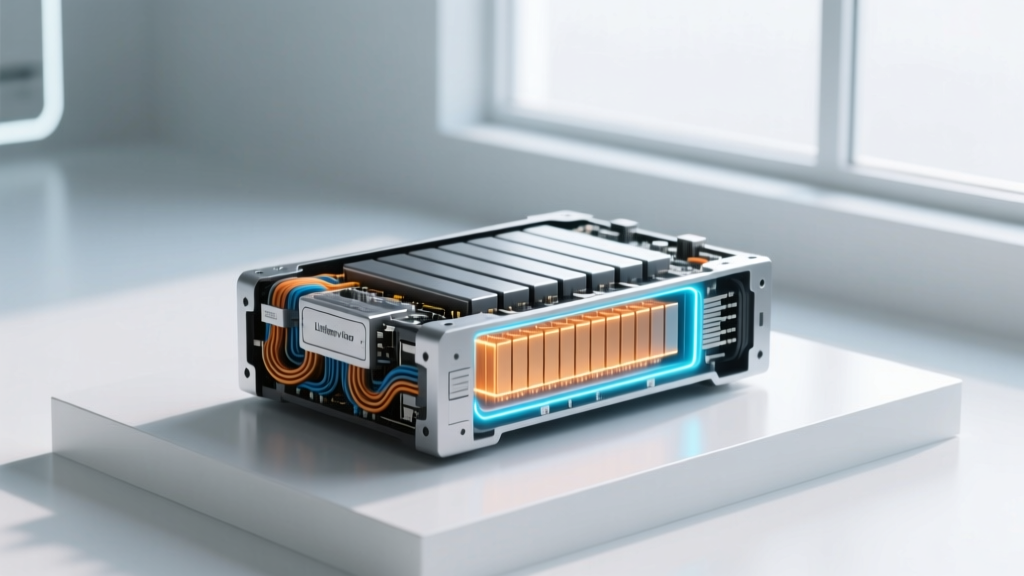
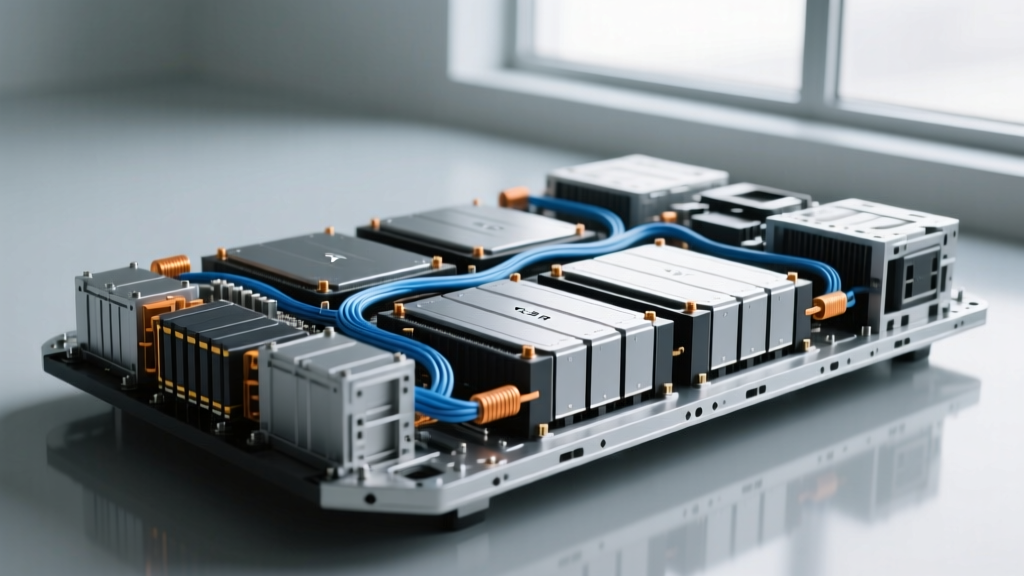
When EV shoppers ask "how many volts is a Tesla battery," the answer depends on the model and model year. Tesla's current fleet spans two distinct high-voltage architectures:
- Model 3 and Model Y (Standard Range / RWD with LFP): ~350–400V nominal (approximately 346V for the 60 kWh LFP pack, up to ~395V for the 75 kWh NMC pack)
- Model S and Model X: ~350–400V nominal, depending on the 100 kWh pack configuration
- Cybertruck: ~800V nominal architecture, enabling faster DC charging and higher power delivery to its tri-motor powertrain
For context, most mainstream EVs on the road today — from the Hyundai Ioniq 5 to the Ford F-150 Lightning — use either a ~400V or ~800V nominal architecture. The nominal voltage is the average operating voltage of the battery pack during a typical discharge cycle; actual voltage fluctuates between roughly 300V (near empty) and 420V (fully charged) on a 400V system, or 600V to 840V on an 800V system.
Why does voltage matter? Higher voltage allows the same power (kW) to flow with less current (amps), which reduces heat generation in cables and enables faster DC charging. That's why 800V architectures, like those in the Cybertruck, Hyundai Ioniq 5, and Porsche Taycan, can sustain higher charge rates without overheating. Voltage is only one piece of the battery puzzle, though — chemistry, thermal management, and cell design matter just as much for longevity.
LFP vs. NMC/NCA: Which Tesla Battery Chemistry Is Right for You?
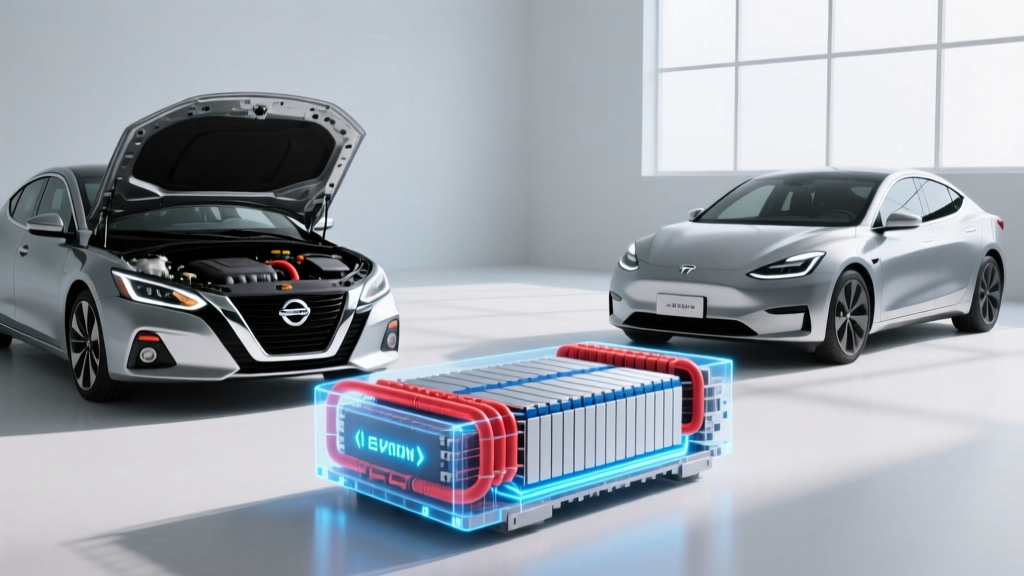
Tesla currently uses two primary lithium-ion chemistries across its lineup, and the choice affects everything from range to charging habits to long-term degradation. Here's how they compare:
| Attribute | LFP (Lithium Iron Phosphate) | NMC / NCA (Nickel Manganese Cobalt / Nickel Cobalt Aluminum) |
|---|---|---|
| Energy Density | Lower (~160 Wh/kg cell-level) | Higher (~250–300 Wh/kg cell-level) |
| Cycle Life | 3,000–5,000+ cycles to 80% SoH | 1,000–2,000 cycles to 80% SoH |
| Cold-Weather Performance | Reduced — more range loss below 32°F, slower charge acceptance | Better low-temp performance, preconditioning mitigates most issues |
| Recommended Daily SoC | 100% — Tesla recommends charging to full regularly | 80–90% daily; 100% only for trips |
| Cost | Lower — no cobalt or nickel | Higher — commodity-sensitive materials |
| Used In (2026 Tesla Models) | Model 3 RWD, Model Y RWD (Standard Range) | Model 3 Long Range, Model Y Long Range/Performance, Model S, Model X, Cybertruck |
| State of Charge Estimation | Flatter voltage curve — BMS needs periodic 100% calibration | More linear voltage curve — easier SoC estimation |
The practical takeaway: if you buy a Tesla Model 3 RWD with the LFP pack, you should charge it to 100% at least once a week to keep the battery management system (BMS) calibrated. If you own a Long Range or Performance variant with NMC/NCA, daily charging to 80–90% will maximize long-term health, saving 100% for road trips.
LFP's lower energy density means a slightly heavier pack for the same kWh capacity, which is why it appears in Standard Range trims where maximum range isn't the priority. NMC/NCA's higher energy density enables the 330+ mile EPA ratings on Long Range models, but at the cost of more careful state-of-charge management.
How Long Do Tesla Batteries Actually Last? Real Degradation Data
Tesla batteries are engineered to outlast the vehicle itself in most cases. The high-voltage traction battery is not a consumable like brake pads — it degrades gradually over thousands of charge cycles, and the rate of that degradation depends heavily on how you use the car.
Typical Tesla Battery Degradation Curve (aggregated fleet data):
- Year 1 / 15,000 miles: ~2–5% capacity loss (initial formation loss, steepest part of the curve)
- Year 3 / 45,000 miles: ~5–8% total capacity loss
- Year 5 / 75,000 miles: ~7–10% total capacity loss
- Year 8 / 120,000 miles: ~10–15% total capacity loss (varies by chemistry and usage)
- 200,000+ miles: Many Tesla packs still retain 75–85% of original capacity, per Tesla's 2024 Impact Report and third-party fleet analyses
LFP packs tend to show slower long-term degradation than NMC, particularly when routinely charged to 100% as recommended. NMC packs that are consistently charged to 100% and left sitting in hot climates degrade faster. The degradation curve is non-linear: most loss happens in the first 20,000–30,000 miles, then the rate flattens considerably.
Tesla's own fleet data, published in their annual Impact Report, indicates that Model 3 and Model Y packs retain approximately 85% of original capacity at 200,000 miles. This aligns with independent analyses from Recurrent Auto, which tracks over 15,000 EVs in real-world conditions and finds that most modern EV batteries retain 80–90% capacity after 5–7 years of typical use.
Tesla Battery Warranty: What's Covered and for How Long
Tesla's battery warranty is one of the stronger guarantees in the EV industry, though it's important to understand exactly what triggers a claim.
| Model | Warranty Period | Mileage Limit | Minimum Capacity Retention |
|---|---|---|---|
| Model 3 RWD (LFP) | 8 years | 100,000 miles | 70% |
| Model 3 Long Range / Performance | 8 years | 120,000 miles | 70% |
| Model Y (all trims) | 8 years | 120,000 miles | 70% |
| Model S / Model X | 8 years | 150,000 miles | 70% |
| Cybertruck | 8 years | 120,000 miles | 70% |
The warranty covers battery capacity falling below 70% of its original usable capacity during the warranty period, whichever comes first (years or miles). It also covers defects in materials and workmanship. What it does not cover: damage from accidents, flooding, fire, or unauthorized modifications; gradual degradation above the 70% threshold; or range reduction caused by software updates that adjust usable buffer.
In practice, very few Tesla owners have needed a warranty battery replacement. According to fueleconomy.gov and NHTSA complaint databases, battery failure rates on Tesla vehicles remain well below 1% within the warranty period. Most degradation claims that do arise involve early-production vehicles (2012–2015 Model S) with older cell designs.
EV Battery Replacement Cost: What to Expect if You Need One
Out-of-warranty battery replacement is the scenario that generates the most anxiety among prospective EV buyers. Here's what the numbers actually look like for Tesla vehicles as of 2026:
| Model | Battery Size (usable kWh) | Estimated Replacement Cost (parts + labor) | Typical Replacement Trigger |
|---|---|---|---|
| Model 3 RWD (LFP) | ~60 kWh | $10,000–$14,000 | Post-warranty degradation below 70%, physical damage |
| Model 3 Long Range | ~75–82 kWh | $13,000–$18,000 | Same as above |
| Model Y Long Range / Performance | ~75–82 kWh | $13,000–$18,000 | Same as above |
| Model S / Model X | ~100 kWh | $18,000–$25,000 | Same as above; older packs may use refurbished units |
| Cybertruck | ~123 kWh (estimated) | $20,000–$28,000 | Same as above; structural pack adds labor complexity |
These costs are significant, but context matters. Most Tesla batteries never need replacement during the vehicle's practical lifespan. The average American drives roughly 14,000 miles per year, meaning a Tesla driven for 15 years would accumulate about 210,000 miles — well within the range where most packs still retain 75%+ capacity. By the time a pack might need replacement (typically 200,000–300,000 miles), the vehicle's residual value is usually low enough that replacement is an economic decision rather than a necessity.
It's also worth noting that Tesla increasingly uses remanufactured battery packs for out-of-warranty replacements, which can reduce costs by 20–30%. Third-party EV battery repair shops are also emerging, offering module-level replacements (replacing individual degraded modules rather than the entire pack) for $3,000–$7,000 depending on the model.
What Affects Battery Life? 5 Factors That Accelerate Degradation
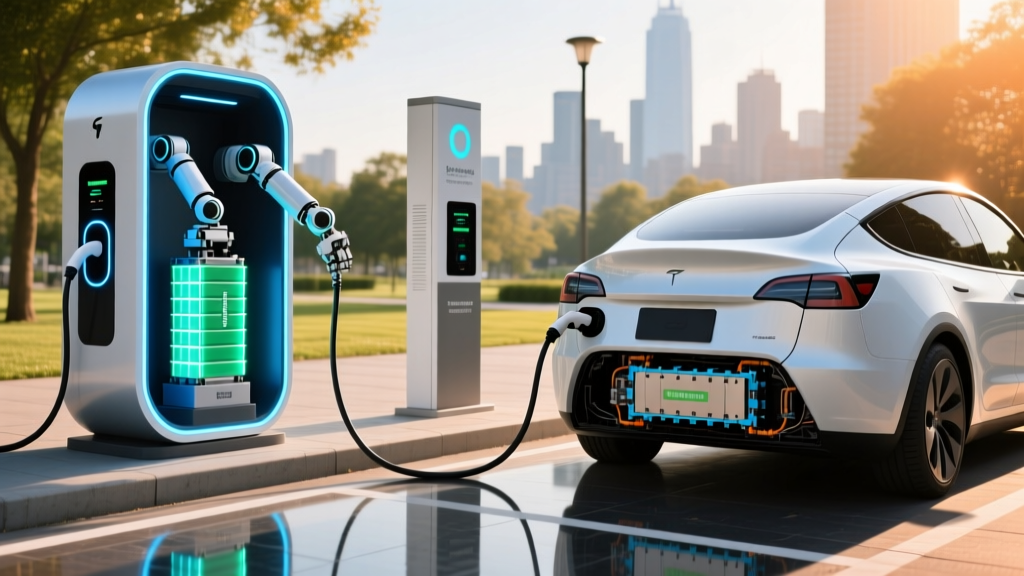
- Frequent DC fast charging: Occasional Supercharging is fine, but daily DC fast charging generates sustained heat that accelerates cell wear. Tesla's battery preconditioning for navigation-routed Supercharger stops helps, but frequent 250 kW sessions still add cumulative stress. Aim to fast-charge no more than 2–3 times per week if possible.
- Extreme state-of-charge habits: For NMC/NCA packs, routinely sitting at 100% SoC or dropping below 10% stresses the cells. The 20–80% daily window is ideal. LFP packs are more tolerant of 100% — in fact, they need it for BMS calibration.
- Extreme temperatures: Prolonged exposure to ambient temperatures above 95°F or below 10°F accelerates degradation, especially when combined with high SoC. Tesla's thermal management system actively cools and heats the pack, but parking in shade or a garage in hot climates measurably helps. Per Recurrent's climate analysis, EVs in temperate climates show 1–3% less degradation over 5 years than those in extreme-heat regions.
- High-mileage rapid cycling: Drivers who deplete and recharge the battery daily (e.g., rideshare drivers covering 200+ miles/day) accumulate cycle count faster. A 75 kWh pack rated for 1,500 full cycles can still deliver 300,000+ miles, but partial cycles (40–80% swings) are gentler than full 0–100% cycles.
- Storing at high SoC: Leaving an NMC Tesla plugged in at 100% for days or weeks (e.g., before a vacation) accelerates calendar aging. If storing the car, set the charge limit to 50% and leave it plugged in so the BMS can manage thermal conditions.
How to Check and Maximize Your Tesla's Battery Health
Monitoring your battery's State of Health (SoH) doesn't require a dealership visit. Here are the primary methods Tesla owners use:
In-Car Energy App
Tesla's Energy app displays real-time consumption and range estimates. By comparing your current rated range at 100% charge to the EPA-rated range when new, you can estimate capacity loss. For example, if your Model 3 Long Range originally showed 330 miles at 100% and now shows 305 miles, that's roughly 7.5% degradation.
Third-Party Apps: Tessie, TeslaFi, Stats
Apps like Tessie, TeslaFi, and Stats (for iOS) pull data directly from Tesla's API and track battery health over time. They log every charge session, calculate degradation curves, and estimate SoH percentage — giving you a much more precise picture than the in-car display alone.
Service Mode (Limited)
Tesla's Service Mode (accessible via the software menu) includes a "Health Test" that runs a brief diagnostic on the battery pack. It provides a pass/fail assessment rather than a precise SoH percentage, but it can flag issues before they trigger a warranty claim.
Maximizing Battery Health: Quick Protocol
- Set your daily charge limit to 80% for NMC/NCA or 100% for LFP.
- Use Level 2 home charging as your primary method — slower charging generates less heat.
- Enable "Scheduled Departure" so the car finishes charging just before you leave, minimizing time at high SoC.
- Precondition the battery before Supercharging (Tesla does this automatically when you navigate to a Supercharger).
- In extreme cold, keep the car plugged in so the battery heater can maintain optimal temperature without draining the pack.
What's Next? Solid-State and Silicon-Anode Batteries
The EV battery landscape is evolving rapidly, but it's critical to separate lab announcements from production reality:
Solid-state batteries promise higher energy density (potentially 400+ Wh/kg), faster charging, and improved safety by replacing the liquid electrolyte with a solid material. Toyota, Samsung SDI, and QuantumScape have all demonstrated prototype cells, but mass production remains in the 2028–2032 window for most automakers. Tesla has not announced a solid-state timeline. When solid-state packs do arrive, expect them in premium models first, at a significant price premium.
Silicon-anode batteries (used in limited form in the Porsche Taycan and some consumer electronics) replace graphite anodes with silicon to increase energy density by 20–40%. Tesla already uses small amounts of silicon in its anode mix, and companies like Sila Nanotechnologies are scaling production. Expect incremental silicon-anode adoption in Tesla's 4680 cells over the next 2–3 model years, yielding modest range gains rather than step-change improvements.
4680 cell scaling: Tesla's larger 4680 cylindrical cell, already in production for Cybertruck and some Model Y vehicles, reduces manufacturing cost per kWh and improves thermal management. As production yield improves through 2026–2027, expect 4680 cells to appear across more of Tesla's lineup, potentially reducing pack costs by 10–15%.
None of these technologies will make current Tesla batteries obsolete. Today's LFP and NMC packs are mature, well-understood, and proven to last 200,000+ miles. Future chemistries will offer incremental improvements, not reasons to delay a purchase.
Frequently Asked Questions
How many volts is a Tesla Model 3 battery?
The Tesla Model 3 uses a ~400V nominal architecture. The Standard Range RWD with the LFP pack operates at approximately 346V nominal, while the Long Range AWD with NMC runs closer to ~395V nominal. Actual voltage ranges from roughly 300V at low SoC to 420V at full charge.
Does Tesla use a 12V battery too?
Yes. Tesla vehicles have both a high-voltage traction battery (the ~400V or ~800V pack that powers the motors) and a low-voltage auxiliary battery. Newer Tesla models (2021+) use a 16V lithium-ion auxiliary battery instead of a traditional 12V lead-acid unit. The auxiliary battery powers the computers, lights, and accessories — it is not the same as the traction battery and is a separate, much smaller component.
How long do EV batteries last in years?
Based on fleet data, most modern EV batteries — including Tesla's — last 15–20 years or 200,000–300,000 miles before degrading to 70–80% of original capacity. Tesla's own Impact Report shows Model 3/Y packs retaining approximately 85% capacity at 200,000 miles. Full failure requiring replacement within the first decade is rare (well under 1%).
How much does a Tesla battery cost to replace?
Out-of-warranty Tesla battery replacement costs range from approximately $10,000 for a Model 3 RWD LFP pack to $25,000+ for a Model S/X 100 kWh pack, including labor. Cybertruck's structural pack may cost $20,000–$28,000. However, most Tesla batteries never require replacement during the vehicle's practical ownership life.
What does the Tesla battery warranty cover?
Tesla warrants its battery packs for 8 years and 100,000–150,000 miles (depending on model) against capacity loss below 70% of original capacity, as well as defects in materials and workmanship. The warranty does not cover damage from accidents, misuse, or unauthorized modifications.
Is LFP better than NMC for Tesla batteries?
Neither is universally better — they serve different priorities. LFP offers longer cycle life (3,000–5,000+ cycles), lower cost, and the convenience of 100% daily charging, but with lower energy density and worse cold-weather performance. NMC/NCA offers higher energy density (longer range in a lighter pack) and better cold performance, but requires more careful SoC management (80% daily limit) and has a shorter cycle life. Choose LFP for daily commuting and cost savings; choose NMC for maximum range and all-season performance.
Does frequent Supercharging damage the battery?
Occasional Supercharging has minimal impact on battery health, thanks to Tesla's active thermal management and navigation-based preconditioning. However, daily DC fast charging does accelerate degradation compared to primarily Level 2 home charging. Tesla's fleet data suggests that vehicles that Supercharge frequently show slightly higher degradation (1–3% more over 100,000 miles) than those that primarily charge at home. For optimal longevity, use Level 2 as your daily method and reserve Supercharging for road trips.