The Promise and Reality of Autonomous Accessibility
The advent of autonomous vehicles (AVs) has long been heralded as a revolutionary mobility solution for individuals with disabilities. According to the Centers for Disease Control and Prevention (CDC), up to 27% of adults in the United States have some type of disability, with mobility, cognitive, and visual impairments representing a significant portion of this demographic. For these individuals, traditional ride-hailing services have often fallen short, plagued by discriminatory cancellations, inadequate wheelchair-accessible vehicle (WAV) availability, and poorly trained drivers. Robotaxis theoretically eliminate the human bias variable, but physical vehicle design and digital interface accessibility remain critical hurdles.
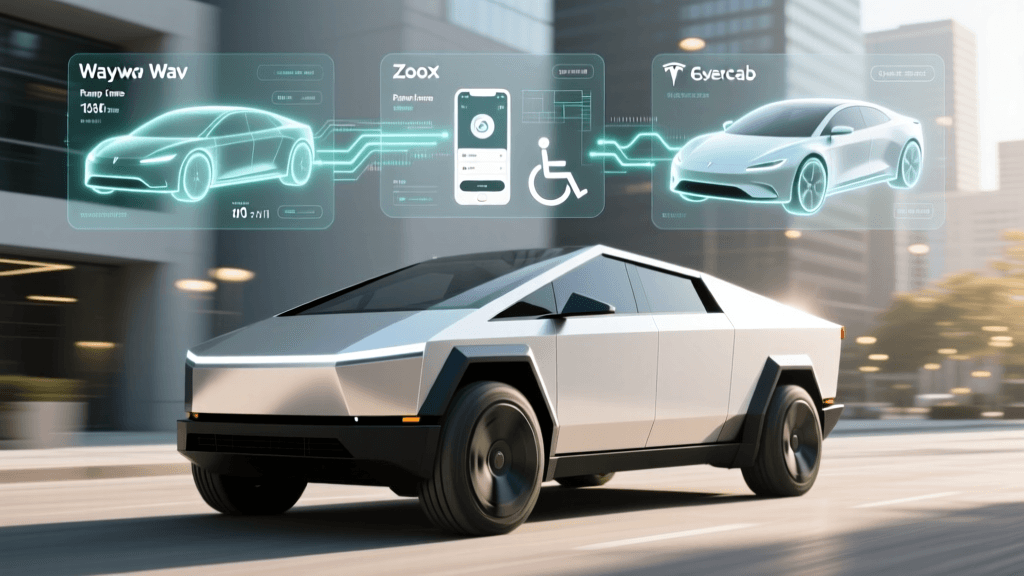
In this data-driven comparison analysis, we evaluate the accessibility features of the leading robotaxi platforms: Waymo's WAV fleet, Zoox's purpose-built carriage, and Tesla's upcoming Cybercab. By measuring them against physical boarding metrics, sensory feedback systems, and operational reliability, we can determine which autonomous ecosystem is genuinely building for universal inclusion, and which is treating accessibility as an afterthought.
Methodology: The Four Pillars of AV Accessibility
To provide a rigorous, data-driven comparison, we evaluated each robotaxi platform across four distinct accessibility pillars. These metrics align with both the Americans with Disabilities Act (ADA) guidelines and modern digital inclusion standards:
- Physical Boarding & Clearance: Ramp deployment times, door aperture width (in inches), interior floor flatness, and wheelchair securement mechanisms.
- Digital Interface & App UI: Compliance with Web Content Accessibility Guidelines (WCAG) 2.1, screen reader optimization, and cognitive load reduction.
- Sensory & In-Ride Feedback: Haptic feedback, audio cue localization, and visual contrast for riders with visual or auditory impairments.
- Operational Reliability: Fleet ratio of accessible vehicles to standard vehicles, average wait time multipliers, and geographic service parity.
Waymo One WAV: The Current Market Benchmark
Waymo currently operates the most mature and widely deployed accessible robotaxi fleet in the world. Utilizing heavily modified Chrysler Pacifica minivans and, more recently, Jaguar I-PACE SUVs, Waymo has integrated automated ramp systems that allow wheelchair users to board without human assistance. According to Waymo's official accessibility portal, their WAVs are designed to accommodate most standard manual and powered wheelchairs.
Physical Boarding Data
The Chrysler Pacifica WAV remains the workhorse of Waymo's accessible fleet. Data collected from rider reports and ADA compliance filings indicate the following specifications:
- Ramp Deployment Time: Approximately 35 to 45 seconds from vehicle stop to full extension.
- Ramp Weight Capacity: 650 lbs (combined weight of occupant and mobility device).
- Door Aperture Width: 36.5 inches, clearing the ADA minimum requirement of 32 inches.
- Securement System: Automated 4-point tie-down system with a specialized lap and shoulder belt that integrates directly into the vehicle's safety monitoring suite.
While the physical hardware is robust, the operational data reveals a bottleneck. Because WAVs represent a small fraction of the total Waymo One fleet (estimated at less than 5% in markets like Phoenix and Los Angeles), riders requesting a WAV frequently experience wait times that are 1.8x to 2.5x longer than those requesting a standard vehicle during peak hours.
Zoox Carriage: Purpose-Built for Universal Design
Unlike Waymo, which retrofits existing consumer vehicles with aftermarket ramps, Zoox has engineered its robotaxi from the ground up. The Zoox carriage is a symmetrical, bidirectional vehicle with no steering wheel, pedals, or traditional dashboard. This clean-sheet design approach offers profound advantages for accessibility, particularly regarding interior spatial geometry.
Physical Boarding and Interior Data
Based on Zoox vehicle specifications and public demonstration data, the carriage prioritizes universal design over retrofitting:
- Door Configuration: Four independent, wide-opening doors that provide an unobstructed entry path.
- Floor Geometry: A completely flat floor with no transmission tunnel or raised battery humps, allowing seamless positioning of wheelchairs or walkers.
- Seating Layout: Inward-facing, four-seat configuration. This allows a wheelchair user to occupy one of the four primary zones without needing a specialized 'cut-out' area, provided the securement mechanism is integrated into the floor track.
The primary challenge for Zoox is curb integration. Without a deployable ramp, the carriage relies on precise, flush curb alignment or specialized boarding zones to bridge the gap between the sidewalk and the vehicle floor. If municipal infrastructure is not upgraded to support flush boarding, Zoox may need to introduce a localized, automated bridge-plate mechanism.
Tesla Cybercab: The Accessibility Deficit
Tesla's recently unveiled Cybercab represents a highly futuristic, minimalist approach to autonomous transit. Designed strictly as a two-seater with butterfly-style doors and a focus on aerodynamic efficiency, the Cybercab's design language prioritizes aesthetics and cost-reduction over universal inclusion.
Physical Boarding Limitations
Our analysis of the Cybercab's physical footprint reveals significant accessibility deficits:
- Door Mechanism: Butterfly doors open upward. While visually striking, they offer limited lateral clearance and can be problematic for riders with limited upper-body mobility or those using assistive walking devices.
- Lack of Ramp Integration: The low-slung sports-car-like chassis and lack of a flat-floor minivan architecture mean there is zero provision for a wheelchair ramp.
- Seating Capacity: With only two seats, there is no flexibility for a caregiver to ride alongside a passenger with cognitive or severe physical disabilities unless both can fit into the standard bucket seats.
From a data perspective, the Cybercab is fundamentally incompatible with non-ambulatory wheelchair users. It relies entirely on the passenger's ability to transfer from a mobility device into a fixed, low-profile automotive bucket seat—a process that is physically impossible for a large percentage of the disabled population without human assistance, which a robotaxi cannot provide.
Data Comparison: Waymo vs. Zoox vs. Tesla
The following table summarizes the core accessibility metrics across the three platforms, highlighting the stark contrast between retrofitted solutions, purpose-built designs, and exclusionary architectures.
| Metric | Waymo One (WAV Fleet) | Zoox Carriage | Tesla Cybercab |
|---|---|---|---|
| Wheelchair Ramp | Yes (Automated, 650 lb capacity) | No (Relies on flush curb/bridge-plate) | No |
| Door Clearance | 36.5 inches (Sliding) | ~40+ inches (Wide-swing) | N/A (Butterfly, limited lateral) |
| Interior Floor | Flat (WAV specific zone) | 100% Flat | Contoured, raised battery hump |
| Non-Ambulatory Access | Fully Supported | Supported (with infrastructure) | Not Supported |
| Wait Time Multiplier | 1.8x - 2.5x standard | N/A (Pre-commercial) | 1.0x (Standard only) |
Digital and Sensory Accessibility: App Interfaces
Physical boarding is only half the equation; a visually or cognitively impaired rider must be able to summon, locate, and interact with the vehicle independently. The National Highway Traffic Safety Administration emphasizes that NHTSA's automated vehicle safety guidelines must encompass the human-machine interface (HMI) to ensure equitable access.
Waymo's Digital Inclusion
Waymo has invested heavily in digital accessibility. The Waymo One app is fully optimized for iOS VoiceOver and Android TalkBack. For visually impaired riders, the app provides precise, localized audio cues (e.g., 'Your vehicle is pulling up to the curb on your left, hazard lights are flashing'). Furthermore, the in-ride screen offers high-contrast modes and audio-described routing updates, ensuring riders with low vision can track their journey.
Zoox's Multi-Sensory HMI
Zoox takes sensory feedback a step further by integrating haptic and ambient lighting systems directly into the cabin. The carriage uses localized audio speakers in the headrests to provide directional cues to hearing-impaired riders via visual and vibration alerts. If the vehicle detects a hazard or an upcoming abrupt stop, the cabin lighting shifts to warm tones and seats provide gentle haptic feedback, reducing cognitive load and anxiety for neurodivergent riders.
Tesla's App-Centric Approach
Tesla's current app ecosystem is highly functional but lacks deep, specialized accessibility modes. The reliance on a smartphone screen to unlock the doors, adjust the climate, and route the vehicle poses a barrier for riders with severe motor impairments who may rely on voice-activated smart home ecosystems or specialized adaptive switches. The Cybercab's lack of an internal screen (relying instead on personal devices) shifts the accessibility burden entirely onto the user's personal hardware.
Operational Realities: The Cost of Inclusion
The data clearly shows that accessibility impacts operational efficiency. Retrofitting a Chrysler Pacifica with an automated ramp system adds approximately $15,000 to $20,000 to the vehicle's bill of materials, not including the ongoing maintenance of the hydraulic and mechanical ramp components. Furthermore, the ramp deployment cycle adds roughly 90 seconds to the total pickup time (deployment, boarding, securement, and stowage), which reduces the total number of revenue-generating trips a WAV can complete in a 24-hour cycle.
This economic reality explains why fleet operators keep WAV ratios low. However, as regulatory bodies in states like California and New York begin to mandate equitable service levels for autonomous fleets, companies that fail to integrate accessibility at the foundational design level (like Zoox) or rely on exclusionary designs (like Tesla) may face severe operational restrictions or fines.
The Verdict: Data-Driven Conclusions
When analyzing the data, Waymo currently holds the undisputed lead in real-world, actionable accessibility. Despite the operational friction of longer wait times, their retrofitted WAV fleet provides a reliable, ADA-compliant lifeline for non-ambulatory riders today. Their digital app ecosystem sets the industry standard for visual and cognitive inclusion.
Zoox represents the most promising future for universal design. By eliminating the steering column and designing a flat-floor, symmetrical cabin, they are building a vehicle that natively accommodates diverse mobility devices without the need for heavy, maintenance-prone hydraulic ramps. However, their success will depend heavily on municipal partnerships to ensure curb-side infrastructure matches their vehicle's boarding geometry.
Conversely, Tesla's Cybercab fails the accessibility test. By prioritizing a sleek, low-slung, two-seat sports-car aesthetic, Tesla has effectively engineered the disabled community out of their robotaxi vision. Without a fundamental redesign to include ramp integration and adaptive securement systems, the Cybercab will remain an exclusionary mode of transit, highlighting a critical blind spot in the broader autonomous vehicle industry's rush toward commercialization.