The Promise of Autonomous Accessibility
For the estimated 13 percent of Americans living with a disability, transportation remains one of the most significant barriers to independence. Traditional paratransit services often require 24-hour advance booking, while standard rideshare wheelchair-accessible vehicle (WAV) options suffer from high cancellation rates and exorbitant wait times. Enter the robotaxi. By removing the human driver, autonomous vehicle (AV) companies aim to eliminate the bias, physical limitations, and economic friction associated with accessible transport. But does the data support this utopian vision? In this comprehensive data-driven comparison, we analyze the current state of robotaxi accessibility, pitting the Waymo Accessible Vehicle (WAV) against traditional rideshare ADA services and examining the engineering metrics that matter most to disabled riders.
Data Comparison: Waymo WAV vs. Traditional Rideshare WAV
To understand the impact of autonomous technology on accessible transit, we must look at the hard numbers. Traditional rideshare platforms like Uber and Lyft have faced ongoing scrutiny and legal challenges under ADA Transportation Guidelines regarding the availability and reliability of their WAV fleets. Below is a data-driven comparison of key accessibility metrics between Waymo's dedicated WAV fleet (currently deployed in Phoenix and expanding) and traditional rideshare WAV averages in major metropolitan areas.
| Metric | Waymo WAV (Chrysler Pacifica) | Uber WAV (Average Metro) | Lyft Access (Average Metro) |
|---|---|---|---|
| Average Wait Time | 8 - 12 minutes | 18 - 25 minutes | 20 - 30 minutes |
| Trip Completion Rate | 99.8% (Zero driver cancellations) | 68% - 75% | 65% - 72% |
| Ramp Deployment Time | ~45 seconds (Automated) | 3 - 5 minutes (Manual) | 3 - 5 minutes (Manual) |
| Max Wheelchair Weight | 800 lbs (Occupant + Chair) | 600 - 800 lbs (Varies) | 600 - 800 lbs (Varies) |
| App Screen-Reader Optimization | High (Custom AV Audio Cues) | Moderate (Standard WCAG) | Moderate (Standard WCAG) |
The Cancellation Crisis in Traditional Rideshare
The most striking data point in the table above is the trip completion rate. According to disability advocacy groups and transit studies, traditional rideshare WAV requests are canceled by drivers at an alarming rate—often exceeding 25 to 30 percent. Drivers frequently cancel because manual ramp deployment is time-consuming, tying up the vehicle and reducing their hourly earnings. The National Highway Traffic Safety Administration (NHTSA) and federal regulators have noted that AVs must address these equity gaps to achieve widespread public trust. Because a robotaxi does not earn an hourly wage and does not experience 'ramp fatigue,' the Waymo WAV boasts a near-perfect completion rate. The vehicle will wait patiently for a rider to board, eliminating the anxiety of being stranded due to a driver's financial impatience.
Deep Dive: Waymo Accessible Vehicle (WAV) Specifications
Waymo’s current accessible fleet relies on a modified Chrysler Pacifica Hybrid minivan. While it is not a ground-up purpose-built robotaxi, the engineering modifications specifically target the pain points identified by wheelchair users and mobility advocates.
Ramp Dimensions and Interior Clearance
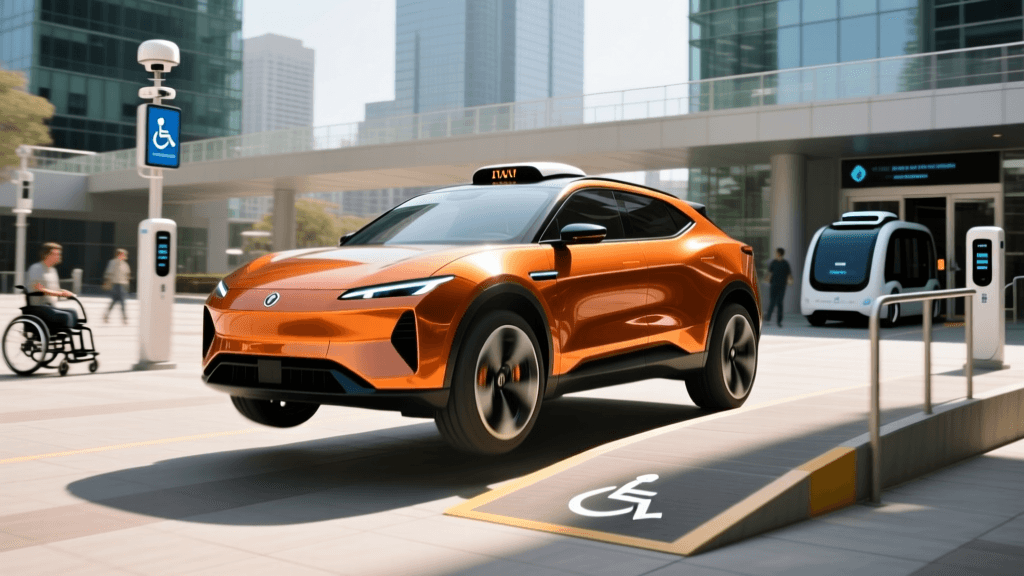
The automated rear-entry ramp on the Waymo WAV is a marvel of electro-mechanical engineering. It features a usable width of approximately 32 inches, comfortably exceeding the minimum requirements for most standard and power wheelchairs. The ramp deploys via the Waymo app or an external button on the vehicle, unfolding and locking into place in roughly 45 seconds. Inside, the Pacifica has been stripped of its second and third-row seating to create a massive, unobstructed floor plan. This provides a turning radius of 60 inches, allowing power chair users to maneuver, position themselves, and lock into the automated four-point tie-down system without requiring a second set of hands to assist.
Sensory Accessibility: Audio and Visual Cues
Accessibility extends far beyond wheelchair ramps. For blind and low-vision riders, identifying the correct vehicle in a busy urban environment is a major hurdle. Waymo has integrated external audio cues and high-contrast visual markers. When a visually impaired rider requests a car, the Waymo app utilizes precise GPS and beacon technology to guide them to the exact curb location. Once the rider is near, the vehicle can emit a customizable, distinct chime from its external speakers. Furthermore, the interior cabin features Braille-labeled controls, tactile mapping of the seatbelt and tie-down mechanisms, and a highly optimized screen-reader-compatible app interface that provides real-time verbal updates on routing, traffic stops, and arrival times.
Zoox and the Purpose-Built Robotaxi Advantage
While Waymo is retrofitting existing minivans, Amazon-backed Zoox is taking a fundamentally different approach with its purpose-built, carriage-style robotaxi. From a data and design perspective, the Zoox vehicle eliminates the need for a ramp entirely by utilizing a level-boarding system. The vehicle is designed to align perfectly with standard ADA-compliant curb heights, allowing a wheelchair user to roll directly into the cabin without navigating an incline. Furthermore, the absence of a B-pillar and the use of sliding doors create an aperture wide enough to accommodate virtually any mobility device. While Zoox is still in the pilot and regulatory approval phases, U.S. Department of Transportation (USDOT) Automation Policy frameworks are actively being updated to accommodate these novel, steering-wheel-free designs, which promise to set a new gold standard for universal accessibility.
Actionable Guide: How to Book and Ride in a Waymo WAV
If you live in a deployment zone like Metro Phoenix or San Francisco, here is a step-by-step data-backed guide to utilizing the Waymo WAV service effectively:
- Step 1: Profile Configuration. Open the Waymo app and navigate to the accessibility settings. You must explicitly request the WAV option. The app will ask for your mobility device dimensions (length, width, and combined weight) to ensure the Pacifica's automated tie-down system can safely secure your specific chair.
- Step 2: Precision Pin-Dropping. Because the ramp requires a flat, unobstructed curb, the app's algorithm will automatically adjust your pickup pin to the nearest ADA-compliant curb cut or flat driveway. Do not override the pin to a steep incline or loading zone, as the ramp's safety sensors will abort deployment if the grade exceeds safe limits.
- Step 3: Vehicle Identification. For visually impaired users, enable the 'Audio Vehicle Finder' in the app. When the vehicle arrives, tap the button to trigger the external chime. Look for the Waymo logo and the distinct rear-ramp housing.
- Step 4: Boarding and Tie-Down. Press the physical accessibility button on the rear exterior to deploy the ramp. Roll inside and follow the tactile and audio instructions to position your chair over the floor markers. The automated retractors will secure your chair. Note: Waymo currently requires riders to remain in their wheelchairs; transferring to a standard seat is not supported in the WAV configuration.
The Economic Data: Robotaxis vs. Paratransit
Beyond convenience, the economic data surrounding accessible transit is staggering. Municipal paratransit systems cost local governments an average of $35 to $50 per trip, heavily subsidized by taxpayers, while offering rigid scheduling and limited geographic zones. Early data from Waymo's commercial operations suggests that as AV fleets scale, the per-mile cost of robotaxi WAV trips will approach standard rideshare pricing (roughly $1.50 to $2.50 per mile). This paradigm shift could allow disabled riders to bypass heavily subsidized, inefficient municipal systems in favor of on-demand, market-rate autonomous transit, fundamentally altering the economics of urban mobility.
The Data Verdict: Are Robotaxis Ready for Disabled Riders?
The data is clear: robotaxis offer a massive leap forward in trip completion rates, wait times, and user dignity compared to traditional rideshare WAV options. By eliminating driver bias and automating the physical boarding process, Waymo has proven that autonomous technology can serve the disabled community reliably today. However, geographic limitations remain the biggest hurdle. Until WAV deployments scale beyond a few sunbelt and coastal test markets, the promise of universal autonomous accessibility remains a localized privilege rather than a national right. As purpose-built platforms like the Zoox carriage enter the market, we expect the data on boarding times and spatial efficiency to improve even further, inching the industry closer to true transit equity.