The Profitability Question: Where Waymo Stands Today
The question of whether Waymo is profitable has followed Alphabet's autonomous-driving subsidiary since it launched its first commercial rides. As of 2026, the honest answer is nuanced: Waymo has not disclosed a standalone operating profit, but the company has hit milestones that suggest unit economics are turning positive in its most mature markets. Waymo One, the consumer-facing robotaxi service, now operates across multiple major U.S. metros, completing over 10 million paid trips cumulatively. Alphabet has noted on recent earnings calls that Waymo's revenue is growing faster than its operating costs — a trajectory the company says puts it on a path toward break-even in its lead markets.
Understanding whether Waymo is profitable — or when it might be — requires looking at the service's actual operational footprint, per-ride economics, safety performance, and the regulatory and technological constraints that shape its cost structure. Here's the full picture.
SAE Automation Levels: Why Waymo Is Different From Autopilot
Before examining economics, it's critical to distinguish what Waymo actually is. Consumer systems like Tesla's FSD (Supervised), Ford's BlueCruise, and GM's Super Cruise are SAE Level 2 driver-assistance features — the human driver must remain engaged and is legally responsible for the vehicle at all times. Waymo One is a fundamentally different category.
Waymo One operates at SAE Level 4 within its geofenced service areas. The vehicle handles all driving tasks — steering, acceleration, braking, route navigation, and edge-case response — with no human driver present and no expectation of human intervention. This is not driver-assist. If the system encounters a scenario it cannot handle, it is designed to pull over safely (a "minimal risk condition") rather than hand control to a passenger.
| Level | Description | Examples | Driver Required? |
|---|---|---|---|
| Level 0–1 | No automation / basic assist (cruise control) | Standard cruise control, AEB | Yes, fully |
| Level 2 | Combined lateral + longitudinal assist | Tesla FSD (Supervised), BlueCruise, Super Cruise | Yes, must monitor |
| Level 3 | Conditional automation (hands off, eyes off in specific conditions) | Mercedes Drive Pilot (limited markets) | Must be ready to resume |
| Level 4 | High automation within defined ODD (geofence, conditions) | Waymo One, Zoox | No |
| Level 5 | Full automation, any condition, any road | Does not exist commercially | No |
Where Can You Actually Ride a Waymo Robotaxi?
Waymo One's service area has expanded significantly since its Phoenix debut. As of early 2026, fully driverless commercial rides are available in the following metros, with geofenced boundaries that continue to grow:
| Metro Area | Status | Coverage Notes |
|---|---|---|
| Phoenix, AZ (Metro) | Fully operational | Largest coverage area — includes Chandler, Tempe, Mesa, Scottsdale, Phoenix Sky Harbor Airport. ~300+ sq mi. |
| San Francisco, CA | Fully operational | Citywide coverage including downtown, Sunset, Richmond districts. Highway driving enabled on select corridors. |
| Los Angeles, CA | Fully operational | Downtown LA, Hollywood, Santa Monica, LAX service. Expansion ongoing into the Valley. |
| Austin, TX | Operational (expanding) | Downtown, South Austin, airport corridor. Launched commercially in 2025. |
Waymo has also announced testing or planned expansion in additional cities, but announced service is not the same as live, bookable rides. If you can't open the Waymo One app and request a ride today, it isn't operational yet.
How to Use Waymo One and What It Costs vs. Uber and Lyft
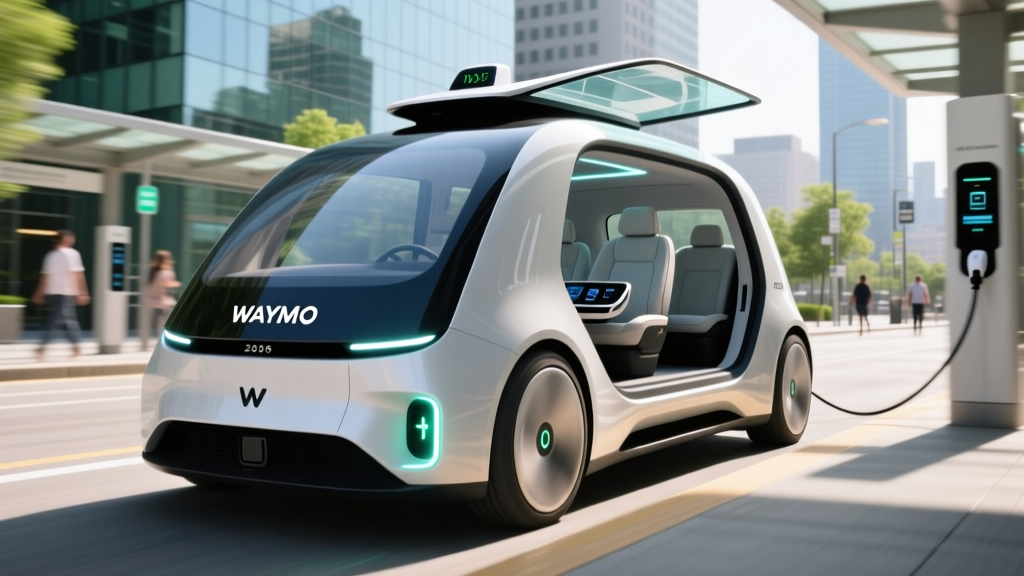
Using Waymo One works like any rideshare app: download the Waymo One app (available on iOS and Android), create an account, set your pickup and dropoff within the geofenced service area, and confirm. A 6th-generation Waymo vehicle — currently based on the Geely Zeekr RT platform with a custom sensor suite — arrives without a driver. You unlock via the app, and the ride proceeds autonomously.
Pricing is where the profitability question gets concrete. Waymo One uses a per-ride pricing model similar to Uber/Lyft, factoring in distance, time, and demand. Here's how it typically compares:
| Route Example | Waymo One | UberX | Lyft Standard |
|---|---|---|---|
| 5-mile city ride (off-peak) | $12–$16 | $11–$15 | $10–$14 |
| 10-mile mid-distance (off-peak) | $20–$28 | $18–$26 | $17–$24 |
| Airport run (~15 mi, off-peak) | $30–$42 | $28–$40 | $26–$38 |
| Surge pricing (peak demand) | Moderate (1.2–1.5x typical) | High (1.5–3x+) | High (1.5–3x+) |
The key economic insight: Waymo's off-peak pricing is roughly comparable to Uber/Lyft, sometimes slightly higher. But Waymo avoids the extreme surge multipliers that human-driver platforms deploy during peak demand — because its marginal cost per ride (electricity, vehicle depreciation, remote-assistance overhead) is more predictable than paying a human driver who can choose to log off during busy periods. Waymo also periodically offers promotional pricing and loyalty credits to build ridership in newer markets.
Uber and Lyft pay drivers roughly 60–75% of the fare (before platform fees). Waymo eliminates that line item entirely. But it replaces it with vehicle hardware costs (the 6th-gen sensor suite is estimated at $30,000–$40,000 per vehicle above the base Zeekr RT price), remote fleet-assistance operators, mapping infrastructure, and R&D amortization. The profitability inflection point comes when utilization rates are high enough that per-ride hardware amortization drops below what a human driver would cost.
Safety Record: What the Data Actually Shows
Safety is both Waymo's strongest selling point and its most scrutinized metric. As of late 2025, Waymo reported over 50 million miles of fully autonomous driving across its commercial fleet. The company publishes periodic safety reports comparing its collision rates to human-driver benchmarks.
- Total autonomous miles driven: 50+ million (fully driverless, no safety driver)
- Injury-causing collision rate: ~85% lower than human-driver benchmark in comparable geographies, per Waymo's published safety reports
- Police-reported crash rate: ~90% lower than human baseline for comparable urban driving
- Contactless incidents: The vast majority of reported incidents involve low-speed contact with other vehicles violating Waymo's right-of-way (e.g., a car backing into a stationary Waymo)
- Fatalities: Zero passenger fatalities in commercial Waymo One operations as of early 2026
Source: Waymo Safety Reports; NHTSA AV safety data
For context, the NHTSA estimates that human drivers experience approximately 1.35 fatalities per 100 million vehicle miles traveled nationally. Waymo's 50+ million driverless miles with zero passenger fatalities is a strong data point, but the sample size is still small relative to the billions of miles driven annually by humans. The statistically meaningful comparison is on injury-causing and police-reported collisions, where Waymo's numbers show a clear advantage — particularly in avoiding the distraction, impairment, and fatigue-related crashes that dominate human crash statistics.
Notable incidents have occurred. In early 2024, a Waymo vehicle in San Francisco was struck by a pickup truck that ran a red light, and the Waymo subsequently made contact with a pedestrian who had entered the crosswalk — the pedestrian sustained minor injuries. The NHTSA reviewed the incident, and Waymo issued a software update to improve its response to post-collision scenarios. These edge cases drive ongoing regulatory scrutiny and software iteration.
The Technology Stack: Lidar, Cameras, and Geofencing
Waymo's approach to autonomous driving is sensor-rich and map-dependent — a deliberate contrast to camera-only systems like Tesla's FSD. The 6th-generation Waymo Driver, deployed on the Zeekr RT vehicle platform, integrates:
- Lidar: Multiple solid-state and spinning lidar units providing 360° 3D point-cloud mapping up to 500+ meters. Lidar gives precise depth perception independent of lighting — critical for night driving and distinguishing object shapes.
- Cameras: High-resolution surround cameras (8+ units) for object classification, traffic-light state detection, signage reading, and lane-line identification.
- Radar: Multiple imaging radar units for velocity detection of moving objects, performance in rain and fog where lidar and cameras degrade.
- Audio sensors: External microphones to detect emergency vehicle sirens and determine their direction.
- HD Maps: Centimeter-precision pre-mapped routes within the geofence. Waymo vehicles do not navigate unmapped roads — the map provides a "prior" that the real-time sensor data is continuously validated against.
This sensor fusion approach is more expensive per vehicle than a camera-only system, but it provides redundancy: if one sensor modality is degraded (e.g., cameras in heavy rain), others compensate. The trade-off is cost vs. robustness — and for a commercial robotaxi fleet where each vehicle runs 16–20 hours per day, the higher upfront hardware cost is amortized across thousands of revenue-generating rides.
Geofencing is equally central. Waymo vehicles operate only within mapped, approved service areas. If a rider requests a destination outside the geofence, the app simply won't allow the booking. This constraint is both a safety feature (the system never encounters road types it hasn't been validated on) and a business limitation (expansion requires mapping, testing, and regulatory approval for each new area).
Regulatory Landscape: Who Approves Robotaxi Operations?
Robotaxi deployment in the United States is governed primarily at the state level, with federal oversight from NHTSA on vehicle safety standards. Waymo's operational approvals vary by state:
- Arizona: The most permissive regulatory environment. No specific state AV permit required for testing or commercial deployment. Waymo has operated commercially in Phoenix since 2020. The Arizona Department of Transportation requires basic registration and insurance.
- California: The most structured framework. The California Public Utilities Commission (CPUC) issues commercial passenger-service permits. The California DMV issues testing and deployment permits. Waymo holds both. San Francisco operations required additional city-level coordination after incidents and public hearings in 2023–2024.
- Texas: Austin operations launched under the state's AV testing framework, which requires registration with the Texas Department of Transportation and proof of insurance. No specific commercial-service permit beyond standard rideshare-style requirements.
At the federal level, NHTSA maintains authority over vehicle safety standards and investigates crashes involving automated systems. Waymo vehicles must comply with all applicable Federal Motor Vehicle Safety Standards (FMVSS), and the company has received specific exemptions for vehicles without traditional controls (steering wheel, pedals) where applicable. Any expansion into new states requires navigating that state's specific regulatory framework — a process that can take 12–24 months from initial testing to commercial approval.
Current Limitations: What Waymo Can't Do Yet
Despite the impressive safety record and expanding footprint, Waymo One has real operational constraints that affect both the rider experience and the profitability equation:
- Weather: Heavy rain, fog, and snow degrade lidar and camera performance. Waymo may restrict or suspend service during severe weather events. Phoenix's dry climate is an advantage; San Francisco's fog and Austin's flash-flood rain present more challenges.
- Geofence boundaries: You cannot book a ride to a destination outside the mapped service area. Suburban and rural areas remain unserved. Airport service is available at Phoenix (PHX), San Francisco (SFO), and Los Angeles (LAX), but not all airports in each metro.
- Complex construction zones: While Waymo handles many construction scenarios, long-term lane closures with temporary signage that contradicts the HD map can trigger conservative behavior — extended stops or rerouting.
- No highway driving (most markets): Waymo has enabled limited highway segments in San Francisco and Phoenix, but full interstate-highway operation is not yet standard. This limits longer-distance ride viability.
- Pickup/dropoff precision: The vehicle will pull to a safe, legal stop near your requested location, but it cannot enter private driveways, parking garages, or gated communities. You walk to the curb.
- Wait times: In newer markets with smaller fleets, wait times of 8–15 minutes are common during peak hours — longer than Uber/Lyft in the same areas.
- No stops mid-ride: You cannot add a stop or change your destination after the ride begins.
The Path to Profitability: Unit Economics and Scale
For Waymo to reach sustained profitability, three variables must align:
- Vehicle cost reduction: Each successive generation of the Waymo Driver has reduced sensor-suite cost. The 6th-gen system is estimated to be roughly half the cost of the 4th-gen hardware used in early Chrysler Pacifica vehicles. Further cost reduction with 7th-gen hardware (expected in testing by 2027) would improve per-vehicle economics substantially.
- Fleet utilization: A robotaxi that sits idle generates no revenue but still incurs depreciation and storage costs. Waymo's most mature Phoenix fleet reportedly achieves 15–18 hours of daily utilization, approaching the theoretical maximum when accounting for charging, cleaning, and maintenance. Newer markets like Austin are still building demand to reach these utilization levels.
- Operational overhead: Remote fleet-assistance operators (who can monitor multiple vehicles simultaneously and intervene in edge cases), vehicle cleaning and charging crews, mapping teams, and regulatory compliance staff all add cost. Waymo's goal is to increase the vehicles-per-operator ratio as the software matures — from an estimated 3–5 vehicles per remote operator today to 10+ in future generations.
Alphabet does not break out Waymo's financials separately in its earnings reports — Waymo sits within the "Other Bets" segment, which reported roughly $6.5 billion in cumulative operating losses across all projects in 2024. But Waymo is widely understood to be the largest revenue contributor within Other Bets, and the trajectory suggests the unit-economics gap is narrowing. Industry analysts estimate Waymo needs approximately 50,000–100,000 vehicles across 10+ cities to achieve corporate-level profitability, accounting for R&D amortization. The current fleet is estimated at 1,500–2,000 vehicles across four metros.
Frequently Asked Questions
Is Waymo truly self-driving, or is there a remote human driver?
There is no human driver in the vehicle — the front seats are empty. Waymo One vehicles operate at SAE Level 4 autonomy within their geofenced service areas. Remote fleet-assistance operators monitor the fleet and can provide guidance in rare edge cases, but they do not directly steer or brake the vehicle in real time. The vehicle's onboard system makes all driving decisions.
How much does a Waymo ride cost compared to Uber or Lyft?
Off-peak Waymo One rides are typically priced within 5–15% of comparable UberX or Lyft Standard fares. The main cost advantage for riders is during peak demand, when Waymo's surge multipliers tend to be lower (1.2–1.5x) compared to Uber/Lyft (which can exceed 2–3x). Exact pricing varies by city, distance, and time of day.
How safe are Waymo robotaxis compared to human drivers?
Based on 50+ million fully autonomous miles, Waymo reports an injury-causing collision rate approximately 85% lower than the human-driver benchmark in comparable urban geographies. Zero passenger fatalities have occurred in commercial Waymo One operations. However, this sample size is still small relative to the billions of miles driven by humans annually, and the comparison is most valid for the urban environments where Waymo operates.
Can I use Waymo in any city?
No. As of early 2026, Waymo One is commercially operational in Phoenix (metro), San Francisco, Los Angeles, and Austin. Each city has a defined geofence — you can only book rides within that boundary. Expansion to additional cities is ongoing but requires mapping, testing, and regulatory approval.
Does Waymo work in rain or bad weather?
Waymo operates in light rain and moderate conditions. However, heavy rain, dense fog, or snow can degrade lidar and camera performance, and the service may restrict or suspend rides during severe weather. Phoenix's dry climate is the most favorable operating environment; San Francisco fog and Austin thunderstorms present more frequent weather-related limitations.
What vehicle does Waymo use?
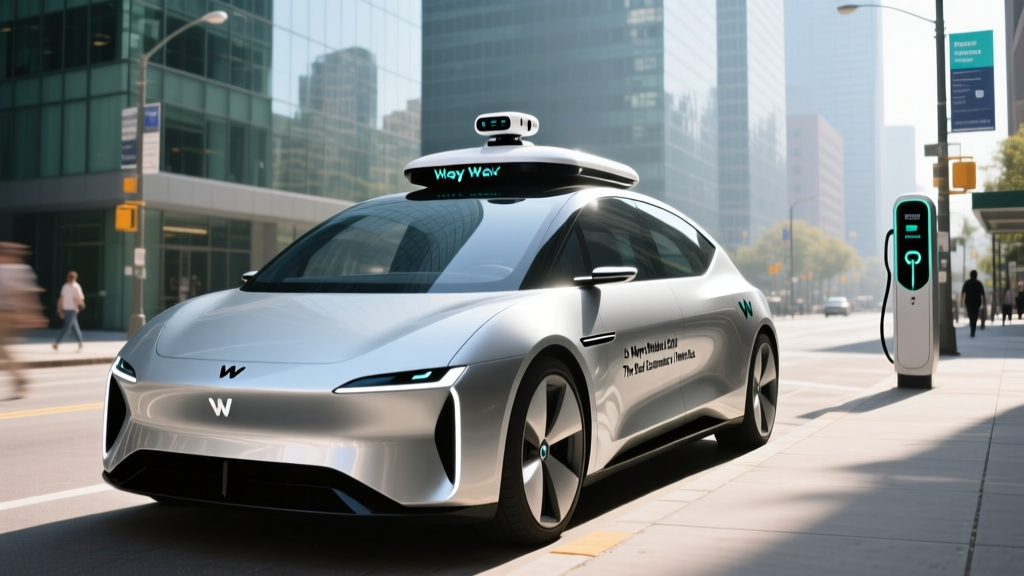
Waymo's current 6th-generation fleet is built on the Geely Zeekr RT platform — a purpose-built electric vehicle with integrated sensor mounts, redundant braking and steering systems, and no traditional driver controls in some configurations. Previous generations used the Chrysler Pacifica Hybrid and Jaguar I-PACE. All vehicles are battery electric.
Will Waymo ever be profitable?
Waymo has not disclosed a standalone profit, but Alphabet has indicated that Waymo's revenue growth is outpacing its cost growth. Analysts project that with continued fleet expansion to 50,000+ vehicles across 10+ cities, reduced per-vehicle hardware costs, and high utilization rates, Waymo could reach operational break-even in its mature markets within the next several years. Full corporate profitability (including R&D amortization) will take longer.