The Tesla Robotaxi Question: Hype vs. Reality
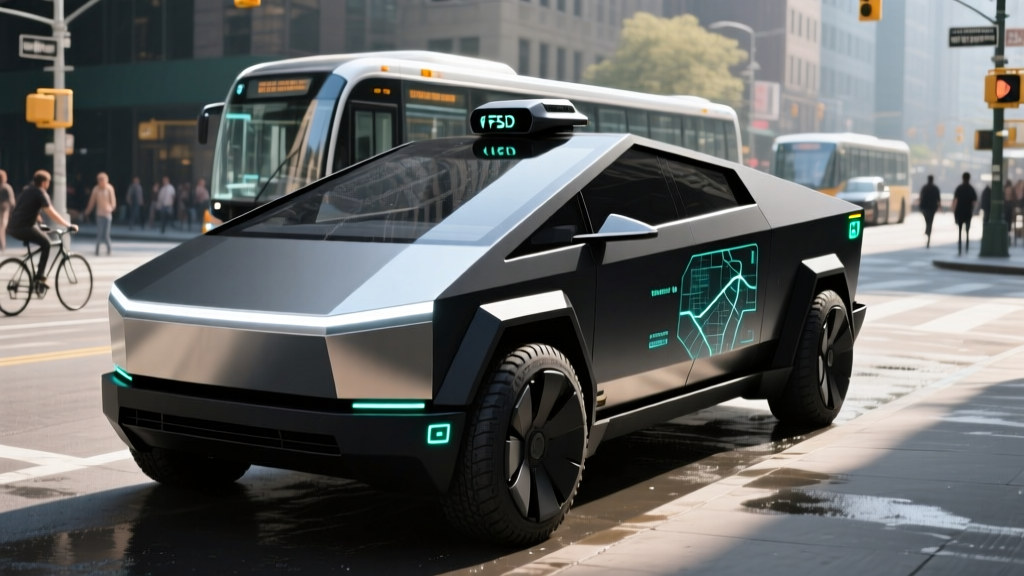
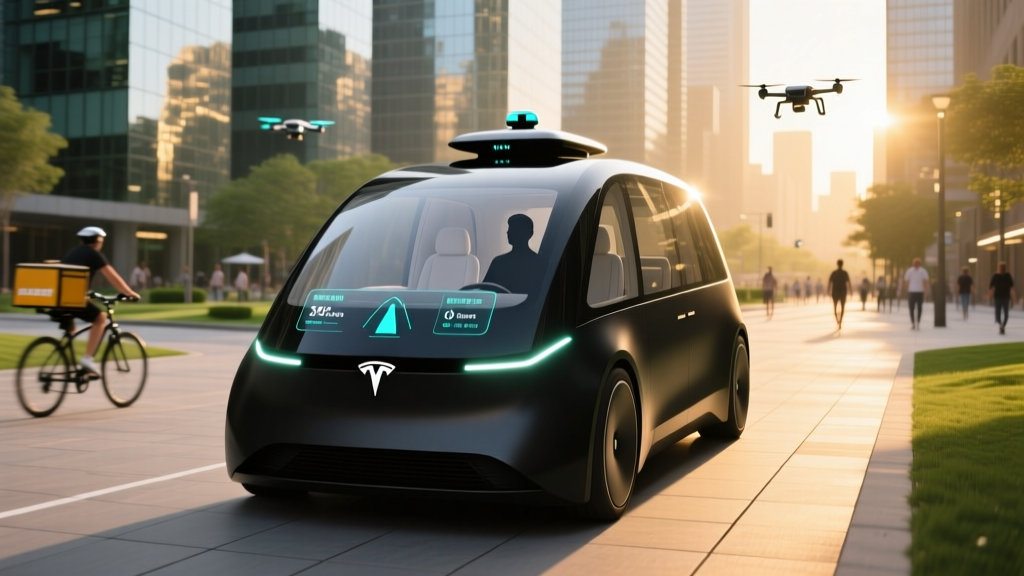
When Tesla unveiled its Cybercab concept in late 2024, the promise was bold: a dedicated, steering-wheel-free robotaxi that would undercut Uber and Lyft while delivering full autonomy. By 2026, however, the gap between Tesla's announcements and a commercially available, driverless ride-hailing service remains significant. For consumers and investors alike, the core question isn't whether Tesla's vision is compelling — it's whether the technology is safe enough to operate without a human behind the wheel, and what the data actually says.
This analysis examines the real state of Tesla's autonomous driving ambitions, the safety concerns that regulators and researchers have raised, and how Tesla's approach stacks up against established Level 4 robotaxi operators like Waymo and Cruise.
Understanding SAE Automation Levels: Why the Distinction Matters
The most common source of confusion around Tesla's autonomous capabilities is the conflation of its Full Self-Driving (FSD) software — which remains a Level 2 driver-assist system — with true Level 4 robotaxi operation. The Society of Automotive Engineers (SAE) defines six levels of driving automation, and the difference between them is not incremental; it's fundamental to who bears responsibility when something goes wrong.
SAE Automation Levels at a Glance
| Level | Name | Who Drives | Example |
|---|---|---|---|
| 0 | No Automation | Human | Conventional car |
| 1 | Driver Assistance | Human (system assists) | Adaptive cruise control |
| 2 | Partial Automation | Human (must supervise) | Tesla Autopilot, FSD Supervised, GM Super Cruise |
| 3 | Conditional Automation | System (human on standby) | Mercedes DRIVE PILOT (limited conditions) |
| 4 | High Automation | System (no human needed in geofence) | Waymo One, Zoox |
| 5 | Full Automation | System (everywhere, all conditions) | Does not yet exist commercially |
Tesla's FSD (Supervised) is classified as SAE Level 2. The driver must remain attentive, hands on or near the wheel, and ready to take over at any moment. Tesla itself acknowledges this in its owner manuals and in the "Supervised" label it adopted in 2024. A true robotaxi — one where you summon a car with no driver and no steering wheel — requires SAE Level 4 capability within a defined operational design domain (ODD).
As of 2026, Tesla has not received regulatory approval to operate a Level 4 robotaxi service anywhere in the United States. The Cybercab remains an announced vehicle with a projected production timeline, not a car you can hail today.
Tesla's Technology Stack: Camera-Only vs. Sensor Fusion
The foundation of the safety debate around Tesla's autonomous ambitions centers on its sensor strategy. Since 2022, Tesla has removed all radar and ultrasonic sensors from its vehicles, relying exclusively on a camera-only vision system powered by neural networks. Tesla calls this approach "Tesla Vision."
Tesla Vision vs. Multi-Sensor Robotaxi Stacks
| Component | Tesla (FSD) | Waymo (6th-Gen) | Zoox |
|---|---|---|---|
| Cameras | 8 surround cameras | Multiple high-res cameras | Multiple cameras |
| Lidar | None | Custom 360° lidar array | Custom lidar array |
| Radar | None (removed 2022+) | Imaging radar | Imaging radar |
| Ultrasonic | None (removed 2022+) | Yes | Yes |
| HD Maps | No (relies on real-time vision) | Yes (centimeter-level) | Yes |
| Redundancy | Single sensor modality | Triple redundancy | Triple redundancy |
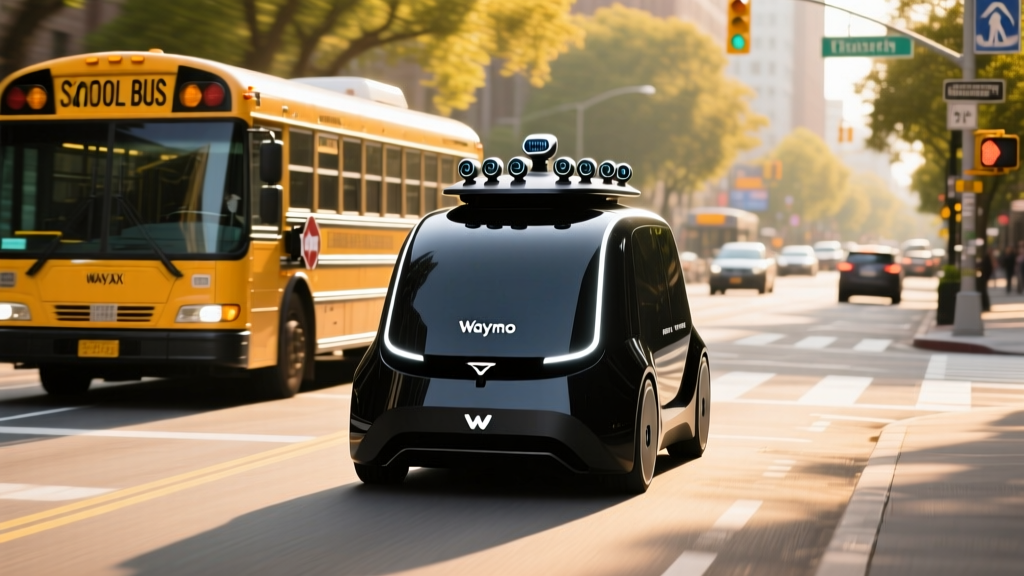
Tesla's argument is that cameras, combined with advanced AI, can replicate human vision and that adding lidar creates unnecessary cost and complexity. Critics — including many robotics and autonomous systems researchers — counter that sensor redundancy is essential for safety-critical systems. Lidar provides precise depth measurement independent of lighting conditions; radar detects objects through fog and rain; HD maps give the system a prior understanding of the environment that doesn't depend on real-time perception alone.
The practical implication: a camera-only system may struggle in low-light conditions, heavy rain, fog, direct sun glare, or scenarios where lane markings are faded or absent. These are precisely the edge cases where sensor fusion provides a safety margin.
Safety Data: What We Know and What We Don't
Evaluating Tesla robotaxi safety concerns requires separating three distinct data sets: FSD (Supervised) performance in consumer vehicles, NHTSA incident reports, and the safety records of actual Level 4 robotaxi operators.
Tesla FSD Safety Data Points
- Tesla's self-reported claim (Q3 2025): 1 crash per ~5.9 million miles driven with FSD active, vs. the U.S. average of ~1 crash per 670,000 miles (NHTSA).
- Key caveat: Tesla's methodology is not independently audited. The company does not publish raw data, and "FSD active" does not mean unsupervised — a human driver was present and legally responsible.
- NHTSA Standing General Order (SGO): Between 2021 and 2025, Tesla vehicles operating with Autopilot or FSD were involved in hundreds of reported crashes. NHTSA has opened multiple investigations into Autopilot-related incidents, including collisions with stationary emergency vehicles.
- NHTSA investigation (2024-2025): The agency investigated Tesla's Autopilot system for its role in crashes involving first-responder vehicles, leading to a recall and software update requiring increased driver monitoring.
For comparison, Waymo's published safety study (conducted with Swiss Re and released in 2024) found that Waymo's Level 4 vehicles, operating fully driverless in Phoenix and San Francisco, experienced 85% fewer injury-causing crashes per million miles than the human benchmark, based on over 25 million driverless miles. Waymo's data was independently verified through insurance claim comparisons.
The distinction is critical: Waymo's data reflects driverless operation (Level 4, no human fallback), while Tesla's data reflects supervised operation (Level 2, human always responsible). Comparing the two directly is apples to oranges, but the methodological transparency gap is notable.
Where Can You Actually Use a Robotaxi Today?
If you want to hail a vehicle with no driver today, Tesla is not an option. Here's where Level 4 robotaxi services are actually operating as of 2026:
| Service | SAE Level | Operational Cities (2026) | Availability | Vehicle |
|---|---|---|---|---|
| Waymo One | Level 4 | Phoenix, San Francisco, Los Angeles, Austin | 24/7 in geofenced zones | Jaguar I-PACE, Hyundai Ioniq 5 |
| Zoox | Level 4 | Las Vegas (limited), Foster City, CA (testing) | Limited invite/employee | Zoox custom vehicle |
| Cruise | Level 4 | Suspended in most markets post-2023 incident; limited Phoenix testing | Restricted | Chevrolet Bolt EV / Origin |
| Tesla (Cybercab) | Announced Level 4 | None — not yet in production | N/A | Cybercab (announced) |
| Tesla FSD (Supervised) | Level 2 | Available nationwide (consumer vehicles) | Any Tesla owner can purchase | Model 3, Y, S, X, Cybertruck |
Tesla's FSD (Supervised) is available in all 50 states, but it is a driver-assist feature, not a ride-hailing service. You cannot summon a driverless Tesla to pick you up. The Cybercab, which Tesla has said will lack a steering wheel and pedals, has not entered production, and Tesla has not received the regulatory approvals needed to operate it as a commercial robotaxi in any jurisdiction.
How Much Would a Tesla Robotaxi Cost vs. Uber and Lyft?
Tesla CEO Elon Musk has stated that the Cybercab would target a ride cost of approximately $0.20 per mile, with the vehicle itself priced around $25,000-$30,000 for individual owners who could add their cars to a Tesla-managed fleet. These figures are projections, not current pricing.
| Service | Avg. Cost Per Mile | Base Fare | Avg. 5-Mile Ride | Status |
|---|---|---|---|---|
| Uber (national avg.) | $1.50-$2.50 | $2.50-$3.50 | $12-$18 | Active |
| Lyft (national avg.) | $1.40-$2.30 | $2.50-$3.50 | $11-$17 | Active |
| Waymo One (Phoenix) | $1.20-$1.80 | $2.00-$3.00 | $9-$14 | Active (geofenced) |
| Tesla Cybercab (projected) | ~$0.20 (claimed) | TBD | ~$2-$4 (if realized) | Not available |
Tesla's projected $0.20/mile figure assumes the elimination of driver costs (which represent roughly 60-70% of a rideshare fare), extremely low vehicle costs, minimal maintenance (EVs have lower maintenance than ICE vehicles), and high fleet utilization. Whether this is achievable at scale, with insurance, cleaning, charging, and fleet management costs factored in, remains unproven.
Current Limitations of Tesla's Autonomous Ambitions
Even if Tesla achieves Level 4 capability, the operational constraints of robotaxi services are substantial. Here are the limitations that apply to all current and near-term robotaxi systems, including Tesla's projected Cybercab:
What Tesla's FSD (Supervised) Cannot Do Today
- Operate without a licensed driver: FSD is Level 2. A human must be in the driver's seat, attentive, and ready to intervene at all times.
- Handle all weather conditions: Camera-only systems degrade in heavy rain, fog, snow, and low-visibility conditions. FSD may disengage or perform unpredictably.
- Navigate unmapped or construction-heavy areas reliably: Without HD maps, Tesla relies on real-time perception, which can be confused by temporary lane changes, construction zones, or unusual road configurations.
- Function as a commercial ride-hailing service: Tesla has no regulatory approval to operate a robotaxi fleet. FSD is licensed for personal use only.
- Guarantee zero interventions: Tesla's own data shows that FSD requires driver interventions — the frequency varies by route complexity, traffic density, and weather.
The Regulatory Landscape: Who Approves Robotaxis?
Operating a driverless commercial vehicle in the United States requires navigating a patchwork of federal and state regulations:
- Federal (NHTSA): Sets vehicle safety standards (FMVSS). A vehicle without a steering wheel, like the proposed Cybercab, requires an exemption or a new standard. NHTSA also investigates safety defects and can issue recalls.
- State DMVs and PUCs: Each state controls whether driverless testing and commercial deployment are permitted. California's CPUC and DMV have the most established robotaxi permitting frameworks. Arizona (Phoenix) has been permissive. Texas (Austin) has opened to testing.
- Local municipalities: Cities can restrict or condition robotaxi operations through local ordinances, geofencing requirements, and emergency-response coordination.
Tesla would need to secure permits in each jurisdiction where it plans to operate the Cybercab — a process that Waymo has spent years completing. As of early 2026, Tesla has not publicly disclosed robotaxi permit applications in California, Arizona, or Texas.
Tesla Robotaxi Safety Concerns: Frequently Asked Questions
Is Tesla FSD actually self-driving?
No. Tesla FSD (Supervised) is an SAE Level 2 driver-assist system. The driver must remain fully attentive and is legally responsible for the vehicle at all times. It cannot operate without a human in the driver's seat. Tesla's own documentation and the system's naming make this clear, despite marketing language that can create confusion.
Has Tesla's Cybercab robotaxi launched anywhere?
No. The Cybercab was unveiled as a concept vehicle and has not entered production. Tesla has announced a target production timeline, but the vehicle is not available for purchase or ride-hailing in any market. Regulatory approval for driverless commercial operation has not been obtained.
How does Tesla's camera-only approach compare to Waymo's lidar-based system?
Tesla relies solely on cameras and neural networks, while Waymo uses a sensor-fusion stack combining lidar, radar, cameras, and HD maps. The redundancy of multiple sensor types provides fallback capability when one modality is degraded (e.g., cameras in fog, lidar in heavy rain). Tesla argues its vision-only approach is scalable and cost-effective, but it lacks the independent verification and safety-case methodology that Level 4 operators like Waymo have published.
What has NHTSA said about Tesla Autopilot and FSD safety?
NHTSA has opened multiple investigations into Tesla's Autopilot and FSD systems, particularly regarding collisions with stationary emergency vehicles and the adequacy of Tesla's driver-monitoring system. In 2024, NHTSA's Standing General Order data showed Tesla vehicles were involved in a significant proportion of reported ADAS-related crashes, though this partly reflects Tesla's large market share and reporting compliance. The agency has required software updates and continues active oversight. See nhtsa.gov for current investigation status.
Can I use Tesla FSD to start my own ride-hailing service?
No. Tesla's FSD license is for personal use only. Operating a commercial ride-hailing service requires specific regulatory permits, commercial insurance, and — critically — a Level 4 capable vehicle approved for driverless operation. Using FSD (a Level 2 system) for commercial passenger transport would violate Tesla's terms of service and likely state and federal regulations.
What's the biggest safety risk with Tesla's robotaxi plans?
The most significant concern is the gap between public perception and technical reality. Marketing language around "Full Self-Driving" can lead drivers to over-trust the system and under-supervise it — a well-documented risk with Level 2 systems. For a future driverless Cybercab, the camera-only sensor strategy, lack of published independent safety validation, and the complexity of obtaining multi-jurisdiction regulatory approval represent substantial hurdles that have not yet been cleared.
Sources: National Highway Traffic Safety Administration (NHTSA), Insurance Institute for Highway Safety (IIHS), Tesla investor relations and vehicle owner manuals.