The Ultimate Edge Case: Why Weather Stumps Robotaxis
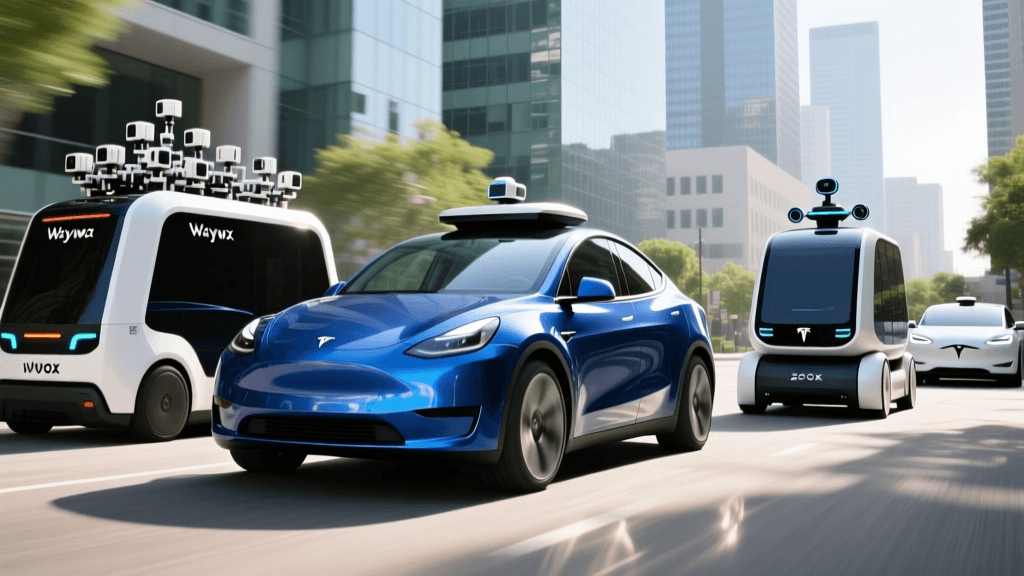
The promise of the robotaxi is a future of seamless, on-demand, and zero-emission mobility. Companies like Waymo, Cruise, Zoox, and Tesla have invested billions into developing Autonomous Driving Systems (ADS) capable of navigating complex urban environments. However, as these fleets expand from the sun-drenched streets of Phoenix to the foggy hills of San Francisco and the snowy avenues of New York, they are colliding with the ultimate edge case: Mother Nature. Weather remains the single greatest bottleneck to achieving ubiquitous, 24/7/365 Level 4 and Level 5 autonomy.
Understanding how precipitation, fog, and extreme temperatures affect sensor fidelity is crucial for both industry stakeholders and everyday consumers. According to the SAE International J3016 standard, an autonomous vehicle's Operational Design Domain (ODD) strictly defines the specific conditions under which the system is designed to function. Weather is a primary boundary of the ODD. When a robotaxi encounters conditions outside its ODD, it must either execute a minimal risk maneuver (pulling over) or request human intervention, directly impacting service reliability and consumer trust.
The Physics of Sensor Degradation in Adverse Weather
To understand robotaxi weather limitations, we must look at the physics governing the three primary sensor modalities: LiDAR, cameras, and radar. Each technology interacts differently with atmospheric particles, creating unique failure modes that engineers are racing to solve.
LiDAR and Mie Scattering
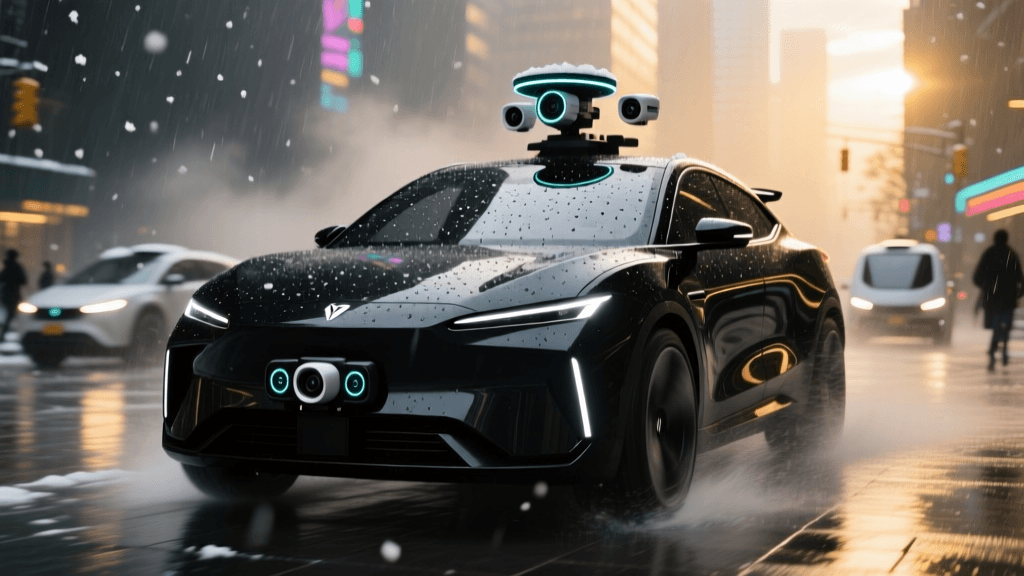
Light Detection and Ranging (LiDAR) is the backbone of most Level 4 robotaxi fleets, including Waymo and Zoox. It works by emitting near-infrared laser pulses and measuring the time it takes for the light to bounce back, creating a high-resolution 3D point cloud of the environment. However, LiDAR is highly susceptible to a phenomenon known as Mie scattering. When the wavelength of the laser is similar to the size of water droplets in heavy rain or fog, the light scatters in all directions. This results in 'noise' or false positives in the point cloud, making it difficult for the perception algorithm to distinguish between a pedestrian and a dense cluster of raindrops.
Camera Blindness and Sun Glare
Cameras provide the rich semantic data necessary for reading traffic lights, stop signs, and lane markings. Tesla's vision-only approach relies entirely on this modality. Yet, cameras are essentially human eyes; if a human cannot see, the camera struggles. Heavy rain obscures lens clarity, while fog drastically reduces contrast. Furthermore, sun glare—particularly during dawn and dusk commutes—can saturate camera sensors, causing 'bloom' that blinds the neural network to obstacles directly ahead. Testing by the Insurance Institute for Highway Safety (IIHS) demonstrates that even advanced driver assistance systems heavily reliant on cameras can experience sudden phantom braking or lane-departure failures when faced with direct sun glare or heavy precipitation.
Radar Clutter in Precipitation
Radio Detection and Ranging (Radar) is traditionally the most weather-resilient sensor, as its longer wavelengths pass through rain and fog with minimal attenuation. However, traditional 3D radar suffers from 'clutter.' In heavy snow or rain, the radar bounces off millions of individual snowflakes or droplets, creating a noisy return signal that can mask slower-moving or stationary objects, like a stalled vehicle in a blizzard.
Sensor Performance Matrix: Weather Impact Analysis
The following table illustrates how different sensor types degrade under specific weather conditions, highlighting why sensor fusion is mandatory for reliable robotaxi operations.
| Weather Condition | LiDAR Impact | Camera Impact | Traditional Radar Impact |
|---|---|---|---|
| Heavy Rain | High (Mie scattering, point cloud noise) | High (Lens occlusion, contrast loss) | Low-Medium (Clutter from droplets) |
| Dense Fog | Severe (Signal attenuation, range drop) | Severe (Whiteout, zero contrast) | Low (Wavelength penetrates fog) |
| Snow / Ice | High (Scattering, lens accumulation) | Severe (Lens occlusion, lane marking loss) | Medium (Clutter, ground reflection changes) |
| Sun Glare | Low (Infrared filters mitigate sun) | Severe (Sensor saturation, blooming) | None (Unaffected by light) |
Fleet Reliability: Waymo, Tesla, and the ODD Boundary
The real-world reliability of robotaxi services is directly tethered to how their specific sensor suites handle local weather patterns. The National Highway Traffic Safety Administration (NHTSA) has repeatedly highlighted that environmental limits are a critical factor in ADS safety and deployment viability.
Waymo: The LiDAR-Heavy Approach
Waymo's 5th and 6th generation driver systems utilize a robust suite of LiDAR, cameras, and radar. In Phoenix, Arizona, the primary enemy is the summer monsoon. During sudden, torrential downpours, the sheer volume of water causes LiDAR scatter that exceeds the system's confidence threshold. Rather than risking a collision, Waymo's software is programmed to execute a conservative minimal risk maneuver, pulling the vehicle over until the storm passes. While this prioritizes safety, it results in stranded passengers and disrupted service reliability. In San Francisco, dense marine fog forces Waymo vehicles to reduce speeds and increase following distances, leading to longer trip times and localized congestion.
Tesla: The Vision-Only Gamble
Tesla's robotaxi ambitions rely on a pure vision approach, eschewing LiDAR and radar in favor of high-definition cameras and neural networks. While this reduces hardware costs, it inherits all the biological limitations of human sight. Heavy rain on the windshield, mud splatter, and low-visibility snowstorms severely degrade Tesla's Full Self-Driving (FSD) capabilities. Furthermore, Tesla's system has historically struggled with sun glare, occasionally misinterpreting bright reflections as physical obstacles. For a future Tesla Robotaxi network to achieve high reliability in cities like Seattle or Chicago, significant breakthroughs in computational photography and synthetic weather training will be required.
Future Outlook: 4D Radar and Dynamic Weather Routing
The industry is not standing still. The next generation of robotaxis will rely on emerging technologies to push the boundaries of the ODD and maintain service reliability during adverse weather.
The Rise of 4D Imaging Radar
Companies like Arbe Robotics and Continental are pioneering 4D imaging radar. Unlike traditional radar that only measures distance, velocity, and azimuth, 4D radar also measures elevation, generating a dense point cloud that rivals LiDAR in resolution. Crucially, because it operates in the radio frequency spectrum, 4D imaging radar sees through dense fog, heavy rain, and snow with virtually no attenuation. By fusing 4D radar data with LiDAR, future robotaxis will possess a 'ground truth' fallback system that can confidently identify pedestrians and vehicles even when optical sensors are completely blinded.
Hyper-Local Weather Mapping and V2X
Future reliability will also depend on connectivity. Vehicle-to-Everything (V2X) communication will allow robotaxis to receive real-time, hyper-local weather data from smart city infrastructure and other vehicles. If a robotaxi fleet manager detects a microburst of heavy rain three blocks ahead, the routing algorithm will dynamically reroute the vehicle to avoid the ODD boundary entirely, ensuring the passenger reaches their destination without the vehicle needing to pull over.
Synthetic Data and Neural Network Training
Training AI to drive in snow is difficult because collecting millions of miles of real-world blizzard data is dangerous and time-consuming. Developers are increasingly turning to synthetic environments, using platforms like NVIDIA Omniverse to generate photorealistic, physically accurate simulations of snow, fog, and rain. This allows perception neural networks to learn how to filter out LiDAR noise and camera bloom in a virtual world before the software is ever deployed to a physical robotaxi.
Actionable Advice for Robotaxi Consumers
As robotaxi services become more prevalent in your city, understanding their weather limitations can save you time and frustration. Here is how to navigate autonomous mobility during adverse conditions:
- Check the App for Weather Alerts: Fleet operators like Waymo often issue in-app notifications regarding 'weather-related delays' or restricted service zones. Always check the app before booking during a storm.
- Avoid Airport Runs in Blizzards: Highway driving requires higher sensor confidence than low-speed urban crawling. During heavy snow or freezing rain, robotaxis will likely restrict highway access, making them unreliable for time-sensitive airport transfers.
- Understand the Pull-Over Protocol: If you are riding in a robotaxi and it suddenly pulls to the curb during a rainstorm, do not panic. This is a programmed safety response. The app will usually provide an option to contact remote support or manually end the ride if the weather does not clear.
- Have a Backup Transit Plan: During severe weather events that push the fleet outside its ODD, robotaxi supply will plummet while demand spikes. Always have a secondary option, such as traditional public transit or a human-driven rideshare, queued up on your phone.
Ultimately, while weather remains a formidable challenge for autonomous vehicles, the convergence of 4D imaging radar, synthetic AI training, and dynamic routing promises a future where robotaxis can safely navigate the storm, ensuring reliable mobility regardless of the forecast.