The Autonomous Race: Three Distinct Philosophies
The race to commercialize fully autonomous robotaxis has evolved from a singular pursuit of self-driving software into a complex battlefield of divergent hardware and architectural philosophies. As we look toward the future of mobility, three major players have emerged with fundamentally different approaches to solving the Level 4 and Level 5 autonomy puzzle: Waymo, Tesla, and Zoox. Each company is betting billions on a specific technological stack, sensor suite, and vehicle platform. For consumers, investors, and automotive enthusiasts, understanding these distinct technology approaches is critical to predicting which model will ultimately dominate the urban transit landscape.
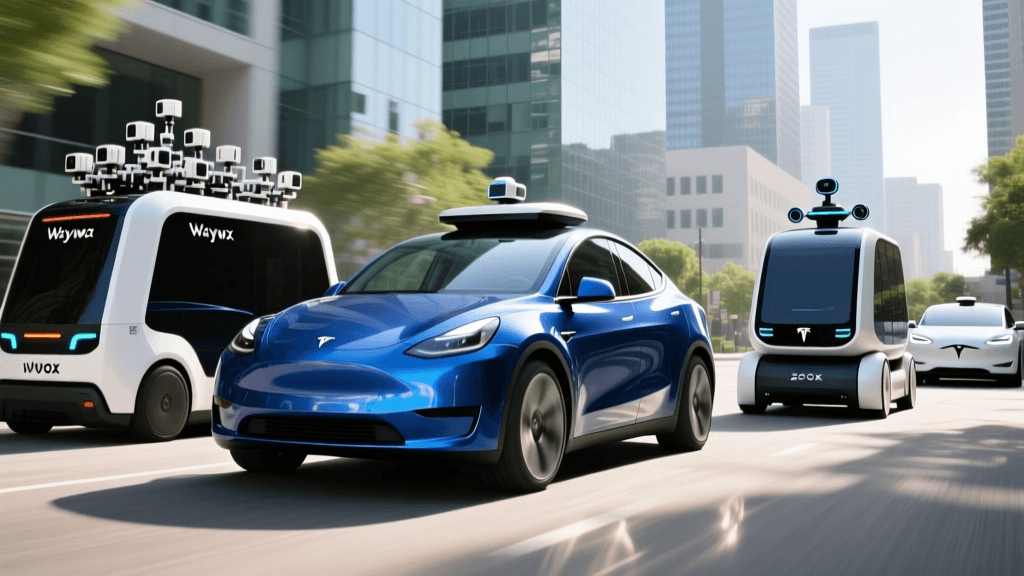
While Waymo relies on a lidar-heavy, mapping-first strategy, Tesla is pushing the boundaries of vision-only, end-to-end neural networks. Meanwhile, Amazon-backed Zoox is taking a radical detour by designing a purpose-built, bidirectional vehicle from the ground up. This comprehensive guide breaks down the sensor suites, computational architectures, and scaling strategies of these three autonomous heavyweights, offering a clear outlook on the future trends of the robotaxi industry.
Waymo: The Lidar-Heavy, Mapping-First Pioneer
Waymo, born out of Google’s Self-Driving Car Project, is widely considered the industry pioneer and current leader in commercialized Level 4 robotaxi deployments. The backbone of Waymo’s technology is its belief in extreme hardware redundancy and high-definition (HD) mapping. The latest iteration, the 6th-generation Waymo Driver, represents a significant leap in sensor integration and cost reduction.
Sensor Suite and Compute
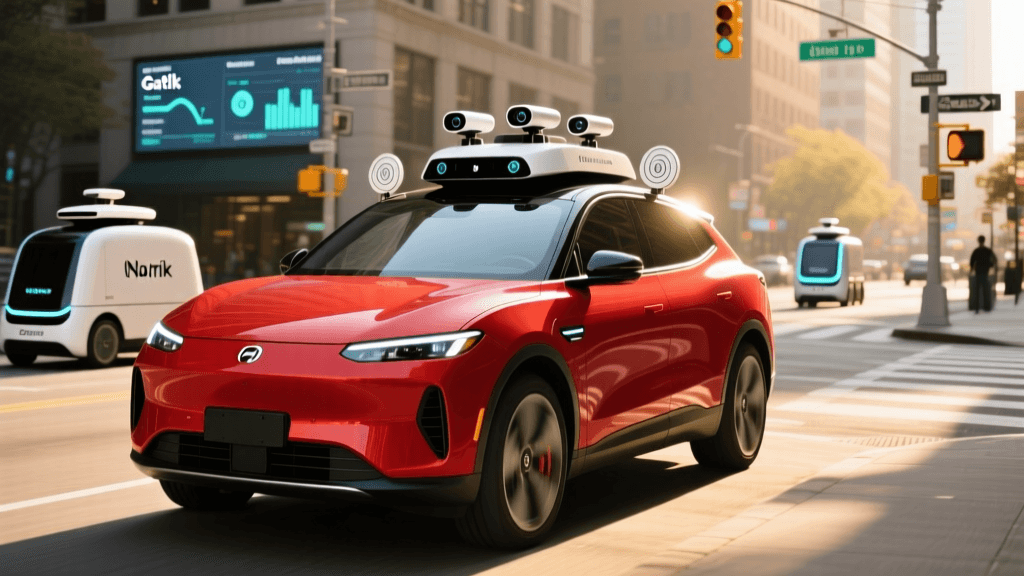
Waymo’s sensor suite is a masterclass in multi-modal redundancy. It utilizes a combination of high-resolution mechanical and solid-state lidars, imaging radars, and external cameras. The lidar provides precise, real-time 3D point clouds that are unaffected by lighting conditions, while the imaging radar excels at detecting the velocity of objects in adverse weather like heavy rain or fog. According to Waymo's official safety framework, this hardware redundancy ensures that if one sensor modality is degraded, the others can seamlessly maintain a comprehensive understanding of the vehicle's environment.
HD Mapping and Geofencing
Waymo’s software relies heavily on pre-mapped HD routes. Before a Waymo vehicle can operate autonomously in a new city, mapping vehicles must physically drive every street to create a centimeter-accurate digital twin of the environment, including curb heights, traffic light positions, and lane boundaries. While this approach yields an exceptionally smooth and safe rider experience, it creates a significant bottleneck for scaling. Expanding to a new city requires weeks of mapping and localized geofencing, limiting Waymo’s ability to rapidly deploy nationwide.
Tesla: The Vision-Only, End-to-End Neural Net Disruptor
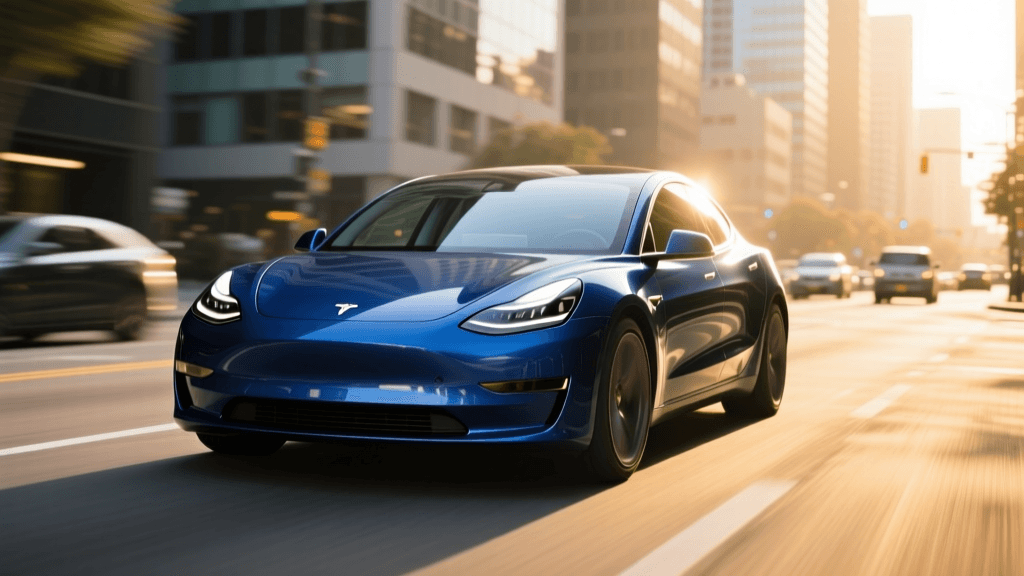
Tesla’s approach to autonomy is the most polarizing in the industry. Under the guidance of its AI team, Tesla has aggressively stripped away traditional autonomous sensors, removing radar and ultrasonic sensors to rely entirely on a 'Tesla Vision' camera-based system. The company’s Full Self-Driving (FSD) software, particularly the recent v12 architecture, represents a paradigm shift toward end-to-end neural networks.
Vision-Only and Occupancy Networks
As outlined on Tesla's AI and engineering portal, the company operates on the philosophy that since humans drive using only vision (eyes) and a neural net (brain), a car should be able to do the same using cameras and silicon. Tesla uses an 'Occupancy Network' to translate 2D camera feeds into a 3D voxel space, allowing the vehicle to identify the volume and shape of obstacles without needing to classify every single object. This is paired with HW4.0 (Hardware 4.0), which features higher-resolution cameras and significantly more compute power than previous generations.
End-to-End Neural Networks and Scalability
The most significant future trend in Tesla’s stack is the shift to end-to-end neural networking in FSD v12. Instead of relying on tens of thousands of lines of hardcoded C++ rules (e.g., 'if red light, then stop'), the system uses neural nets trained on millions of video clips of human driving to map pixels directly to steering and pedal controls. The primary advantage of this approach is infinite scalability. Because Tesla does not rely on HD maps or expensive lidar, any Tesla equipped with HW3.0 or HW4.0 can theoretically drive anywhere in the world. However, the trade-off is the 'black box' nature of neural nets, which makes debugging edge cases and proving safety to regulators exponentially more difficult.
Zoox: The Purpose-Built, Bidirectional Challenger
Zoox, acquired by Amazon in 2020, has taken a completely different path. Rather than retrofitting existing consumer vehicles with aftermarket sensor pods, Zoox designed a symmetrical, bidirectional, purpose-built robotaxi from the ground up. This 'carriage-style' vehicle features no steering wheel, no pedals, and four-wheel steering, allowing it to move laterally and drive equally well in either direction.
Corner-Mounted Sensor Pods
The Zoox safety and engineering team emphasizes that their vehicle architecture is optimized specifically for dense urban environments and Mobility-as-a-Service (MaaS). Instead of placing sensors on the roof or hood, Zoox integrates its sensor pods into the four corners of the vehicle. Each pod contains a lidar, radar, and multiple cameras, providing overlapping 360-degree coverage with a massive field of view. This corner-placement eliminates blind spots caused by the vehicle's own body and allows the car to 'peek' around corners before the rest of the vehicle enters the intersection.
Urban Optimization and Passenger Experience
Zoox’s bidirectional capability and four-wheel steering allow it to navigate tight urban corridors, perform zero-turn-radius maneuvers, and seamlessly exit dead-end streets without complex multi-point turns. Furthermore, the interior is designed like a lounge, with passengers facing each other. While this approach creates the ultimate robotaxi passenger experience, it also means Zoox must act as both a software developer and a low-volume automotive manufacturer, requiring massive capital expenditure to scale production compared to Waymo or Tesla.
Technology Comparison Matrix
To visualize the stark differences between these three autonomous titans, review the comparison table below detailing their core technological approaches.
| Feature | Waymo (6th Gen) | Tesla (FSD v12 / HW4) | Zoox (Purpose-Built) |
|---|---|---|---|
| Primary Sensors | Lidar, Imaging Radar, Cameras | Cameras Only (Tesla Vision) | Corner-mounted Lidar, Radar, Cameras |
| Mapping Strategy | HD Maps (Centimeter accuracy) | Real-time SLAM / No HD Maps | HD Maps (Urban Geofenced) |
| Software Architecture | Modular Perception & Planning | End-to-End Neural Networks | Modular Perception & Planning |
| Vehicle Platform | Retrofitted (Jaguar I-PACE, Zeekr) | Consumer Fleet (Model 3/Y, Cybertruck) | Purpose-Built (Symmetrical, No Wheel) |
| Scalability Model | City-by-City Expansion | Global Over-the-Air Deployment | Hyper-Local Dense Urban Zones |
| Current Autonomy Level | Level 4 (Commercial) | Level 2 (Supervised Consumer) | Level 4 (Testing / Limited Commercial) |
Future Trends: Which Approach Will Win the Robotaxi War?
Looking ahead to the next decade, the robotaxi industry will likely not be a 'winner-take-all' scenario, but rather a segmentation based on use cases and geographic density.
1. The Commoditization of Lidar
Waymo and Zoox are betting that the cost of high-performance lidar will continue to plummet. As solid-state lidar becomes cheaper and smaller, the hardware cost penalty for multi-sensor redundancy will shrink, making the 'vision-only' approach less economically advantageous. We expect to see Waymo's licensing model expand, allowing traditional OEMs to integrate the Waymo Driver into consumer vehicles for highway autonomy.
2. The Regulatory Hurdle for End-to-End AI
Tesla’s vision-only, end-to-end neural network faces the steepest regulatory climb. The National Highway Traffic Safety Administration (NHTSA) and global equivalents require explainability in safety-critical systems. Proving that a black-box neural network will not hallucinate a phantom obstacle or fail to recognize a stopped emergency vehicle is a massive hurdle. Tesla’s future success hinges on its ability to simulate billions of edge-case miles to satisfy regulatory safety mandates.
3. FMVSS Exemptions and Purpose-Built Pods
Zoox’s success depends on navigating Federal Motor Vehicle Safety Standards (FMVSS). Because their vehicle lacks a steering wheel and mirrors, they require special exemptions from the NHTSA to operate on public roads. The future trend points toward cities creating specific 'autonomous zones' where purpose-built, low-speed pods like Zoox are legally permitted to operate, effectively replacing traditional shuttle buses and first-mile/last-mile transit.
Actionable Advice for Consumers and Early Adopters
As these technologies transition from R&D labs to public streets, here is how you can engage with and evaluate these robotaxi platforms today:
- Riding Waymo One: If you live in or are visiting Phoenix, San Francisco, or Los Angeles, download the Waymo One app. Actionable Tip: Request a ride during off-peak hours (early morning or late evening) to experience the vehicle's sensor performance in low-light conditions, showcasing the superiority of their lidar stack over camera-only systems.
- Testing Tesla FSD: Tesla frequently offers 30-day free trials of FSD Supervised. Actionable Tip: When testing FSD v12, pay close attention to how the vehicle handles unprotected left turns and construction zones. Monitor the driver monitoring system and keep your hands near the wheel, as the system remains a Level 2 ADAS requiring active supervision.
- Tracking Zoox Deployments: Zoox is currently operating its purpose-built vehicles in Las Vegas and San Francisco. Actionable Tip: Join the Zoox early rider waitlist if you are in these markets. When riding, observe the four-wheel steering capabilities during tight turns and note the passenger-centric interior design, which represents the true future of shared Mobility-as-a-Service.
Conclusion
The battle between Waymo, Tesla, and Zoox is not just a competition of software; it is a fundamental debate on the physics, economics, and philosophy of artificial intelligence in the physical world. Waymo offers the safest, most proven, yet capital-intensive path. Tesla offers the most scalable, data-rich, yet regulatory-challenged vision. Zoox offers the ultimate passenger experience, constrained by manufacturing and urban infrastructure realities. As sensor costs drop and AI models mature, the consumer will ultimately benefit from a diversified, multi-modal autonomous transit ecosystem.