The Great Filter: Why Weather Dictates Robotaxi Reliability
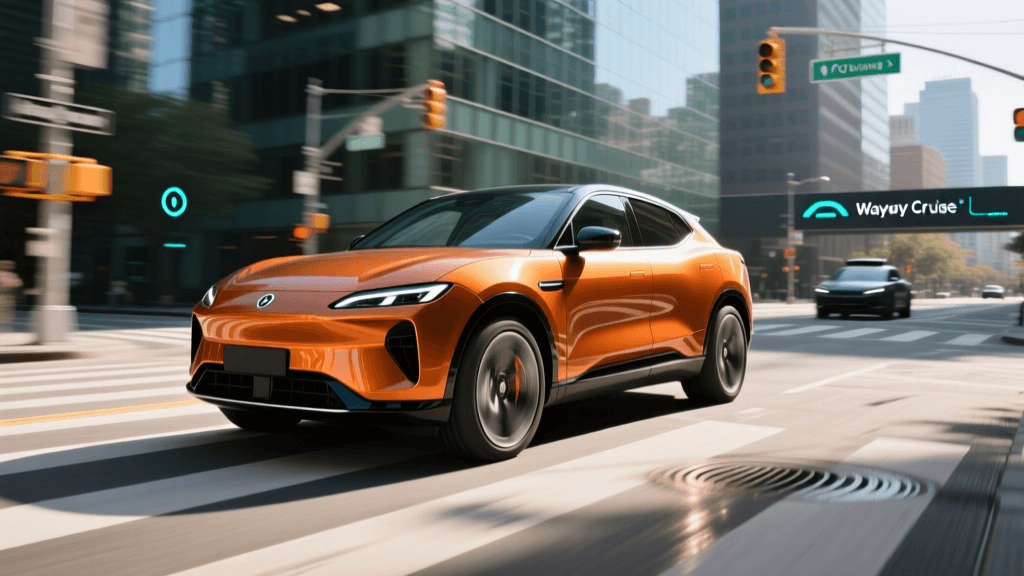
The promise of fully autonomous robotaxis has transitioned from science fiction to everyday reality in cities like Phoenix, San Francisco, and Los Angeles. Companies like Waymo, Cruise, and Zoox are logging millions of driverless miles, reshaping urban mobility. However, as these fleets expand beyond their initial sun-belt testing grounds, they are colliding with the ultimate stress test for artificial intelligence and sensor hardware: adverse weather. For the autonomous vehicle (AV) industry, weather is not merely an inconvenience; it is the primary bottleneck limiting service reliability, operational design domains (ODD), and consumer trust.
Understanding how rain, snow, fog, and extreme heat impact robotaxi performance is critical for both fleet operators and everyday consumers. This analysis dives deep into the physics of sensor limitations, examines current service reliability metrics, and explores the future technologies engineered to conquer the elements.
Sensor Physics: How Rain, Snow, and Fog Blind Autonomous Vehicles
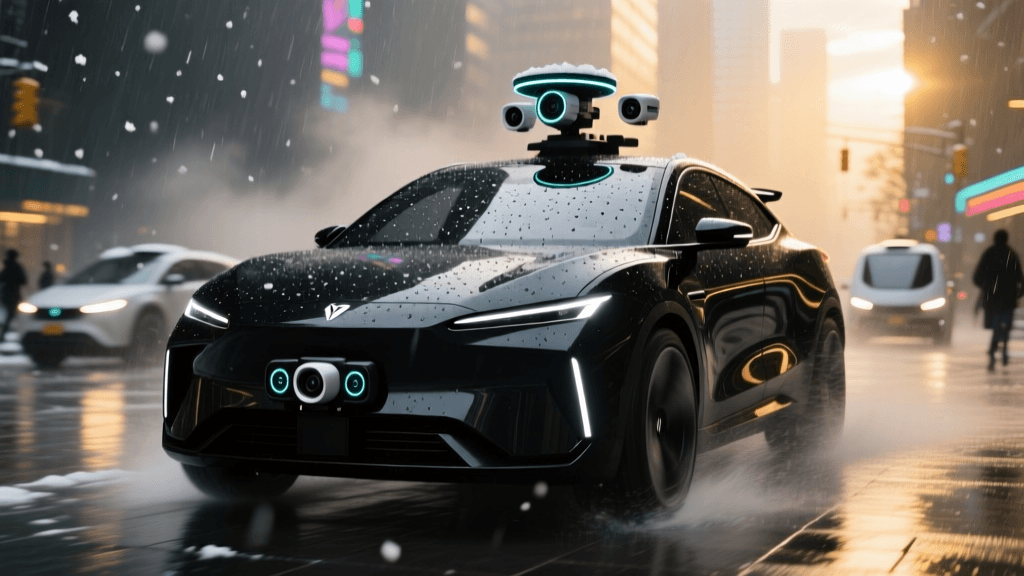
Modern robotaxis rely on a triad of sensors—LiDAR, cameras, and radar—to perceive the world. While this redundancy works flawlessly on a clear day, precipitation and atmospheric anomalies exploit the physical vulnerabilities of each technology.
LiDAR and the Scattering Effect
Light Detection and Ranging (LiDAR) is the cornerstone of high-definition 3D mapping for most Level 4 robotaxis. However, most commercial LiDAR units operate at a 905-nanometer wavelength. When these laser pulses encounter heavy rain, dense fog, or snow, the light scatters off the water droplets or ice crystals. This creates "phantom obstacles" or point-cloud noise, causing the vehicle's perception system to register a raindrop inches from the lens as a solid object. In heavy fog, the effective range of a standard 905nm LiDAR can drop from 200 meters to less than 30 meters, severely compromising the vehicle's ability to plan safe, high-speed trajectories.
Camera Vision and Optical Occlusion
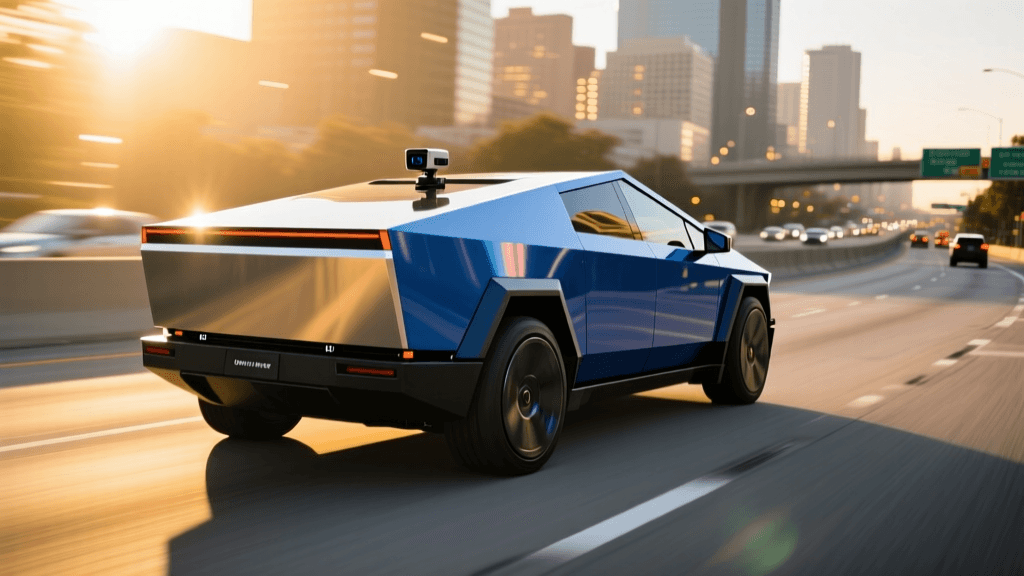
Cameras are essential for reading traffic lights, deciphering construction signs, and detecting the brake lights of vehicles ahead. Yet, cameras are just as vulnerable as the human eye. Heavy rain smears across the lens, snow can completely occlude the field of view, and direct sun glare during dawn or dusk can saturate the image sensor. While automated washer systems and hydrophobic coatings help, a sudden downpour can still blind a camera suite in milliseconds, forcing the AI to rely entirely on secondary sensors.
Radar: The Unsung Hero of Bad Weather
Radio Detection and Ranging (Radar) operates using radio waves (typically in the 77GHz band), which easily pass through rain, fog, and snow. Radar is highly reliable for detecting the speed and distance of other vehicles in terrible weather. However, traditional radar lacks the angular resolution to read lane markings, identify stationary debris, or classify complex objects like pedestrians holding umbrellas. Therefore, while radar keeps the car from rear-ending someone in a blizzard, it cannot safely navigate a complex, unmapped urban intersection alone.
Service Reliability and the Operational Design Domain (ODD)
The SAE International J3016 standard defines the Operational Design Domain (ODD) as the specific conditions under which a given driving automation system is designed to function. Weather is a massive defining factor of an ODD. When a robotaxi encounters conditions outside its ODD—such as a sudden flash flood or heavy snow accumulation—it is programmed to execute a Minimal Risk Condition (MRC). In practice, this means the vehicle will safely pull over, activate its hazard lights, and wait for human tele-assistance or for the weather to clear.
From a service reliability standpoint, this safety-first programming results in significant downtime. During severe weather events in San Francisco, robotaxi fleets have been known to halt operations entirely or experience massive delays due to vehicles conservatively pulling over. The National Highway Traffic Safety Administration (NHTSA) has continuously emphasized that AV manufacturers must clearly define and adhere to their ODD limitations to prevent catastrophic failures. While pulling over is the safest action, frequent MRC events frustrate riders, inflate operational costs, and reduce the overall throughput of the fleet.
Sensor Performance Matrix in Adverse Weather
To understand why robotaxis struggle in specific conditions, it is helpful to compare how the primary sensor modalities degrade when exposed to the elements.
| Sensor Type | Heavy Rain | Dense Fog | Snow / Ice | Sun Glare / Heat |
|---|---|---|---|---|
| Camera (Optical) | Severe degradation (lens smearing, low contrast) | Severe degradation (loss of visibility) | High degradation (lens occlusion) | Moderate degradation (sensor saturation) |
| LiDAR (905nm) | Moderate degradation (point-cloud noise) | Severe degradation (signal scattering) | Moderate degradation (snowflake reflections) | Low degradation (highly reliable) |
| Traditional Radar | Low degradation (penetrates water) | Low degradation (penetrates fog) | Low degradation (penetrates snow) | No degradation (immune to light) |
| 4D Imaging Radar | Low degradation (high resolution maintained) | Low degradation (excellent penetration) | Low degradation (maintains mapping) | No degradation (immune to light) |
Future Trends: Engineering All-Weather Autonomy
The industry is acutely aware of these limitations. The next generation of robotaxi hardware and software is being explicitly designed to push the boundaries of the ODD, aiming for true all-weather reliability.
4D Imaging Radar and 1550nm LiDAR
To bridge the gap between traditional radar's reliability and LiDAR's resolution, the industry is rapidly adopting 4D Imaging Radar. Unlike standard radar, 4D radar measures elevation, providing a dense point cloud that can map stationary objects and lane boundaries even in a whiteout blizzard. Simultaneously, LiDAR manufacturers are shifting toward 1550nm wavelengths. Because 1550nm light is absorbed differently by water and allows for higher power output without damaging the human eye, it penetrates fog and rain significantly better than the current 905nm standard.
AI Weather Routing and V2X Integration
Software is evolving just as fast as hardware. Future robotaxi dispatch algorithms will utilize hyper-local, AI-driven micro-weather models. Instead of sending a vehicle into a localized downpour, the fleet management system will dynamically reroute the car through clearer micro-climates or underground corridors. Furthermore, Vehicle-to-Everything (V2X) infrastructure will allow smart city intersections to broadcast traffic light status and pedestrian locations directly to the robotaxi's computer, bypassing the need for optical sensors entirely when visibility drops to zero.
What This Means for Consumers and Fleet Operators
Testing by the Insurance Institute for Highway Safety (IIHS) on advanced driver assistance systems consistently shows that sensor limitations in bad weather require heightened vigilance. For fully autonomous robotaxis, this translates into specific operational realities that consumers must understand.
- Expect Cancellations and Delays: If you are ordering a robotaxi during a heavy storm, expect longer wait times or outright cancellations. The vehicle's decision to abort a ride is a feature of its safety programming, not a software bug.
- Dynamic Pricing Shifts: Fleet operators will likely implement weather-based surge pricing. The increased computational load, slower travel speeds, and higher risk of vehicle retrieval during storms will be passed on to the consumer.
- The Hybrid Fleet Approach: For the next decade, the most reliable mobility networks will be hybrid. Smart consumers and city planners will rely on robotaxis for clear-weather, high-density urban routes, while falling back on human-driven rideshares or robust public transit during severe winter storms or monsoon seasons.
Ultimately, the robotaxi revolution will not be won on the sunny streets of Phoenix. It will be won in the sleet of Chicago and the fog of London. Until 4D radar and advanced sensor fusion become ubiquitous, weather will remain the ultimate arbiter of autonomous service reliability.