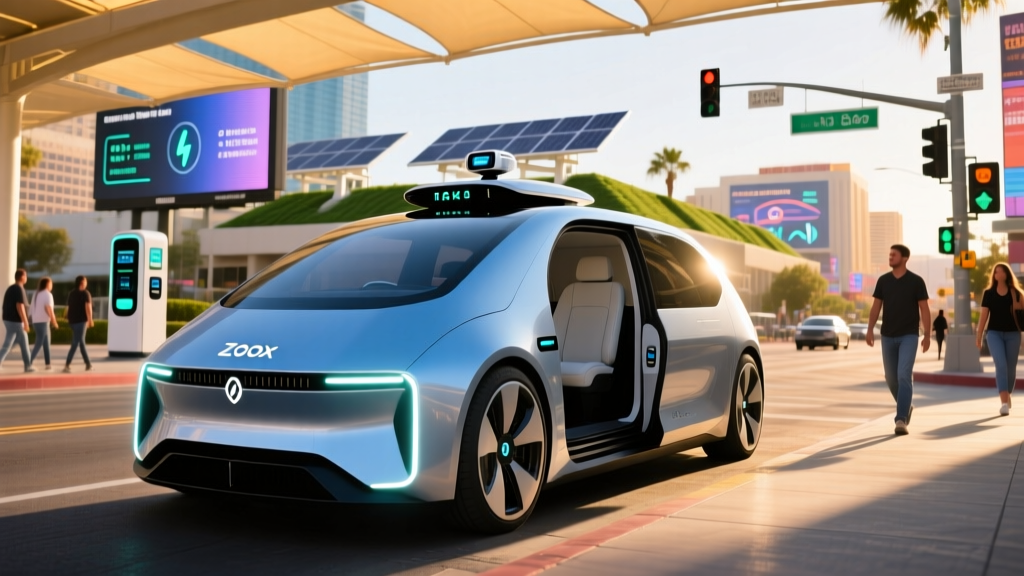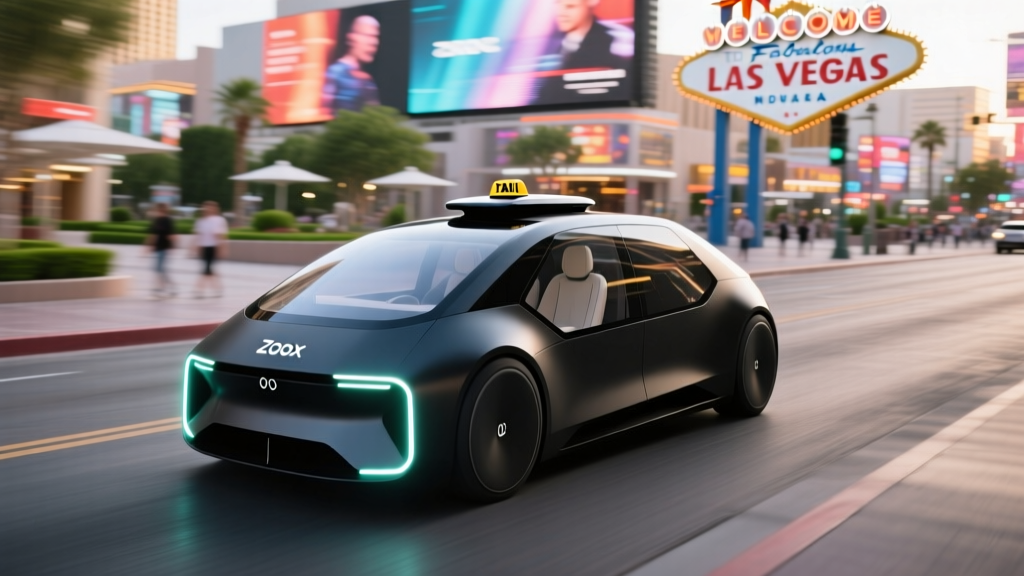
If you've seen a Jaguar I-PACE or Hyundai IONIQ 5 cruising city streets with a distinctive roof-mounted sensor array, you've seen a lidar self-driving car in the wild. These aren't concept vehicles or marketing stunts — they're commercial robotaxis carrying paying passengers every day in a growing (but still limited) number of U.S. cities. Understanding what makes them work, where they operate, and what they still can't do is essential before you hail one.
What Makes a Lidar Self-Driving Car Different From Your EV's Autopilot
The single most important distinction in autonomous driving is the gap between consumer driver-assist systems and purpose-built robotaxis. Your Tesla with FSD (Supervised), your Ford with BlueCruise, your GM with Super Cruise — these are all SAE Level 2 systems. A lidar-equipped robotaxi from Waymo or Cruise (prior to its suspension) operates at SAE Level 4 within its geofenced service area. The difference is not incremental; it's categorical.
| SAE Level | Who Drives | Examples | Driver Required? |
|---|---|---|---|
| Level 0 | Human (full-time) | Base-model cars, no ADAS | Yes |
| Level 1 | Human + single assist (steering OR speed) | Adaptive cruise, lane-keep | Yes |
| Level 2 | Human + combined assist (steering AND speed) | Tesla Autopilot/FSD, BlueCruise, Super Cruise, Toyota Safety Sense | Yes — hands on or eyes on, always |
| Level 3 | System in specific conditions; human on standby | Mercedes DRIVE PILOT (limited markets/conditions) | Conditional — must be ready to resume |
| Level 4 | System fully — no human needed in geofenced area | Waymo One, Zoox (limited areas) | No — within operational design domain |
| Level 5 | System everywhere, all conditions | Does not yet exist commercially | No |
When you step into a Waymo vehicle, there is no one in the driver's seat. The system handles all driving tasks within its approved operational design domain (ODD) — a precisely mapped, geofenced area with known road characteristics. If the system encounters a situation it cannot handle, it executes a minimal risk condition (typically a safe pull-over), not a handoff to a human.
The Technology Stack: Why Lidar Self-Driving Cars Need So Many Sensors
The term "lidar self-driving car" highlights one component of a much larger sensor fusion architecture. Lidar (Light Detection and Ranging) fires millions of laser pulses per second to build a real-time, high-resolution 3D point cloud of the vehicle's surroundings. It measures distance with centimeter-level accuracy regardless of ambient light — a critical advantage over cameras alone in low-light, high-glare, or shadow-heavy conditions.
Here's what a typical Level 4 robotaxi sensor suite looks like in practice, using Waymo's 6th-generation hardware as the benchmark:
| Sensor Type | Quantity | Function | Key Advantage |
|---|---|---|---|
| Lidar | 5+ | 3D spatial mapping, object detection, distance measurement | Works in darkness, direct sunlight, shadows; cm-level accuracy to ~500m |
| Camera | 29+ | Traffic light state, sign reading, object classification, lane markings | Color/texture data lidar cannot capture; reads text and signals |
| Radar | 6+ | Velocity measurement of moving objects, all-weather detection | Penetrates rain, fog, dust; measures Doppler speed directly |
| External audio sensors | Multiple | Siren detection, horn recognition | Hears emergency vehicles before they're visible |
| IMU / GPS / HD Map | Integrated | Vehicle positioning to ~cm accuracy within mapped area | Centimeter localization beyond GPS alone |
The camera-only approach championed by Tesla for its FSD system deliberately omits lidar, relying instead on neural network processing of camera feeds. The debate between lidar-inclusive sensor fusion and camera-only perception remains active. However, every commercial Level 4 robotaxi currently carrying paying passengers — Waymo, Zoox, and Baidu's Apollo Go in China — uses lidar as a core sensor. The redundancy it provides is considered non-negotiable for unsupervised operation by every operator that has achieved regulatory approval for driverless service.
Where Can You Actually Use a Lidar Self-Driving Car Right Now?
Robotaxi availability in 2026 remains geographically constrained. These services operate within tightly defined geofences — not city-wide — and expansion happens incrementally as operators map new areas, validate performance, and secure regulatory approval.
| Operator | Vehicle Platform | Live Service Cities | Service Hours | Status |
|---|---|---|---|---|
| Waymo One | Jaguar I-PACE (6th-gen sensors), Zeekr RT (announced rollout) | Phoenix (metro area), San Francisco, Los Angeles, Austin (expanding) | 24/7 in most service areas | Commercial — open to public via app |
| Zoox | Zoox purpose-built vehicle (bidirectional, no steering wheel) | Las Vegas (limited area), Foster City, CA (testing) | Limited hours | Limited public rides; not full commercial launch |
| Cruise | Chevrolet Bolt EV / Origin (announced) | Suspended — gradual re-entry in select cities with safety driver | N/A | Post-suspension restart; safety driver present |
Waymo One is the only fully driverless commercial robotaxi service operating at meaningful scale in the U.S. as of early 2026. If you're in Phoenix, San Francisco, or Los Angeles and within the geofenced zone, you can download the Waymo One app, request a ride, and a vehicle with no one in the driver's seat will arrive. In Austin, Waymo has been expanding its service area progressively.
The critical detail: you cannot hail a robotaxi outside the geofence. If your destination falls outside the mapped operational area, the app will not allow the trip. This is not a software limitation that an update will fix overnight — it requires high-definition mapping, extensive validation drives, and regulatory sign-off for each new zone.
Robotaxi Pricing: How Does It Compare to Uber and Lyft?
One of the most common questions from prospective robotaxi riders is cost. In practice, Waymo One pricing is designed to be competitive with Uber and Lyft, though it varies by market, time of day, and trip distance.
| Service | Base Fare | Per-Mile Rate | Per-Minute Rate | Typical 5-Mile Trip |
|---|---|---|---|---|
| Waymo One | ~$5.00 | ~$1.50–$1.80 | ~$0.30–$0.40 | $14–$18 |
| UberX | ~$3.50–$5.00 | ~$1.20–$1.60 | ~$0.25–$0.40 | $12–$17 |
| Lyft Standard | ~$3.50–$5.00 | ~$1.10–$1.50 | ~$0.25–$0.35 | $11–$16 |
Waymo does not implement traditional surge pricing in the same way Uber and Lyft do, which can make it more predictable during peak demand periods. However, availability is constrained by fleet size — during high-demand windows, wait times can stretch to 15–25 minutes, whereas a human-driven rideshare might arrive in 3–5 minutes.
Waymo has offered promotional pricing and referral credits in new markets to build ridership. The long-term economic thesis is that removing the driver (who typically earns 60–75% of a rideshare fare) should eventually make robotaxis significantly cheaper than human-driven alternatives. That inflection point has not yet arrived at current fleet scales and hardware costs.
Safety Record: What the Real Data Shows
Safety is the most scrutinized dimension of robotaxi operations, and it demands concrete numbers rather than marketing claims. Waymo has accumulated over 30 million fully driverless miles on public roads as of late 2025, with millions more added in early 2026 across its operating cities.
Waymo Safety Data Snapshot
- Total driverless miles: 30+ million (public roads, as of late 2025; growing in 2026)
- At-fault injury-causing crash rate: Approximately 85% lower than human benchmark in comparable urban environments, per Waymo's published analysis submitted to NHTSA
- Contact rate (any collision, including minor): Significantly below human baseline per million miles, though exact comparison depends heavily on urban vs. highway mix
- Notable incidents: Low-speed contact events documented in public reports; no confirmed fatalities in fully driverless Waymo operation as of early 2026
- Cruise suspension context: Cruise's October 2023 incident in San Francisco (pedestrian dragged after being thrown into vehicle path by a human-driven car) resulted in California DMV permit suspension and a nationwide pause — illustrating that regulators will act decisively on safety failures
The data context matters. Robotaxis operate almost exclusively in dense urban environments at moderate speeds (typically under 45 mph). This is a different risk profile than highway driving. Direct comparison to the national average crash rate (which includes rural highways, high-speed interstates, and drunk driving) requires careful normalization. Waymo's published analyses attempt this by comparing to urban-specific human benchmarks, and the results consistently show lower at-fault collision rates.
However, robotaxis exhibit failure modes that human drivers rarely do: they may stop unexpectedly in travel lanes when encountering an unrecognized scenario, they can be overly cautious at four-way stops (causing rear-end risk from impatient human drivers), and they have struggled with temporary construction zones that alter lane markings. These are not catastrophic failures, but they contribute to traffic friction and secondary collision risk.
Current Limitations: What a Lidar Self-Driving Car Still Cannot Do
For all the sophistication of a multi-sensor lidar stack processing millions of data points per second, Level 4 robotaxis have well-defined boundaries. Understanding these limitations is not pessimism — it's the prerequisite for using the service safely and with appropriate expectations.
- Geofencing: The vehicle will not operate outside its mapped service area. Period. There is no manual override or "take me anywhere" mode.
- Heavy weather degradation: Dense fog, heavy snow, and torrential rain can degrade lidar and camera performance. Services may reduce operating areas, increase following distances, or suspend operations entirely during severe conditions. Waymo has improved rain performance with 6th-gen hardware, but Phoenix's dry climate is a more forgiving test environment than, say, Chicago in February.
- Construction zones: Temporary lane reconfigurations, moved barriers, and absent lane markings remain challenging. The vehicle may slow significantly, stop, or request remote assistance.
- Unprotected left turns: Complex multi-lane unprotected left turns across oncoming traffic remain one of the most computationally demanding scenarios. Robotaxis handle them, but conservatively — expect longer wait times for gaps than a human driver would accept.
- Emergency vehicle interaction: While audio sensors detect sirens, edge cases exist where the vehicle's response (pulling over, stopping) may not match what a human officer or firefighter expects. Documented incidents have shown robotaxis proceeding through intersections where emergency vehicles are present, though these are rare.
- Accessibility: Current robotaxi platforms (Jaguar I-PACE) are standard passenger vehicles — they do not accommodate wheelchair users without a human driver to assist with ramp deployment and securement. Zoox's purpose-built vehicle aims to address this, but at limited scale.
- No intercity/highway travel: Robotaxis do not currently operate on high-speed limited-access highways for commercial passenger service. Your trip from downtown Phoenix to Tucson is not happening in a Waymo.
Regulatory Landscape: Who Approves Robotaxi Operations
Robotaxi deployment in the U.S. requires navigating a layered regulatory framework that involves federal, state, and local authorities — and the rules vary significantly by jurisdiction.
At the federal level, NHTSA (National Highway Traffic Safety Administration) sets vehicle safety standards and investigates crashes. However, NHTSA does not currently "approve" or "certify" autonomous driving systems the way it certifies vehicle crashworthiness. The regulatory framework for ADS (Automated Driving Systems) remains evolving, with NHTSA issuing standing general orders requiring crash reporting from ADS-equipped vehicles.
At the state level, authority is fragmented:
- California: The California DMV issues testing and deployment permits. The California Public Utilities Commission (CPUC) regulates commercial passenger service. California demonstrated its regulatory power when it suspended Cruise's permit in October 2023.
- Arizona: Among the most permissive regulatory environments. Waymo launched its first commercial service in Phoenix partly because Arizona's regulatory framework allowed it. The state requires minimal permitting compared to California.
- Texas: Austin has welcomed Waymo operations. Texas legislation provides a framework for autonomous vehicle operation without a statewide permitting regime as restrictive as California's.
- Nevada: Has its own autonomous vehicle testing and deployment framework, under which Zoox has operated in Las Vegas.
The patchwork nature of regulation means that a robotaxi operator must secure approval state-by-state and often city-by-city. There is no federal "robotaxi license" that grants nationwide operating authority. This is one of the primary reasons expansion is slow and geographically concentrated.
How to Actually Hail a Lidar Self-Driving Car: Step-by-Step
- Download the app: Waymo One is available on iOS and Android. You'll need to create an account and add a payment method.
- Check service availability: Enter your pickup and dropoff locations. If either falls outside the geofence, the app will tell you the trip isn't available. There is no workaround.
- Request the ride: Confirm your pickup spot. The app provides an estimated wait time (typically 5–15 minutes in normal conditions, longer during peak demand).
- Vehicle arrival: The app shows the approaching vehicle's location and license plate. The vehicle will pull to your designated pickup spot and unlock its doors automatically.
- Start the ride: Once you're buckled, tap "Start Ride" on the rear-seat screen. The vehicle will not move until all passengers have fastened seatbelts.
- During the ride: A screen displays the vehicle's planned route and detected objects (other cars, pedestrians, cyclists) in real-time. You can adjust climate control and add music. There is no steering wheel interaction available to you.
- Arrival and exit: The vehicle pulls to your destination, unlocks the doors, and you exit. Payment is processed automatically.
The experience is remarkably uneventful — which is precisely the point. The vehicle drives conservatively, follows traffic laws strictly (sometimes to the frustration of human drivers behind it), and handles routine urban navigation competently. It does not feel like a thrill ride or a technology demo. It feels like a car being driven by an extremely cautious, extremely attentive driver who never gets tired, never texts, and never runs a red light.
Frequently Asked Questions
Is a lidar self-driving car truly self-driving, or is it driver-assist?
A commercial robotaxi like Waymo One is SAE Level 4 — truly driverless within its geofenced operational area. There is no human in the driver's seat, no steering wheel accessible to passengers, and no expectation that you will intervene. This is fundamentally different from Tesla FSD (Supervised), Ford BlueCruise, or GM Super Cruise, all of which are Level 2 systems that require continuous driver attention and readiness to take over.
How much does a robotaxi ride cost compared to Uber or Lyft?
Waymo One pricing is generally comparable to UberX and Lyft Standard, typically within $1–$3 of an equivalent rideshare trip for a 5-mile urban ride. Waymo does not use traditional surge pricing, which can make it more predictable during peak hours. However, fleet-size constraints mean longer wait times during high demand, which is the tradeoff for price stability.
Are lidar self-driving cars safe? What does the data show?
Waymo's published data, based on 30+ million driverless miles, indicates an at-fault injury-causing crash rate approximately 85% lower than comparable human drivers in urban environments. No confirmed fatalities have occurred in fully driverless Waymo operation. However, robotaxis have unique failure modes (unexpected stops, construction zone confusion) and operate in a narrower context (urban, moderate speeds) than the full spectrum of human driving. The Cruise suspension in 2023 demonstrated that safety failures do occur and that regulators will respond.
Where can I use a robotaxi right now?
As of early 2026, Waymo One operates commercial driverless service in Phoenix, San Francisco, Los Angeles, and Austin (expanding). Zoox offers limited public rides in Las Vegas. Cruise is in a gradual restart phase with safety drivers present. If you are outside these metro areas, commercial robotaxi service is not yet available to you.
What are the main limitations of current robotaxi services?
Geofencing (service only within mapped zones), weather sensitivity (heavy rain, fog, snow can degrade or suspend service), inability to operate on high-speed highways, challenges with temporary construction zones, and fleet-size constraints that limit availability during peak demand. These are not minor edge cases — they define the current boundaries of the technology.
Why do robotaxis use lidar when Tesla says cameras are enough?
Lidar provides direct, active distance measurement that works identically in darkness, direct sunlight, and shadow — conditions where camera-only systems must infer depth from visual cues. Every commercial Level 4 robotaxi operator (Waymo, Zoox, Baidu Apollo Go) uses lidar in its sensor stack. Tesla's camera-only approach has not achieved Level 4 unsupervised operation. The redundancy lidar provides is considered essential by regulators and operators who have secured driverless deployment approvals.
Will robotaxis replace Uber and Lyft drivers?
Not at current scale or geographic coverage. Robotaxis operate in a handful of U.S. cities within limited geofences and cannot handle the full range of trip types (highway, rural, adverse weather) that human drivers manage daily. Long-term, the economic thesis of removing driver costs is compelling, but fleet deployment, hardware costs, regulatory approval timelines, and operational limitations mean human-driven rideshare will remain dominant outside robotaxi geofences for years.