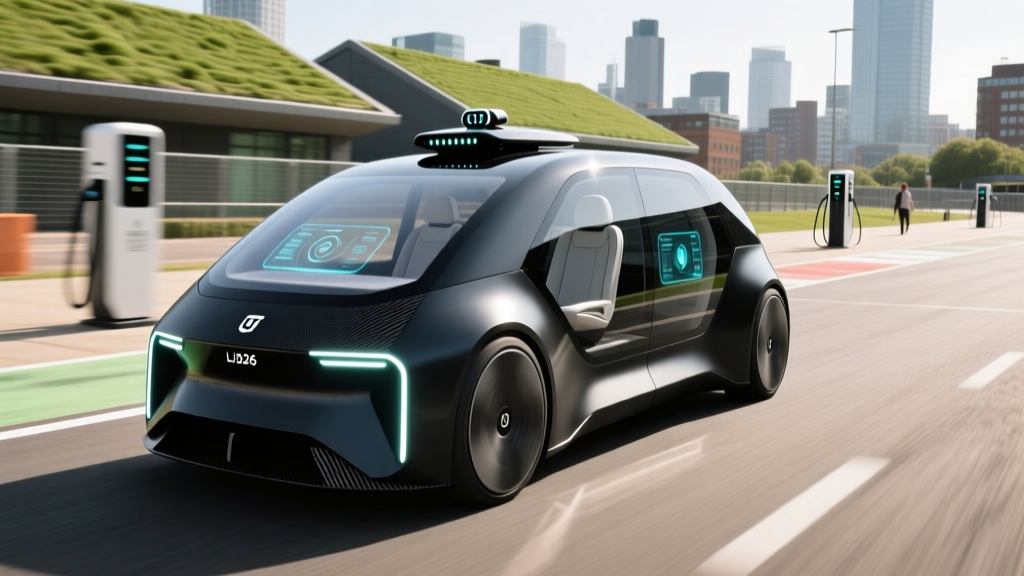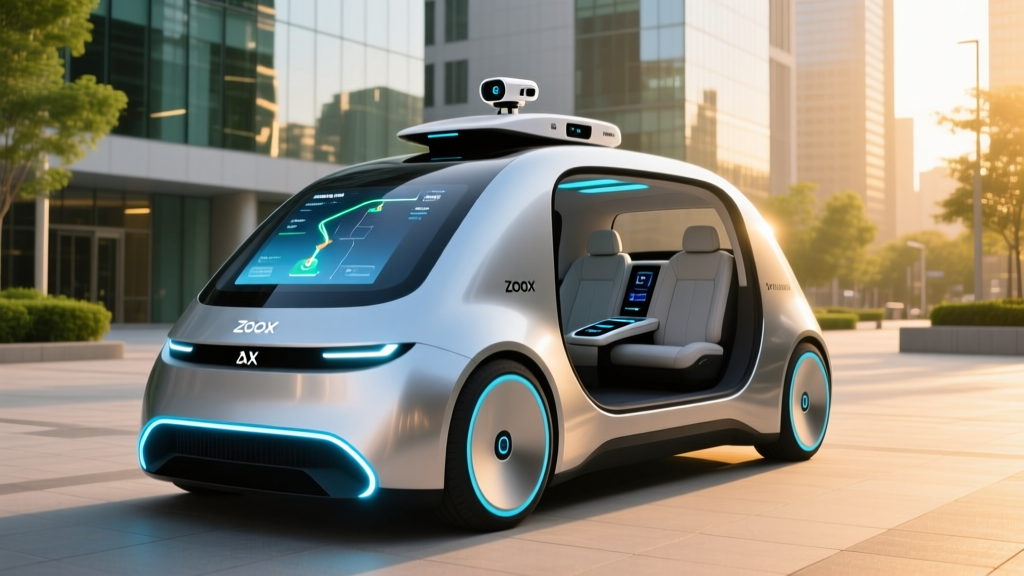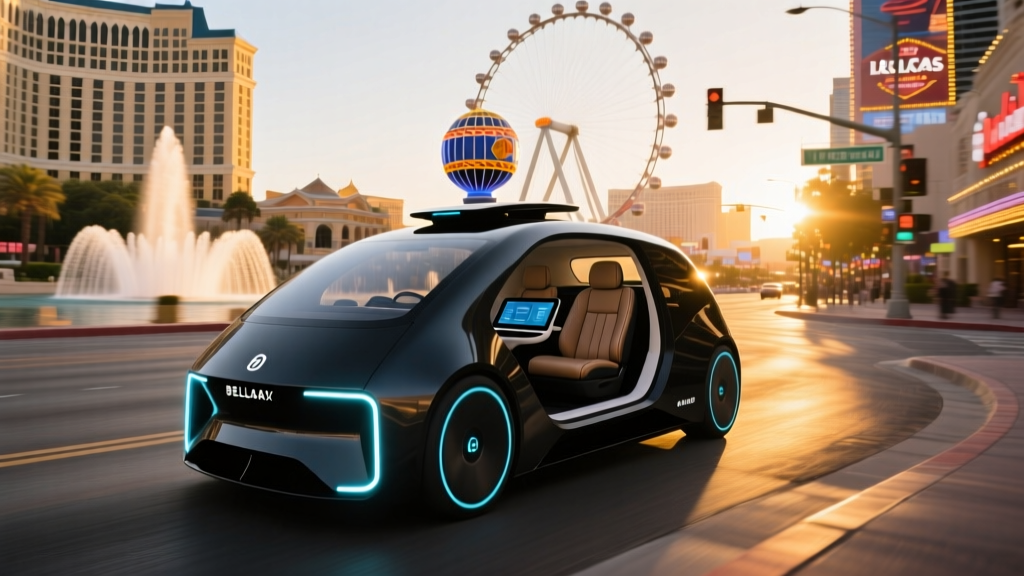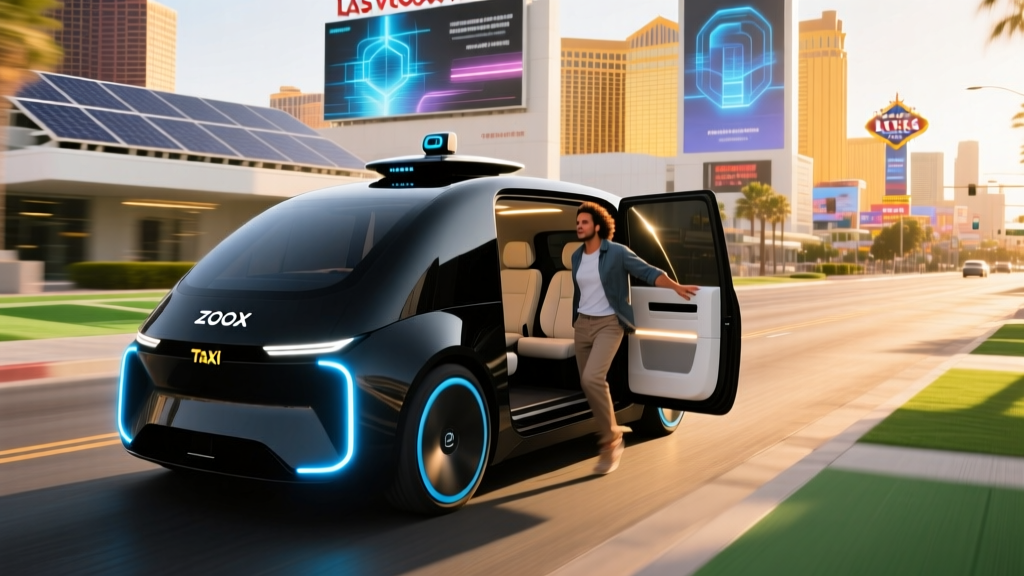
What Zoox Actually Is — And What It Isn't
If you've seen a boxy, carriage-style vehicle gliding down Las Vegas Boulevard with no one in the driver's seat, you've probably seen a Zoox robotaxi. But before you try to hail one, it's worth understanding exactly what this service is, where it operates, and how it differs from the driver-assist systems you might be familiar with in consumer EVs.
Zoox operates as a Level 4 autonomous service within its geofenced operational area. This means the vehicle handles all driving tasks without a human driver present — no steering wheel, no pedals, no fallback driver behind the glass. This is fundamentally different from Level 2 systems like Tesla Autopilot, GM Super Cruise, or Ford BlueCruise, which require continuous driver supervision. Zoox does not sell vehicles to consumers; it operates a ride-hail service using its purpose-built autonomous carriages.
Zoox, acquired by Amazon in 2020 for roughly $1.3 billion, designs and operates both the vehicle and the ride-hailing platform. The Zoox carriage is a bidirectional, battery-electric vehicle built from the ground up for autonomous passenger transport — not a retrofitted SUV with bolted-on sensors. As of early 2026, Zoox has been expanding its commercial service footprint after years of testing, but availability remains tightly controlled.
Where Can You Ride Zoox Right Now?
Zoox's commercial robotaxi service is not available everywhere. The company has been methodically expanding its operational zones, and as of 2026, rides are offered in select areas of the following cities:
| City | Status (2026) | Service Area Notes |
|---|---|---|
| Las Vegas, NV | Commercial service (limited) | Las Vegas Strip corridor and portions of downtown; geofenced zone |
| San Francisco, CA | Commercial service (limited) | Select neighborhoods; expanded from initial test zones |
| Foster City, CA | Testing / early access | Limited employee and invited-rider programs |
| Austin, TX | Testing | Not yet open to general public rides |
| Atlanta, GA | Testing | Mapping and validation phase |
Las Vegas is currently Zoox's most accessible public market. The service initially launched along the Strip corridor, covering major hotel-casino properties and key intersections. The geofenced area has been gradually expanding, but you cannot summon a Zoox to arbitrary addresses outside the operational zone. Think of it as a fixed-route service with flexible pickup/drop-off points within a mapped boundary.
For the most current service-area map and availability windows, check the Zoox ride page directly — operational zones update as the company validates new streets and intersections.
How to Ride Zoox in Las Vegas: Step by Step
Unlike Uber or Lyft, you can't just download an app and request a ride anywhere. Zoox has managed access to its service, especially during its expansion phase. Here's the current process:
- Download the Zoox app — Available on iOS and Android. Create an account with your phone number and payment method.
- Check eligibility and waitlist status — As of early 2026, Zoox has been opening its Las Vegas service to the general public in phases. You may be placed on a short waitlist or granted immediate access depending on demand and zone capacity.
- Set your pickup and drop-off — Both must fall within the active geofenced service area. The app shows the current zone boundary clearly. Pickup points are typically at designated curb locations near major venues, not in hotel garages or private driveways.
- Confirm your ride — The carriage arrives autonomously. There is no driver to communicate with; the app provides real-time vehicle location and license/carriage ID.
- Board and ride — The carriage has inward-facing seats (facing each other), no steering wheel, and large screens showing the vehicle's perception of the road. Doors open automatically when the vehicle is safely stopped.
- Exit at your destination — The carriage waits briefly, then departs for its next assignment or repositions.
Practical tip: Zoox carriages are easiest to hail during off-peak hours (mid-morning, early afternoon). Friday and Saturday nights on the Strip see high demand, and wait times can stretch or the service may pause new ride requests temporarily.
Zoox Pricing vs. Uber and Lyft in Las Vegas
One of the most common questions is cost. During its initial commercial launch phase, Zoox has offered rides at highly competitive rates — sometimes free or heavily subsidized — to build ridership and gather operational data. As of 2026, the pricing model has shifted toward standard fares:
| Service | Typical Fare (2-mile Strip trip) | Surge Pricing? | Tip Required? |
|---|---|---|---|
| Zoox | $0–$8 (promotional / early commercial rates) | No dynamic surge | No (no driver) |
| UberX | $10–$18 | Yes (1.5x–3x common on weekends) | Expected (15–20%) |
| Lyft Standard | $10–$17 | Yes (similar to Uber) | Expected (15–20%) |
| Uber Comfort / Lyft XL | $15–$28 | Yes | Expected |
Zoox's current pricing advantage is significant, but it's partly a function of the company subsidizing rides during its growth phase. Long-term, Zoox has indicated it intends to price competitively with mid-tier rideshare options — undercutting Uber/Lyft on per-mile cost by eliminating the driver's share of the fare, which typically represents 60–75% of what you pay.
Key difference: You cannot add stops, request a specific route, or ask the vehicle to wait. Zoox rides are point-A to point-B within the geofence. If you need a multi-stop errand run, stick with Uber or Lyft.
Zoox Safety Record: What the Data Shows
Safety is the top concern for anyone considering a robotaxi ride. Unlike consumer vehicles rated by NHTSA or IIHS, robotaxis don't have traditional crash-test scores — their safety case rests on operational data, disengagement rates, and incident reporting.
- Testing and operational miles: Zoox has accumulated hundreds of thousands of autonomous miles across its test and commercial fleets in California and Nevada, with the bulk of public-road miles logged in San Francisco and Las Vegas.
- Disengagement rate: In its most recent California DMV disengagement reports, Zoox reported intervention rates competitive with other Level 4 operators — meaning remote or in-vehicle safety operators took control fewer than once per several thousand miles on average during testing phases. (Note: DMV disengagement metrics are self-reported and vary in methodology across companies.)
- At-fault collisions: Zoox's public incident record through 2025 shows no reported serious passenger injuries during commercial operations. Minor contact incidents during testing have been documented in California DMV and NHTSA filings, consistent with the industry's early-stage operational profile.
- NHTSA Standing General Order: Zoox is required to report all Level 2+ and Level 4 incidents to NHTSA under the agency's crash-reporting mandate, providing a layer of federal oversight not always visible to the public.
Sources: California DMV Autonomous Vehicle Disengagement Reports, NHTSA Standing General Order data, Zoox safety transparency reports.
Context matters. Zoox carriages operate at relatively low speeds (typically capped at 35–45 mph) within well-mapped urban corridors. They are not navigating rural highways or mountain passes. The safety case for Level 4 robotaxis is strongest in constrained, low-speed, well-mapped environments — which is exactly what the Las Vegas Strip corridor provides.
Under the Hood: Zoox's Technology Stack
Zoox takes a sensor-rich approach to autonomy, which contrasts sharply with camera-only systems like Tesla's FSD. Here's what enables the carriage to drive itself:
- LiDAR: Multiple solid-state and spinning LiDAR units provide 360° 3D point-cloud mapping of the environment at long range. LiDAR gives the vehicle precise depth perception regardless of lighting conditions — critical for nighttime Strip driving amid neon and headlight glare.
- Cameras: A full surround camera array (visible spectrum) handles lane-line detection, traffic-signal recognition, pedestrian classification, and sign reading.
- Radar: Forward and corner radar units detect moving objects at range and in adverse conditions where camera or LiDAR performance may degrade (rain, dust).
- Microphones: External microphones detect emergency vehicle sirens, prompting the carriage to pull over or yield.
- Redundant compute: Dual independent computing platforms cross-check each other; if one fails, the other can bring the vehicle to a safe stop.
Every street in the Zoox operational zone is pre-mapped at centimeter-level resolution. The vehicle doesn't "figure out" new roads on the fly — it follows a validated, pre-approved route network. If construction closes a mapped lane, Zoox operations staff can update the map or temporarily restrict the zone. This geofencing is a core safety constraint and a key limitation.
The carriage itself is purpose-built: symmetric (drives equally well in either direction), with four-wheel steering for tight urban maneuvering and a compact footprint (~the size of a Toyota Prius) that fits standard lanes and curb spaces. The battery pack is an NMC lithium-ion system sized for all-day urban operation with periodic opportunity charging — Zoox has not published the exact kWh capacity, but the carriage is designed for the 35–45 mph stop-and-go duty cycle of city service.
Regulatory Landscape: Who Approves Robotaxi Operations?
Robotaxi services don't just launch — they require explicit regulatory approval at the state and sometimes municipal level. Here's how the framework works for Zoox:
- Nevada: The Nevada Department of Motor Vehicles (DMV) and the Nevada Public Utilities Commission (PUCN) regulate autonomous vehicle testing and commercial operation. Nevada was one of the first states to pass AV-enabling legislation, and Las Vegas has been relatively permissive in allowing commercial robotaxi services along the Strip corridor.
- California: The California DMV issues testing permits and requires annual disengagement reports. The California Public Utilities Commission (CPUC) issues commercial "driverless pilot" and full commercial deployment permits. Zoox holds active permits in both frameworks.
- Federal (NHTSA): The National Highway Traffic Safety Administration sets vehicle safety standards (FMVSS). Zoox's purpose-built carriage required an exemption from certain FMVSS requirements (like having a steering wheel and mirrors) since it was designed without traditional driver controls. NHTSA granted Zoox's exemption petition, allowing the carriage to operate on public roads.
This multi-layered regulatory environment means Zoox can't simply flip a switch and launch in a new city. Each jurisdiction requires its own permitting process, safety case, and often public-comment periods. This is why expansion is measured in years, not months.
Current Limitations: Where Zoox Can't Go and What It Can't Do
Level 4 autonomy is impressive within its boundaries, but those boundaries are real. Here are the practical limitations you'll encounter:
- Geofenced service area only: You cannot ride Zoox to the airport (Harry Reid International is outside the current zone as of early 2026), to suburbs like Summerlin or Henderson, or to Red Rock Canyon. Pickup and drop-off must be inside the mapped zone.
- Weather constraints: Heavy rain, flooding, or dust storms can trigger service pauses. The sensor suite handles light rain and nighttime conditions well, but extreme weather that degrades LiDAR or camera visibility will cause the fleet to pull over or suspend operations.
- No highway driving: Zoox carriages are designed for surface streets. You won't be taking I-15 to the outskirts of town.
- Construction and road closures: Unmapped construction zones, temporary lane shifts, and event-related road closures (like F1 Grand Prix week or NYE on the Strip) can shrink the operational zone or pause service entirely.
- Accessibility: The Zoox carriage is designed to accommodate wheelchair users, but the interior layout (facing seats, no traditional trunk) means large luggage, strollers, or oversized items may not fit. This is a last-mile service, not an airport shuttle.
- No route customization: You cannot ask the vehicle to take a specific route, make a stop, or wait for you. It's point-A to point-B via the system's chosen path.
- Limited hours: Service is not necessarily 24/7. Operational windows depend on fleet size, demand, and maintenance schedules.
Frequently Asked Questions
Is Zoox truly self-driving, or is there a hidden driver?
Zoox is genuinely driverless — SAE Level 4. There is no human in the vehicle, no steering wheel, and no pedals. The carriage is monitored remotely by Zoox operations staff who can intervene via teleoperation if the vehicle encounters an edge case it cannot resolve autonomously. This is fundamentally different from Level 2 systems like Tesla FSD (Supervised), which require a licensed driver behind the wheel at all times.
How much does a Zoox ride cost compared to Uber or Lyft?
As of 2026, Zoox rides in Las Vegas have been priced between $0 (promotional periods) and roughly $8 for a typical 2-mile Strip trip — significantly less than UberX or Lyft Standard, which run $10–$18 for the same distance before surge pricing and tips. Zoox does not use dynamic surge pricing, and there is no driver to tip. Long-term pricing is expected to settle at competitive rates below traditional rideshare, but promotional subsidies won't last indefinitely.
How safe are Zoox robotaxis in real-world operation?
Zoox's public safety record through early 2026 shows no reported serious passenger injuries during commercial operations. The company reports competitive disengagement rates in California DMV filings and is subject to NHTSA's Standing General Order crash-reporting mandate. The carriages operate at low speeds (35–45 mph cap) in well-mapped urban corridors, which reduces the severity envelope of any potential collision. However, the total commercial miles logged are still far lower than the billions of human-driven miles that establish baseline crash statistics, so long-term actuarial comparisons are not yet possible.
Can I ride Zoox from the Las Vegas airport to my hotel?
Not currently. Harry Reid International Airport (LAS) is outside Zoox's geofenced service area as of early 2026. You'll need Uber, Lyft, a taxi, or a hotel shuttle for airport transfers. Zoox is best used for trips along and near the Strip corridor once you're already in the area.
What happens if the Zoox carriage breaks down or gets stuck mid-ride?
Zoox monitors its fleet in real time from a remote operations center. If a carriage encounters a situation it cannot resolve (a blocked lane, an unmapped obstacle, a system fault), remote operators can guide the vehicle via teleoperation or dispatch a roadside-assistance team. Passengers can contact Zoox support through the in-carriage screen or the app at any time.
Does Zoox operate in bad weather?
Light rain and nighttime conditions are handled well by the multi-sensor suite (LiDAR, radar, cameras). However, heavy rain, flash-flooding conditions, or severe dust storms — all of which occur in Las Vegas — can trigger service pauses. If conditions exceed the system's validated operating envelope, the fleet will safely pull over or return to base until conditions improve.
Is Zoox owned by Amazon?
Yes. Amazon acquired Zoox in June 2020 for approximately $1.3 billion. Zoox operates as an independent subsidiary and has not integrated its robotaxi service with Amazon's delivery or logistics operations as of 2026, though the parent company's resources fund Zoox's capital-intensive expansion.