What Zoox Actually Is — And What It Isn't
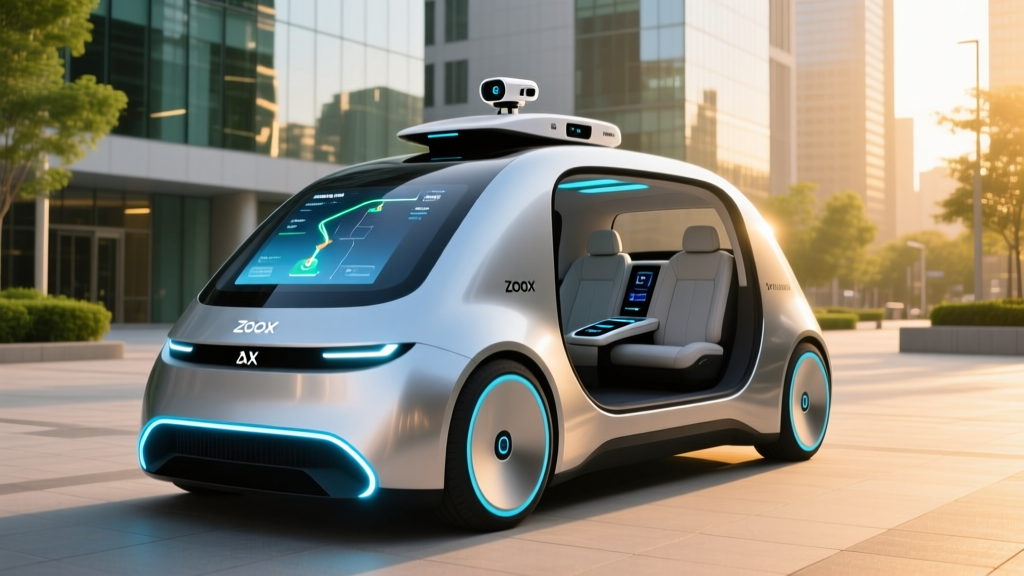
Zoox is Amazon's fully autonomous robotaxi subsidiary, operating purpose-built, bidirectional electric vehicles with no steering wheel, pedals, or driver seat. Unlike Tesla's FSD (Supervised) or GM's Super Cruise — which are SAE Level 2 driver-assist systems requiring constant human attention — Zoox operates at SAE Level 4 within geofenced urban zones. That means the vehicle handles all driving tasks without any human fallback, but only within its approved operational design domain (ODD).
| Level | Description | Examples |
|---|---|---|
| Level 2 | Driver-assist; human must monitor and intervene | Tesla Autopilot/FSD Supervised, BlueCruise, Super Cruise |
| Level 3 | Conditional automation; human must take over on request | Mercedes Drive Pilot (limited markets) |
| Level 4 | Full automation within geofenced ODD; no human driver needed | Zoox, Waymo One |
| Level 5 | Full automation everywhere, all conditions (not yet achieved) | None commercially available |
The distinction matters enormously. When you ride in a Zoox vehicle, there is nobody in the front seat. The car navigates intersections, handles lane changes, and responds to pedestrians entirely on its own — within its mapped service area. This is fundamentally different from any consumer vehicle you can buy today.
Where Can I Ride Zoox Right Now?
As of early 2026, Zoox operates its purpose-built robotaxi in a limited but growing footprint. The company has been methodically expanding from its initial testing grounds into commercial passenger service.
| City | Status | Service Area Notes |
|---|---|---|
| Las Vegas, NV | Live — public rides | Las Vegas Strip corridor and surrounding downtown zones |
| San Francisco, CA | Live — public rides | Select neighborhoods; geofenced urban core |
| Foster City, CA | Testing / limited access | Suburban Bay Area testing zone near Zoox HQ |
| Austin, TX | Testing phase | Mapping and validation; no public rides yet |
| Atlanta, GA | Announced expansion | Planned future service area; not yet operational |
Zoox's rollout strategy is deliberately cautious. Unlike Waymo, which has scaled across multiple major metros, Zoox has prioritized perfecting its purpose-built vehicle platform in dense urban corridors before expanding. If you're outside Las Vegas or San Francisco, you cannot currently hail a Zoox ride — and announced expansion cities should not be treated as available service.
Zoox Ride Cost: What You'll Actually Pay
The question most prospective riders ask first: how much does a Zoox ride cost compared to conventional rideshare? Zoox has historically offered promotional and subsidized pricing during its initial commercial rollout phases, but the pricing structure has evolved as the service matures.
| Cost Factor | Zoox Robotaxi | UberX / Lyft | Waymo One |
|---|---|---|---|
| Base fare | ~$3.00–$4.50 | ~$2.50–$3.50 | ~$3.00–$5.00 |
| Per-mile rate | ~$1.25–$1.80 | ~$1.00–$1.60 | ~$1.30–$1.90 |
| Per-minute rate | ~$0.25–$0.40 | ~$0.20–$0.35 | ~$0.30–$0.45 |
| Typical 3-mile ride | $8–$13 | $8–$14 | $9–$15 |
| Typical 8-mile ride | $16–$24 | $14–$22 | $17–$26 |
| Surge pricing | Limited currently | Common (1.5x–3x) | Moderate |
The Zoox ride cost is broadly competitive with UberX and Lyft for short urban trips, and roughly on par with Waymo One. The key differentiator isn't price — it's the experience. You're riding in a vehicle designed from the ground up as a passenger pod: inward-facing seats, no driver to interact with, and a top speed of approximately 75 mph (though urban geofenced routes rarely approach this).
How to Book a Zoox Ride
- Download the Zoox app (iOS/Android) — available only in active service cities.
- Create an account with payment method and identity verification.
- Set pickup/dropoff within the geofenced service zone (the app will confirm if your location is supported).
- Confirm the ride — the vehicle arrives autonomously to your exact pickup point.
- Unlock via app — no driver to greet you; the doors unlock when the vehicle confirms your identity.
How Safe Are Zoox Robotaxis? The Real Data
Safety is the most scrutinized dimension of any Level 4 robotaxi operation. Zoox, like all autonomous vehicle operators in California, is required to report disengagement data and collision reports to the California DMV. At the federal level, NHTSA oversees standing general orders requiring crash reporting for vehicles equipped with SAE Level 2 and above automation systems.
- Total autonomous miles driven: Millions of miles across testing and commercial operations (cumulative through 2025/2026)
- Disengagement rate: Zoox reports fewer disengagements per 1,000 miles than many competitors in California DMV filings, though direct cross-company comparison is unreliable due to differing ODDs and reporting methodologies
- Reported collisions: Minor contact incidents documented in DMV OL 316 reports; no fatalities attributed to Zoox autonomous operation as of early 2026
- Vehicle design safety: Purpose-built Zoox vehicle features a symmetric crumple zone architecture (bidirectional), airbag systems for all four passengers, and a low center of gravity from its skateboard-style battery platform
Context matters here. Robotaxis operate primarily in dense, low-speed urban environments where most collisions are minor (fender-benders, side-swipes at intersections). The relevant comparison isn't against highway driving but against human-driven rideshare in the same corridors. According to IIHS research, the vast majority of urban crashes involve human error — distraction, impairment, or misjudgment — categories a Level 4 system is designed to eliminate.
That said, no autonomous system is infallible. Zoox vehicles have occasionally executed conservative stops or route deviations when encountering ambiguous scenarios (construction zones, erratic pedestrians, unusual road configurations). These are features, not bugs — the system is designed to fail safe rather than push through uncertainty.
Zoox Technology Stack: Sensors, Compute, and the Purpose-Built Vehicle
Zoox takes a fundamentally different approach from Tesla's camera-centric philosophy. The Zoox robotaxi employs a redundant multi-sensor suite combining lidar, cameras, and radar — the same sensor fusion strategy used by Waymo and most other Level 4 operators.
| Component | Specification / Role |
|---|---|
| Lidar | Multiple roof-mounted and corner units; 360° coverage; high-resolution point cloud for object detection and depth mapping at 150+ meter range |
| Cameras | Multi-spectrum camera array covering 360° with overlapping fields of view; traffic light/sign recognition, lane detection, pedestrian classification |
| Radar | Short- and long-range radar for velocity detection and all-weather object tracking |
| Compute | Custom high-performance computing platform with redundant processing paths; real-time sensor fusion and path planning |
| HD Mapping | Centimeter-precision geofenced maps updated continuously; vehicle localizes within its ODD using lidar + visual SLAM |
| Vehicle Platform | Purpose-built bidirectional EV; ~75 mph top speed; 4-wheel steering; battery-electric skateboard with dual-motor AWD |
The purpose-built Zoox vehicle is a critical differentiator. Unlike Waymo, which retrofits Jaguar I-PACE SUVs with sensor pods, Zoox designed its vehicle from scratch as an autonomous passenger pod. The bidirectional design (it can drive equally well in either direction) eliminates the need for three-point turns and simplifies urban navigation. The battery pack sits in the skateboard platform, giving the vehicle a low center of gravity and maximizing interior space for four passengers in a carriage-style seating arrangement.
Lidar vs. Camera-Only: Why Zoox Chose Sensor Fusion
Tesla's FSD relies exclusively on cameras and neural networks, arguing that human-level vision is sufficient for autonomy. Zoox — along with Waymo, Cruise, and most Level 4 operators — disagrees. Lidar provides precise depth data regardless of lighting conditions, radar penetrates fog and rain better than cameras, and the redundancy of multiple sensor modalities provides a safety margin that single-modality systems cannot match. In practice, this means a Zoox vehicle can detect a pedestrian stepping off a curb at night in heavy rain using lidar even when camera visibility is degraded.
Regulatory Landscape: Who Approves Robotaxi Operations?
Robotaxi operations in the United States exist within a patchwork of state and federal regulation. Understanding this landscape is essential for anyone evaluating Zoox's service legitimacy and expansion timeline.
- Federal (NHTSA): Sets vehicle safety standards (FMVSS). Zoox received an NHTSA exemption to operate its purpose-built vehicle without traditional controls (steering wheel, mirrors, pedals). NHTSA also mandates crash reporting via Standing General Order for all ADS-equipped vehicles.
- California (DMV + CPUC): The California DMV issues autonomous vehicle testing and deployment permits. The California Public Utilities Commission (CPUC) regulates commercial passenger service (i.e., charging fares). Zoox holds permits from both agencies for San Francisco operations.
- Nevada (DMV + PUCN): Nevada was among the first states to authorize autonomous vehicle testing and commercial deployment. Zoox's Las Vegas operations fall under Nevada's AV regulatory framework.
- Other states: Texas, Arizona, Georgia, and others have varying AV legislation. Expansion into new states requires separate regulatory approval processes — there is no single federal "robotaxi license."
This state-by-state approach means Zoox's expansion is inherently slower than a software-only rollout. Each new city requires regulatory engagement, mapping, local validation testing, and permit acquisition — typically a 12-to-24-month process per market.
Current Limitations: Where Zoox Can't Go (and Why)
Level 4 autonomy is powerful but bounded. The Zoox robotaxi has specific, hard operational limits that every rider should understand before booking.
- Geofenced zones only: The vehicle will not operate outside its pre-mapped ODD. If your destination falls outside the service zone, the app will not allow you to book the ride.
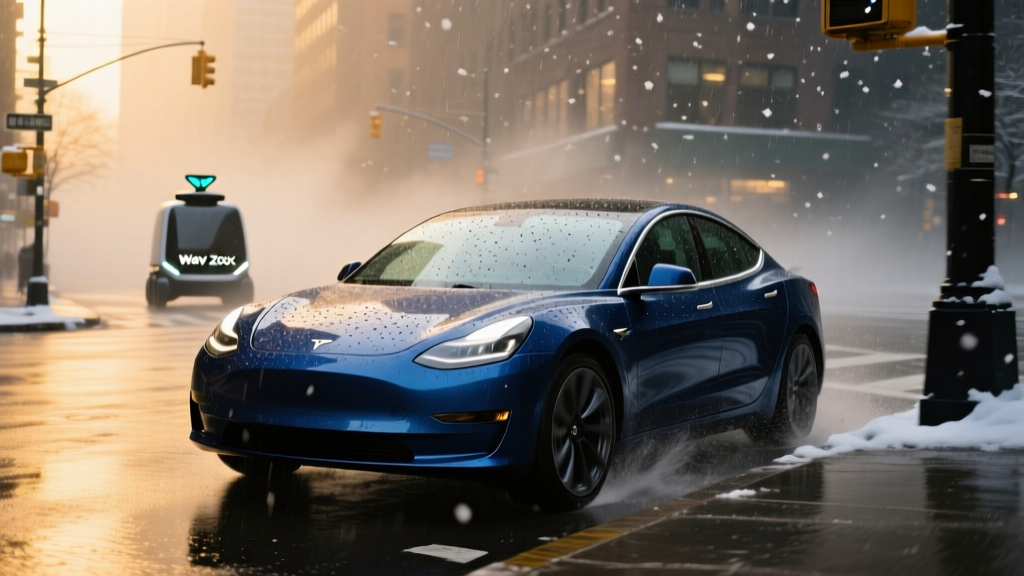
- Weather restrictions: Heavy rain, dense fog, or snow can degrade sensor performance. Zoox may suspend service or restrict routes during severe weather events — unlike a human driver who can push through.
- Construction zones: Major, unmapped road construction can cause the vehicle to stop and request remote assistance. The vehicle will not improvise routes through unfamiliar construction configurations.
- No highway driving (currently): Zoox's urban ODD focuses on surface streets. Highway merging and high-speed operation are not part of the current commercial service envelope in most markets.
- Limited cargo: The passenger pod is designed for people, not groceries or luggage. There is no trunk space comparable to a conventional rideshare SUV.
- No pet transport: Service animals are accommodated under ADA requirements, but personal pets are generally not permitted.
- Wait times: Fleet density in current markets is lower than Uber/Lyft. Expect 5–15 minute wait times during peak hours, versus 2–5 minutes for conventional rideshare.
These limitations aren't unique to Zoox — they apply broadly to all current Level 4 robotaxi services. The technology excels at predictable urban driving within known environments but cannot yet handle the full spectrum of scenarios a human driver navigates daily.
Should You Ride Zoox? A Practical Decision Framework
Choose Zoox if:
- You're in Las Vegas or San Francisco and want a genuinely driverless experience
- Your trip is within the geofenced zone and under ~8 miles
- You value the novelty and technology experience of a purpose-built robotaxi
- You prefer a vehicle with no human driver interaction
Stick with Uber/Lyft if:
- Your trip goes outside the robotaxi geofence
- You need cargo space, child seats, or pet transport
- You're traveling during severe weather
- Minimizing wait time is your top priority
- You need highway-speed travel between suburbs
The Zoox ride cost is competitive enough that it's not a barrier — the real question is whether the service envelope matches your trip. For short, intra-city hops within the geofenced zone, Zoox offers a compelling, safe, and genuinely autonomous experience. For everything else, conventional rideshare remains the pragmatic choice.
Frequently Asked Questions
Is Zoox truly self-driving, or is there a remote human driver?
Zoox is a genuine SAE Level 4 autonomous vehicle — there is no human driver in the vehicle, and no remote joystick operator controlling the car in real time. The vehicle makes all driving decisions independently using its onboard sensors and computing platform. However, Zoox does employ remote fleet assistants who can provide high-level guidance if the vehicle encounters an ambiguous scenario (e.g., an unusual construction zone). The remote assistant does not steer or brake the vehicle; they provide contextual information that helps the vehicle's AI resolve the situation.
How much does a Zoox ride cost compared to Uber?
For a typical 3-mile urban trip, expect to pay $8–$13 with Zoox, compared to $8–$14 for UberX. The Zoox ride cost is broadly competitive with conventional rideshare for short trips, though Uber/Lyft may be slightly cheaper for longer routes due to more mature pricing algorithms and larger driver supply reducing surge frequency.
Can I ride Zoox in any city?
No. As of 2026, Zoox offers public rides in Las Vegas and San Francisco only. Testing is underway in Foster City, CA, and Austin, TX, but these markets are not yet open for public commercial rides. Expansion to Atlanta and other cities has been announced but is not yet operational.
What happens if the Zoox vehicle encounters a situation it can't handle?
The vehicle is programmed to execute a minimal risk condition — typically pulling over safely to the side of the road and stopping. A remote fleet assistant is then alerted and can provide guidance to help the vehicle resolve the situation or dispatch a support team if needed. The vehicle will not attempt to drive through a scenario it cannot confidently handle.
Is Zoox owned by Amazon?
Yes. Amazon acquired Zoox in June 2020 for approximately $1.3 billion. Zoox operates as an independent subsidiary under Amazon's umbrella, and its robotaxi service is separate from Amazon's delivery and logistics operations.
What is the Zoox vehicle's battery and range?
Zoox has not published detailed battery capacity (kWh) or EPA range figures for its purpose-built vehicle, as it is not a consumer product available for purchase. The vehicle is designed for continuous urban operation with opportunistic charging between rides. The bidirectional skateboard platform houses a lithium-ion battery pack with dual-motor all-wheel drive. Fleet operations manage charging logistics so riders never encounter a low-battery vehicle.
How does Zoox's safety record compare to human drivers?
Direct comparison is complex because robotaxis operate in specific geofenced urban corridors at relatively low speeds — a different risk profile than general human driving. What the data shows is that Zoox has accumulated millions of autonomous miles without a reported fatality. Minor contact incidents have been documented in regulatory filings, consistent with the dense urban environments where the vehicles operate. For context, human drivers in the US experience approximately 1.3 fatalities per 100 million vehicle miles across all driving conditions.