The Rise of the Aftermarket Autonomous Vehicle
While Waymo, Cruise, and Zoox dominate the headlines with their fully driverless robotaxi fleets, the reality for most consumers is that personal vehicle autonomy is still evolving. For daily commuters and road-trip enthusiasts, waiting for a Level 4 or Level 5 consumer vehicle is not a practical option. This is where the aftermarket Advanced Driver Assistance Systems (ADAS) market steps in, bridging the gap between factory limitations and cutting-edge neural network capabilities. Leading this aftermarket revolution is comma.ai, the hardware and software company founded by George Hotz, which has recently released its most advanced consumer hardware yet: the comma 3X.
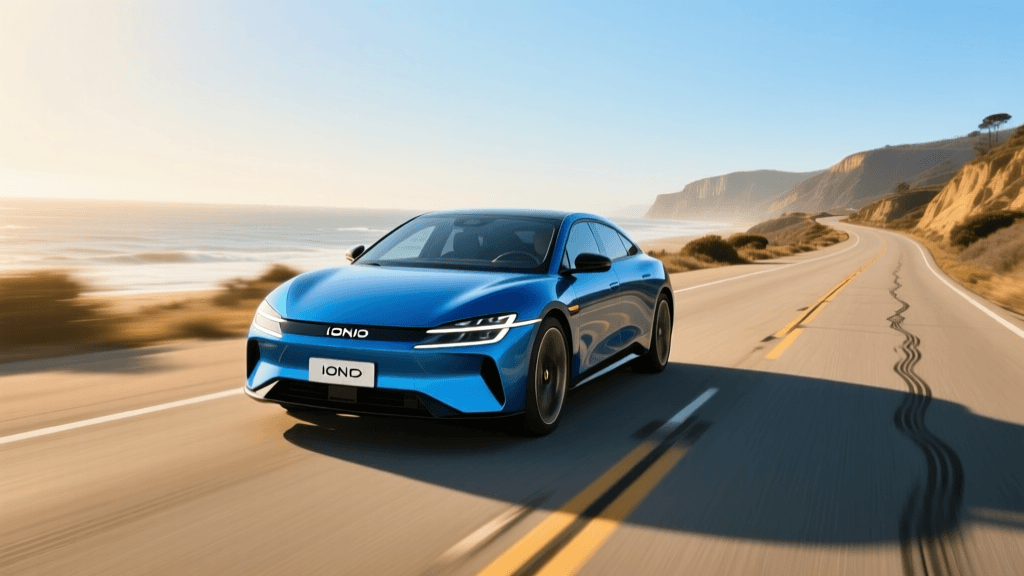
At AutoEdgeView, we specialize in dissecting the realities of autonomous driving, from municipal robotaxi rollouts to the granular details of consumer ADAS. Today, we are conducting a comprehensive head-to-head product showdown. We are pitting the aftermarket powerhouse—the comma 3X running OpenPilot—against one of the most highly rated factory ADAS suites on the market: Hyundai’s Highway Driving Assist 2 (HDA2), specifically tested on the Hyundai Ioniq 5. This review will cover the exact setup process, hardware costs, and a rigorous performance comparison to determine if replacing your car's native brain with an aftermarket AI is worth the investment.
The Contenders: comma 3X OpenPilot vs. Hyundai HDA2
To understand this showdown, we must first define the combatants. Hyundai’s HDA2 is a formidable factory system. It combines adaptive cruise control, lane centering, and GPS-based curve speed reduction. It is highly capable on well-marked highways but relies heavily on traditional computer vision and mapped data. It represents the pinnacle of legacy, rule-based ADAS programming.
On the other side is the comma 3X running OpenPilot. The comma 3X is a standalone computing unit featuring an 8-megapixel road-facing camera, a 2-megapixel driver-facing infrared camera, and a Qualcomm Snapdragon processor. Instead of relying on hard-coded rules, OpenPilot utilizes an end-to-end neural network trained on millions of miles of real-world driving data. It mimics human driving behavior by processing raw visual data and outputting steering and acceleration commands directly, effectively bypassing the car's native ADAS logic while still utilizing the vehicle's drive-by-wire steering and braking actuators.
Step-by-Step Hardware Setup and Installation
One of the biggest hurdles for aftermarket ADAS is the installation process. Unlike a plug-and-play smartphone mount, integrating a secondary neural computer into a modern vehicle's CAN bus requires precision. According to the official comma.ai documentation, the installation is designed to be completed by users with basic technical skills, but it requires careful attention to detail.
Required Hardware and Costs
- comma 3X Device: $1,250 (The core computing unit and camera array)
- Car Harness (CAN-FD with Radar Relay): $150 (Translates OpenPilot signals to the Hyundai CAN-FD network)
- Custom Windshield Mount: $50 (Ensures optimal camera angle and stability)
- Total Investment: Approximately $1,450
Installation Process (Estimated Time: 45 Minutes)
The setup begins by removing the plastic shroud behind the rearview mirror to access the factory forward-facing camera. For the Hyundai Ioniq 5, you will unplug the factory camera and plug in the comma.ai CAN-FD harness. This harness acts as a middleware, intercepting the factory steering and cruise control buttons while feeding OpenPilot's commands to the car's steering rack and electronic brake control module.
Once the harness is secured and the radar relay is connected, the comma 3X is mounted to the windshield using the custom adhesive mount. It is crucial to place the device directly behind the rearview mirror to ensure an unobstructed view of the road and to keep the device out of the driver's direct line of sight. After routing the USB-C power cable down the A-pillar and into the OBD-II port or a 12V accessory outlet, the hardware installation is complete.
Software Calibration
The physical setup is only half the battle. Upon first boot, OpenPilot requires a calibration drive. You must drive for approximately 20 to 30 minutes on a well-marked highway at speeds above 30 mph. During this time, the 8MP camera maps the road geometry, calculates the pitch and yaw of the mount, and establishes a baseline for the neural network. Only after the calibration progress bar hits 100% will the system engage.
Head-to-Head Performance Showdown
With the comma 3X installed and calibrated, we took the Hyundai Ioniq 5 on a 300-mile loop covering pristine interstate highways, construction zones, and heavy stop-and-go urban traffic. Below is the structured data comparison between the stock HDA2 and the aftermarket OpenPilot system.
| Performance Metric | Stock Hyundai HDA2 | comma 3X OpenPilot |
|---|---|---|
| Lane Centering Smoothness | Moderate (frequent micro-corrections) | Excellent (human-like, fluid steering) |
| Stop-and-Go Traffic | Jerky braking, slow acceleration | Smooth, predictive braking and throttle |
| Curve Speed Management | Relies on GPS maps (can be delayed) | Vision-based (adjusts in real-time) |
| Faded Lane Line Handling | Disengages or ping-pongs | Maintains path using road edge context |
| Driver Monitoring | Basic steering wheel torque sensor | Advanced IR eye and face tracking |
| Ghost Braking Events | Frequent in overcast conditions | Rare (vision model ignores shadows) |
Lane Centering and Micro-Corrections
The most immediate difference you notice when switching from HDA2 to OpenPilot is the steering feel. Stock HDA2 operates on a traditional PID controller loop. It waits for the car to drift slightly toward the lane line before applying corrective torque, resulting in a subtle but constant 'ping-pong' effect within the lane. OpenPilot, utilizing its end-to-end neural network, predicts the curvature of the lane hundreds of feet ahead. The steering inputs are incredibly fluid, mimicking the exact micro-adjustments a professional chauffeur would make. In sweeping highway curves, OpenPilot hugs the inside of the lane naturally, whereas HDA2 tends to drift wide before aggressively correcting.
Stop-and-Go Traffic Handling
Commuting in heavy traffic is where ADAS systems prove their worth. HDA2's adaptive cruise control is notoriously conservative. It leaves massive gaps in traffic, inviting cut-offs, and when it does brake, it often waits until the last second, resulting in harsh deceleration. OpenPilot’s vision model processes the brake lights and deceleration rates of cars two or three lengths ahead. It initiates gentle, progressive braking long before the car directly in front of you hits the brakes, drastically reducing passenger whiplash and improving overall traffic flow.
Driver Monitoring and Safety Protocols
Safety is the paramount concern when introducing aftermarket autonomous technology. The National Highway Traffic Safety Administration (NHTSA) continuously emphasizes that current ADAS technologies require active driver supervision. Hyundai monitors this via a steering wheel torque sensor; if you apply slight pressure, the car assumes you are paying attention, even if you are looking at your phone. This is a dangerous loophole.
comma.ai takes a much stricter approach. The comma 3X features a dedicated infrared driver-facing camera that tracks your eye gaze and head position. If your eyes leave the road for more than a few seconds, OpenPilot issues escalating audio and visual warnings. If you fail to respond, the system will safely bring the vehicle to a halt in its lane and disengage. According to research highlighted by the Insurance Institute for Highway Safety (IIHS), robust driver monitoring systems that utilize eye-tracking are significantly more effective at preventing driver complacency than torque-based sensors. In this regard, the aftermarket comma 3X is objectively safer than the factory Hyundai system.
Cost Breakdown and Value Proposition
At $1,450, the comma 3X ecosystem is a significant investment. To put this into perspective, Hyundai charges roughly $1,500 to $2,000 as an upfront package cost for HDA2 when configuring a new Ioniq 5 (often bundled with premium trims). However, the value proposition of the comma 3X extends beyond a single vehicle. The device and the harness are modular. If you sell your Hyundai and purchase a supported Toyota, Honda, or Volkswagen, you simply unplug the 3X, buy a new $150 car-specific harness, and transfer the $1,250 computing unit to your new car. Furthermore, OpenPilot receives over-the-air (OTA) software updates weekly. While factory ADAS systems are largely frozen in time from the day the car rolls off the assembly line, OpenPilot's neural networks are continuously retrained and improved, meaning your car's autonomous capabilities literally get better every month.
Final Verdict: Is the Aftermarket Swap Worth It?
The head-to-head showdown between the comma 3X OpenPilot and Hyundai’s stock HDA2 yields a clear winner for the autonomous driving enthusiast. While HDA2 is a competent, safe, and reliable factory system that requires zero setup, it is fundamentally limited by legacy programming and conservative tuning. It feels like a machine trying to keep you in a box.
OpenPilot, conversely, feels like an AI co-pilot. The end-to-end neural network provides a level of steering smoothness, predictive braking, and contextual awareness that factory systems have yet to match. The 45-minute installation and calibration process is a minor inconvenience when weighed against the thousands of hours of stress-free highway commuting you will gain. For those who view their vehicle not just as transportation, but as a platform for cutting-edge technology, the comma 3X is an essential upgrade. It proves that the robotaxi revolution isn't just happening in geofenced city centers with Waymo and Cruise; it is happening right now, on your daily commute, powered by aftermarket innovation.