The Next Frontier of Smart Driving: Why Sensors Aren't Enough
Advanced Driver Assistance Systems (ADAS) have revolutionized automotive safety over the last decade. Features like Automatic Emergency Braking (AEB), Adaptive Cruise Control (ACC), and Lane Centering are now commonplace. However, as we push closer to higher levels of autonomous and smart driving, engineers are hitting a physical wall: the limits of line-of-sight sensors. Cameras, radar, and LiDAR are incredible tools, but they cannot see through solid objects, around blind corners, or through heavy fog. This is where Vehicle-to-Everything (V2X) communication enters the chat.
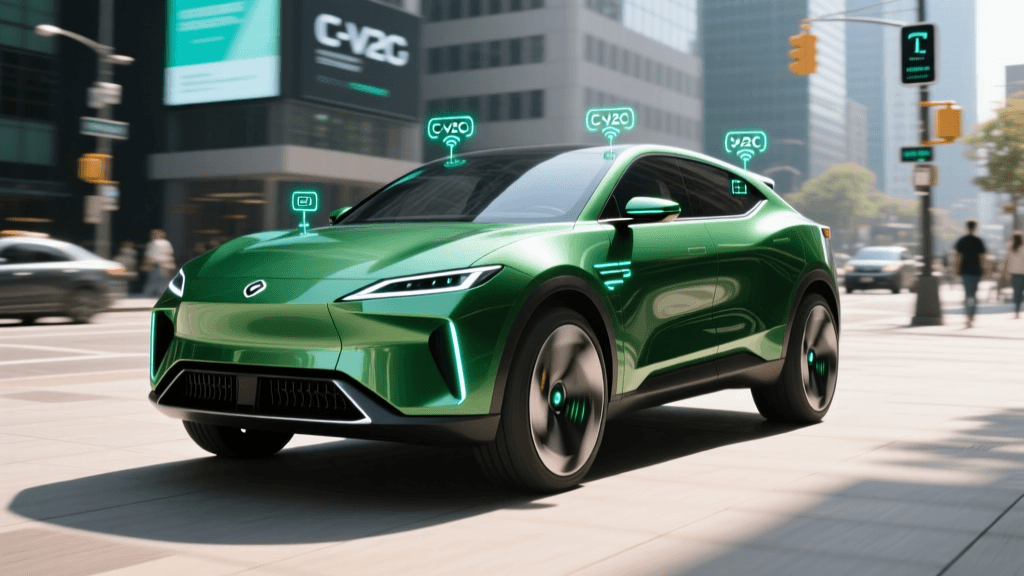
V2X allows vehicles to communicate with each other (V2V), with infrastructure like traffic lights (V2I), and even with pedestrians (V2P). Despite its massive potential to eliminate accidents, V2X remains widely misunderstood by consumers and even some automotive enthusiasts. According to the Insurance Institute for Highway Safety (IIHS), while ADAS features significantly reduce crash rates, they still struggle in adverse weather and complex, occluded environments. V2X is the missing puzzle piece designed to solve these exact limitations. Let's bust the most common myths and mistakes surrounding V2X and ADAS sensor fusion.
Myth 1: LiDAR and Cameras Make V2X Redundant
The Myth: Modern EVs and smart cars are packed with high-definition cameras, ultrasonic sensors, and expensive LiDAR arrays. Many buyers assume this hardware is more than enough to map the environment, making V2X an unnecessary, expensive add-on.
The Reality: Physical sensors are strictly bound by the laws of physics—they require a direct line of sight. If a large semi-truck is driving in front of you, your LiDAR cannot see the sedan braking hard three cars ahead. If you are approaching a blind, heavily wooded curve, your cameras cannot see the stalled vehicle just around the bend. V2X bypasses these physical limitations by using radio waves to broadcast Basic Safety Messages (BSMs). These messages include a vehicle's exact GPS position, speed, heading, and brake status, updating up to 10 times per second (10Hz). By integrating V2X data into the ADAS sensor fusion algorithm, your car effectively gains "x-ray vision," allowing the ADAS to pre-charge brakes or warn the driver of a hazard hundreds of yards away, long before a camera or LiDAR could detect it.
Myth 2: V2X Requires a Perfect 5G Cellular Connection
The Myth: Because the current industry standard is called C-V2X (Cellular Vehicle-to-Everything), consumers frequently assume the technology relies on local cell towers and a strong 5G internet connection to function. They worry that driving into a rural "dead zone" will disable their car's safety systems.
The Reality: This is a fundamental misunderstanding of how C-V2X architecture works. As detailed by the 5G Automotive Association (5GAA), C-V2X operates in two distinct modes. The first is network-based communication (Uu interface), which uses cell towers for long-range traffic and cloud data. The second, and far more critical for immediate ADAS safety, is direct communication (the PC5 interface). Direct C-V2X allows vehicles to talk directly to one another and to nearby smart infrastructure using a dedicated 5.9 GHz radio spectrum. This peer-to-peer connection requires absolutely zero cellular network coverage, zero internet connection, and zero cell towers. Whether you are in downtown Manhattan or a remote desert highway, your car's V2V safety broadcasts will function with ultra-low latency (under 20 milliseconds) as long as the other vehicle is within radio range.
Myth 3: V2X is Only for Autonomous Robotaxis
The Myth: V2X is a futuristic technology reserved for Waymo robotaxis and heavy commercial fleets; it has no practical application for the average consumer buying a car today.
The Reality: V2X is already in consumer driveways. Audi has been utilizing V2I (Vehicle-to-Infrastructure) in models like the A6 and Q8 for years through their "Traffic Light Information" system, which counts down to green lights and optimizes speed for green-light corridors. Cadillac integrated V2V communication into the CT5 to enhance Super Cruise safety, allowing cars to share road surface and braking data. Furthermore, Ford has been actively deploying C-V2X equipped vehicles in smart city test beds to interact with connected crosswalks and blind-spot warning intersections. You do not need to wait for Level 5 autonomy to benefit from V2X; it is actively enhancing Level 2 and Level 3 ADAS systems right now.
Sensor-Only ADAS vs. V2X-Enhanced ADAS
To understand the practical differences, here is a comparison of how traditional sensor suites perform versus a V2X-enhanced ADAS setup in real-world scenarios.
| Scenario | Sensor-Only ADAS (Cameras/LiDAR) | V2X-Enhanced ADAS (Sensor Fusion + C-V2X) |
|---|---|---|
| Blind Curve Hazard | Fails to detect stalled car until it enters the camera's line of sight, often resulting in late AEB activation. | Receives BSM from stalled car's GPS and hazard lights; warns driver and pre-charges brakes 300+ meters away. |
| Heavy Fog / Snow | Cameras blinded; LiDAR scatter causes phantom braking or system disengagement. | Radio waves penetrate fog and snow effortlessly; V2V maintains tracking of surrounding traffic regardless of visibility. |
| Emergency Vehicle Approach | Relies on acoustic sensors (microphones) which are easily drowned out by cabin noise or music. | Receives direct V2I/V2V digital alert from the ambulance's transponder, displaying approach direction on the dash. |
| Traffic Light Timing | Camera reads the current light color but cannot predict when it will change. | V2I connects to the city grid, displaying exact seconds remaining and advising optimal speed to hit the green wave. |
Common Mistakes Drivers Make with V2X-Equipped Cars
Even if you purchase a vehicle equipped with cutting-edge V2X hardware, human error can negate its benefits. Here are the most common mistakes drivers make:
- Assuming Universal Connectivity: V2X is only as good as its network density. If your car broadcasts a hazard warning, but the trailing vehicle is a 10-year-old model without a V2X receiver, that trailing driver will not get the alert. Drivers mistakenly assume their car's V2X braking will automatically stop the car behind them.
- Neglecting Physical Sensor Maintenance: V2X enhances ADAS; it does not replace it. Drivers often ignore dirty cameras or misaligned LiDAR sensors, assuming the V2X radio will handle the driving. If your car's physical sensors are blinded by mud, the ADAS may still disengage, as the system requires sensor consensus to execute autonomous steering or braking maneuvers safely.
- Ignoring Infrastructure Alerts: Many drivers dismiss V2I alerts (like red-light runner warnings or construction zone alerts) as "software glitches" because they don't immediately see the hazard. Because V2X sees around corners, the threat might not be visible to the naked eye yet. Always trust and react to V2X dashboard warnings.
Actionable Advice: Buying and Using V2X Today
If you are in the market for a smart EV or hybrid and want to future-proof your ADAS capabilities, keep these actionable tips in mind:
- Prioritize C-V2X over DSRC: In 2020, the FCC reallocated 45 MHz of the 5.9 GHz safety band away from the older Wi-Fi-based DSRC standard to favor C-V2X. When reviewing vehicle spec sheets, ensure the automaker explicitly lists C-V2X compatibility. DSRC is effectively a dead standard in the United States.
- Check Local Smart City Infrastructure: V2I features like Audi's Traffic Light Information or intersection collision warnings only work if your local municipality has invested in smart traffic controllers. Check your local U.S. Department of Transportation (USDOT) regional deployment maps to see if your daily commute supports V2I features.
- Keep Firmware Updated: V2X security certificates and message protocols (like the SAE J2735 standard) are updated regularly to prevent spoofing and hacking. Ensure your vehicle's Over-The-Air (OTA) update system is active and connected to Wi-Fi periodically to download the latest V2X security patches.
V2X is not a replacement for attentive driving or physical sensors; it is the ultimate co-pilot. By understanding what V2X can and cannot do, you can leverage this technology to create a safer, more predictable driving environment for yourself and everyone around you.