The Evolution of Automated Parking: From Basic Sensors to AI
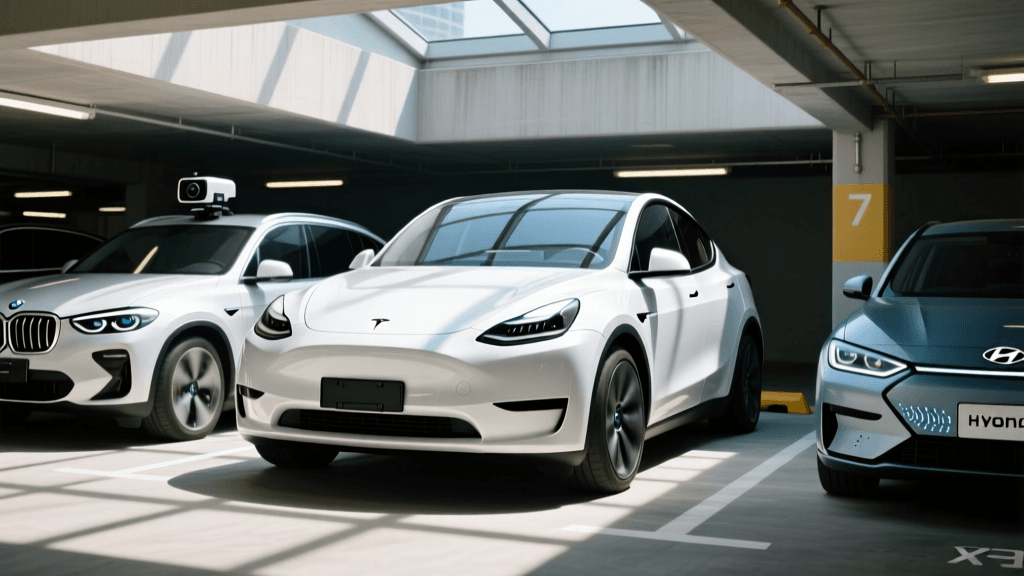
Automated parking assist systems have transitioned from novelty features reserved for luxury sedans to sophisticated, AI-driven capabilities available across mainstream electric and hybrid vehicles. Initially, parking assist merely involved ultrasonic sensors that beeped faster as you approached an obstacle. Today, advanced driver assistance systems (ADAS) can autonomously navigate complex multi-story garages, reverse down narrow driveways, and parallel park with zero driver input inside the cabin. However, not all automated parking systems are created equal. The underlying sensor suites, processing architectures, and software logic vary wildly between manufacturers. In this technology deep dive, we dissect the physics and software behind modern automated parking, comparing the distinct approaches taken by Tesla, BMW, and Hyundai.
Sensor Physics: Ultrasonic vs. Computer Vision vs. Odometry
To understand how a car parks itself, you must first understand the hardware perceiving the environment. Modern systems rely on sensor fusion, combining three primary data streams:
1. Ultrasonic Sensors (The Proximity Standard)
Ultrasonic sensors operate by emitting high-frequency sound waves (typically between 40 and 48 kHz) and measuring the time-of-flight for the echo to return. The distance is calculated using the formula: Distance = (Time × Speed of Sound) / 2. These sensors are incredibly reliable for detecting solid, flat surfaces like concrete walls or the bumpers of other cars. However, they suffer from acoustic absorption and scattering. Thin objects like chain-link fences, angled curbs, or soft materials like snowbanks often fail to reflect the sound waves back to the receiver, creating dangerous blind spots.
2. Computer Vision and Neural Networks
Cameras provide high-resolution spatial data and semantic understanding. While ultrasonic sensors know something is there, a camera system utilizing neural networks knows what is there. Modern vision systems use 360-degree bird's-eye-view stitching and occupancy networks to map the 3D volume of a parking space. They can differentiate between a painted white line, a concrete curb, a shopping cart, and a pedestrian. The limitation of cameras is their reliance on adequate lighting and clear lenses; heavy rain, mud, or direct sun glare can temporarily blind the system.
3. Kinematic Odometry
Often overlooked, odometry uses wheel speed sensors, steering angle encoders, and inertial measurement units (IMUs) to track the vehicle's exact physical movement through space. This is critical for systems that require the car to retrace its steps or calculate precise turning radii in GPS-denied environments like underground concrete garages.
SAE Automation Levels and Driver Liability
Despite marketing terms like 'Smart Summon' or 'Remote Parking,' it is vital to understand that these systems currently operate at SAE Level 2 automation. According to the SAE International J3016 standard, Level 2 requires continuous driver supervision. The human driver remains legally responsible for the vehicle's actions, even if they are standing outside the car holding a key fob or watching via a smartphone app. The National Highway Traffic Safety Administration (NHTSA) explicitly notes that ADAS features are designed to assist, not replace, an attentive driver. Understanding this liability is crucial when testing the limits of your vehicle's parking capabilities.
Brand Implementation Comparison: Tesla vs. BMW vs. Hyundai
Different automakers have engineered vastly different solutions to the automated parking problem. Here is how the industry leaders compare in real-world scenarios.
Tesla: Smart Summon and Actually Smart Summon (Vision-Only)
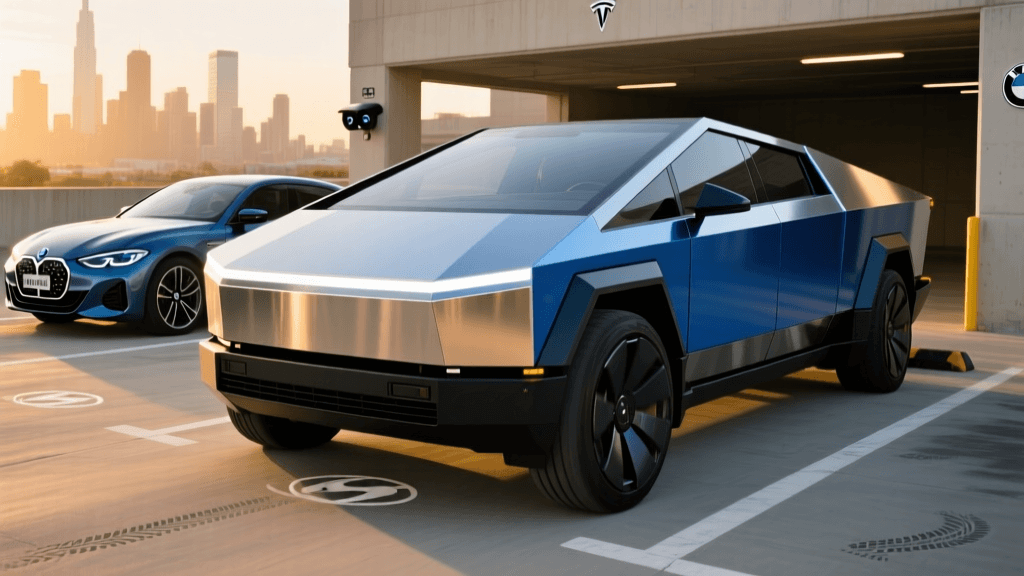
Tesla has famously abandoned ultrasonic sensors (the 'Tesla Vision' approach) in favor of a pure camera-based neural network. Smart Summon allows the vehicle to navigate a parking lot to meet the driver at a chosen GPS pin or the driver's phone location. The system relies on an occupancy network to map free space and obstacles. Strengths: Excellent at understanding complex, unstructured environments like grassy overflow lots or spaces without painted lines. Weaknesses: Historically prone to 'phantom braking' when shadows or reflections confuse the neural net, and occasionally struggles with high curbs that fall below the camera's lower field of view.
BMW: Reversing Assistant (Sensor Fusion & Odometry)
BMW’s Reversing Assistant is a masterclass in kinematic odometry and sensor fusion. The vehicle continuously records the steering inputs and path of the last 50 meters of forward travel at speeds under 22 mph. When activated, the system takes over steering and throttle to perfectly retrace that exact path in reverse. Strengths: Unmatched for narrow, winding driveways, tight alleyways, or single-lane mountain roads where turning around is impossible. Weaknesses: Strictly limited to 50 meters and cannot navigate a path it hasn't just driven forward. It is a reactive tool, not a proactive navigation tool.
Hyundai / Kia: Remote Smart Parking Assist (RSPA)
Hyundai and Kia utilize a highly refined ultrasonic and camera fusion system tailored for tight, perpendicular parking spaces. RSPA allows the driver to exit the vehicle and hold a button on the smart key fob to move the car straight forward or backward into a spot. Strengths: The 'dead-man's switch' on the physical key fob provides excellent tactile feedback and immediate stopping power if the driver releases the button. It is incredibly precise for narrow garage bays where opening the door is impossible. Weaknesses: Lacks the complex lateral navigation capabilities of Tesla's Summon; it is primarily designed for straight-line ingress and egress.
Feature & Sensor Comparison Matrix
| Feature / Metric | Tesla Smart Summon | BMW Reversing Assistant | Hyundai RSPA |
|---|---|---|---|
| Primary Sensors | 8-Camera Vision (No Ultrasonic) | Ultrasonic, 360-Cameras, IMU/Odometry | Ultrasonic, Surround-View Cameras |
| Max Autonomous Distance | ~65 meters (GPS/Phone guided) | 50 meters (Reverse path only) | ~10 meters (Straight line in/out) |
| Lateral Navigation | Yes (Complex lot navigation) | Yes (Retraces forward steering path) | No (Straight line forward/reverse) |
| Control Interface | Smartphone App | In-Cabin Button / Key Fob | Smart Key Fob Button |
| Best Real-World Use Case | Large, crowded shopping center lots | Narrow, winding private driveways | Tight perpendicular garage bays |
Real-World Limitations and Edge Cases
While laboratory testing and marketing videos make automated parking look flawless, the Insurance Institute for Highway Safety (IIHS) and independent testers frequently highlight edge cases where these systems struggle. Understanding these limitations is key to avoiding property damage:
- Glass Facades and Mirrors: Ultrasonic sensors and cameras can struggle with highly reflective glass storefronts or mirrored elevator doors in parking garages, sometimes interpreting reflections as open space or phantom obstacles.
- Steep Inclines and Speed Bumps: Vehicles with low front overhangs or sport suspensions may scrape on steep parking garage ramps. Systems often fail to calculate the exact break-over angle required to clear a speed bump without undercarriage contact.
- Faded Infrastructure: Vision-based systems that rely on painted lines to center the vehicle will frequently fail in older, poorly maintained lots where the white or yellow paint has eroded.
- Weather Interference: Heavy snow can completely muffle ultrasonic transducers, while road salt spray can blind cameras. Most systems will safely disable themselves and alert the driver when sensor confidence drops below a critical threshold.
Actionable Advice for Buyers and Daily Users
If you are shopping for a vehicle with automated parking, or looking to get the most out of your current ADAS-equipped EV or hybrid, follow these practical guidelines:
- Test in a Controlled Environment First: Never trust an automated parking system in a tight, expensive garage on your first try. Test the system in an empty, open-air lot using a soft obstacle (like a cardboard box) to understand the system's braking latency and steering aggression.
- Maintain Sensor Hygiene: Keep camera lenses and ultrasonic sensor pucks clean. Use a microfiber cloth and automotive glass cleaner. Avoid stiff-bristled brushes or scraping ice off sensors with a plastic scraper, as scratching the polycarbonate covers will permanently distort camera focal lengths and scatter ultrasonic waves.
- Verify Calibration After Bodywork: If your vehicle undergoes suspension work, wheel alignment, or a windshield replacement, the cameras and IMUs may lose their spatial calibration. A dealership or certified ADAS technician must perform a dynamic or static recalibration to ensure the parking assist algorithms calculate distances accurately.
- Keep Your Thumb on the Button: When using remote parking features via a key fob or smartphone, always keep your finger on the dead-man's switch and your eyes on the vehicle's blind spots. The latency between your brain recognizing a hazard, releasing the button, and the vehicle's hydraulic brakes engaging can result in several inches of roll-out.
Conclusion
Automated parking technology is no longer a monolithic feature; it is a spectrum of specialized tools. Tesla’s vision-based approach pushes the boundaries of AI spatial awareness for complex lot navigation, BMW’s odometry-driven Reversing Assistant offers unparalleled precision for tricky driveways, and Hyundai’s RSPA provides reliable, stress-free ingress and egress for tight urban garages. By understanding the underlying sensor physics and software logic, drivers can leverage these Level 2 ADAS features safely, efficiently, and with a clear understanding of their real-world limitations.