The Evolution of Rearward Visibility and Active Safety
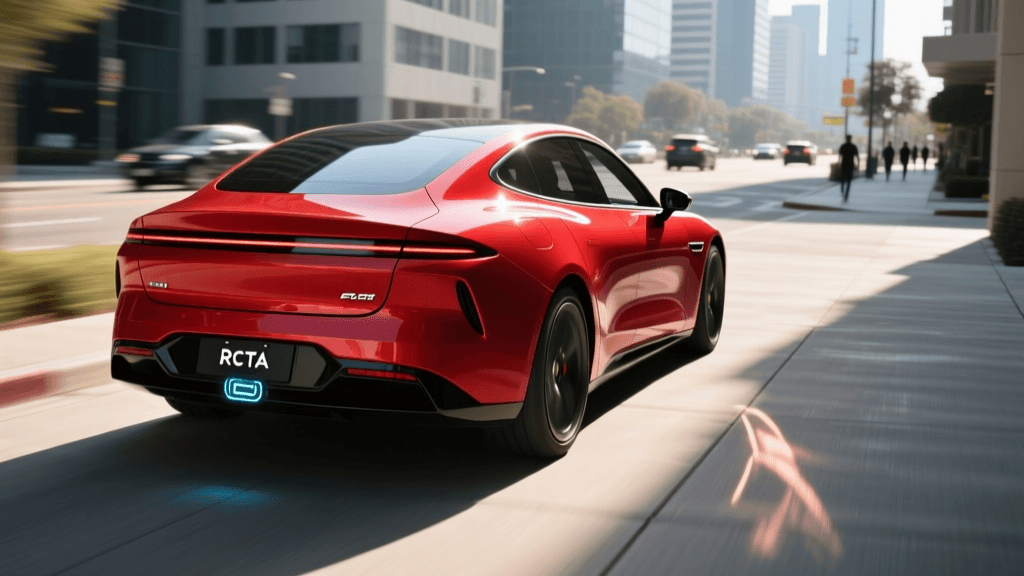
When the National Highway Traffic Safety Administration (NHTSA) mandated rearview cameras for all new vehicles under 10,000 pounds, the primary goal was to eliminate back-over accidents involving pedestrians, particularly children. However, cameras alone suffer from a restricted field of view and require the driver to actively monitor the screen. This limitation birthed the widespread adoption of Rear Cross Traffic Alert (RCTA) systems. Unlike passive cameras, RCTA is an active Advanced Driver Assistance System (ADAS) designed to detect moving objects approaching from the sides while a vehicle is in reverse.
As automotive engineers transition from simple warning chimes to automated rear braking, understanding the real-world effectiveness and inherent limitations of RCTA is critical for both consumers and fleet managers. This data-driven analysis breaks down the hardware, compares top OEM implementations, and examines the empirical crash data to determine exactly where RCTA succeeds—and where it fails.
The Physics and Hardware Behind RCTA Systems
RCTA systems primarily rely on radar sensors, though some newer architectures fuse radar data with ultrasonic sonar and camera inputs. The most common hardware configuration involves two short-range radar (SRR) sensors mounted behind the rear bumper fascia, typically operating in the 24 GHz or 77 GHz frequency bands.
When the vehicle is shifted into reverse, these sensors emit electromagnetic waves that bounce off approaching objects. By measuring the Doppler shift of the returning waves, the system calculates the relative speed and trajectory of the cross-traffic. Modern 77 GHz sensors offer superior resolution and are better at distinguishing between a moving vehicle, a pedestrian, and a rolling shopping cart. The processing latency—the time it takes for the sensor to detect an object, the ECU to classify it, and the HMI (Human-Machine Interface) to issue a warning—typically ranges between 100 and 300 milliseconds. While this is faster than human reaction time, it establishes a hard mathematical limit on how close a fast-moving object can be before an alert is triggered.
Data-Driven Comparison: Top OEM Implementations
Not all RCTA systems are created equal. The effectiveness of the system depends heavily on sensor placement, software filtering algorithms, and whether the system is tied to automatic emergency braking (AEB). Below is a comparative analysis of leading OEM rear cross-traffic systems based on published technical specifications and independent testing parameters.
| OEM System | Primary Sensor Tech | Approx. Detection Angle | Max Effective Range | Auto-Brake Integration |
|---|---|---|---|---|
| Toyota Safety Sense (TSS) | 77 GHz Radar | ~120 Degrees | 20 Meters | Yes (Rear AEB) |
| Honda Sensing | Radar + Sonar Fusion | ~110 Degrees | 15 Meters | Yes (Cross Traffic Braking) |
| Subaru EyeSight (Rear) | 24/77 GHz Radar | ~130 Degrees | 20 Meters | Yes (Reverse AEB) |
| Ford Co-Pilot360 | Short-Range Radar | ~120 Degrees | 20 Meters | Yes (Cross-Traffic Braking) |
| Tesla Autopilot | Camera + Ultrasonic (Legacy) / Vision Only | ~110 Degrees | 15 Meters | Yes (Automatic Emergency Braking) |
The data reveals a distinct advantage for systems utilizing 77 GHz radar with auto-brake integration. Systems limited to auditory alerts without braking intervention rely entirely on the driver's reaction time, which averages 1.5 seconds in unexpected scenarios. By integrating Rear AEB, OEMs like Toyota and Subaru effectively remove the human latency variable, drastically reducing the probability of a collision.
Quantifying Effectiveness: What the Crash Data Reveals
To understand the true value of RCTA, we must look at empirical crash statistics. According to data published by the Insurance Institute for Highway Safety (IIHS), rear crash prevention systems—which bundle backup cameras, parking sensors, and rear cross-traffic alert with automatic braking—are highly effective. The IIHS found that vehicles equipped with rear automatic braking (which utilizes RCTA sensor arrays) experienced a 78% reduction in backing crashes compared to vehicles with no rear-facing technology.
Furthermore, the National Highway Traffic Safety Administration (NHTSA) has continuously tracked the evolution of rear visibility technology. While their initial mandates focused on cameras to address blind zones directly behind the vehicle, subsequent data showed that lateral backing crashes (the exact scenario RCTA is designed to prevent) remained a significant risk in crowded urban environments and angled parking lots. Vehicles equipped with active RCTA warnings show a marked decrease in low-speed property damage claims in parking structures, validating the system's effectiveness in its intended environment: low-speed, perpendicular, and angled parking scenarios.
Critical Limitations: Where the Data Shows RCTA Fails
Despite the impressive crash reduction statistics, RCTA is not a foolproof shield. Signal processing limitations, environmental factors, and geometric constraints create distinct blind spots that drivers must understand.
1. The Angled Parking Penalty
RCTA systems are calibrated primarily for perpendicular parking spaces (e.g., standard grocery store lots). When a vehicle is parked at an angle (typically 45 to 60 degrees), the geometry of the radar sweep is compromised. The sensor on the side closest to the driving lane is often blocked by the adjacent vehicle's rear bumper, while the opposite sensor's line of sight is directed away from approaching traffic. Data shows that RCTA detection range can be reduced by up to 40% when backing out of an angled space, significantly delaying the warning chime.
2. The Static Object Blind Spot
One of the most common consumer complaints regarding RCTA is its failure to alert drivers to stationary objects like poles, curbs, or walls. This is not a hardware failure, but a deliberate software limitation. Radar sensors generate massive amounts of data, including reflections from static environments. To prevent the system from issuing continuous, annoying false alarms (a phenomenon known as 'nuisance alerting'), engineers program the RCTA algorithms to filter out objects with a relative velocity of zero. RCTA is strictly designed to detect moving cross-traffic. For static objects, drivers must rely on ultrasonic parking sensors or the backup camera.
3. High-Speed Cross-Traffic and Closing Velocity
RCTA is optimized for parking lot speeds (typically under 15 mph). If a driver backs out of a driveway directly onto a road where cross-traffic is moving at 45 mph, the closing velocity may exceed the system's ability to process the threat and apply the brakes in time. The mathematical reality of physics means that a vehicle traveling at 45 mph covers 66 feet per second. If the RCTA sensor's maximum lateral range is 20 meters (approx. 65 feet), the approaching vehicle will enter the detection zone and impact the reversing car in roughly one second—faster than the mechanical braking system can achieve maximum hydraulic pressure.
4. Environmental Attenuation
Radar waves, particularly at higher frequencies, are susceptible to attenuation from heavy precipitation. Dense rain, snow accumulation on the bumper fascia, or even thick mud can scatter the radar signal, reducing the effective range or causing the system to disable entirely. Most OEMs will display a 'Sensor Blocked' warning on the dashboard in these conditions, leaving the driver to rely solely on mirrors and cameras.
Actionable Advice for Maximizing RCTA Utility
Understanding the data and limitations of RCTA allows drivers to adopt habits that maximize the system's effectiveness while mitigating its blind spots.
- Pull-Through Parking: Whenever possible, pull through to the next parking space so you can drive forward when leaving. This entirely eliminates the need for RCTA and provides the driver with optimal forward visibility.
- Back In, Drive Out: If a pull-through is unavailable, back into your parking space upon arrival. Backing into a space is safer because the vehicle's rear sensors and cameras are better suited for the controlled environment of an empty space, allowing you to drive out forward later.
- Perform the 'Creep and Peek': When exiting a tight space with tall adjacent vehicles (like SUVs or vans) that block your lateral view, inch backward slowly (1-2 mph) to push the rear bumper past the adjacent vehicles' bumpers. This clears the physical obstruction, allowing the RCTA radar sensors an unobstructed line of sight down the driving lane.
- Sensor Maintenance: Treat the rear bumper fascia as a critical sensor array. During winter months, ensure that snow and ice are completely cleared from the lower corners of the rear bumper where RCTA modules are typically housed. Use mild soap and water to clean the area; avoid abrasive brushes that could scratch the fascia and cause radar wave scattering.
- Do Not Confuse RCTA with Rear AEB: Verify your vehicle's specific trim level and package. An audible 'RCTA Warning' chime will not stop the car. Only systems explicitly branded with Rear Cross-Traffic Braking or Rear AEB will intervene physically. Always keep your foot hovering over the brake pedal when reversing in active traffic areas.
Conclusion
The data is unequivocal: Rear Cross Traffic Alert systems, particularly when paired with automatic rear braking, represent a massive leap forward in low-speed collision avoidance. By effectively scanning the blind zones that backup cameras cannot see, RCTA prevents thousands of property damage claims and pedestrian incidents annually. However, it is not an autonomous valet. The geometric limitations of angled parking, the deliberate filtering of static objects, and the physics of high-speed cross-traffic dictate that RCTA must be used as a secondary layer of defense, not a replacement for active driver observation and spatial awareness.