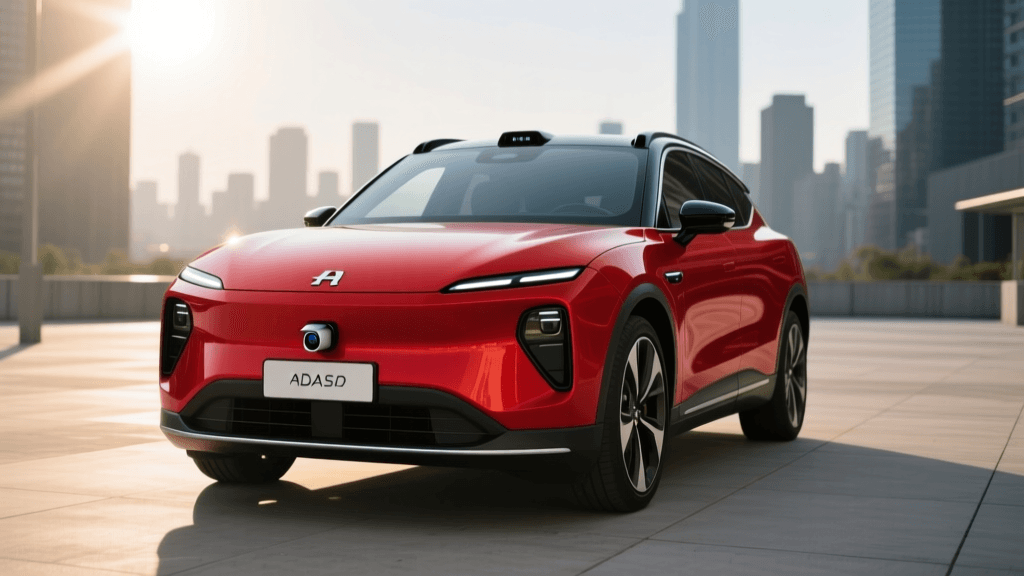
The ADAS Divide: Understanding Budget vs. Luxury Systems
When consumers cross-shop a $25,000 compact sedan and a $75,000 luxury flagship, the spec sheet might both claim to feature 'Adaptive Cruise Control' and 'Lane Keep Assist.' However, the real-world execution of these Advanced Driver Assistance Systems (ADAS) varies wildly. According to the National Highway Traffic Safety Administration (NHTSA), ADAS features are designed to enhance safety, but they are not a replacement for an attentive driver, and their capabilities depend heavily on the underlying hardware.
Budget vehicles typically rely on monocular cameras and basic single-band radar. Luxury vehicles, conversely, utilize complex sensor fusion, combining LiDAR, high-definition maps, stereo cameras, and ultrasonic sensors. When you expect luxury performance from a budget system, or when your luxury system throws a complex calibration error, troubleshooting becomes essential. This guide breaks down how to solve the most common ADAS discrepancies and hardware limitations across different vehicle tiers.
Troubleshooting Phantom Braking in Budget AEB Systems
One of the most frustrating issues for owners of budget and mainstream vehicles (such as those equipped with base-level Toyota Safety Sense or Honda Sensing) is 'phantom braking.' This occurs when the Automatic Emergency Braking (AEB) system aggressively applies the brakes for no apparent obstacle.
The Root Cause
Budget AEB systems primarily rely on a single monocular camera mounted behind the rearview mirror. These cameras struggle with high-contrast lighting and depth perception. Shadows cast by highway overpasses, metallic road signs reflecting sunlight, or even dark-colored vehicles in low-light conditions can trick the image recognition software into identifying a false obstacle.
Actionable Troubleshooting Steps
- Clean the Camera Housing: A smudge or water spot on the windshield directly in front of the camera can refract light, creating 'ghost' objects. Clean the upper center of your windshield with isopropyl alcohol.
- Adjust ACC Following Distance: If phantom braking occurs while using Adaptive Cruise Control, increase the following distance setting from 'short' to 'long.' This gives the system's radar more time to differentiate between a stationary overpass shadow and a stopped vehicle.
- Check for TSBs (Technical Service Bulletins): Automakers frequently release ECU software updates to refine AEB sensitivity. Visit your dealer and ask if there are any open TSBs for your specific ADAS module.
Solving Lane Centering Oscillation (The 'Ping-Pong' Effect)
A massive point of confusion for buyers is the difference between Lane Keep Assist (LKA) and Lane Centering Assist (LCA). Budget cars usually feature LKA, which only applies steering torque when the vehicle touches the painted line. This results in the car bouncing back and forth between the lines—a phenomenon known as the 'ping-pong' effect.
The Root Cause
Mainstream systems lack the processing power and predictive mapping to continuously calculate the exact geometric center of a lane. Luxury systems (like BMW's Highway Assistant or Mercedes-Benz Active Distance Assist Distronic) use continuous micro-adjustments based on sensor fusion and road-edge detection.
Actionable Troubleshooting Steps
- Disable Aggressive Chimes: In the vehicle's infotainment settings, locate the ADAS menu and change 'Lane Departure Warning' from 'Audible/Visual' to 'Visual Only' or 'Vibration.' The constant beeping causes driver fatigue, leading many to turn the system off entirely.
- Apply Steering Wheel Weight: Budget camera systems will disengage if they do not detect hands on the wheel. Instead of constantly fighting the torque sensor, rest the weight of your forearm lightly on the lower spoke of the steering wheel to satisfy the capacitive or torque sensor without overriding the system's micro-corrections.
- Follow Tire Tracks in Poor Weather: If lane lines are obscured by snow or heavy rain, budget cameras will fail and disengage. In these scenarios, manually follow the physical tire tracks of the vehicle ahead, as the system's radar will still maintain longitudinal ACC distance even if lateral steering is disabled.
Sensor Calibration and Blockage: Luxury Car Headaches
While luxury vehicles offer vastly superior ADAS performance, they introduce a new set of troubleshooting nightmares: sensor fragility and recalibration costs. A minor fender bender or even a cracked windshield can disable a $2,000 LiDAR array or corner radar system.
The Root Cause
Luxury ADAS relies on precise alignment. A radar sensor in the front bumper must be aligned to within a fraction of a degree. If the bumper is removed for a minor scratch repair, or if an aftermarket windshield is installed with the camera mounted a millimeter off-center, the system will throw a 'Sensor Blocked' or 'Calibration Required' error.
Actionable Troubleshooting Steps
- Avoid Aftermarket Bumper Bras and Wraps: Never apply vinyl wraps, clear bras, or aftermarket bumper covers over the manufacturer's radar zones (usually marked by a flat, plastic emblem). These materials can deflect radar waves, causing the system to fail.
- Mandate OEM Windshields: If your luxury vehicle requires a windshield replacement, insist on an OEM (Original Equipment Manufacturer) glass. The Insurance Institute for Highway Safety (IIHS) notes that improper camera mounting behind the glass can severely degrade AEB and lane-keeping performance.
- Perform Dynamic Recalibration: If your system throws a calibration error after a tire rotation or suspension lift, you may need a dynamic recalibration. This involves driving the vehicle at specific speeds (usually 40-60 mph) on a well-marked highway for 15-20 minutes so the system can relearn the road geometry. Check your owner's manual for the exact drive-cycle requirements.
Comparison Chart: Budget vs. Luxury ADAS Troubleshooting
| Feature | Budget Implementation | Luxury Implementation | Common Fault | Troubleshooting Fix |
|---|---|---|---|---|
| AEB / Collision Warning | Monocular Camera + Basic Radar | Stereo Camera + Multi-Mode Radar + LiDAR | Phantom braking under bridges | Clean camera zone; update ECU via dealer TSB |
| Lane Assist | Lane Keep Assist (Reactive) | Lane Centering (Predictive/HD Maps) | Ping-pong steering oscillation | Switch to visual-only alerts; maintain light wheel pressure |
| Adaptive Cruise | Stop-and-go requires manual resume | Stop-and-go with predictive curve slowing | Harsh braking in curves | Reduce max ACC speed setting; use eco-driving modes |
| Parking Assist | Rear backup camera + 4 ultrasonic sensors | 360-degree cameras + 12 ultrasonics + automated steering | False proximity alarms in rain | Wipe bumper sensors; check for ice/salt buildup |
When to Seek Professional Recalibration
While many ADAS quirks can be solved through settings adjustments and proper cleaning, physical misalignment requires professional intervention. According to research by the AAA Foundation for Traffic Safety, even minor misalignments can drastically reduce the effectiveness of automatic emergency braking.
You must take your vehicle to a certified dealer or a specialized ADAS calibration center if:
- You experience uneven braking: If the car pulls to one side during AEB activation, the radar crosshair is misaligned.
- The system fails in clear weather: If your dashboard displays 'Radar Blocked' on a sunny, clean day, the sensor bracket may be bent.
- After suspension modifications: Lifting or lowering a vehicle changes the pitch angle of the front radar. Static recalibration using specialized targets and laser levels is required. Expect to pay between $250 and $500 for a static and dynamic recalibration service.
Understanding the hardware limitations of your specific vehicle tier is the first step in mastering your ADAS. By adjusting your expectations, maintaining your sensor zones, and utilizing the correct troubleshooting protocols, you can maximize the safety and comfort of your daily commute, whether you are driving a budget commuter or a luxury flagship.