The Automation Chasm: Beyond the Marketing Hype
When navigating the modern automotive landscape, consumers are bombarded with terms like 'self-driving,' 'autopilot,' and 'semi-autonomous.' However, beneath the marketing gloss lies a rigid engineering framework defined by the SAE International's J3016 standard. This framework categorizes driving automation from Level 0 (no automation) to Level 5 (full automation). For today's car buyers, the most critical and misunderstood boundary in this spectrum is the chasm between Level 2 (Partial Automation) and Level 3 (Conditional Automation). Understanding this divide is not just an academic exercise; it fundamentally dictates your legal liability, your required level of attention, and the underlying hardware architecture of the vehicle you are purchasing.
In this technology deep dive, we will dissect the sensor fusion requirements, Operational Design Domains (ODD), and the psychological 'handover' protocols that separate advanced driver assistance systems (ADAS) from true conditional autonomy.
Level 2: Partial Automation and the Human Fallback
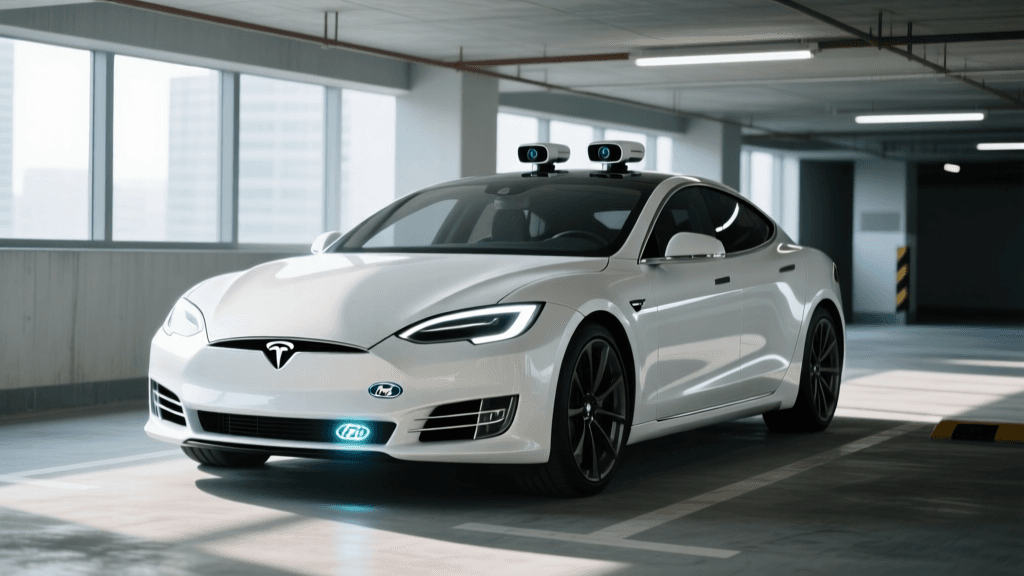
Level 2 systems, such as Tesla's Autopilot, Ford's BlueCruise, and General Motors' Super Cruise, represent the current zenith of mass-market ADAS. In a Level 2 architecture, the vehicle's automated driving system (ADS) can simultaneously control lateral (steering) and longitudinal (acceleration/braking) movements. However, the defining characteristic of Level 2 is that the human driver remains the ultimate fallback. You are not a passenger; you are a supervisor.
From a hardware perspective, Level 2 systems typically rely on a combination of forward-facing cameras, millimeter-wave radar, and ultrasonic sensors. Some systems, like Tesla's FSD (Full Self-Driving) beta, lean entirely on a vision-only neural network approach. Others utilize basic sensor fusion. Because the human is legally and practically responsible for the Dynamic Driving Task (DDT), Level 2 systems require continuous driver monitoring. According to research highlighted by the Insurance Institute for Highway Safety (IIHS), the most effective Level 2 systems employ infrared cabin cameras to track eye gaze and head position, ensuring the driver remains engaged with the road environment rather than just applying periodic torque to the steering wheel.
Key Limitation: If a Level 2 system encounters an edge case—such as a faded lane line, an overturned white truck against a bright sky, or complex construction zone cones—it will disengage. If the driver is not paying attention, a collision is imminent, and the legal liability rests entirely on the human behind the wheel.
Level 3: Conditional Automation and the Liability Shift
Level 3 represents a monumental leap in both engineering and legal philosophy. In a Level 3 system, the vehicle assumes full responsibility for the DDT and the monitoring of the driving environment, but only within a strictly defined Operational Design Domain (ODD). When the system is active within its ODD, the driver is legally permitted to take their eyes off the road and engage in secondary tasks, such as watching a movie or browsing the web on the infotainment screen. Crucially, if an accident occurs while the Level 3 system is properly engaged within its ODD, the automaker assumes liability.
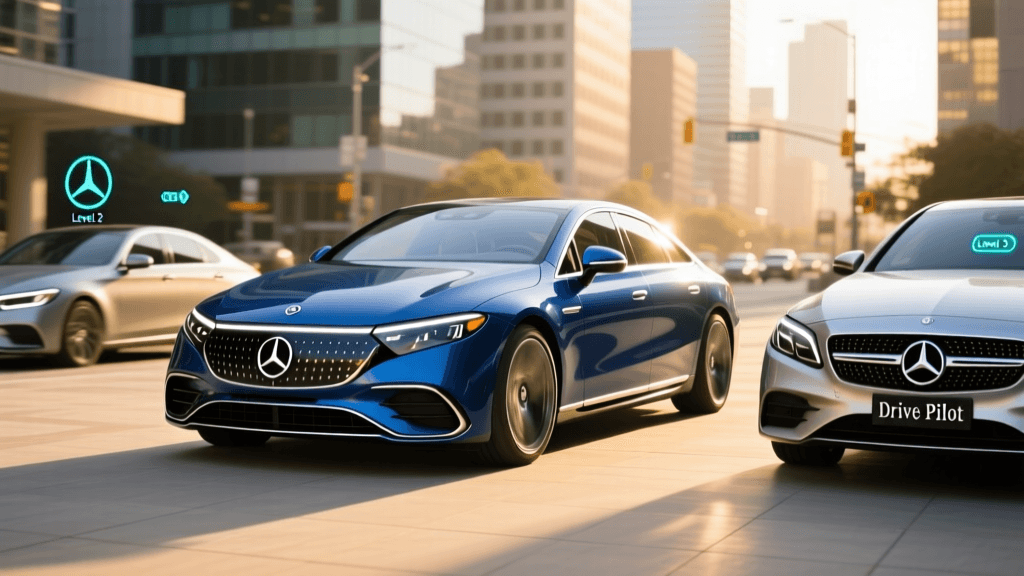
The National Highway Traffic Safety Administration (NHTSA) and global regulators require massive hardware redundancy for Level 3 approval. This is why Level 3 vehicles, such as the Mercedes-Benz S-Class equipped with Drive Pilot or the limited-edition Honda Legend, mandate the inclusion of LiDAR (Light Detection and Ranging) sensors, high-definition 3D mapping, rear-facing cameras to monitor traffic, and redundant steering and braking actuators. If the primary steering rack fails, a secondary system must instantly take over without requiring human intervention.
The ODD Constraint: Level 3 is not 'go anywhere' autonomy. Mercedes-Benz Drive Pilot, for example, is currently restricted to specific mapped highways, in heavy traffic congestion, at speeds under 40 mph (60 km/h), during daylight hours, and in clear weather. If the vehicle exits the ODD (e.g., the speed limit increases, or rain begins to fall), the system initiates a handover protocol.
Level 2 vs. Level 3: Technical Comparison Matrix
| Feature | Level 2 (Partial Automation) | Level 3 (Conditional Automation) |
|---|---|---|
| SAE Definition | System controls steering & speed; human monitors environment. | System controls all driving tasks and monitors environment within ODD. |
| Driver Attention | Eyes ON road, hands ON or near wheel (supervisory role). | Eyes OFF road permitted (secondary tasks allowed within ODD). |
| Legal Liability | Human Driver (100% responsible for accidents). | Automaker (liable if system fails within approved ODD). |
| Sensor Suite | Cameras, Radar, Ultrasonics (Vision-heavy). | LiDAR, HD Maps, Redundant Cameras/Radar, Ultrasonics. |
| System Redundancy | Minimal (system disengages, hands control to human). | High (redundant braking/steering/compute to achieve safe state). |
| Current Examples | Ford BlueCruise, GM Super Cruise, Tesla Autopilot. | Mercedes-Benz Drive Pilot, Honda Legend (Japan only). |
The 'Handover' Problem and Cognitive Offloading
The most dangerous engineering challenge in Level 3 autonomy is not the driving itself, but the 'handover' protocol. When a Level 3 vehicle approaches the boundary of its ODD—say, the traffic jam clears and speeds exceed 40 mph—the system must request the human to take back control. This is known as transitioning from a 'fallback-ready user' to an active driver.
Human factors research shows that 'cognitive offloading' severely degrades reaction times. If a driver has been watching a movie for 20 minutes, their situational awareness is near zero. When the car issues a Take-Over Request (TOR), the driver requires anywhere from 8 to 15 seconds to mentally re-engage, look at the road, assess the environment, and place their hands on the wheel. To mitigate this, Level 3 systems must provide a massive buffer of time and distance before the ODD expires. If the driver fails to respond to the TOR within the allotted window (usually 10 seconds), the Level vehicle must execute a 'Minimum Risk Maneuver' (MRM)—typically activating the hazard lights, safely braking to a complete stop in the current lane or on the shoulder, and unlocking the doors while automatically calling emergency services.
Actionable Buyer Advice: Do You Need Level 3?
As Level 3 systems slowly roll out to markets like Nevada, California, and parts of Europe, buyers must weigh the immense cost against practical utility. Here is what you need to consider before checking the box for conditional autonomy:
- Analyze Your Commute: Level 3 is currently optimized for highway traffic jams. If your daily commute consists of stop-and-go highway traffic under 40 mph, Mercedes' Drive Pilot could genuinely transform your morning routine, allowing you to answer emails or read the news safely. However, if you drive on rural roads, in heavy rain, or at high speeds on open interstates, the system will remain dormant, and you will be relegated to using standard Level 2 ADAS.
- Evaluate the Cost of Entry: The hardware required for Level 3 is astronomically expensive. The LiDAR units, redundant compute modules, and HD mapping subscriptions push the cost of these packages well over $5,000, with some manufacturers exploring annual subscription models to cover the continuous mapping updates and liability insurance premiums.
- Insurance Implications: While the automaker assumes liability during Level 3 operation, proving whether the system was engaged within the ODD at the exact millisecond of an incident requires forensic data retrieval from the vehicle's Event Data Recorder (EDR). Ensure your insurance provider understands the nuances of ADS liability in your specific jurisdiction.
- The Level 2+ Alternative: For 95% of buyers, a high-end Level 2 system equipped with robust Driver Monitoring Systems (like GM's Super Cruise or Ford's BlueCruise) offers the best balance of cost and utility. These systems allow for hands-free driving on thousands of miles of pre-mapped highways, drastically reducing fatigue, while keeping the legal and cognitive framework simple: you are always the captain of the ship.
Conclusion
The transition from Level 2 to Level 3 is not merely a software update; it is a fundamental rewriting of the social and legal contract between human and machine. Level 2 demands your constant vigilance in exchange for physical relief from the monotony of steering and braking. Level 3 offers the gift of time, but only within a highly restricted, heavily mapped, and sensor-dense operational cage. As LiDAR costs decrease and HD mapping expands, the ODD for Level 3 will grow. Until then, understanding the exact boundaries of your vehicle's automation is the most critical safety feature you can possess.