The Hidden Dangers of Night Driving
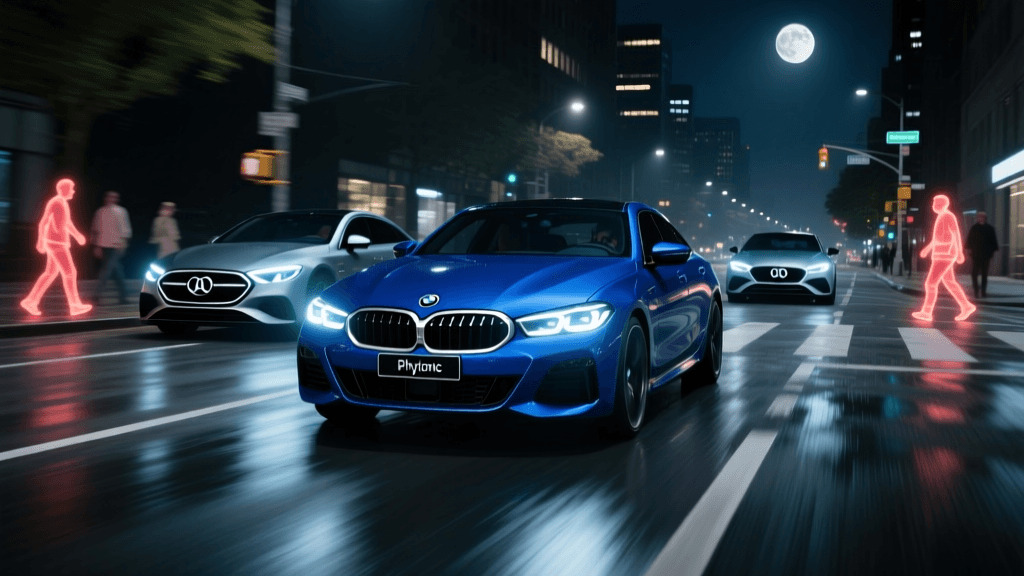
Driving after dark presents a unique set of hazards that standard headlights and basic Automatic Emergency Braking (AEB) systems often struggle to mitigate. According to the National Highway Traffic Safety Administration (NHTSA), the vast majority of pedestrian fatalities occur in dark or low-light conditions. When human eyes fail to detect a pedestrian wearing dark clothing on an unlit rural road, advanced driver assistance systems (ADAS) must step in. This is where dedicated Night Vision and Pedestrian Detection systems become critical.
However, not all night vision systems are created equal. While standard cameras rely on visible light, true night vision utilizes infrared technology to see beyond the reach of your high beams. In this head-to-head showdown, we compare the three luxury titans of thermal imaging and pedestrian detection: BMW, Mercedes-Benz, and Audi. We will break down their technology, real-world performance, system costs, and limitations to help you decide which ADAS suite offers the best nighttime protection.
The Technology: Thermal (FIR) vs. Active Infrared (NIR)
Before diving into the brands, it is vital to understand the underlying technology. There are two primary types of automotive night vision:
- Far Infrared (FIR) / Thermal Imaging: This passive system detects heat signatures emitted by objects. It does not require an infrared light source. FIR is exceptionally good at detecting living things (pedestrians, cyclists, and large animals) because their body heat contrasts sharply with the cooler background environment.
- Near Infrared (NIR) / Active Illumination: This active system uses an infrared headlight or spotlight to illuminate the road with light invisible to the human eye. A specialized camera then captures the reflected light. While it provides a high-resolution, black-and-white image of the road, it struggles more with heat differentiation and can be blinded by oncoming IR sources or heavy rain.
The Insurance Institute for Highway Safety (IIHS) notes that pedestrian detection systems perform significantly better when they can accurately distinguish human silhouettes from background clutter, which is why thermal FIR technology is generally preferred for biological detection.
Contender 1: BMW Night Vision with Dynamic Light Spot
BMW utilizes a Far Infrared (FIR) thermal camera mounted discreetly behind the front kidney grille. The system scans the road up to 300 meters ahead, well beyond the range of the vehicle's high beams.
How It Detects and Warns
When the system identifies a pedestrian or large animal, it displays a thermal image on the central iDrive screen or the digital instrument cluster. The detected subject is highlighted with a yellow box. If the system calculates a collision risk, the box turns red, an audible warning chimes, and the 'Dynamic Light Spot' feature activates. This uses a targeted LED spotlight to physically flash the pedestrian, warning them of the approaching vehicle without blinding oncoming traffic.
Costs and Packaging
BMW's Night Vision is typically bundled in the Executive Package or as a standalone option, costing approximately $2,600. It integrates seamlessly with BMW's Active Protection System to pre-tension seatbelts and prep the brakes if a nighttime collision is deemed imminent.
Contender 2: Mercedes-Benz Night View Assist Plus
Mercedes-Benz has historically relied on Near Infrared (NIR) technology but has evolved its Night View Assist Plus to include specialized pedestrian and animal recognition algorithms. The system uses an IR spotlight integrated into the headlamp cluster and a specialized camera mounted near the rearview mirror.
How It Detects and Warns
Mercedes projects the night vision feed directly into the primary digital instrument cluster, temporarily replacing the speedometer when a hazard is detected in darkness. Pedestrians are highlighted with a red bounding box. If the system determines the pedestrian is in the vehicle's path, it emits a loud warning tone and can initiate autonomous braking. Unlike BMW's targeted spotlight flash, Mercedes relies heavily on the dashboard visual warning and the vehicle's standard AEB intervention.
Costs and Packaging
Night View Assist Plus is usually found in the Driver Assistance Package Plus, adding roughly $2,500 to the vehicle's bottom line. While the NIR image is incredibly crisp and resembles a daytime video feed, it is slightly less effective than thermal imaging at detecting pedestrians partially obscured by cold foliage.
Contender 3: Audi Night Vision Assistant
Audi employs a highly advanced Far Infrared (FIR) thermal camera located in the single-frame grille. Like BMW, it relies on heat signatures, making it incredibly effective at picking up human body heat against cold asphalt or snow.
How It Detects and Warns
Audi's system displays the thermal feed in the Virtual Cockpit. Detected pedestrians are marked with yellow boxes. If the pedestrian steps into the vehicle's projected path, the box turns red. The standout feature is Audi's integration with its Matrix LED headlights. The system will rapidly flash the specific LED segment directed at the pedestrian, illuminating them in visible light to warn them, while simultaneously keeping the rest of the high beam active for the driver.
Costs and Packaging
Audi's Night Vision Assistant is generally part of the Executive or Prestige packages, costing around $2,500 to $3,000 depending on the model year and trim.
Head-to-Head Comparison Chart
| Feature | BMW Night Vision | Mercedes Night View Assist Plus | Audi Night Vision Assistant |
|---|---|---|---|
| Sensor Type | Far Infrared (Thermal) | Near Infrared (Active IR) | Far Infrared (Thermal) |
| Max Detection Range | ~300 Meters | ~250 Meters | ~300 Meters |
| Dash Display | Central Screen / Cluster | Primary Instrument Cluster | Virtual Cockpit |
| Pedestrian Highlight | Yellow to Red Box | Red Silhouette Outline | Yellow to Red Box |
| Active Warning | Dynamic Light Spot (Flash) | Audible Alarm + AEB Prep | Matrix LED Flash |
| Estimated Cost | ~$2,600 | ~$2,500 | ~$2,500 - $3,000 |
Real-World Limitations You Must Know
While these systems are engineering marvels, they are not infallible. Understanding their limitations is crucial for safe driving:
- Weather Interference: Heavy rain, dense fog, and snow can scatter infrared light and block thermal signatures. In torrential downpours, both FIR and NIR systems may temporarily disable themselves and alert the driver.
- Sensor Obscuration: The thermal cameras are mounted low in the front grille to maintain an unobstructed view of the road. This makes them highly susceptible to mud, slush, and bug splatter. Audi and BMW include dedicated high-pressure washer nozzles for the IR camera, but you must ensure the sensor is clean before a long night drive.
- Temperature Extremes: Thermal cameras rely on a temperature differential. On extremely hot summer nights (above 95°F), the ambient temperature of the road and environment may closely match human body temperature, reducing the system's contrast and detection range.
- Stationary Objects: These systems are specifically tuned to detect the biological heat signatures and movement patterns of pedestrians and large animals. They will not highlight fallen trees, debris, or stalled vehicles without heat signatures.
The Verdict: Which System Wins?
When comparing the luxury heavyweights, BMW and Audi take the top spots due to their use of Far Infrared (thermal) technology. Thermal imaging is inherently superior for detecting living, breathing hazards because it does not rely on reflected light, making it far more reliable in pitch-black conditions and against complex backgrounds.
Between the two, Audi's Night Vision Assistant edges out the win for its seamless integration with the Matrix LED headlights. The ability to instantly flash a specific pedestrian with visible light without blinding oncoming drivers is a masterclass in ADAS integration. BMW is a very close second, offering excellent range and a highly reliable Dynamic Light Spot system.
Mercedes-Benz offers a fantastic, high-resolution NIR system, but active near-infrared illumination simply cannot match the biological contrast provided by thermal sensors when a pedestrian is partially hidden by shadows or foliage.
Actionable Buying Advice
Is a $2,500+ night vision package worth the investment? If your daily commute involves poorly lit rural roads, suburban areas with heavy deer populations, or unlit highways where pedestrians may walk on the shoulder, the answer is an absolute yes. The system acts as a vital second set of eyes that can see through the darkness long before your high beams can. However, if you strictly drive in well-lit urban environments, standard AEB and high-beam assist systems are sufficient, and you can save your money for other ADAS upgrades.