The ADAS Identity Crisis: Reactive vs. Proactive Steering
As advanced driver assistance systems (ADAS) become standard equipment on everything from entry-level hybrids to premium electric vehicles, a dangerous terminology gap has emerged between automakers and consumers. The most frequently confused technologies are Lane Keep Assist (LKA) and Lane Centering Assist (LCA). While both systems utilize forward-facing cameras to monitor lane markings, their underlying algorithms, steering torque outputs, and operational philosophies are fundamentally different.
From a data-driven perspective, conflating these two systems is not just a semantic error; it is a safety hazard. Telemetry data and empirical testing reveal that LKA is a reactive boundary guard, while LCA is a proactive co-pilot. This analysis breaks down the engineering specifications, SAE automation levels, and real-world performance metrics that separate these two critical ADAS features.
Defining the Baseline: SAE Automation Levels
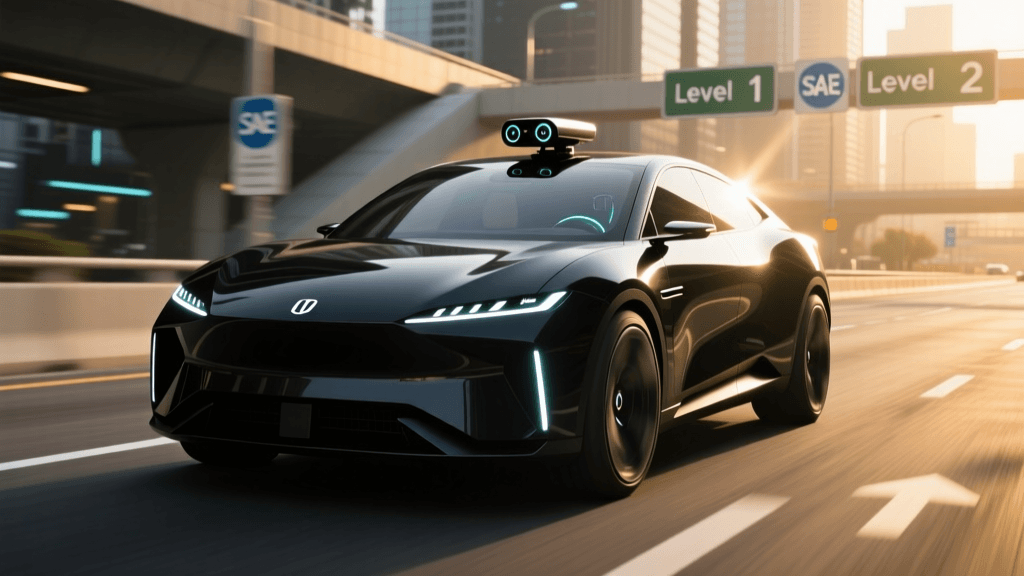
To understand the functional divide between LKA and LCA, we must first look at the taxonomy established by SAE International. According to the SAE J3016 standard, vehicle automation is categorized from Level 0 (no automation) to Level 5 (full automation).
Lane Keep Assist operates strictly as a Level 1 system. It provides intermittent lateral support only when the vehicle is about to depart the lane. The driver remains 100% responsible for continuous steering.
Lane Centering Assist, when paired with Adaptive Cruise Control (ACC), elevates the vehicle to Level 2 partial automation. It provides continuous lateral and longitudinal control, though the driver must maintain supervisory oversight. The data distinction here is binary: LKA intervenes only upon failure (lane departure), whereas LCA operates continuously to prevent failure.
Data Comparison Matrix: LKA vs. LCA
The following table outlines the core engineering and operational differences based on OEM telemetry and independent testing parameters.
| Metric | Lane Keep Assist (LKA) | Lane Centering Assist (LCA) |
|---|---|---|
| SAE Automation Level | Level 1 (Lateral Warning/Nudge) | Level 2 (Continuous Lateral Control) |
| Activation Trigger | Tire crosses lane marking by 10-15 cm | Continuous (activates upon system engagement) |
| Steering Torque Limit | Capped (typically 3 to 5 Nm) | Variable (up to 15+ Nm for curve negotiation) |
| Algorithm Type | Reactive (Threshold-based) | Predictive (Path-planning & Sensor Fusion) |
| Minimum Curve Radius | N/A (Does not negotiate curves) | 250m - 500m (Standard) / <50m (HD Map) |
| Driver Override Feel | Mild resistance, easily overpowered | Firm resistance, requires deliberate torque |
Lane Keep Assist (LKA): The Physics of the Reactive Nudge
Lane Keep Assist is designed as a failsafe against unintentional lane departures, often caused by driver distraction or fatigue. The system relies on a monocular or stereo camera mounted near the rearview mirror to detect high-contrast lane markings.
Activation Thresholds and Torque Limits
Data from automotive engineering benchmarks shows that LKA systems typically wait until the vehicle's tire crosses the painted lane line by approximately 10 to 15 centimeters before applying steering torque. This deliberate delay prevents the system from "fighting" the driver during normal, intentional lane changes or when hugging the edge of a narrow road.
When LKA does activate, the steering rack applies a brief, localized torque pulse. This pulse is strictly capped by OEM engineers—usually between 3 and 5 Newton-meters (Nm). This low torque threshold ensures that the driver can effortlessly override the system with a single hand. However, this data point also highlights LKA's primary limitation: it cannot physically steer the vehicle through a curve. If a driver attempts to use LKA to navigate a bend, the system will simply allow the car to drift into the adjacent lane before applying a corrective nudge, resulting in a dangerous and uncomfortable "ping-pong" effect between lane lines.
Lane Centering Assist (LCA): Predictive Path Planning
Lane Centering Assist represents a generational leap in ADAS software. Rather than waiting for a boundary violation, LCA uses continuous micro-adjustments to keep the vehicle's center of mass aligned with the geometric center of the lane.
Sensor Fusion and Curve Negotiation
While basic LCA systems rely solely on camera vision, advanced implementations (such as GM's Super Cruise or Ford's BlueCruise) utilize sensor fusion, combining camera data with LiDAR-mapped HD road networks and GPS telemetry. This data-driven approach allows the vehicle to anticipate the road geometry before the camera can even see the curve.
Standard camera-only LCA systems can typically negotiate highway curves with a radius down to 250 or 300 meters. If the curve is tighter, the system will issue a visual and auditory warning, prompting the driver to take over. Conversely, HD-mapped LCA systems possess the spatial data required to safely navigate curves with radii as tight as 50 meters at highway speeds, applying up to 15 Nm or more of continuous steering torque to maintain the trajectory.
Real-World Performance and Safety Data
Independent testing organizations have extensively evaluated how these systems perform outside the controlled environment of the proving ground. According to research highlighted by the Insurance Institute for Highway Safety (IIHS), the misuse of partial automation systems (LCA) and the over-reliance on warning systems (LKA) remain significant safety variables.
Furthermore, data from the National Highway Traffic Safety Administration (NHTSA) emphasizes that environmental factors severely degrade ADAS performance. Empirical tests show that heavy rain, sun glare directly into the camera lens, and faded lane markings can reduce LCA tracking confidence by over 60%, leading to sudden system disengagement. LKA is similarly vulnerable; if the camera cannot detect the painted line due to snow cover or asphalt wear, the reactive system is rendered completely inert.
Analyst Note: The data clearly indicates that neither LKA nor LCA can replace human situational awareness. LCA reduces highway fatigue by managing micro-steering tasks, but it requires rigorous driver monitoring to prevent automation complacency.
Actionable Buyer's Guide: Identifying Your System
Because automakers use highly fragmented marketing terminology, identifying whether a vehicle has LKA or LCA requires looking past the brochure and into the software menu. Here is a data-driven guide to decoding brand-specific ADAS packages:
- Toyota (Toyota Safety Sense): "Lane Departure Alert with Steering Assist" is LKA. "Lane Tracing Assist" (LTA) is LCA (requires Dynamic Radar Cruise Control to be active).
- Honda (Honda Sensing): "Road Departure Mitigation" and "Lane Keeping Assist System" (LKAS) function as LKA with mild centering tendencies, but true hands-on LCA is found in their newer "Traffic Jam Assist" packages.
- Tesla (Autopilot): Basic Autopilot includes "Autosteer," which is a highly aggressive, vision-based LCA system. It does not use LKA boundary-nudging.
- Hyundai/Kia (Highway Driving Assist): "Lane Following Assist" (LFA) is LCA. "Lane Keeping Assist" (LKA) is the reactive boundary system.
- GM (Super Cruise / Ultra Cruise): These are advanced, eyes-off/eyes-on LCA systems utilizing LiDAR and HD maps, far exceeding standard camera-based centering capabilities.
Conclusion: Specifying the Right ADAS for Your Drive
When evaluating a new EV or hybrid, understanding the telemetry and operational limits of LKA versus LCA is paramount. If your daily commute involves stop-and-go highway traffic and long, sweeping interstates, a vehicle equipped with robust Lane Centering Assist (Level 2) will significantly reduce cognitive load and steering fatigue. However, if you primarily drive on rural, poorly marked roads or in regions with heavy winter snowfall, relying on a sophisticated Lane Keep Assist (Level 1) system paired with your own active steering may yield fewer false disengagements and a more predictable driving experience. Always consult the vehicle's specific ADAS telemetry capabilities, rather than relying on generalized marketing terminology, to ensure the technology matches your real-world driving environment.