The Illusion of Autonomy: Marketing vs. Reality
In the modern automotive landscape, the terminology surrounding advanced driver assistance systems (ADAS) is often clouded by aggressive marketing. Automakers frequently use terms like "Full Self-Driving," "ProPILOT," or "Autopilot" to describe systems that still require constant human supervision. For consumers and automotive enthusiasts alike, understanding the true technological boundary between partial automation and conditional automation is critical. This deep dive explores the engineering, sensor architectures, and legal frameworks that separate Level 2 and Level 3 semi-autonomous driving systems.
Understanding the SAE Automation Framework
To accurately compare these systems, we must rely on the SAE International J3016 standard, the globally recognized framework for defining driving automation levels from 0 (no automation) to 5 (full automation). The leap from Level 2 to Level 3 is not merely a software update; it represents a fundamental shift in vehicle architecture, sensor redundancy, and legal liability. While Level 2 systems assist the driver, Level 3 systems actually replace the driver under specific conditions.
Level 2 ADAS: The Current Industry Standard
Level 2 automation, categorized as "Partial Driving Automation," is currently the ceiling for most mainstream vehicles. Systems like Tesla Autopilot, Ford BlueCruise, and GM Super Cruise fall into this category. In a Level 2 system, the vehicle can simultaneously control steering (lateral) and acceleration/braking (longitudinal). However, the SAE standard dictates that the human driver must continuously monitor the environment and remain prepared to take over immediately.
The Role of Driver Monitoring Systems (DMS)
Because human complacency is a significant risk with Level 2 systems, automakers have integrated sophisticated Driver Monitoring Systems. According to research highlighted by the Insurance Institute for Highway Safety (IIHS), systems that utilize infrared cameras to track eye gaze and head position are vastly superior to simple torque-sensing steering wheels. Vehicles like the Cadillac CT5 with Super Cruise use cabin-facing cameras to ensure the driver's eyes remain on the road, issuing escalating visual, audible, and haptic warnings if attention drifts. Despite these safeguards, the legal and operational burden of situational awareness remains entirely on the human.
Level 3 Autonomy: The Paradigm Shift
Level 3, or "Conditional Driving Automation," marks the threshold where the vehicle becomes the primary driver. In this scenario, the automated system performs all aspects of the dynamic driving task, provided the vehicle is operating within its strictly defined Operational Design Domain (ODD). The ODD includes specific parameters such as mapped divided highways, speeds under 40 mph (in traffic jam chauffeur applications), and favorable weather conditions.
Mercedes-Benz DRIVE PILOT: A Level 3 Pioneer
The most prominent example of Level 3 technology available to consumers is the Mercedes-Benz DRIVE PILOT system. Approved for use in specific jurisdictions like Nevada and California, DRIVE PILOT allows the driver to legally take their eyes off the road and engage with the vehicle's central infotainment screen while in heavy highway traffic. The critical distinction here is the "handover protocol." If the vehicle approaches the edge of its ODD—such as a complex construction zone or an impending speed limit increase—the system issues a takeover request. The driver is typically given 10 seconds to re-engage and assume full control.
Technical Deep Dive: Sensors and Compute Architecture
The engineering gap between Level 2 and Level 3 is defined by hardware redundancy and sensor fusion. A Level 2 system can often function with a vision-heavy approach (relying primarily on cameras and basic radar). Level 3 requires a multi-modal sensor suite to guarantee safety without human oversight.
- LiDAR Integration: Level 3 systems almost universally rely on Light Detection and Ranging (LiDAR) sensors. LiDAR generates a precise, real-time 3D point cloud of the vehicle's surroundings, unaffected by glare, shadows, or sudden changes in lighting that can blind optical cameras.
- High-Definition Mapping: Unlike Level 2 systems that read the road in real-time, Level 3 systems localize the vehicle within a pre-mapped, centimeter-accurate HD map. This provides the vehicle with foresight regarding road curvature, lane widths, and upcoming exits.
- Actuator Redundancy: If a Level 2 system experiences a critical failure, it will disengage and alert the driver to take over. A Level 3 system cannot rely on the driver for immediate fallback. Therefore, Level 3 architectures require redundant steering motors, dual-braking circuits, and secondary power supplies to safely execute a "minimal risk maneuver" (such as pulling over to the shoulder and activating hazard lights) if a primary component fails.
The Liability Shift: Who Pays in a Crash?
Perhaps the most profound difference between Level 2 and Level 3 is legal liability. The National Highway Traffic Safety Administration (NHTSA) and global regulatory bodies have established clear precedents regarding automation and fault. In a Level 2 vehicle, if a crash occurs while the system is engaged, the driver is legally liable because they failed in their duty to supervise the vehicle. In a certified Level 3 vehicle, when the system is actively engaged within its approved ODD, the automaker assumes legal liability for the vehicle's actions. This shift in liability is precisely why automakers are incredibly cautious about deploying Level 3 technology, limiting it to highly constrained environments where the risk of edge-case failures is minimized.
Comparison Chart: Level 2 vs. Level 3
| Feature | Level 2 (Partial Automation) | Level 3 (Conditional Automation) |
|---|---|---|
| Steering & Acceleration | System controls both simultaneously | System controls both simultaneously |
| Environmental Monitoring | Human driver (system assists) | Automated system (within ODD) |
| Driver Attention Required | Constant supervision mandatory | Eyes off-road permitted (within ODD) |
| Fallback in System Failure | Driver must take over immediately | System executes minimal risk maneuver |
| Legal Liability (When Engaged) | Human Driver | Automaker / System |
| Primary Sensor Suite | Cameras, Ultrasonic, Basic Radar | LiDAR, HD Radar, Cameras, HD Maps |
| Current Examples | Tesla Autopilot, GM Super Cruise | Mercedes DRIVE PILOT, Honda Legend |
What Buyers Need to Know Before Upgrading
If you are shopping for a vehicle with advanced semi-autonomous capabilities, it is vital to look past the dealership brochures and understand the hardware you are actually purchasing.
1. Identify the Sensor Hardware
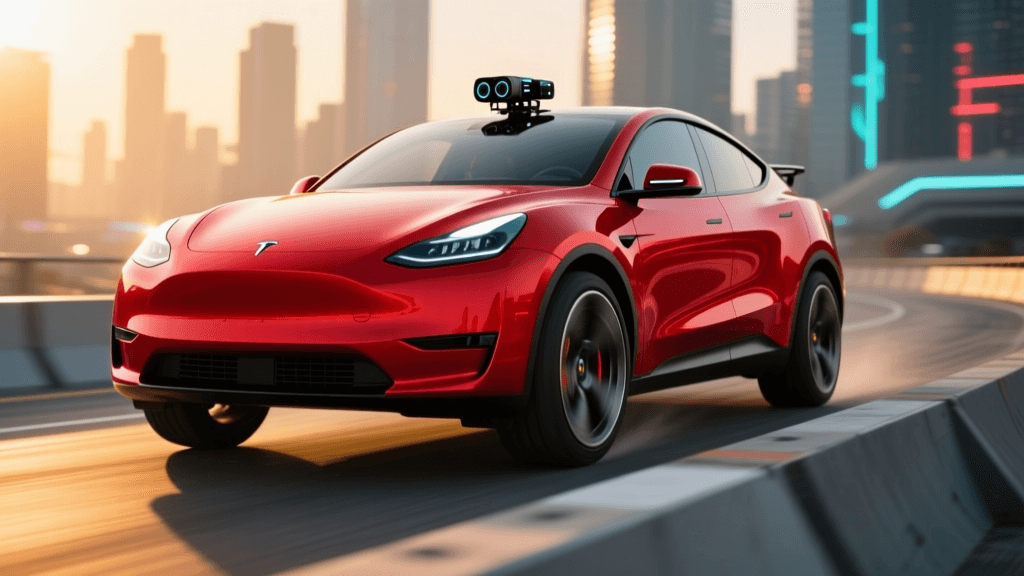
Look for physical LiDAR sensors, often housed in the front grille, roofline, or side mirrors. If a vehicle relies solely on cameras and standard radar, it is strictly a Level 2 system, regardless of what the marketing department calls it. True Level 3 systems require the computational overhead and spatial awareness that only LiDAR and redundant hardware can provide.
2. Understand the Operational Design Domain (ODD)
Level 3 is not a "go anywhere" technology. Before purchasing, read the owner's manual to understand the exact ODD. Ask yourself: Does the system work on my local highways? Is it limited to speeds under 40 mph? Does it deactivate in rain or fog? A Level 3 system that only operates in stop-and-go traffic on specific mapped freeways may not align with your daily driving needs.
3. Evaluate the Cost of Repairs
The sensor fusion required for Level 3 autonomy is incredibly expensive. A single LiDAR unit or specialized HD radar array can cost thousands of dollars to replace. Furthermore, minor fender benders that damage a bumper housing these sensors will result in exorbitant repair bills and require precise recalibration by certified technicians. Always factor in the potential insurance premiums and out-of-pocket repair costs associated with high-end ADAS hardware.
Conclusion
The transition from Level 2 to Level 3 autonomous driving is the most significant hurdle in the history of the automotive industry. It requires moving from a paradigm of human supervision with machine assistance, to machine execution with human fallback. While Level 2 systems like GM's Super Cruise offer incredible convenience for long highway stretches, they demand your unwavering attention. Level 3 systems like Mercedes-Benz DRIVE PILOT offer a genuine glimpse into the future of mobility—reclaiming your time and shifting the burden of liability—but they are currently constrained by strict geographical, meteorological, and financial limitations. As sensor costs decrease and HD mapping expands, the bridge between these two levels will continue to narrow, but for now, understanding the technical and legal chasm between them is essential for the modern car buyer.