The Engineering Divide: Reactive Safety vs. Proactive Convenience
In the rapidly evolving landscape of Advanced Driver Assistance Systems (ADAS), consumers and automotive journalists frequently conflate Lane Keep Assist (LKA) with Lane Centering Assist (LCA). While both systems manipulate the vehicle's Electric Power Steering (EPS) rack to influence lateral movement, their underlying algorithms, sensor dependencies, and operational philosophies are vastly different. From a data-driven perspective, treating these two features as interchangeable is a fundamental misunderstanding of SAE International autonomy levels. LKA is strictly a reactive safety net designed to prevent catastrophic lane departures, whereas LCA is a proactive convenience feature engineered to reduce driver fatigue on long highway journeys.
As electric vehicles and smart driving platforms increasingly rely on software-defined architectures, understanding the telemetry and hardware requirements of these systems is crucial for buyers. This analysis breaks down the exact sensor fusion requirements, steering torque profiles, and safety statistics that separate basic lane-keeping from advanced lane-centering.
Data Table: Lane Keep Assist vs. Lane Centering at a Glance
The following matrix highlights the core engineering and operational differences between LKA and LCA systems based on current OEM specifications and SAE J3016 definitions.
| Metric / Feature | Lane Keep Assist (LKA) | Lane Centering Assist (LCA) |
|---|---|---|
| Primary Objective | Prevent unintentional lane departure (Safety) | Maintain equidistant position in lane (Convenience) |
| SAE Autonomy Level | Level 1 (Driver Support) | Level 2 (Partial Automation) |
| Intervention Trigger | Reactive (Tire touches or crosses lane line) | Proactive (Continuous lateral position monitoring) |
| Steering Torque Profile | High-torque, sudden pulse (2.5 - 4.5 Nm) | Low-torque, continuous micro-adjustments (0.2 - 0.8 Nm) |
| Primary Sensor Reliance | Monocular or Stereo Forward Camera | Sensor Fusion (Camera + Radar + LiDAR/HD Maps) |
| Control Loop Frequency | Lower sampling rate (e.g., 20 - 50 Hz) | High-frequency continuous loop (100+ Hz) |
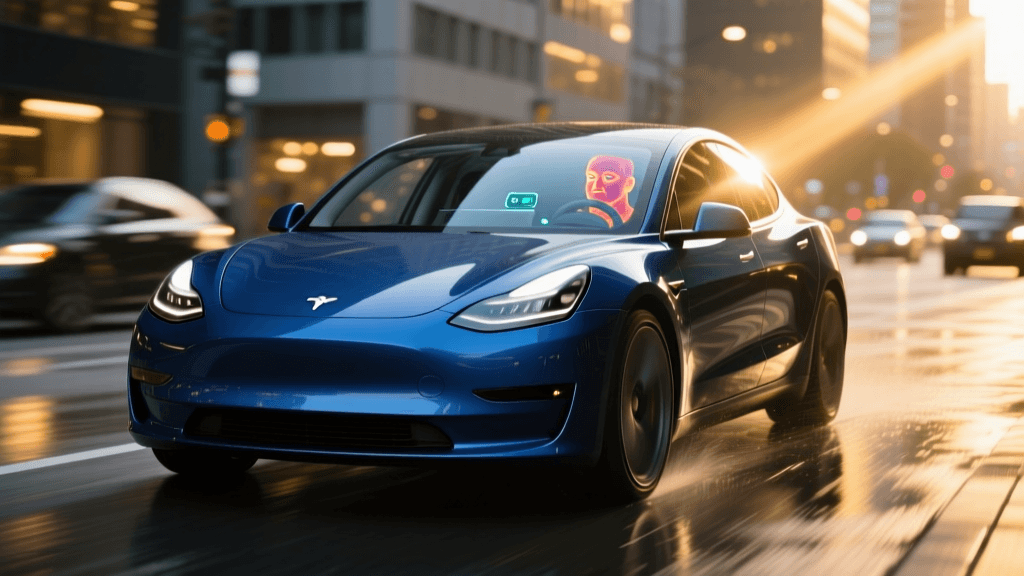
| Driver Monitoring System | Basic (Torque sensor on steering wheel) | Advanced (Infrared eye-tracking + capacitive sensors) |
| Performance in Faded Lines | Fails or disengages completely | Maintains path via map data or AI predictive modeling |
Steering Torque and EPS Rack Telemetry Analysis
The most tangible difference for the driver lies in the steering torque data transmitted to the Electric Power Steering (EPS) rack. Lane Keep Assist operates on a binary threshold logic. The system's forward-facing camera detects the lane boundary, and the software waits until the vehicle's calculated trajectory intersects with that boundary. At the moment of intersection, the EPS receives a command to apply a sudden, high-torque corrective pulse. Data from OEM engineering tests show these LKA pulses typically range between 2.5 and 4.5 Newton-meters (Nm) of force. This abrupt intervention is designed to be highly noticeable, serving as a haptic warning to a potentially distracted driver.
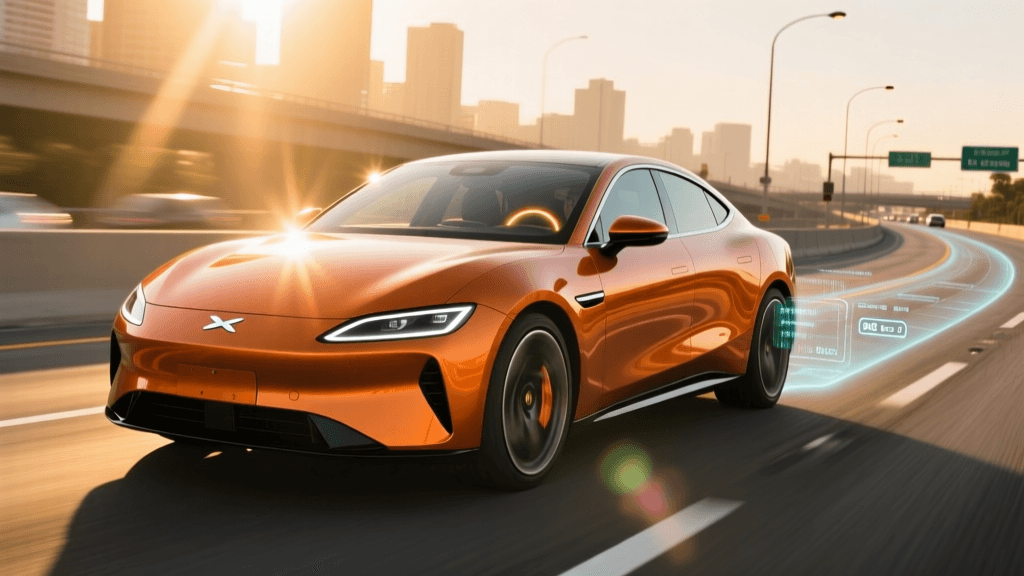
Conversely, Lane Centering Assist utilizes a continuous proportional-integral-derivative (PID) controller or advanced neural network path-planning algorithm. The system calculates the exact geometric center of the lane and continuously compares the vehicle's yaw rate and lateral offset against this ideal path. Because LCA makes corrections before the vehicle ever drifts toward the line, the EPS receives a constant stream of micro-adjustments. These adjustments typically apply less than 0.8 Nm of torque at any given millisecond, resulting in a smooth, almost imperceptible steering feel that mimics a professional human driver.
Sensor Fusion: Monocular Cameras vs. Multi-Modal Arrays
The hardware required to execute these steering commands dictates the cost and capability of the ADAS suite. Lane Keep Assist relies almost exclusively on a single forward-facing monocular camera (or a stereo camera pair) mounted behind the rearview mirror. These cameras operate at standard frame rates (30 to 60 frames per second) and utilize basic computer vision algorithms, such as the Hough Line Transform or entry-level convolutional neural networks (CNNs), to identify high-contrast white and yellow paint on the asphalt. If the paint fades, or if the sun creates a glare that washes out the camera sensor, LKA simply disengages.
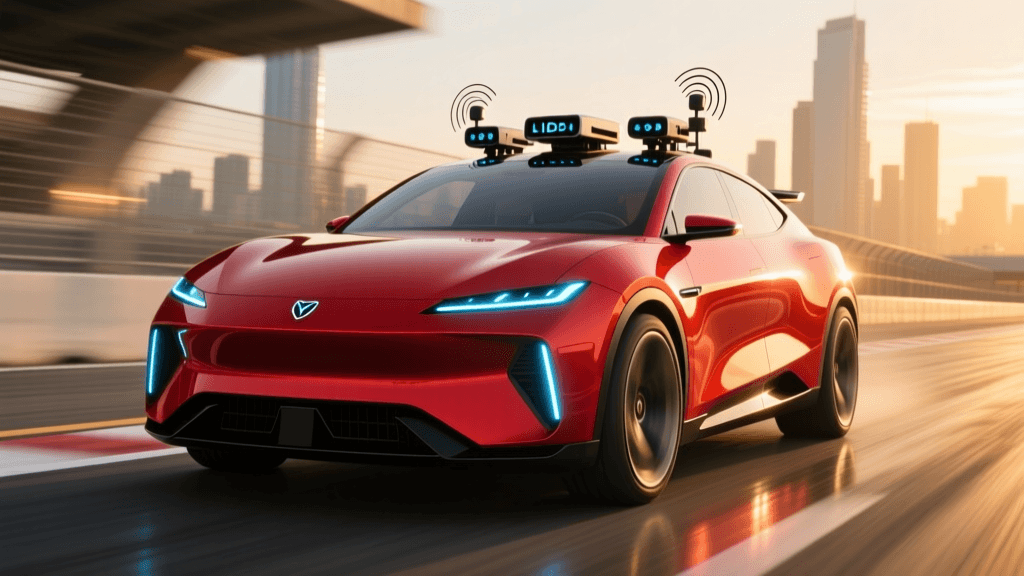
Lane Centering Assist, however, demands a multi-modal sensor fusion approach. While cameras are still used to read lane markings, LCA systems cross-reference this visual data with radar returns from guardrails and adjacent vehicles, high-definition GPS coordinates, and in premium implementations, LiDAR point clouds. For example, systems that utilize HD mapping can maintain perfect lane centering even in a complete whiteout snowstorm where camera vision is reduced to zero. The processing power required for this fusion is exponentially higher, necessitating advanced System-on-Chip (SoC) hardware like the NVIDIA DRIVE Orin or Qualcomm Snapdragon Ride platforms, which can process hundreds of tera operations per second (TOPS) to maintain the 100+ Hz control loops required for smooth centering.
Brand Implementation Analysis: How OEMs Bridge the Gap
Automakers market these features under various trademarked names, which further muddies the waters for consumers. Analyzing the data behind the marketing reveals distinct approaches to lateral control:
- Toyota Safety Sense (TSS 3.0): Toyota utilizes Lane Tracing Assist (LTA), which functions as an LCA system when paired with Dynamic Radar Cruise Control. However, when operating independently at lower speeds or without cruise control engaged, the system defaults to a reactive Lane Departure Alert with Steering Assist (LKA).
- General Motors (Super Cruise): GM's Super Cruise is a pure, highly advanced LCA system. By restricting the system's operational design domain (ODD) to LiDAR-mapped divided highways, GM achieves sub-decimeter lateral accuracy. The system relies heavily on an infrared Driver Monitoring System (DMS) to ensure the driver's eyes remain on the road, mitigating the risks of automation complacency.
- Tesla (Autopilot / FSD): Tesla relies entirely on a vision-only neural network approach for its LCA. By training its AI on billions of miles of driving data, Tesla's system attempts to predict the "drivable space" and lane center even when physical paint is entirely absent. While innovative, this approach has historically resulted in higher variance in steering torque smoothness compared to LiDAR-assisted systems.
- Ford (BlueCruise): Similar to GM, Ford's BlueCruise operates as a Level 2 LCA system on pre-qualified sections of divided highways. Ford's telemetry data emphasizes the integration of a driver-facing camera to monitor eye gaze, ensuring that the proactive steering is only utilized when the human supervisor is verified to be attentive.
Safety Data, Crash Reduction, and Regulatory Frameworks
When evaluating the real-world efficacy of these systems, we must look at crash statistics and regulatory testing protocols. According to extensive research compiled by the Insurance Institute for Highway Safety (IIHS), lane departure warning and reactive Lane Keep Assist systems have been shown to reduce single-vehicle, sideswipe, and head-on crashes by approximately 11%, and reduce injuries from these crashes by 21%. This data validates LKA as a highly effective, life-saving safety net that intervenes precisely when human attention fails.
However, the introduction of proactive Lane Centering Assist introduces the psychological phenomenon of automation complacency. Because LCA drives the car smoothly down the center of the lane, drivers are statistically more likely to disengage from the driving task, look at their phones, or experience cognitive tunneling. Recognizing this danger, the National Highway Traffic Safety Administration (NHTSA) and European regulatory bodies (via UN ECE R79) have established strict guidelines governing lateral steering assistance. Regulations dictate the maximum allowable sustained steering force an automated system can apply before requiring driver confirmation, and heavily mandate the integration of robust Driver Monitoring Systems for any vehicle offering hands-free or low-torque LCA capabilities.
Furthermore, safety testing organizations like Euro NCAP and the IIHS have updated their assessment protocols. While LKA is tested for its ability to prevent edge-line crossing at high speeds, LCA systems are now rigorously evaluated on their curve-negotiation capabilities, their ability to handle construction zones, and the strictness of their driver monitoring timeouts. A system that centers the car perfectly but allows the driver to look away for more than 10 seconds will be heavily penalized in modern safety ratings.
The Verdict: Matching the Technology to the Driver
For the modern EV and smart-car buyer, distinguishing between Lane Keep Assist and Lane Centering is essential for setting proper expectations. If your primary goal is a passive safety net that will save you from a catastrophic accident during a momentary lapse in concentration on a winding backroad, a standard LKA system is sufficient, cost-effective, and statistically proven to reduce crash severity.
However, if you frequently commute on monotonous, multi-lane interstate highways and wish to reduce cognitive and physical fatigue, you must seek out a vehicle equipped with a true Level 2 Lane Centering Assist system. When evaluating these vehicles, look past the marketing brochures and examine the hardware: prioritize systems that utilize sensor fusion, offer infrared eye-tracking for driver monitoring, and provide smooth, low-torque steering interventions. By understanding the data and engineering behind the steering wheel, you can select an ADAS suite that perfectly aligns with your driving environment and safety requirements.