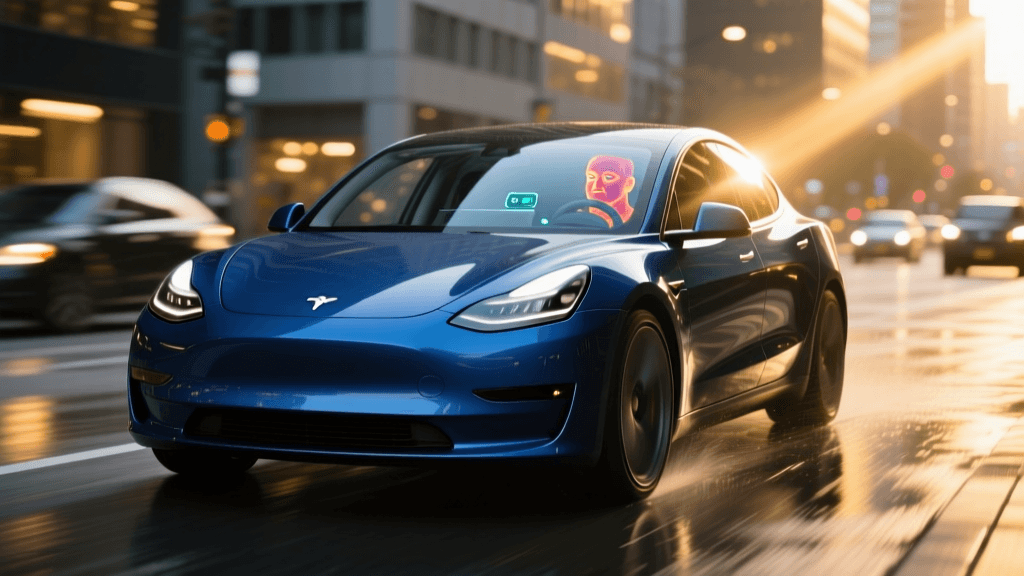
The Rise of the Cabin Camera: Separating Fact from Fiction
As advanced driver assistance systems (ADAS) evolve from basic lane-keeping to sophisticated Level 2+ and Level 3 semi-autonomous features, the vehicle needs to know if you are actually paying attention. Enter the Driver Monitoring System (DMS). Once a niche feature reserved for luxury European sedans, DMS is now becoming a standard requirement for vehicles equipped with hands-free driving aids like GM Super Cruise, Ford BlueCruise, and Tesla Autopilot. However, as these infrared cameras and AI algorithms become ubiquitous, a wave of misinformation has followed. Many drivers fundamentally misunderstand how these systems detect drowsiness and distraction, leading to unnecessary privacy fears and dangerous workarounds. In this guide, we are busting the most common myths surrounding driver monitoring systems and highlighting the critical mistakes you must avoid when sharing the cockpit with an AI co-pilot.
Myth 1: The DMS Camera is Secretly Recording and Uploading Your Face
The most pervasive myth regarding cabin cameras is that automakers are constantly recording high-definition video of your face, storing it on local servers, and uploading it to the cloud to build a biometric profile or sell your data. This is categorically false for virtually all production vehicles on the road today.
Modern DMS relies on Near-Infrared (NIR) cameras and edge computing. The camera emits an invisible infrared light (typically in the 850nm to 940nm spectrum) that illuminates your face regardless of ambient lighting conditions. Instead of recording a standard RGB video feed, the system's local neural processing unit (NPU) maps a 3D point cloud of your facial landmarks in real-time. It tracks the distance between your eyelids, the direction of your pupils, and the tilt of your head. This data is processed entirely on the vehicle's local edge computer. The system does not 'see' your face the way a human does; it sees a constantly updating mathematical wireframe of your attention metrics. No video is saved, and no biometric images are transmitted to the cloud.
Myth 2: Steering Wheel Torque Sensors Are Just as Good as Cameras
Before the advent of interior cameras, automakers relied on steering wheel torque sensors to ensure the driver was engaged. If the system detected resistance or micro-movements on the wheel, it assumed the driver was attentive. Many drivers still believe this method is just as effective as a camera-based DMS. This is a dangerous misconception.
Torque sensors suffer from the 'straight highway problem.' When driving on a long, straight, well-marked interstate, the steering wheel requires almost zero rotational input. A driver could easily fall asleep or look down at their phone for extended periods while their hands rest passively on the wheel, completely fooling the torque sensor. Camera-based DMS, however, tracks eye gaze and blink rate, regardless of steering input.
| Feature | Steering Torque Sensors | IR Camera DMS (Cabin Camera) |
|---|---|---|
| Detection Method | Measures rotational resistance on the wheel | Tracks pupil gaze, eyelid closure, and head pose |
| Straight Highway Accuracy | Poor (requires artificial steering input) | Excellent (monitors eyes regardless of wheel position) |
| Drowsiness Detection | Cannot detect sleep if hands remain on wheel | Highly accurate via PERCLOS and blink rate metrics |
| Distraction Detection | Cannot detect phone usage or looking away | Instantly detects gaze deviation from the road |
| Hardware Cost | Low (integrated into steering column) | Moderate to High (requires NIR camera and NPU) |
Myth 3: Wearing Sunglasses or a Hat Completely Blinds the System
A common complaint on automotive forums is that DMS is useless because it 'breaks' the moment you put on sunglasses or a baseball cap. While early generations of optical cameras struggled with polarized lenses and heavy shadows, modern NIR-based systems are specifically engineered to overcome these obstacles.
Near-infrared light easily penetrates most standard tinted and polarized sunglasses. To the infrared camera, your dark lenses appear largely transparent, allowing it to track your pupil movement and blink rate without issue. However, there are exceptions. Highly mirrored or specialized welding-style lenses can reflect the IR illuminator, blinding the sensor. Similarly, while a standard baseball cap will not trigger a fault, pulling the brim down extremely low over your eyes can cast an infrared shadow that obscures the camera's view of your eyelids. In these specific edge cases, the system will usually prompt you to adjust your headwear or eyewear rather than shutting down entirely.
How the AI Actually Measures Drowsiness: The PERCLOS Metric
To understand how to avoid false alerts, it helps to understand the science of drowsiness detection. The gold standard for DMS algorithms is the PERCLOS metric, which stands for 'Percentage of Eyelid Closure over the Pupil.' The AI does not just look for closed eyes; a quick blink is entirely normal and ignored by the system. Instead, the algorithm measures the speed of your eyelid descent and the duration of the closure. When a driver becomes fatigued, their blinks become slower, longer, and more frequent. By calculating the percentage of time the eyes are 80% to 100% closed over a rolling one-minute window, the system can accurately predict microsleeps before they become dangerous. According to the National Highway Traffic Safety Administration (NHTSA), drowsy driving is responsible for tens of thousands of crashes annually, making PERCLOS-based interventions a critical life-saving technology.
Common Mistakes Drivers Make with DMS
Despite the life-saving potential of these systems, human behavior often undermines their effectiveness. Here are the most common mistakes drivers make:
- Using Steering Wheel Weights: To bypass older torque-based systems, some drivers purchase heavy metal rings or weights to hang on the steering wheel. Not only is this incredibly dangerous and illegal in many jurisdictions, but it also completely defeats the purpose of Level 2+ ADAS. If an emergency requires evasive action, the AI cannot intervene if the human is asleep.
- Taping Over or Obstructing the Camera: Some privacy-paranoid drivers place tape over the cabin camera. In modern vehicles like those equipped with GM Super Cruise, obstructing the DMS will immediately disable the hands-free autonomous features, reverting the car to basic, hands-on lane-keep assist.
- Ignoring the 'Dirty Lens' Alert: The DMS camera is usually mounted on the steering column or rearview mirror housing. Over time, dust, fingerprint smudges, or off-gassing from interior plastics can coat the lens. If the system alerts you to clean the camera, use a microfiber cloth; otherwise, the IR illuminator will scatter, causing false 'inattentive' warnings.
- Looking at the Center Console for Long Periods: Even if you are just changing a song on Apple CarPlay or adjusting the climate control, staring at the center stack for more than 3 to 5 seconds will trigger a distraction warning. The AI cannot tell the difference between adjusting the radio and reading a text message; it only knows your eyes are off the forward roadway.
Real-World Implementations: GM, Subaru, and Ford
Different automakers have taken varied approaches to DMS. General Motors was an early pioneer with Super Cruise, utilizing an infrared camera mounted on the steering column to allow for true hands-free driving on mapped highways. Subaru's DriverFocus Distraction Mitigation System uses facial recognition software developed by Omron to not only track eye gaze but also recognize up to five different drivers, automatically adjusting seat positions and climate preferences while monitoring for fatigue. Ford's BlueCruise utilizes a similar infrared camera setup, recently updating its software to allow for longer periods of hands-free driving by improving the AI's tolerance for quick, natural glances at side mirrors and speedometers.
The Regulatory Push: Safety First
The push for robust DMS is no longer just about enabling hands-free convenience; it is becoming a strict safety mandate. Organizations like the Insurance Institute for Highway Safety (IIHS) have made it clear that partial automation systems without robust driver monitoring are insufficient and encourage over-reliance. Furthermore, Euro NCAP's safety protocols now heavily reward vehicles equipped with direct, camera-based driver monitoring that can reliably detect both distraction and drowsiness, effectively forcing automakers to abandon steering torque sensors as a primary means of attention tracking.
Conclusion
Driver Monitoring Systems represent a massive leap forward in automotive safety, bridging the dangerous gap between human fallibility and machine automation. By understanding how near-infrared cameras and PERCLOS algorithms actually work, drivers can shed unfounded privacy fears and stop attempting to 'trick' their vehicles. The cabin camera is not a surveillance tool; it is a digital co-pilot designed to ensure that when the car asks for your attention, you are truly ready to take the wheel.