Many drivers transition from a luxury vehicle to a budget-friendly commuter car, or vice versa, and immediately notice a jarring difference in how Advanced Driver Assistance Systems (ADAS) behave. You might expect the seamless lane centering and predictive adaptive cruise control of a premium BMW or Mercedes-Benz, only to find your budget Honda or Toyota constantly bouncing between lane markers or slamming on the brakes for overhead shadows. This isn't necessarily a defect; it is a fundamental difference in hardware architecture and software tuning. Troubleshooting ADAS behavior requires understanding whether your vehicle relies on basic camera-only systems or advanced sensor fusion.
In this comprehensive guide, we will break down the hardware disparities between budget and luxury ADAS, diagnose common behavioral quirks like phantom braking and lane ping-ponging, and provide actionable troubleshooting steps to optimize your daily drive regardless of your vehicle's price tag.
The Hardware Divide: Camera-Only vs. Sensor Fusion
To troubleshoot why your vehicle's ADAS is underperforming, you must first identify the hardware suite it relies upon. Budget vehicles (typically priced under $35,000) generally utilize a basic sensor suite consisting of a single monocular windshield-mounted camera and a front-facing 77GHz millimeter-wave radar. This setup is highly effective for basic Automatic Emergency Braking (AEB) and Lane Departure Warning (LDW), but it lacks the depth perception and redundancy required for smooth, hands-off highway driving.
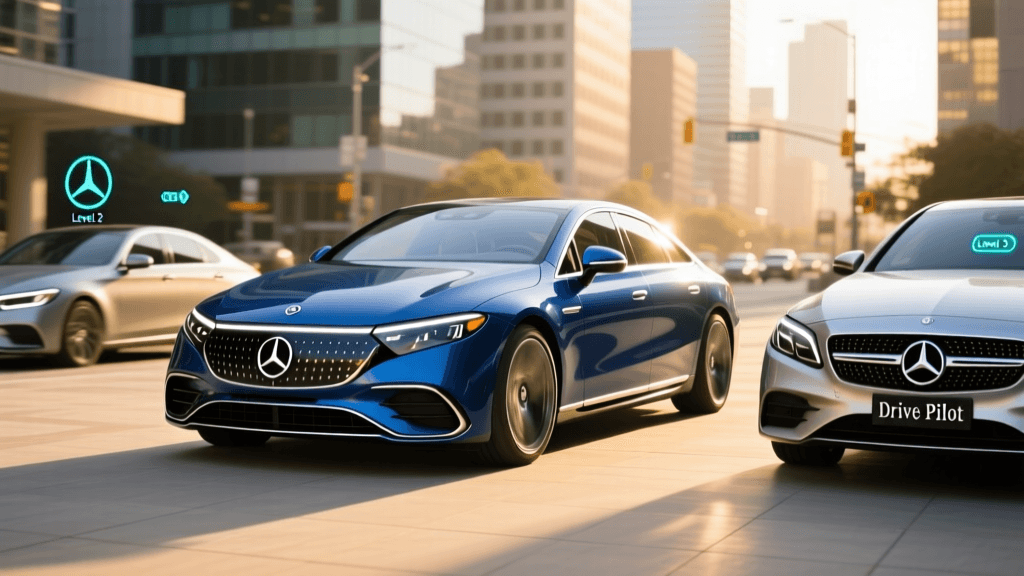
Luxury vehicles, on the other hand, utilize sensor fusion. Brands like BMW (Driving Assistant Pro), Mercedes-Benz (Drive Pilot), and high-end EVs combine data from ultrasonic sensors, corner radars, high-definition multi-camera arrays, and often LiDAR. According to the National Highway Traffic Safety Administration (NHTSA), the effectiveness of ADAS is heavily dependent on the sensor suite's ability to interpret complex environments. When a budget car's single camera is blinded by sun glare, the system disables itself. When a luxury car's camera is blinded, its radar and LiDAR seamlessly take over, maintaining adaptive cruise control without alerting the driver.
Troubleshooting Phantom Braking in Budget AEB Systems
Phantom braking—when your vehicle aggressively applies the brakes for no apparent obstacle—is one of the most common and terrifying complaints among budget ADAS users. This occurs because monocular cameras and basic radars struggle with contrast and depth mapping. An overhead bridge shadow, a metallic soda can on the highway, or even a dark patch of asphalt can be misinterpreted by a budget camera as a stalled vehicle.
Actionable Fixes for Phantom Braking:
- Adjust ACC Following Distance: If your Adaptive Cruise Control is set to the shortest following distance, the system operates with a hyper-sensitive braking threshold. Increase the following distance to 'Medium' or 'Far' to give the radar more time to verify if an object is stationary or moving.
- Clean the Radar Dome: Budget cars often house the radar behind the front emblem or lower bumper grille. A buildup of road grime, bug splatter, or ice will scatter the radar waves, causing false positives. Wipe the sensor area with a microfiber cloth and mild soap weekly.
- Software Updates: Manufacturers frequently release over-the-air (OTA) or dealer-installed ECU updates to refine AEB algorithms. Check with your dealer to ensure your ADAS module is running the latest firmware, which often includes patched shadow-recognition logic.
Solving the 'Ping-Pong' Effect in Lane Assistance
A major point of frustration for drivers moving from luxury to budget cars is the 'ping-pong' effect, where the car bounces back and forth between the left and right lane markers. This happens because budget cars typically feature Lane Keep Assist (LKA), which is a reactive system. It only applies steering torque when you are about to cross a line. Luxury cars feature Lane Centering Assist (LCA), a proactive system that continuously reads the geometry of the lane and applies micro-adjustments to keep the car dead center.
How to Troubleshoot and Mitigate Lane Bounce:
- Understand the System's Limits: Recognize that your budget LKA is designed to save you from drifting off the road, not to drive the car for you. Fighting the steering wheel when the LKA engages causes a feedback loop that worsens the bounce.
- Disable LKA for Manual Centering: If you find the reactive steering inputs jarring on winding roads, go into your infotainment settings and disable Lane Keep Assist, leaving only Lane Departure Warning (LDW) active. This provides an audible or haptic alert without violently jerking the steering wheel.
- Check Tire Pressure and Alignment: A car that naturally pulls to one side due to uneven tire pressure or poor alignment will force the budget LKA system to work overtime, exacerbating the ping-pong effect. Ensure your tires are inflated to the manufacturer's door-jamb specifications.
Comparison Chart: Budget vs. Luxury ADAS Troubleshooting
| Feature | Budget ADAS (e.g., Honda Sensing, TSS 3.0) | Luxury ADAS (e.g., BMW DAP, GM Super Cruise) | Troubleshooting Step for Budget Owners |
|---|---|---|---|
| Hardware | Monocular Camera + Single Front Radar | LiDAR, Multi-Camera, Corner Radars, Ultrasonic | Manually clear snow/mud from front emblem radar. |
| Lane Keeping | Reactive (Bounces off lane lines) | Proactive (Continuous centering via HD maps/LiDAR) | Disable LKA on winding roads; use LDW only. |
| AEB / Braking | Prone to phantom braking from shadows | Object classification via AI and sensor fusion | Increase ACC following distance to reduce sensitivity. |
| Weather Limits | Disables entirely in heavy rain or sun glare | Heated radar domes; redundant sensor fallback | Manually engage climate defrosters to clear camera. |
| Calibration | Requires static dealer calibration after glass work | Often supports dynamic (on-road) self-calibration | Demand static calibration receipt after windshield replacement. |
Environmental Troubleshooting: When Weather Blinds Your Car
Luxury vehicles are equipped with heated radar domes, hydrophobic camera coatings, and even dedicated wiper fluid nozzles for their sensor arrays. Budget vehicles rarely include these luxuries. Consequently, a light drizzle or direct sunset glare can cause a budget ADAS system to throw a 'System Unavailable' error and abruptly disengage cruise control.
Troubleshooting Environmental Blindness:
- Targeted Defrosting: The ADAS camera is typically located behind the rearview mirror against the windshield. If the system fails in cold or humid weather, aim your HVAC defroster vents directly at the top center of the windshield to clear interior condensation that the wipers cannot reach.
- Apply Hydrophobic Coatings: Treat the exterior of your windshield (specifically the area behind the rearview mirror) with a high-quality glass sealant like Rain-X or Glaco. This forces water to bead and roll off the camera's field of view at highway speeds.
- Use Polarized Sunglasses with Caution: While not a car issue, wearing polarized sunglasses can make it difficult for you to see the heads-up display (HUD) or dashboard ADAS warnings, leading to delayed reactions when the system disengages.
The Hidden Trap: Windshield Replacement and Calibration
One of the most critical troubleshooting scenarios for budget ADAS owners occurs after a windshield replacement. Because budget systems rely entirely on the precise angle of the monocular camera, even a millimeter of deviation in camera mounting can cause the car to steer toward oncoming traffic or fail to recognize stopped vehicles. The Insurance Institute for Highway Safety (IIHS) has extensively documented how improperly calibrated ADAS cameras severely compromise automatic emergency braking performance.
Luxury cars with advanced sensor fusion can often perform 'dynamic calibration'—recalibrating the camera by simply driving down a well-marked highway for 20 minutes. Budget cars almost universally require static calibration, which involves setting up laser-aligned physical targets in a service bay.
Troubleshooting Post-Replacement Issues:
- If your steering wheel is off-center, or the car hugs one side of the lane after a windshield replacement, the camera was not calibrated correctly.
- Always ask your glass replacement provider if they perform in-house static calibration or if they sub-contract it. If they do not have a calibration rig, take the vehicle to a dealership immediately.
- Keep the calibration receipt. If the ADAS system causes an at-fault accident due to improper alignment, this documentation is vital for insurance liability claims.
Summary: Managing Expectations and System Limits
Troubleshooting ADAS in budget vehicles is less about 'fixing' broken code and more about managing hardware limitations. By understanding that your vehicle relies on reactive lane keeping and basic radar, you can adjust your driving habits, maintain your sensors meticulously, and configure your settings to minimize phantom braking and lane bounce. While luxury vehicles offer a more forgiving, redundant safety net through sensor fusion, budget ADAS systems remain highly effective life-saving tools when their physical and environmental boundaries are respected and properly maintained.