The Evolution of Mainstream Active Safety
Advanced Driver Assistance Systems (ADAS) have transitioned from exclusive luxury car features to mandatory expectations in mainstream vehicles. As automakers race toward higher levels of autonomy, the battleground has shifted to the sophistication, reliability, and standardization of Level 2 and Level 2+ driver assistance suites. In this head-to-head product showdown, we are putting the newly minted Toyota Safety Sense (TSS) 3.0 against its fiercest mainstream rivals: Honda Sensing and Subaru EyeSight.
While Honda and Subaru have long been pioneers in camera-based safety systems, Toyota’s latest iteration of its safety suite brings a host of hardware and software upgrades that fundamentally change how the vehicle interacts with its environment. Below, we break down the specific new features of TSS 3.0, compare them directly to the competition, and analyze independent testing data to determine which ADAS suite truly reigns supreme.
Toyota Safety Sense 3.0: The Deep Dive Breakdown
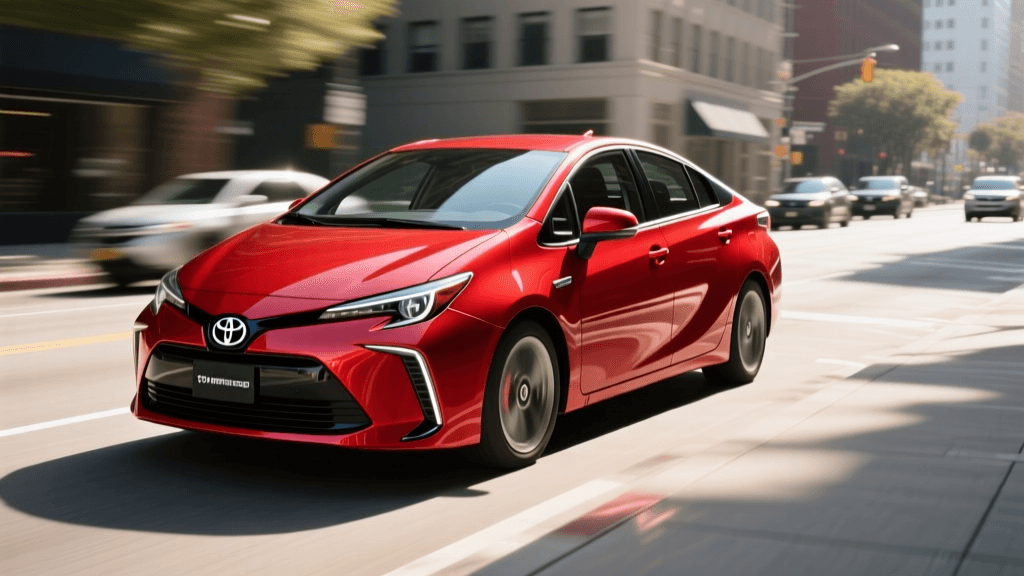
Toyota Safety Sense 3.0 represents a significant leap over the previous TSS 2.5 and 2.0 generations. By utilizing an improved monocular camera and a more sensitive millimeter-wave radar, Toyota has expanded the operational design domain (ODD) of its safety features. Here is a detailed breakdown of the core improvements.
Enhanced Pre-Collision System (PCS)
The cornerstone of any ADAS suite is Automatic Emergency Braking (AEB). TSS 3.0’s Pre-Collision System now features a wider detection angle and improved object recognition. Crucially, TSS 3.0 can now detect motorcyclists in addition to vehicles, pedestrians, and cyclists. Furthermore, the Intersection Support feature has been refined to recognize oncoming vehicles and crossing pedestrians when the driver is executing a left or right turn, applying automatic braking if a collision trajectory is detected.
Proactive Driving Assist (PDA)
Perhaps the most innovative addition to TSS 3.0 is Proactive Driving Assist. Unlike traditional Adaptive Cruise Control (ACC) which only reacts to the vehicle directly in front of you, PDA operates in everyday driving scenarios without requiring the driver to set a cruising speed. When the system detects a pedestrian, cyclist, or parked car on the side of the road, it gently applies the brakes and provides subtle steering input to maintain a safe lateral and longitudinal buffer. This creates a much smoother, more human-like driving experience in urban environments.
Lane Tracing Assist (LTA) and Road Sign Assist (RSA)
Lane centering in older systems often felt like the car was bouncing between the lines. TSS 3.0 utilizes advanced AI-driven lane marker recognition to provide smoother, more continuous steering torque. When paired with Road Sign Assist, the vehicle can now read speed limit, stop, and yield signs, displaying them on the multi-information display and, in some configurations, automatically adjusting the ACC set speed to match the posted limit.
Head-to-Head: TSS 3.0 vs. Honda Sensing vs. Subaru EyeSight
To understand where TSS 3.0 stands, we must compare it directly to the segment benchmarks. Honda recently updated its Sensing suite with a new 90-degree front camera and a wider radar field of view, while Subaru continues to rely on its unique stereoscopic camera setup for EyeSight. Below is a structured comparison of their capabilities.
| Feature / Capability | Toyota Safety Sense 3.0 | Honda Sensing (Latest Gen) | Subaru EyeSight (Gen 4) |
|---|---|---|---|
| Primary Sensor Suite | Monocular Camera + Millimeter-Wave Radar | 90-Degree Camera + Wide-Angle Radar | Stereo Cameras + Optional Radar |
| Motorcyclist Detection | Yes (New for 3.0) | Limited / Not Explicitly Rated | No |
| Intersection Turn Braking | Yes (Left and Right Turns) | Yes (Left Turns Mostly) | Yes (Pre-Collision Braking at Junctions) |
| Proactive Distance Assist | Yes (PDA - Steering & Braking) | No (Relies on Standard ACC/LKAS) | No (Relies on Standard ACC/Lane Centering) |
| Low-Light / Fog Performance | Excellent (Radar Fusion) | Good (Radar Fusion) | Fair (Stereo Cameras struggle in heavy fog/snow) |
| Standard on Base Trims | Yes (Across almost all models) | Yes (Across all models) | Yes (Standard on CVT models) |
Real-World Performance and Independent Testing
Feature lists are only as good as their real-world execution. The Insurance Institute for Highway Safety (IIHS) has continually raised the bar for crash avoidance testing, particularly with its rigorous nighttime pedestrian AEB evaluations. In recent testing cycles, vehicles equipped with TSS 3.0 have consistently earned 'Advanced' or 'Superior' ratings in both day and night pedestrian detection scenarios. The fusion of radar and high-resolution cameras allows the Toyota system to maintain braking efficacy even when ambient lighting is poor, an area where purely camera-based systems historically falter.
Furthermore, the National Highway Traffic Safety Administration (NHTSA) has mandated that all new passenger vehicles must be equipped with AEB that meets strict performance standards by 2029. Toyota’s proactive rollout of TSS 3.0 means their current lineup already exceeds many of these upcoming federal requirements, particularly regarding higher-speed AEB engagement and vulnerable road user protection.
Subaru’s EyeSight system remains a favorite for its incredibly smooth adaptive cruise control in stop-and-go traffic, thanks to the depth perception afforded by stereo cameras. However, in heavy rain or dense fog, the cameras can become obscured, triggering system warnings and disengagements. Toyota’s reliance on radar fusion ensures that TSS 3.0 remains operational in adverse weather conditions where Subaru’s system might temporarily go offline.
Pricing, Packaging, and the OTA Factor
One of Toyota’s most commendable strategies is the democratization of safety. Unlike European competitors that often lock advanced ADAS features behind expensive technology packages or monthly subscription models, Toyota includes TSS 3.0 as standard equipment on the vast majority of its lineup, from the base Corolla to the top-trim Sequoia.
- No Subscription Fees: Core safety features like PCS, LTA, and RSA do not require a monthly subscription.
- Over-the-Air (OTA) Updates: TSS 3.0 is built on a more advanced electrical architecture, allowing Toyota to push software refinements, improve object recognition algorithms, and fix bugs without requiring a dealership visit.
- Repair Costs: Because the radar and camera are integrated into the grille and windshield respectively, minor front-end collisions or windshield replacements will require ADAS recalibration, which can add $300 to $500 to standard repair bills across all modern brands.
Honda follows a similar standard-inclusion philosophy with Honda Sensing, making both brands highly attractive to safety-conscious buyers who refuse to pay extra for crash avoidance. Subaru also includes EyeSight standard, though it is generally restricted to models equipped with a Continuously Variable Transmission (CVT), leaving manual transmission models without the suite.
The Verdict: Which ADAS Suite Wins?
When evaluating the complete package of hardware capability, software refinement, and standard availability, Toyota Safety Sense 3.0 emerges as the winner of this mainstream ADAS showdown. The introduction of Proactive Driving Assist (PDA) bridges the gap between basic lane-keeping and true situational awareness, providing a layer of comfort and safety in urban environments that neither Honda Sensing nor Subaru EyeSight currently matches. Furthermore, the explicit addition of motorcyclist detection and enhanced intersection support showcases Toyota’s commitment to protecting vulnerable road users.
However, the competition remains fierce. Honda Sensing’s new 90-degree camera offers phenomenal cross-traffic detection at blind intersections, and Subaru EyeSight still delivers the most natural-feeling stop-and-go cruise control on the market. Yet, for the daily commuter who faces unpredictable weather, complex urban traffic, and the constant threat of distracted drivers, TSS 3.0’s sensor fusion and proactive algorithms provide the most comprehensive, reliable, and accessible safety net in the mainstream automotive segment today.
Buyer's Tip: When purchasing a new Toyota, always verify the window sticker or build sheet for 'TSS 3.0'. While most 2023 and newer models feature it, some carry-over models from previous generations may still be equipped with TSS 2.5. For the full suite of intersection and motorcyclist detection, 3.0 is mandatory.