The Evolution of Toyota Safety Sense 3.0
As advanced driver assistance systems (ADAS) become the primary battleground for automotive safety, Toyota has unveiled its latest iteration: Toyota Safety Sense (TSS) 3.0. Rolling out across the newest generation of vehicles like the Prius, Crown, and Sequoia, TSS 3.0 represents a significant leap over the previous TSS 2.5+ suite. But how does it stack up against fierce competitors like Honda Sensing and Subaru EyeSight? In this head-to-head product showdown, we break down the exact features, sensor upgrades, and real-world performance metrics of TSS 3.0, providing actionable advice for buyers navigating the modern ADAS landscape.
What is New in Toyota Safety Sense 3.0?
Toyota's third-generation safety suite relies on a synergistic combination of an upgraded monocular camera and a next-generation millimeter-wave radar. This hardware upgrade directly translates to software improvements across the entire feature set, allowing for faster processing and wider environmental awareness.
Pre-Collision System (PCS) with Pedestrian Detection
The most critical upgrade in TSS 3.0 is the expanded detection capabilities of the PCS. The new millimeter-wave radar boasts an extended range of up to 200 meters and a significantly wider field of view. Crucially, TSS 3.0 now includes Intersection Turn Support. If you are turning left at an intersection and an oncoming vehicle is approaching, or turning right while a pedestrian is crossing, the system will issue an alert and apply automatic emergency braking (AEB) if necessary. Furthermore, the system now detects motorcycles, a demographic historically vulnerable in intersection collisions.
Proactive Driving Assist (PDA): The Game Changer
Perhaps the most innovative addition to TSS 3.0 is Proactive Driving Assist. Unlike traditional AEB, which only engages in imminent crash scenarios, PDA operates during normal driving. Using the camera and radar, PDA provides gentle, anticipatory braking and subtle steering inputs to maintain a safe distance from pedestrians, cyclists, and parked cars. It bridges the gap between passive warnings and aggressive emergency interventions, resulting in a much smoother, more natural driving experience that mimics a cautious human driver.
Lane Tracing Assist (LTA) and Road Sign Assist (RSA)
LTA has been refined to offer more continuous and centered steering support, particularly on curves and highways. The system now better recognizes road edges even when lane markings are faded or absent. Meanwhile, RSA has been expanded to recognize a broader array of traffic signs, including speed limits, stop signs, and yield signs, displaying them dynamically on the multi-information display.
Head-to-Head: TSS 3.0 vs. Honda Sensing
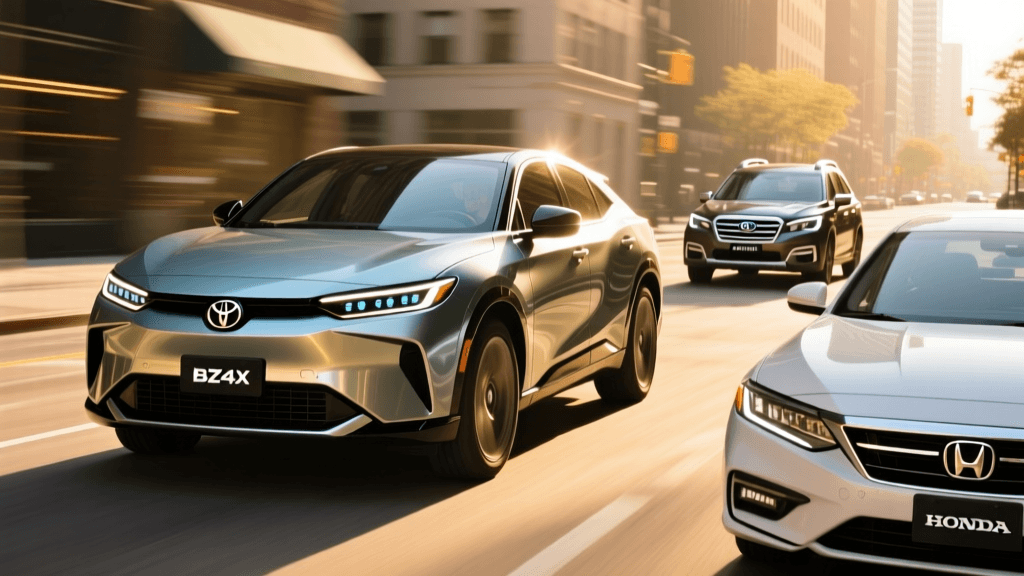
Honda recently updated its Sensing suite with a new 90-degree front-facing camera, eliminating the need for a separate radar unit in some models by relying on advanced stereo-vision algorithms. While Honda's camera-only approach excels in bright, clear conditions, TSS 3.0 retains its millimeter-wave radar. This gives Toyota a distinct advantage in adverse weather conditions like heavy rain, fog, or direct sun glare, where optical cameras can become blinded. Additionally, Honda Sensing currently lacks a direct equivalent to Toyota's Proactive Driving Assist, meaning Toyota's system feels less intrusive and more anticipatory in dense urban traffic.
Head-to-Head: TSS 3.0 vs. Subaru EyeSight
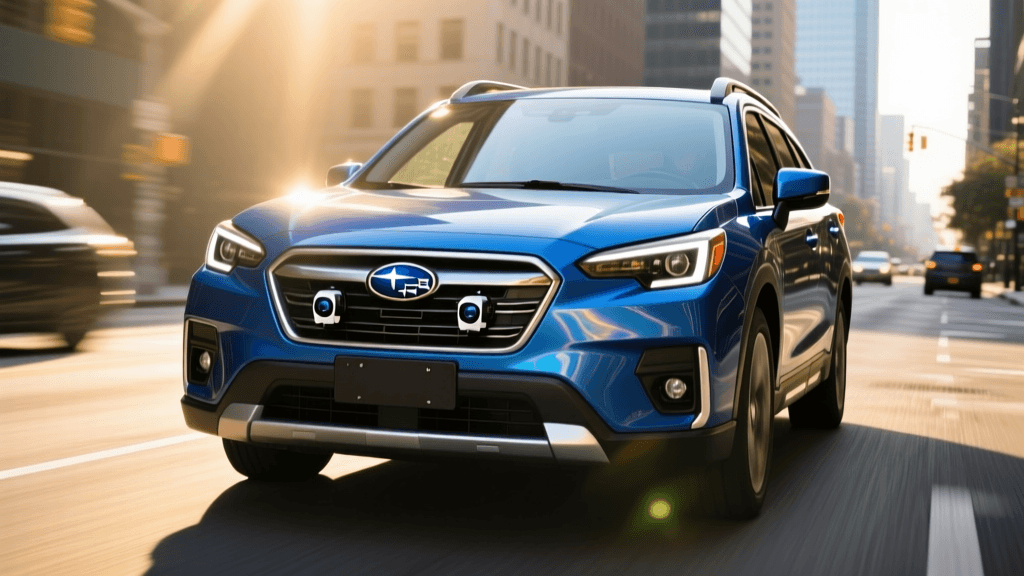
Subaru’s EyeSight system has long been the gold standard for stereo-camera depth perception. However, Subaru's reliance on cameras mounted high on the windshield means the system can struggle when the windshield is obscured by snow or heavy spray from the truck ahead. TSS 3.0’s combination of radar and camera provides a more robust redundancy. Furthermore, while Subaru's AEB is incredibly effective, Toyota's new Intersection Turn Support and motorcycle detection give TSS 3.0 a slight edge in complex urban environments where unpredictable variables are common.
Feature Comparison Matrix
| Feature / Metric | Toyota Safety Sense 3.0 | Honda Sensing (Latest) | Subaru EyeSight (Gen 4) |
|---|---|---|---|
| Primary Sensor Array | Camera + Millimeter-Wave Radar | 90-Degree Wide Camera | Stereo Cameras + Radar (Select) |
| Intersection Turn Assist | Yes (Left/Right turns) | Yes (Left turns primarily) | Yes |
| Proactive Anticipatory Assist | Yes (PDA) | No | No |
| Motorcycle Detection | Yes | Limited | Yes |
| Adverse Weather Reliability | High (Radar redundancy) | Moderate (Camera reliant) | Moderate (Camera reliant) |
Real-World Performance and Independent Testing
Independent organizations continuously push ADAS systems to their limits. The Insurance Institute for Highway Safety (IIHS) recently updated its testing protocols to include nighttime pedestrian detection and higher-speed vehicle-to-vehicle AEB tests. TSS 3.0 was engineered specifically with these stricter parameters in mind. The enhanced camera sensor features improved low-light sensitivity, allowing the PCS to identify pedestrians in dark clothing at night—a scenario where older systems frequently fail.
Global testing protocols, including Euro NCAP, have similarly increased the complexity of their AEB car-to-car and car-to-pedestrian scenarios, forcing automakers to rely on sensor fusion rather than single-sensor reliance. Toyota's dual-sensor approach in TSS 3.0 aligns perfectly with these stringent global benchmarks. Furthermore, the National Highway Traffic Safety Administration (NHTSA) emphasizes that while ADAS features drastically reduce collision severity, they are not a replacement for an attentive driver. TSS 3.0's driver monitoring integration ensures that the Lane Tracing Assist will safely bring the vehicle to a halt if the driver fails to respond to hands-on-wheel warnings, a vital safety net in semi-autonomous scenarios.
Practical Advice for Buyers and Owners
If you are considering a vehicle equipped with TSS 3.0, or currently own one, keep these actionable tips in mind to maximize the system's effectiveness and protect your wallet:
- Understand Calibration Costs: Because TSS 3.0 relies on a precisely aligned camera and radar, a simple windshield replacement is no longer a cheap fix. Expect to pay between $600 and $1,200 for a new OEM windshield and the mandatory ADAS recalibration. Always use certified technicians for glass work to ensure the camera angle is perfect.
- Keep Sensors Clean: The millimeter-wave radar is typically hidden behind the Toyota emblem on the front grille, while the camera sits behind the rearview mirror. In winter, ensure the front emblem is wiped free of packed snow and ice, or the system will disable itself and throw a warning light on your dash.
- Learn the PDA Nuances: Proactive Driving Assist can feel overly cautious to aggressive drivers. If you frequently drive on narrow roads with parked cars, you may find PDA braking too often. You can adjust the sensitivity or temporarily disable PDA via the multi-information display settings, though it resets upon vehicle restart for safety reasons.
- Do Not Trust Faded Lines: While LTA is improved, it still requires visible contrast. In construction zones with conflicting yellow and white lines, keep your hands firmly on the wheel and be prepared to override the steering assist immediately.
- Beware of Aftermarket Accessories: Installing aftermarket bull bars, heavy-duty grille guards, or even certain types of radar-absorbing license plate frames can obstruct the millimeter-wave radar. Always consult your dealer before modifying the front fascia of a TSS 3.0 equipped vehicle.
- Check for OTA Updates: Toyota is increasingly utilizing over-the-air (OTA) updates to refine ADAS algorithms. Ensure your vehicle's infotainment and telematics system is connected to Wi-Fi periodically to download the latest tuning parameters for the PCS and LTA.
Final Verdict
Toyota Safety Sense 3.0 is a masterclass in iterative, meaningful refinement. By retaining the millimeter-wave radar and introducing the highly intuitive Proactive Driving Assist, Toyota has created an ADAS suite that balances aggressive crash prevention with smooth, everyday usability. While Honda Sensing and Subaru EyeSight remain formidable competitors, TSS 3.0's superior adverse weather reliability and comprehensive intersection support make it the current benchmark for mainstream automotive safety. For buyers prioritizing a system that feels like a co-pilot rather than a backseat driver, TSS 3.0 is the definitive choice in the current market.