The Evolution of Tesla’s Full Self-Driving Architecture
Tesla’s Full Self-Driving (FSD) capability has long been the most polarizing, closely watched, and rapidly evolving Advanced Driver Assistance System (ADAS) suite in the automotive industry. For years, the software was publicly tested under the moniker "FSD Beta." However, in early 2024, Tesla executed a subtle but monumental branding and technical pivot, retiring the "Beta" badge and replacing it with "FSD (Supervised)." This nomenclature shift was not merely a marketing exercise; it signaled a fundamental architectural overhaul with the release of version 12, transitioning the industry's gaze toward the future of autonomous mobility.
For consumers, automotive engineers, and industry analysts, understanding the distinction between the legacy FSD Beta and the current FSD (Supervised) mode is critical. It represents the bridge between traditional heuristic programming and the future of end-to-end artificial intelligence. As we look toward the industry outlook for the remainder of the decade, comparing these two eras of Tesla's ADAS provides a roadmap for where the broader autonomous vehicle market is heading.
The End of the "Beta" Era and the Rise of Supervised AI
The term "Beta" in software development implies a testing phase, riddled with expected bugs and requiring constant user intervention. Tesla utilized its fleet of millions of vehicles to gather real-world driving data, using it to train its neural networks. However, the legal and regulatory liabilities of the word "Beta" in the context of vehicle safety became increasingly untenable. By rebranding to "FSD (Supervised)," Tesla aligned its terminology with the reality of Level 2 ADAS: the driver is ultimately responsible for the vehicle, regardless of how capable the software appears.
According to a March 2024 report by Reuters, the rollout of FSD v12 marked the official transition away from the Beta branding, introducing a system that relies almost entirely on neural networks rather than hard-coded rules. This shift is the defining capability difference between the old Beta and the new Supervised mode, fundamentally altering how the vehicle perceives and reacts to the world.
Architectural Leap: Heuristics vs. End-to-End Neural Networks
To understand the capability gap, one must look under the hood. The final iterations of FSD Beta (version 11.x) relied on a hybrid approach. While neural networks were used for object detection and lane mapping, the decision-making process—such as when to brake, how to navigate an unprotected left turn, or how to handle a four-way stop—was governed by hundreds of thousands of lines of C++ heuristic code. Engineers had to manually program "if-then" rules for millions of edge cases. This resulted in a driving style that was often described as robotic, rigid, and prone to "phantom braking" when the code encountered scenarios it was not explicitly programmed to handle.
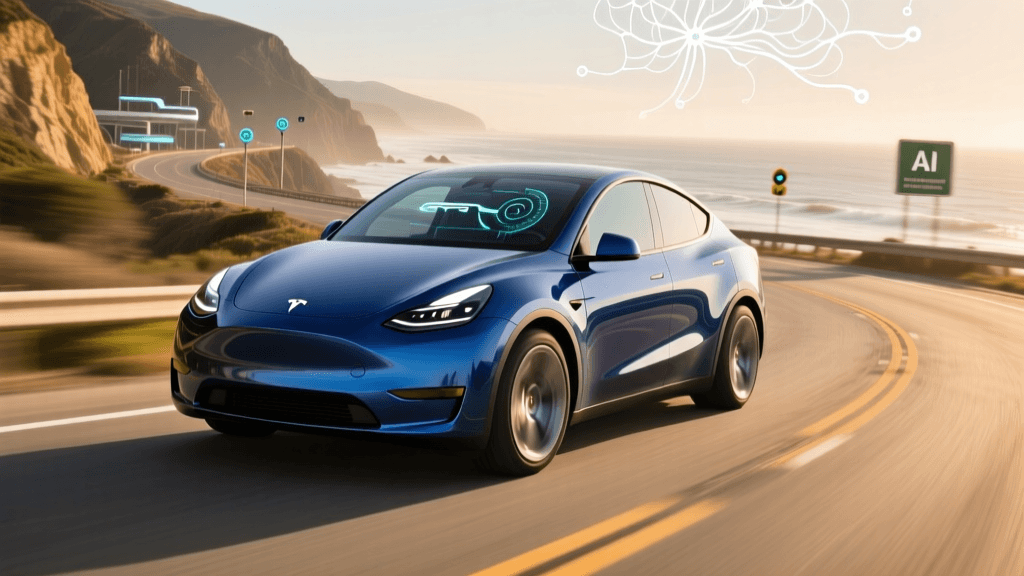
FSD (Supervised) version 12.x replaces this massive C++ codebase with a single, end-to-end neural network. Trained on millions of video clips from Tesla's fleet, the system learns to drive by mimicking human behavior rather than following a rigid rulebook. The camera inputs go in, and the steering and acceleration outputs come out, with the neural network handling the complex reasoning in between. This results in a vastly superior, human-like driving capability that adapts to fluid, unpredictable environments.
Capability Comparison: FSD Beta vs. FSD (Supervised)
The transition from rule-based logic to pattern recognition has yielded measurable improvements in daily driving scenarios. Below is a structured comparison of the capabilities between the legacy FSD Beta and the modern FSD (Supervised) architecture.
| Feature / Metric | FSD Beta (v11.x) | FSD Supervised (v12.x) |
|---|---|---|
| Core Architecture | C++ Heuristics + Neural Nets | End-to-End Neural Network |
| Decision Making | Rule-based logic trees | Pattern recognition via video training |
| City Street Fluidity | Robotic, hard-coded stops, hesitant | Human-like, smooth negotiation, creeping |
| Phantom Braking | Frequent in complex weather/shadows | Significantly reduced via contextual vision |
| Unprotected Turns | Often timed poorly or aborted | Anticipates gaps in traffic naturally |
| Driver Monitoring | Cabin camera (basic attention) | Enhanced attention tracking algorithms |
One of the most noticeable capability upgrades in the Supervised mode is the vehicle's ability to perform "creeping" maneuvers at blind intersections. In the Beta era, the car would often stop completely behind a crosswalk, unable to see oncoming traffic, and wait indefinitely. The Supervised neural network understands that inching forward to gain a line of sight is a necessary and safe human driving behavior, drastically reducing the need for driver intervention in dense urban environments.
Industry Outlook: The Vision-Only Paradigm
Tesla’s commitment to a vision-only, camera-based approach for FSD (Supervised) stands in stark contrast to the broader ADAS and autonomous vehicle industry. Competitors like Waymo and Cruise have historically relied on LiDAR, radar, and high-definition geofenced mapping to achieve Level 4 autonomy in specific urban corridors. However, Tesla's end-to-end neural network suggests a future where generalized, anywhere-to-anywhere autonomy is achieved through software and cameras alone, mirroring human biology.
If Tesla's vision-only Supervised mode continues to decrease intervention rates exponentially, it could render expensive LiDAR arrays obsolete in consumer vehicles. The industry outlook points toward a bifurcated market: geofenced robotaxis utilizing multi-sensor redundancy for commercial fleets, and consumer vehicles relying on advanced, camera-based neural networks for generalized ADAS. The success of FSD v12 is currently the primary stress test for the viability of the vision-only paradigm on a global scale.
Regulatory Hurdles on the Road to Unsupervised Mode
The ultimate goal for Tesla is "FSD (Unsupervised)," a state where the driver can safely fall asleep or look away from the road. However, the gap between Supervised and Unsupervised is not merely a software update; it is a massive regulatory chasm. The National Highway Traffic Safety Administration (NHTSA) maintains strict oversight on ADAS technologies. As outlined in their automated vehicle safety guidelines, manufacturers must prove that their systems can handle the Operational Design Domain (ODD) without posing an unreasonable risk to safety.
Furthermore, organizations like the Insurance Institute for Highway Safety (IIHS) have introduced stringent testing protocols for ADAS, focusing heavily on driver monitoring systems to prevent automation complacency. According to the IIHS advanced driver assistance evaluations, systems that fail to ensure the driver remains engaged are heavily penalized. For Tesla to transition from Supervised to Unsupervised, it must not only perfect the neural network's edge-case handling but also satisfy federal regulators that the system's failure modes are safe, a hurdle that will likely take years of validated, real-world data to clear.
What This Means for Consumers and the ADAS Market
For consumers weighing the purchase of Tesla's FSD package, the transition from Beta to Supervised offers a clearer picture of the product's maturity. The FSD capability package currently costs $8,000 as a one-time purchase or $99 per month. Given the capabilities of the Supervised v12 software, it is currently the most advanced consumer-level, point-A-to-point-B navigation system available on public roads, outperforming legacy ADAS suites like GM's Super Cruise or Ford's BlueCruise in terms of geographic flexibility (which are largely limited to pre-mapped divided highways).
However, buyers must temper their expectations regarding the timeline for true autonomy. The "Supervised" tag is a legal and functional reminder that the vehicle is a Level 2 system. You must remain vigilant, keep your hands near the wheel, and be prepared to take over at a moment's notice. The actionable advice for prospective buyers is to view FSD as a premium convenience feature that reduces fatigue on complex commutes, rather than an investment in a near-future autonomous chauffeur.
Conclusion
The comparison between Tesla's FSD Beta and the current FSD (Supervised) mode highlights one of the most significant technological leaps in modern automotive history. By abandoning millions of lines of heuristic C++ code in favor of an end-to-end neural network, Tesla has solved the "long tail" of edge cases that previously plagued the Beta iterations. The resulting system drives with a fluidity and contextual awareness that was previously thought impossible without LiDAR. As the industry looks toward the future, Tesla's Supervised mode sets a new benchmark for ADAS, proving that advanced AI can generalize complex driving tasks. Yet, the road to an Unsupervised future remains paved with regulatory challenges, ensuring that the human driver remains the ultimate failsafe for the foreseeable future.